Assistant Professor @Trinity_U. Adjunct @UVicEconomics. @MSUAFRE & @LifeAtLUMS alum. Environment, Development & Econ History. Pseudo Intellectual on Caffeine.
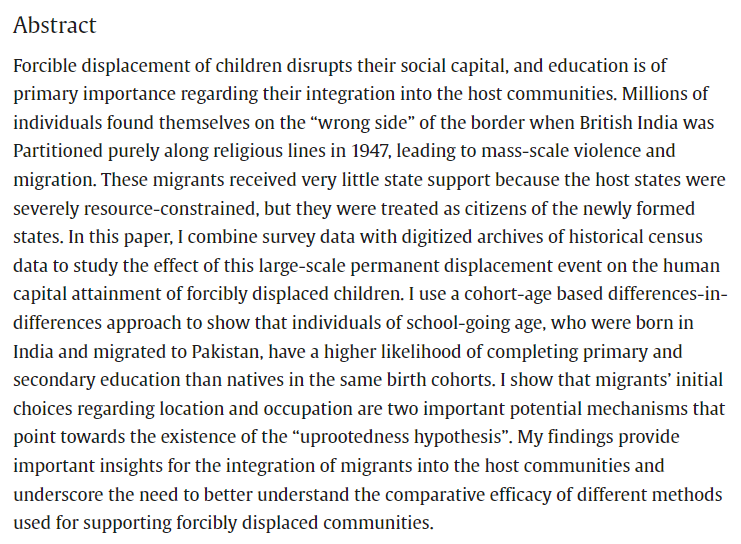
Not very active on this space anymore, but I did a brief review of my work on the effect of British India's Partition (https://t.co/MEH5IIbAw4) on human capital attainment.
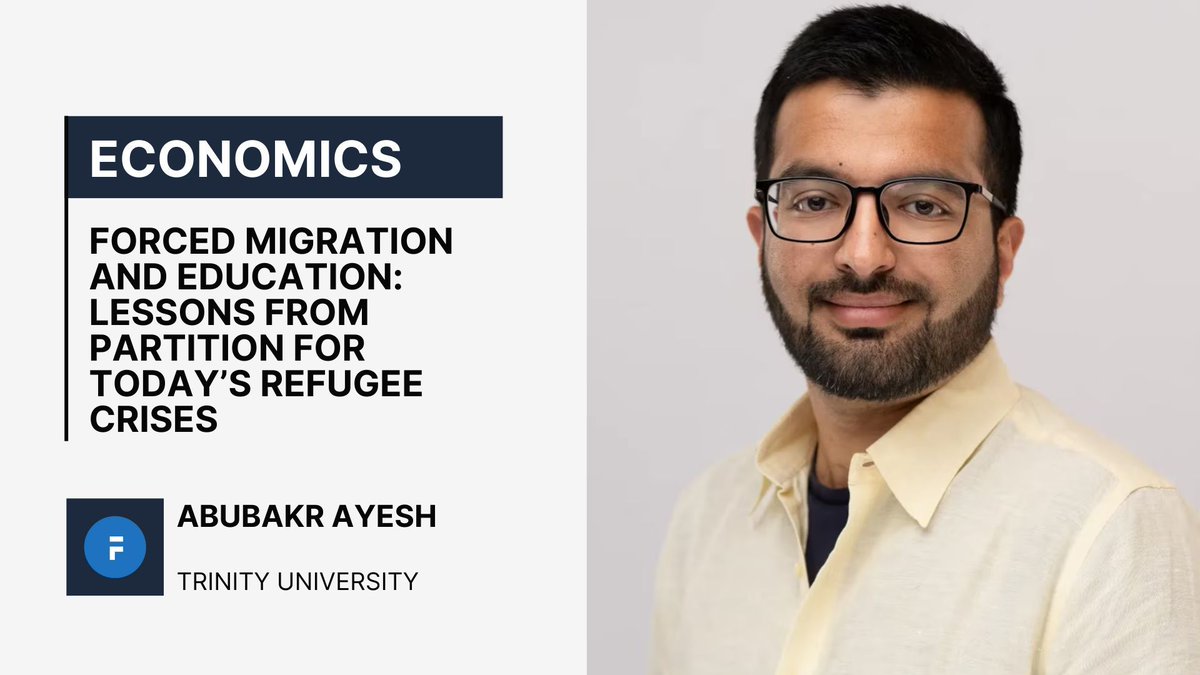
Can uprooted children turn forced displacement into an unexpected driver of educational success? Abubakr Ayesh , Trinity University , discusses: https://t.co/VNgM1FH4Do
#economics
📢 Free Virtual Course for Economics Students!
The ReCIPE (@cepr_org) research programme is hosting a course on ‘Key Concepts for Economies in Conflict and Fragile Settings’, taught by a series of experts in the field.
More details & registration: https://t.co/uatHasTYJo
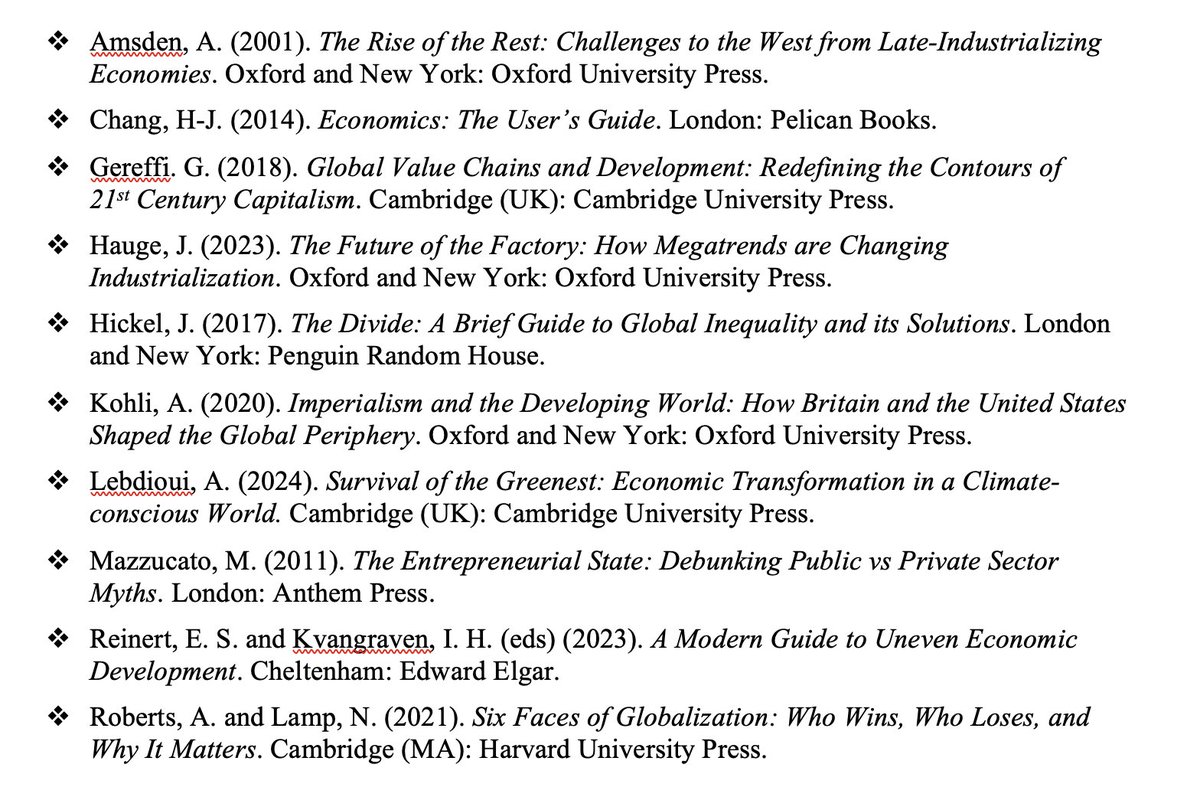
Ha-Joon Chang once told me that trying to learn about political economy and economic history in an economics department is like trying to learn about atheism in the Catholic church.
He captured how I had been feeling my entire undergrad, stuck in an economics department.
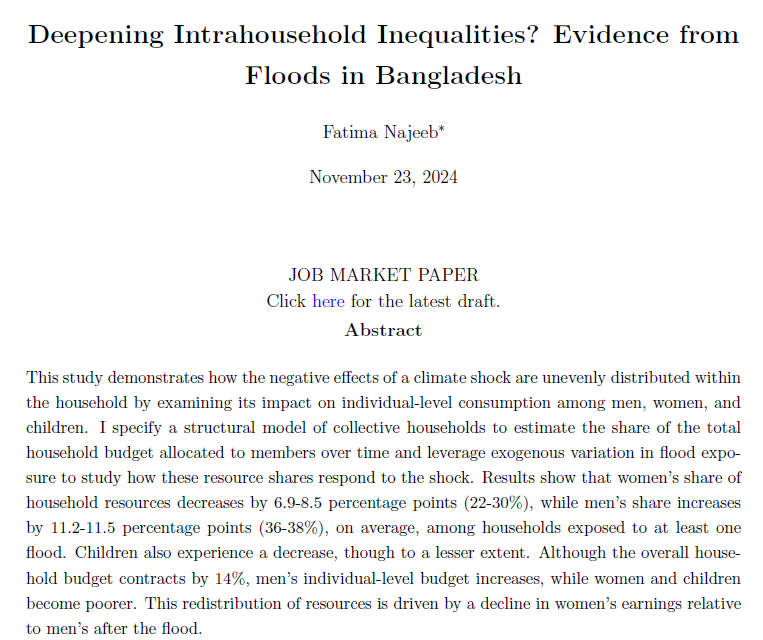
1/ How do climate shocks reshape lives inside households? 🏠🌍
My #JMP explores how climate shocks can change the way household members share resources, deepening intrahousehold inequalities. This has important implications for climate resilience and policy design.
Full paper: https://t.co/8SjDyfXOjX
#EconTwitter #EconJobMarket
Deadline for submissions is 10 days away (Nov 5) - can't wait to see what interesting research you all are up to! We'll consider any labor/public paper (broadly defined) with at least one LAC co-author, though any author may present. Submit!
I am now preparing some DiD lecture slides to give a talk at Amazon, and I have created this DiD Checklist.
I am sharing them here in case some of you find it useful!
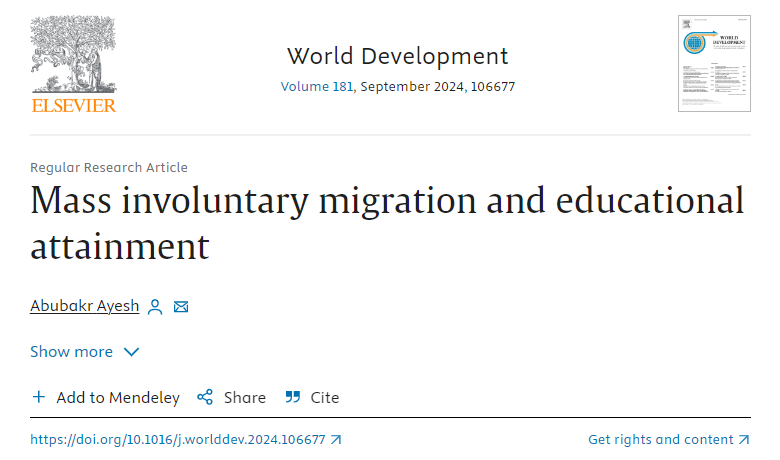
Pleased to share that my 2/3 chapter of my PhD dissertation is published. Using a DiD approach, I study the educational attainment of displaced children during the 1947 Partition of British India. More details here:
https://t.co/YAWsewmwA0
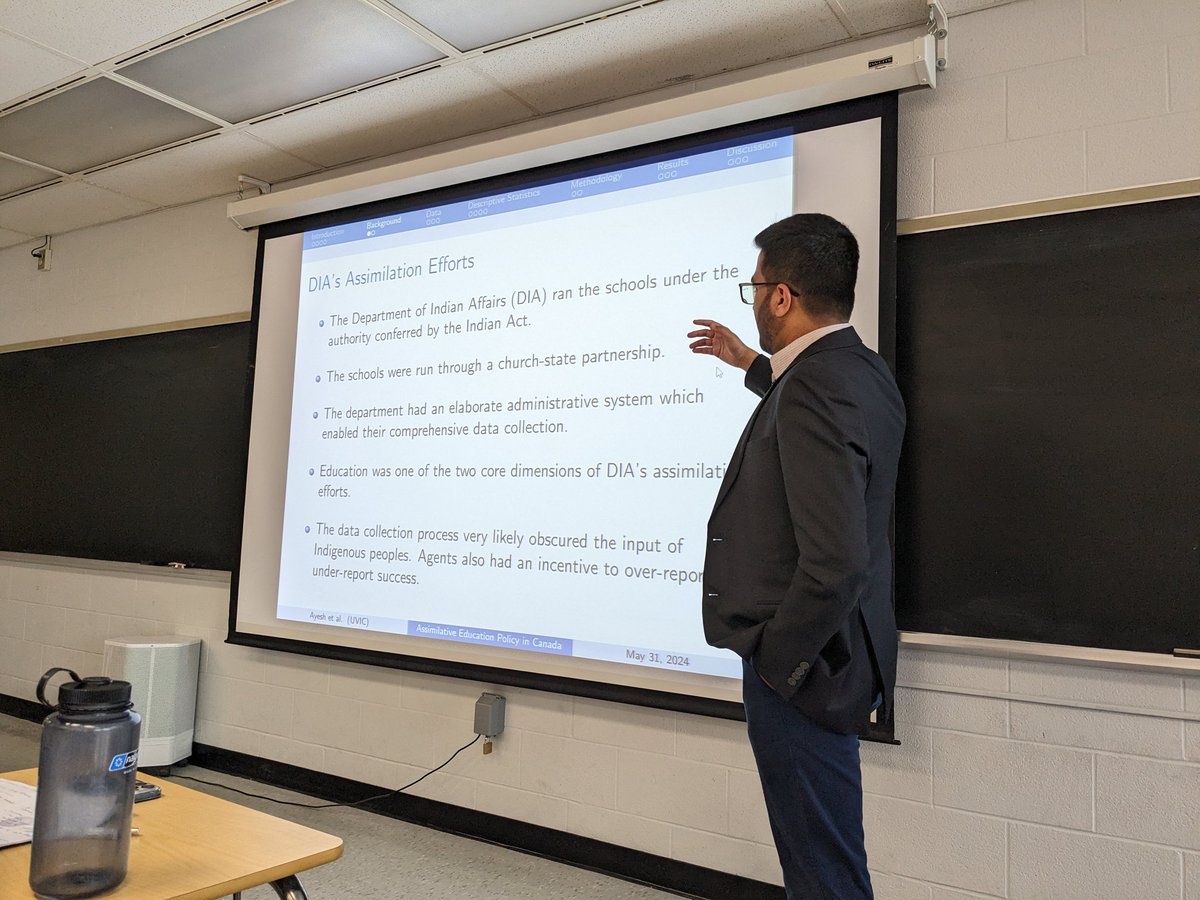
After some great commentary from Josh Lewis, we've got @abubakrayesh up talking about residential schools, the Indian Act, and assimilation (which is joint with @DonnFeir, @MaggieECJones, Samuel Shipley, and me).
Really happy to share that ⬇ paper with @AndrabiTahir@BauNatalie Jishnu Das & @aikhwaja has been accepted at @QJEHarvard! TLDR; Giving grants to public schools (in Pakistan) can improve learning in both sectors due to competition. Final paper here: https://t.co/E9BVbGYYhM.
It's been a phenomenal year for cool young researcher! Excited to share the work of *40* great development economists based all around the world, here's a recap 🧵. . .follow them, read + cite their papers, look out for them!
Haven't been here since Twitter turned "X" but forthcoming in @JEEM_tweets is my work on ag fires, pollution & crime.
Using an IV based on wind direction, I find air pollution increases violent crime. Pollution's effect on men's labor market outcomes is an important mechanism.
Esther Duflo and I are delighted to put our @MITEcon PhD. Micro Development Economics course, 14.771, online @MITOCW. All videos, syllabi, and lecture notes are free and open for all, including for use in your own classes.
https://t.co/C222hV6Ffx
@LahoreMarquez Just being a devil's advocate: on the other hand free secondary education does not help much either as this working paper shows:
https://t.co/8kdaYA0MlN
PS not arguing for privatization (of schooling to be specific) here.
I’m fairly fluent in English but I start struggling when I’m tired. Even after all these years of living abroad. Is ‘too tired to talk in English’ a thing with other non native speakers too?