this is exactly right, imo. The purpose of therapy is not to have you naval gazing all the time. It's to have insight into why you do what you do, to be able to recognize, manage and process it quickly as it comes up, and as a result to have the bandwidth to do useful things. You should not be your own biggest topic of contemplation.
In the defense of the unnamed bank, His Holiness is, under U.S. law, ~certainly a politically exposed person (PEP) as a head of state, and therefore a wide range of routine things need enhanced due diligence.
Also, possible the banker's UI did not anticipate that would happen.
If you visit areas in and around Delhi where workers live even once, the horrific living conditions will stay with you. I don't know where people get the audacity to say that workers in NCR earn "decent" money. Of course this is true of nearly every Indian city.
#PeekOnGround: A family of 8 lives in a small, dingy room that is not even tall enough for a person to stand straight - this is how many of the workers protesting for wage hikes in Noida live.
Peek TV’s co-founder @AgarwalVedanta visited one such worker’s house.
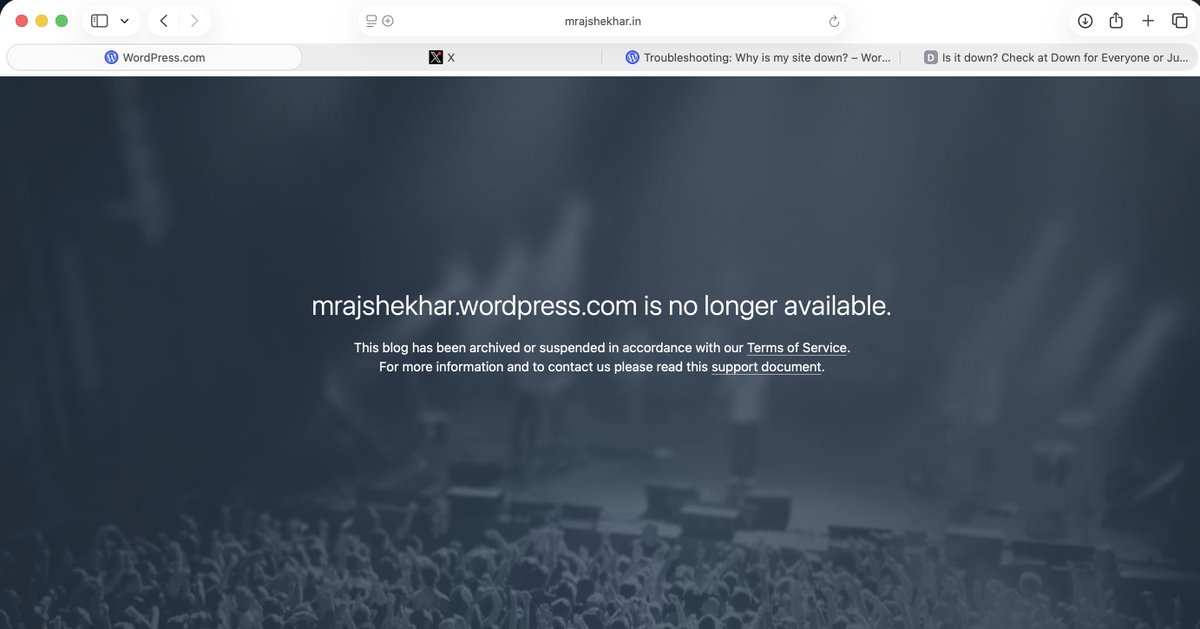
Hey @wordpressdotcom, why has my blog been taken down? And sans intimation? (And what terms of service did I violate? All I do here is aggregate links to my journalism)
PS: Folks, their contact form is not accepting my complaint either. Could you amplify this message please?
Went down the rabbit hole on this. Your brain treats a physical book like a landscape. It builds a spatial map of the text, the same way it maps trails, rooms, and city blocks. When you scroll on a phone, that map breaks apart.
Seven large-scale research reviews and direct brain scans confirm what you already feel.
A 2023 study in PLOS ONE attached brain-activity sensors to children’s heads while they read the same text on paper and on screen. Paper reading produced fast brain waves, the pattern linked to focused attention. Screen reading shifted the brain into slow waves, the pattern linked to mind wandering and daydreaming. Same kids. Same words. Measurably different brain states.
A separate 2022 study from Showa University in Japan scanned the front of the brain, the area that manages focus and comprehension, during phone versus paper reading. Smartphones sent that region into overdrive, meaning the brain was straining just to keep up with basic processing. Paper reading produced a moderate load that triggered natural deep breathing, which helped regulate brain function and sustain focus. The phone suppressed that breathing pattern entirely.
Since 2017, researchers have published seven major reviews combining hundreds of individual studies. Six of seven reached the same conclusion: people understand less on screens. A 2018 review of 54 studies and 170,000+ participants, literally titled “Don’t throw away your printed books,” found paper outperformed screens across the board for non-fiction. A 2024 follow-up with 49 more studies confirmed it. The gap has grown steadily every year since 2001. Being a “digital native” doesn’t help.
The best explanation is how your brain tracks where you are. Your short-term memory can only juggle about 7 things at once. A physical book gives you constant location cues: the weight shifting from right hand to left, where a paragraph sits on the page, how thick the remaining pages feel. Your brain hands off the “where am I in this text?” job to those physical signals, leaving more room for actually understanding what you’re reading. On a phone, every screen looks identical. Your brain has to track position and process meaning at the same time, and something gives.
A Norwegian eye-tracking study analyzing 25,000+ individual eye movements found screen readers processed text more shallowly. The students had no idea they were reading differently.
In 2019, nearly 200 reading scientists from 30+ countries signed an open letter warning that screen reading was degrading deep comprehension. Since then, Scandinavian countries, among the most digitized school systems on Earth, have started putting physical books back in classrooms.
There is so much talk right now about how journalism is unsustainable financially, that business models are tapped out and growth is hard to come by. But there is no talk of the bigger scandal in media, which is that it has become morally unsustainable. What is the purpose of journalism when every major newsroom is engaged in genocide denial? In giving cover to war crimes? In following the diktats of apartheid states and corrupt right-wing governments? This is a journalism whose cowardice has not only been exposed, but foregrounded. It's the disgrace of an entire industry.
Public information announcement:
India is still exporting refined petroleum and petroleum products No curbs are being imposed or contemplated 15 days into the oil war
Thank you for your attention to this matter
Just thinking about how South African apartheid was eventually destroyed not because the world suddenly woke up to the evils of racism, but because apartheid South Africa started wars on too many fronts and overextended itself into oblivion. No reason.
I’m not always comfortable with the term ‘global south’. But as both China & India have consistently taken the interests of developing countries seriously, I proceed as such. One has largely recovered with the global south since the 2000s, another has deviated, esp. since 2023.
Depressing part of growing older in a collapsing imperial gerontocracy (among many) is not only have I heard all these bullshit justifications for war before but I've literally heard them from the same people
No matter what Galgotia University did at the India AI summit, there is NO reason to humiliate its students.
Some of the worst Indians are from elite institutions like St. Stephens and the IITs and the best from non-elite ones.
Some of the worst humans alive are from Harvard.
american craftsmanship is declining. 20 years ago, if you wanted to manufacture a reason for a war, you had to make a map and do a little presentation at the UN. now you just say anything.
Good piece making an important point: the expansion of gig work in China is not just due to social change or tech exploitation, but an economy that is running below potential and not creating enough jobs
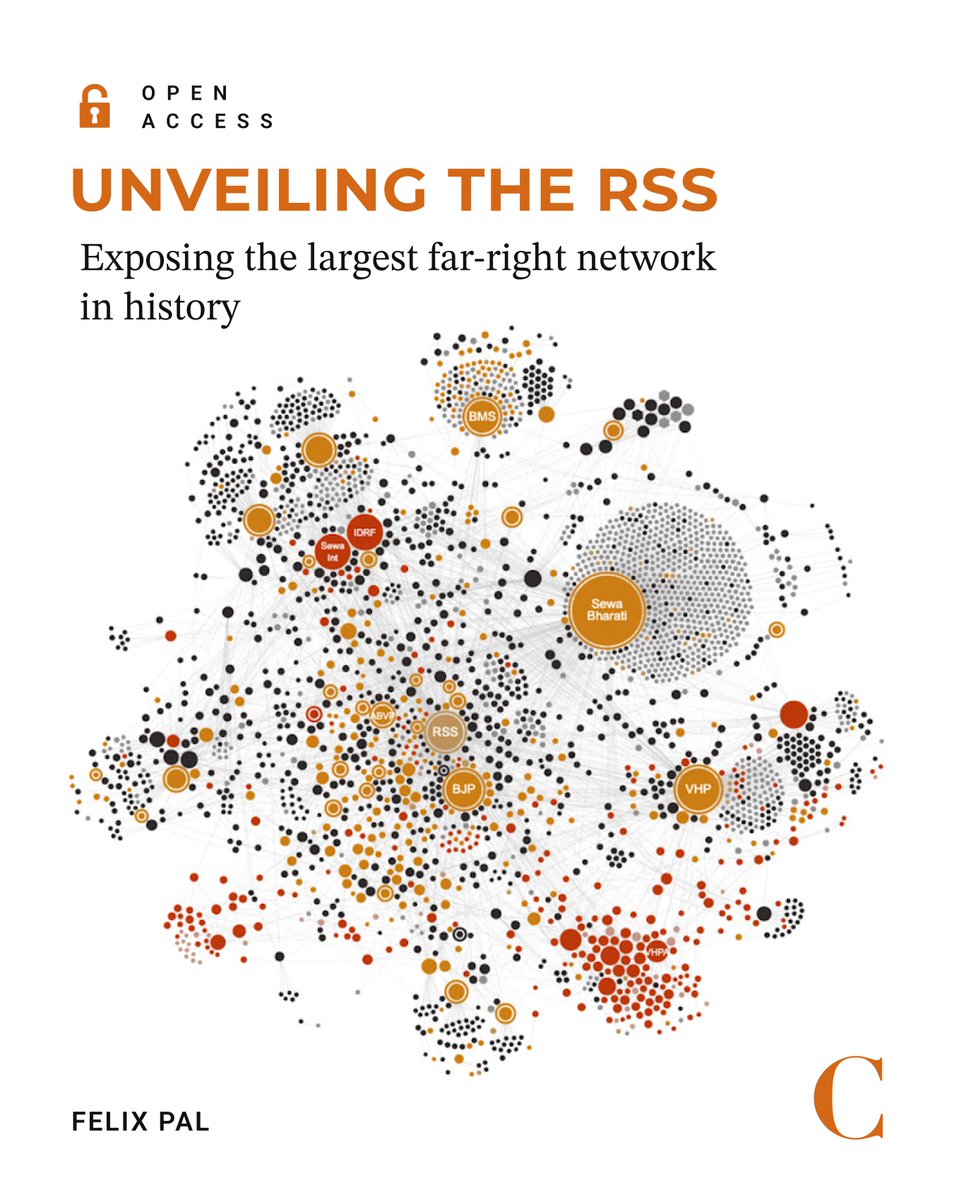
Open Access | The Sangh is neither infinite nor unknowable. A special investigation that Felix Pal helped lead, conducted over a period of six years, with data now housed at Science Po’s Centre de recherches internationales, and fact-checked and released by The Caravan, has constructed the world’s first network map of the RSS, revealing over twenty-five hundred organisations with concrete, traceable, material ties leading to the Sangh.
What the world’s first network map of the RSS, revealing over twenty-five hundred organisations with concrete, traceable, material ties leading to the organisation, tell us about how the Sangh functions, Felix Pal (@FelixPal8) explains: https://t.co/OolKtfVM69
Explore the network map here: https://t.co/OxrS9glyI7
It’s very rare that an account on Thailand & Cambodia and their wars these days mention the history of the Vietnamese-Soviet reconstruction of post-genocide Cambodia (1979-91). This is a must-read polemic essay. https://t.co/VCn5I2D1lA
This is sheer blackmail. They knew what they were doing. The fault lies with civil aviation ministry that they have repeatedly allowed private airlines to hold the country to ransom and extract concessions. Kingfisher and Jet Airways didi it in the past. You have to have more credible players by fixing rules and making aviation affordable! They get way because India has no culture of hefty compensation for victims and deterrent penalties! The judiciary is to blame for the last bit. …1/n