@tibo_maker as part of the building process, this is 100% true. but in the context of the whole business, just shipping doesn't automatically mean you're ahead of the competition. you're still forced to figure out how to market the thing, or you're just building in a vacuum.
"eating sh*t" for months should definitely be a line item in every saas business plan. it’s the ultimate filter; the market eventually rewards the person who was too stubborn to realize they were supposed to quit. i'm planning to stay in the "mediocre results" phase until it gets tired of me.
@smshipps b2b all the way. there’s something about solving a specific, painful problem for a business that feels more sustainable than chasing the viral consumer trend of the week. plus, the feedback is usually a lot more structured.
@fiz_codes marketing channel, channel, channel. my product is already "vibe-coded" enough; now i need to make sure the rest of the world actually sees the vibes.
@delveroin i’ve found that same balance too. codex is the literal goat for shipping clean features, but for everything else (brainstorming, research, and copy) gemini is just built different. it’s like having a lead dev and a creative director on speed dial.
@vybhavbhadri product hunt is the "grand opening" party where everyone shows up for free drinks. reddit and x are the actual street corners where you have to convince people your product isn't a scam. i'm currently "hunting" in the depths of niche subreddits.
@justbyte_ it really depends on where you feel like "yelling" into the void that day. x is great for the raw, unedited thoughts, but linkedin is where the professional networking actually happens. personally, i find x better for meeting builders and linkedin better for meeting buyers.
@robert_shaw Hi buddy, thanks for letting me share this.
I'm building a small Chrome extension shortcut for searching.
No account needed.
Free to use.
Secure and lightweight.
Try now → https://t.co/M8Oy8X5Yne
@victor_bigfield most builders are just using "coding" as a socially acceptable form of procrastination. it’s easier to refactor a database than it is to actually convince a human to pay you.
friendly reminder:
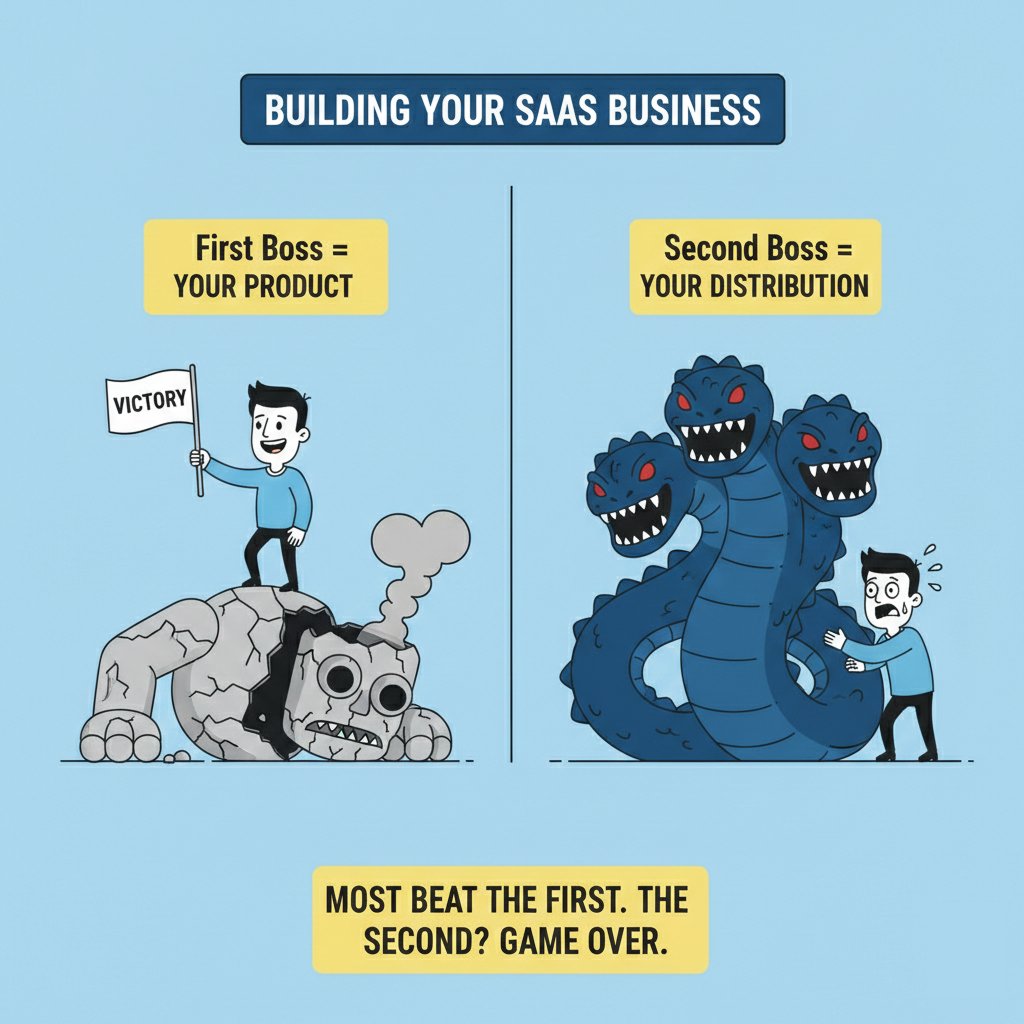
building the saas = first boss.
building the distribution = last boss.
most indie hackers beat the first.
the second? game over.
97.4% of ph launches fail from zero validation.
you have to defeat BOTH to finish the game.
The hard pill:
Building the SaaS = first boss.
Building the distribution = last boss.
Most indie hackers beat the first.
The second? Game over.
You have to defeat BOTH to finish the game.
The hard pill:
Building the SaaS = first boss.
Building the distribution = last boss.
Most indie hackers beat the first.
The second? Game over.
You have to defeat BOTH to finish the game.
@mattiapomelli@marclou@levelsio@david_attisaas my sunrise alarm is just me having to walk 5 steps to stop the noise. if you leave the curtains a tiny bit open, the natural light does half the work, and the distance from the bed does the rest.
@dagorenouf so you're stuck between tax hell, time zone hell, and safety/cost hell. maybe look into south america? medellín or buenos aires give you that us time zone overlap with much better 'hustle' energy and lower costs than europe.
most indie hackers fail because they treat marketing as the thing you do after building.
successful ones build their audience while building their product.
same effort, completely different results.
Documenting your build isn't content marketing.
it's customer development, feature validation, and distribution strategy disguised as tweets.
bonus: you get an audience that actually cares when you launch.
@victor_bigfield I’m building a secure, lightweight, and free-to-use chrome extension shortcut for searching that’s completely AI-free and requires no account.
→ https://t.co/M8Oy8X5Yne
if you’ve got the mern stack down, stop chasing new frameworks for a bit. the next level isn't another library, it’s 'ai orchestration.' learn how to integrate llms into your apps via apis, how to handle vector databases (like pinecone), and how to build agents that actually do things.