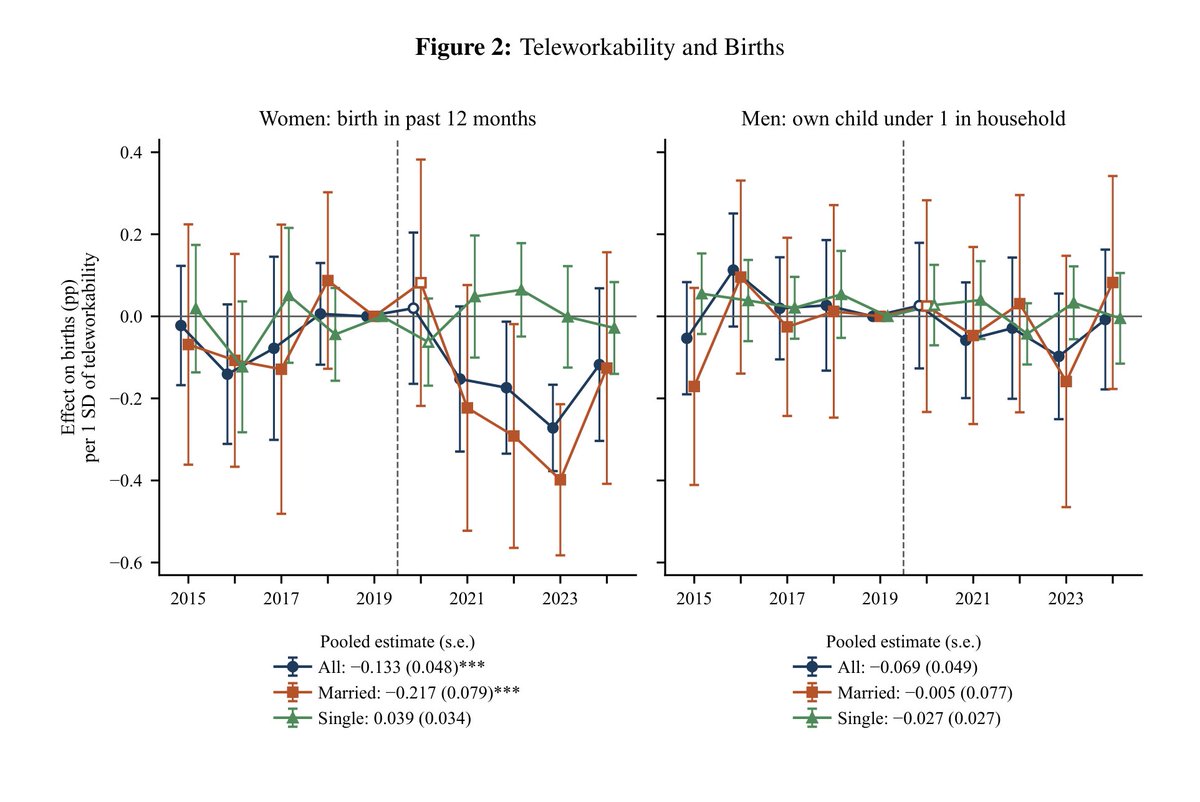
Many people hope remote work will raise birth rates. No commute, more flexibility, a chance to live near family.
I test the idea in a new paper. Among married women, the 2020 expansion of remote work reduced births. 🧵
@the_pi_man Great question. Everyone lived through 2020, but only some could work remotely. Comparing those groups nets out the common shocks, and the fertility gap opens only after remote work takes off.
Many people hope remote work will raise birth rates. No commute, more flexibility, a chance to live near family.
I test the idea in a new paper. Among married women, the 2020 expansion of remote work reduced births. 🧵
Remote work is a real amenity, but I find no sign that it raises births.
Caveats: these are college graduates, four years out, and the shock is in the context of the pandemic. Completed family size will take years to see.
Paper: https://t.co/E3B3GQ9H5A
How big is this? If all women respond as college graduates do, the rise in remote work since 2019 lowered the total fertility rate by about 0.09 births per woman.
For scale, the U.S. rate is 1.6.
We just launched https://t.co/tn1oZOF9Uc for quick hits and long reads on all things AI policy from @JoinFAI's AI policy team!
We're kicking off with the first in a series from @acjohnston0 on how AI is reshaping labor markets. Read and subscribe below!
New paper, forthcoming at the Journal of Public Economics: Why do employers offer pensions? The standard answer is that they boost effort and retain better workers. We test both — and find neither. https://t.co/Z1GmjZFP2e
Fascinating paper
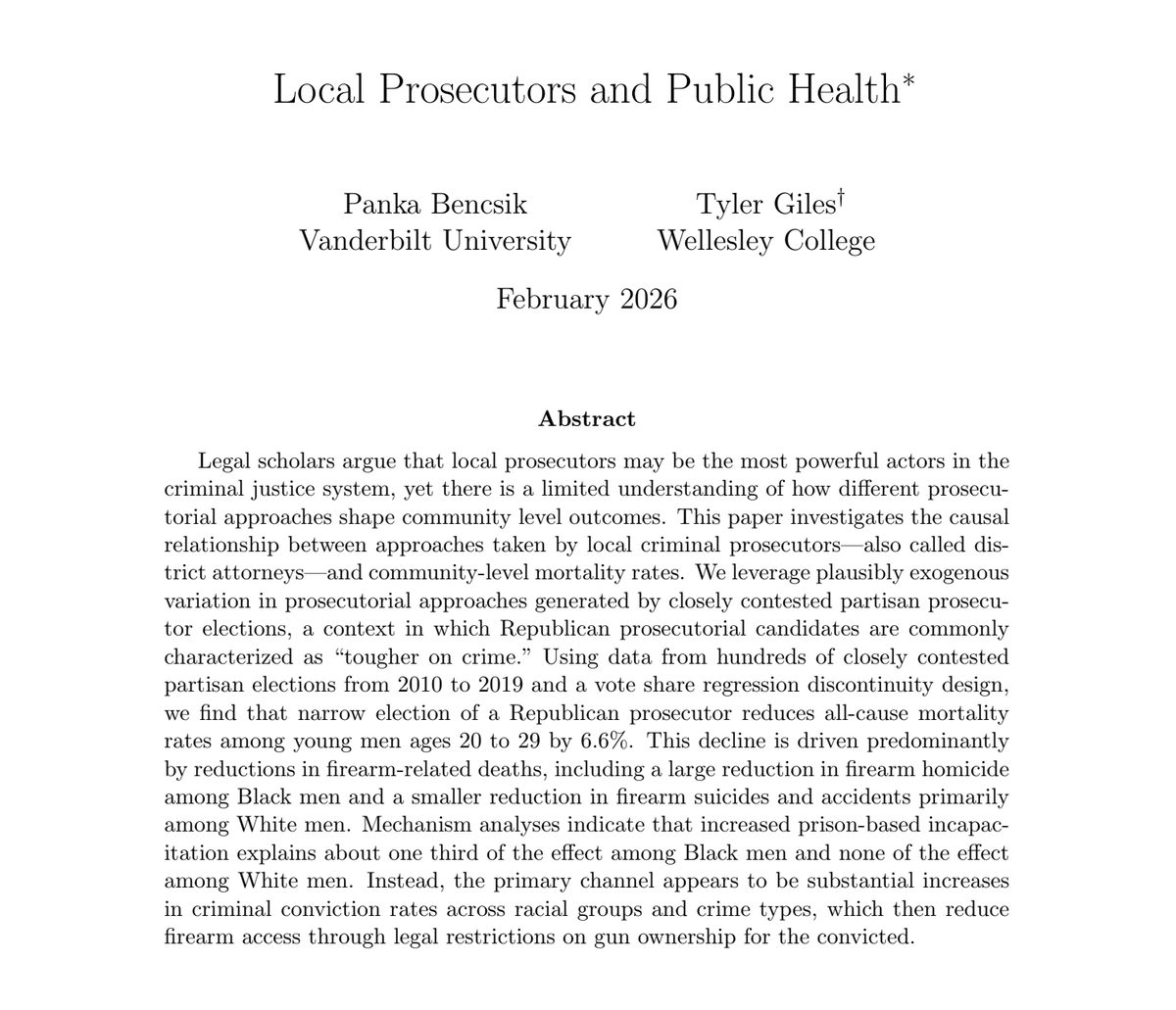
"...We find that narrow election of a Republican prosecutor reduces all-cause mortality rates among young men ages 20-29 by 6.6%. This decline is driven predominantly by reductions in firearm-related deaths." https://t.co/Vq36DQ1JYy
@BarbellFi You'll be happy you have more kids when you are older. And your kids will be happy they have more people deeply connected to them. Kids are a kind of freedom.