Young innovators face a number of challenges that hold them back.
Phillip Lubanga, Tambula Concepts - @MastercardFdn EdTech Fellow, highlights some of them.
#EdTechMondays
The population is growing, but there are only a few teachers to support the increasing number of students in classrooms. That alone presents very many challenges. - Phillip Lubanga, Tambula Concepts, Mastercard Foundation EdTech Fellow
#EdTechMondays
ASIGMA is pleased to announce the commencement of its work as the implementation partner for the Revitalization of the Lesotho Textile and Apparel Sector (RLTAS) Project.
Through this World Bank-funded CAFI initiative, ASIGMA will support Lesotho's textile and apparel firms to improve productivity, quality, and market competitiveness, while strengthening Lesotho National Development Corporation's (LNDC) capacity to attract investment and promote exports.
Learn more: https://t.co/LHwPQYfySw
I am excited to share this piece on the impact of AI on technical debt. As software engineers, do we still know what we are building?
@"From Builders to Stewards: When AI Turns Knowledge into Technical Debt"https://t.co/hFaHpd4WgQ sur @LinkedIn
Why Do Engineers Recommend Clay Bricks for Foundations? (Short Answer: We Don’t)
======
"Why do you engineers ask for clay bricks to be used in the foundation?" This was a good question by @JMukalazi following my note on why the debate on bricks and blocks is a distraction. https://t.co/ElrO1sBEjo
Most of us don’t. And if one does, he’s not offering structural advice. He’s channelling the spirits of superstition and short-cuts.
Here’s the thing. Both clay bricks and concrete blocks are vulnerable to rising damp — that part is true. The culprit is usually poor waterproofing or careless detailing by the contractor. But with clay bricks, rising damp is just the opening act. The real show begins inside the brick itself.
Ugandan clay bricks are made from swamp clay mixed with anything the swamp can offer — dead leaves, fibrous roots, worms, and generous helpings of excess water. When fired, the organic matter and moisture volatilize, leaving behind voids. And in these moist, mineral-rich cavities, acid-producing bacteria take up residence — comfortably housed in what I can only describe as metakaolin-lined micro-apartments.
These bacteria don’t just squat. They slowly release acids that eat away at plaster, causing it to flake, peel, and disintegrate. So, while both materials may suffer from moisture issues, only clay bricks turn that moisture into an ecosystem of decay. If your wall starts shedding plaster like it’s allergic to cement, chances are you're looking at a clay brick problem, not a weather forecast.
And we haven’t even talked about structure yet. Foundations demand materials that are dimensionally consistent, dense, and chemically inert. Swamp bricks are the opposite: they shrink unpredictably, absorb water like gossip, and compromise structural longevity. Recommending them for foundations is not engineering, it is a ritual.
Yet, the myth persists. Clay bricks are “cheaper”, they say. But are they? They consume more cement, more mortar, more labour, and in time, more money in repairs and resale losses. Their rough finishes and structural inconsistency quietly erode the long-term value of your home.
So, no. Engineers worth their salt aren’t behind this. It’s usually a contractor’s shortcut, a fundi’s gospel, or a client’s nostalgic obsession. But buildings aren’t shrines to tradition. They’re systems of logic, performance, and adaptability.
Especially that we don't live in bricks. Bricks make walls, and for Uganda, most walls are 40-50% the same material that makes the concrete blocks, cement and sand. So, the brick argument works if we are a bacterium that is looking for a metakaolin lined warm nest to stay in for as long as King Nebuchadnezzar has been dead, not a house made of many other materials that will be expired in the next 50 years.
If your engineer recommends swamp bricks in your foundation, don’t ask for a structural report. Ask for his horoscope.
I don't trust anyone who approaches me that they want to be my friend!
Friendships should develop over repeated interactions, associations and experiences.
You won't even need to ask coz the friendship will be forged through the process!
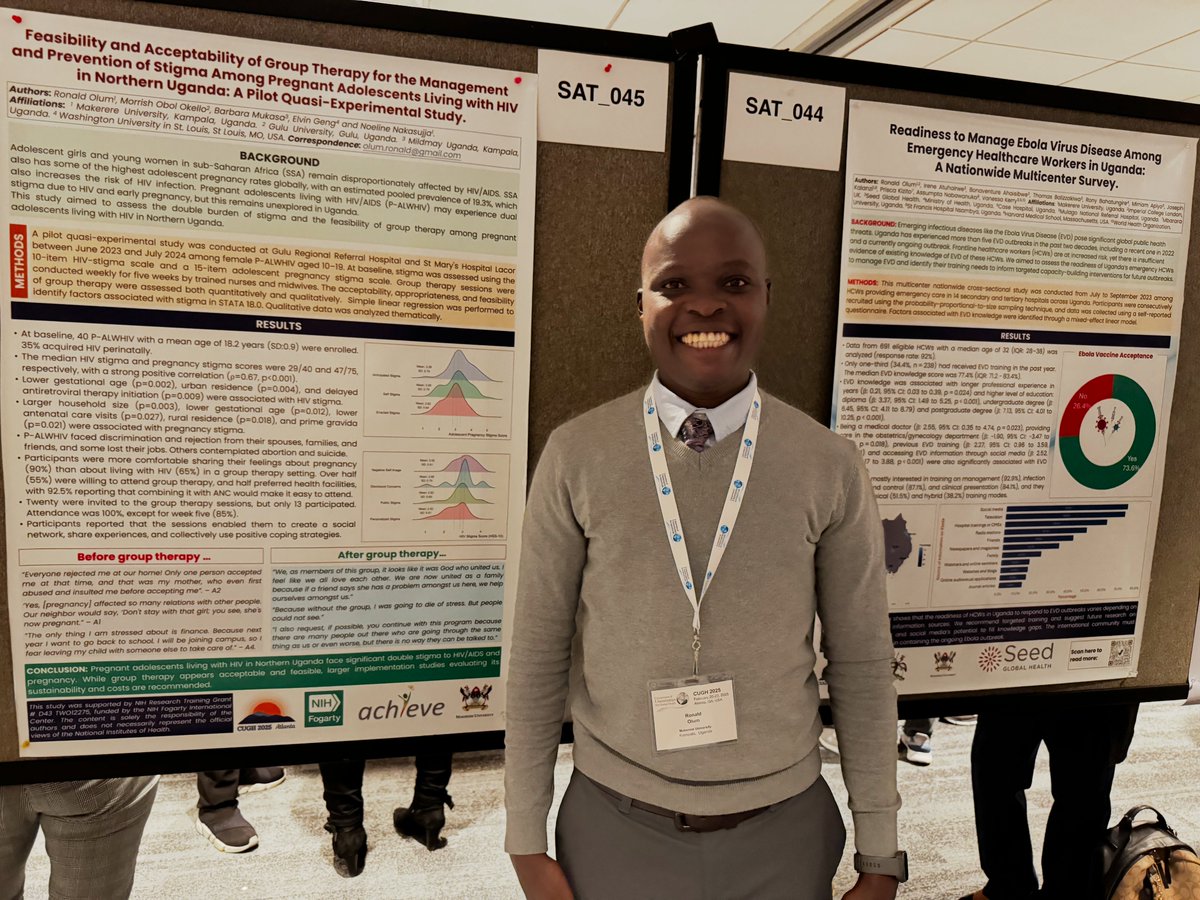
It is an honor to receive the 2025 @CUGHnews Dr. Judy Wasserheit Young Leadership Award. I dedicate this award to the young women in Northern Uganda whose resilience inspires me. I also extend my gratitude to my mentors, whose unwavering support has made this possible. #CUGH2025