Human beings are born with different capacities. If they are free they are not equal. And if they are equal they are not free. (A Solzhenitsyn) #AmericaFirst
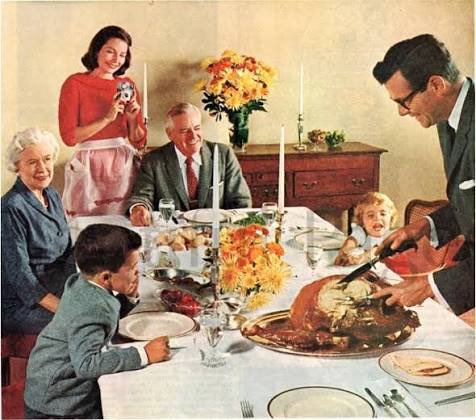
An entirely different civilization used to exist
Even the Hollywood degenerates couldn't hide it
Dignity and decorum still existed. People still looked good and healthy, and dressed in a way that decorously complemented their looks and vitality
That civilization was mortally wounded by the Great War, held on until the Second World War, and perished in its aftermath. By the 1960s, it was gone
Such is what we have lost
This account is under heavy fire by cuckservatives and their own Idaho young Republicans
They’re telling on him like it’s the third grade
🚨 BACK THIS GUY UP if you don’t want the whole region flooded with Indians
I wasn’t always this political. But then the left came after my God, my Catholic faith, my children, the unborn, our sovereignty, borders and our freedoms. They mocked Ann Widdecombe’s death, made excuses for Pakistani grooming gang perpetrators, flooded our country with fighting-age men while victims fought to be heard, and expected women like me to remain silent.
So here I am. And here I’ll stay.
Unbothered and louder than ever.
Well this got buried fast HOLY FUCK
Chairman of the Foreign Affairs Committee says, “I know that Egypt warned Israel three days before the [October 7th, 2023] attack.”
Harold Cottam, age 21, sat unlacing his boots for bed shortly after midnight on April 15, 1912, while the Titanic sank in the dark 58 miles away.
His coat was already off in the radio room of the passenger ship Carpathia, yet he kept his headphones on for a few extra minutes to send the Titanic routine traffic.
Back through the static came an urgent call from coordinates reporting that the Titanic had struck an iceberg and was sinking.
Cottam ran to the bridge and burst into the cabin of sleeping captain Arthur Rostron to wake him.
Rostron ordered the ship turned toward the distress position at once, then paused in the quiet cabin to ask if Cottam was sure the signal was real.
The Carpathia had a top speed of 14 knots, so Rostron woke the off duty stokers and shut off cabin heat and hot water to send all steam to the engines.
Cabins went cold while the deck shook underfoot as the ship pushed past 17 knots through pitch darkness straight toward the ice.
Rostron posted extra lookouts on the bow, bridge wings, and mast, steering around tall icebergs by starlight without slowing down.
Inside, the crew turned all three dining rooms into medical wards with a doctor in each, readied hot soup and blankets, and cleared officer cabins.
They hung rope ladders, chairs, and canvas mail sacks along the hull, and poured oil down the forward lavatory pipes to calm the sea.
At four in the morning, Rostron spotted green flares from a lifeboat and stopped the engines at the ice field.
The shaking deck went still in the dark, and ten minutes later sailors pulled the first survivor aboard.
Daylight soon revealed dozens of massive icebergs surrounding the Carpathia on every side.
For over four hours in rough swells, crewmen hauled shivering adults up on ropes and lifted babies and small children aboard in canvas bags.
By half past eight, 705 survivors were safe aboard, and Rostron steered through thick fog to Pier 54 in New York on the rainy night of April 18, 1912.
Survivors pooled money to give a medal to every crew member, and on March 1, 1913, President William Howard Taft awarded Rostron the Congressional Gold Medal at the White House.
All 705 people who reached New York that rainy night were alive because a 21 year old with his boots unlaced kept his headphones on for a few extra minutes before bed.
My idea for Trump: golf for two years, meet world leaders, take photo ops, and leave Washington to Stephen Miller. Miller just pulled Mullin off TV after his DACA comments. Forgiven for breaking the law? That's amnesty. Stop BSing us.
Auro survived ten days alone on a road divider in Delhi. Now he is five months old, fully vaccinated, alert and quick to learn. His rescuer has had three leads fall through, so he is still waiting. Delhi NCR, if you know a family, please send this on.
I wondered why Sanchez was rushing the new immigrants into other parts of Europe.
It’s so that they can be given voting rights out of sight of the Spanish public.
In 1974, a twenty-three-year-old man named Dan Jury made a decision that went against everything expected of someone his age.
He took his eighty-one-year-old grandfather, Frank Tugend, out of a nursing home and brought him into his small apartment.
Dan was young. He had no money to spare. No medical training. No guarantee that he would be able to handle what lay ahead. But he had watched his grandfather fade inside an institution, surrounded by routines instead of relationships, efficiency instead of tenderness. And he could not accept that this was how the man who had shaped his childhood would spend the end of his life.
So Dan brought him home.
From that moment on, Dan became a caregiver in every sense of the word. He helped Frank bathe. He gave him medication. He cooked, cleaned, lifted, waited, stayed. He learned the slow rhythms of an aging body. He learned how fragile dignity can be, and how carefully it must be protected.
Friends his age were building careers, falling in love, chasing independence. Dan was changing sheets, sitting through long nights, and holding a hand when pain made words impossible. People told him he was sacrificing his youth.
Dan would later say those years taught him more about life than anything else ever could.
As Frank’s health declined, Dan began to photograph their days together. Not staged portraits. Not sentimental images. Honest ones. A frail body resting.
A grandson leaning close. Moments of exhaustion, tenderness, frustration, humor, and quiet connection.
Nothing was hidden.
In 1978, Dan and his brother Mark published the photographs in a book titled Gramp.
The book was unlike anything most Americans had seen. Aging was usually kept behind closed doors, handled by institutions, softened or erased in public life. Gramp showed the truth. The vulnerability. The intimacy. The humanity of dying at home, surrounded by someone who loved you.
The images were difficult. They were also deeply moving.
Frank Tugend, who had lived through war, labor, hardship, and loss, became a teacher in his final years. Not through speeches or advice, but through presence. Through the way he accepted help without surrendering dignity. Through the way he allowed himself to be seen, cared for, and loved.
He taught Dan patience. He taught him how love shows up in small, unglamorous acts. He taught him that care is not something you delegate when life becomes inconvenient.
When Frank died, Dan was changed forever.
Their story quietly shifted how many people thought about elder care in America. It challenged the idea that institutions were always the most humane option. It showed that caring for an aging family member is not a burden to endure, but a relationship that can deepen both lives.
Dan did not lose his youth.
He spent it learning how to love without turning away.
And in doing so, he helped the rest of us see aging not as something to hide, but as a final chapter that still deserves tenderness, dignity, and human presence
This is why so many men are ditching marriage. Especially in the secular world. When a woman says those vows, there is a good chance she doesn't mean a word of it.
Imagine if a man did this and said this.
The world would end.