Should we ice injuries?
A review finds:
-Icing can impair the inflammatory and regeneration process over the long term
-It can reduce sensation of pain
-If you decide to ice, do so in the acute phase (first few hours) and not 12hr+ post injury.
TIme for a rant. Why is it so hard to study performance in the lab?
One major reason is that what feels like a massive improvement in the real world is hard to pick up in the lab.
Take super shoes, you get a 3-4% boost in performance. Massive. You feel it on race day. But in the lab, even the largest single factor boost we get...it's hard to pick apart.
Now, take it a step further to a still significant but smaller boost, say 1% from high carb fueling or bicarb or any other legitimate intervention...
It's near impossible to get this to show up consistently in studies on a small number of amateur or moderately trained folks. Why? The variation in performance is too large.
If you're a 6 minute miler, you don't run 6min ont he dot every time you race. On a great day, you run 6:00. On a good day, maybe 6:05. Average day 6:08. Bad day 6:15. Disaster? 6:25.
Hopkins & Hewson (2001) studied the day variability of performance and basically found:
Elite/world-class trained: ~1.5%
Sub-elite well-trained: ~2.5%
Recreational/amateur: ~4%
The point is the variation in day to day performance is much larger than the intervention. For amateurs, its bigger than the single biggest performance breakthrough we've had in running (super shoes!).
To counteract this, we try to use larger number of folks, but in exercise science that almost never happens because of recruiting, funding, and other constraints.
So what you tend to get with small N studies is that most are statistically blind to any change under 3-4%.
And yet...most of our interventions from fuel to bicarb to caffeine are all relatively small effects (0.5-2%) which are practically very significant, but hard to detect in the lab.
That's why... performance in the real world tends to show what works. It's not perfect. But if you've got hundreds or thousands of elites and sub-elites taking bicarb and saying: "Hmm, I ran a bit faster in each race I used it this season..." It sticks around.
One of the main reasons is athletes don't just test things in a one off study. They test it in training, key workouts, numerous races, etc. Compare notes with their training partners, etc. It's easier to surface a signal over that longer period.
Again, it's not perfect. But what often happens is a new supplement, tool, tech shows up. Everyone tries it. For a brief period you don't quite know as there's a copycat nature...But if the performance boost is significant it stays. If it doesn't, it fades away.
So when you see someone say, "Hey in this study of 14 amateur runners, taking carbs didn't improve performance..." the answer is almost always, ya because of day to day performance variation, you can't pick up the signal from the noise.
Science is great. I love research. But don't overlook the natural trend of trial and error in the arena. It generally surfaces what has value.
3 weeks tomorrow since my freak double quad rupture injury and surgical repair. Being in good shape when sick or injured matters. Having done hard things matters. Having a great circle of people around you matters. Know I matter….matters.
True toughness is quiet and comes deep from within. It’s about making the right choice under stress, uncertainty and fatigue. It requires emotional control: cultivating the power to respond—not react—and thus making thoughtful, deliberate decisions during pressure-filled situations.
@Strong_Old_Men All I can figure is bad navigation of a storm drain hidden behind a huge flower pot as I came around a corner in semidarkness and came off a curb. First leg ruptured on unexpected landing and 2nd leg gave out on trying to catch myself.
It’s now been 1 week and a few hours since my freak injury of complete rupture of both quads running and surgery to repair hours later. They are still alive😊
As a parent or coach, the hardest moments come when you clearly see someone’s potential, yet they can't. You can’t force motivation—but you can plant seeds.
Here's what to do about it:
https://t.co/SUYU5KsDwf
@GaTechAlum_IE92@coachgambetta All I can figure is bad navigation of a storm drain hidden behind a huge flower pot as I came around a corner in semidarkness and came off a curb. First leg ruptured on unexpected landing and 2nd leg gave out on trying to catch myself.
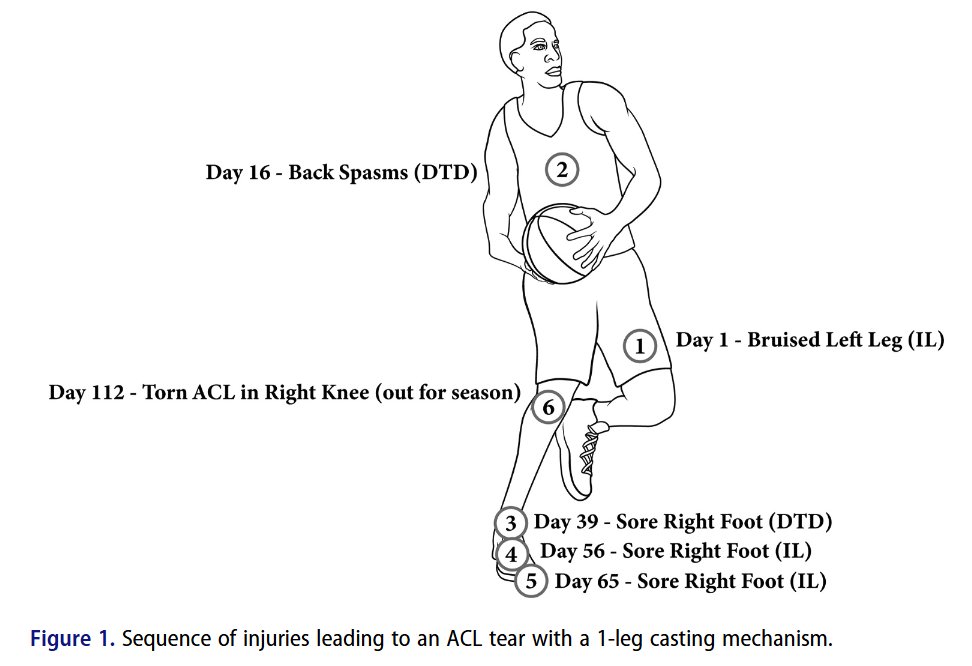
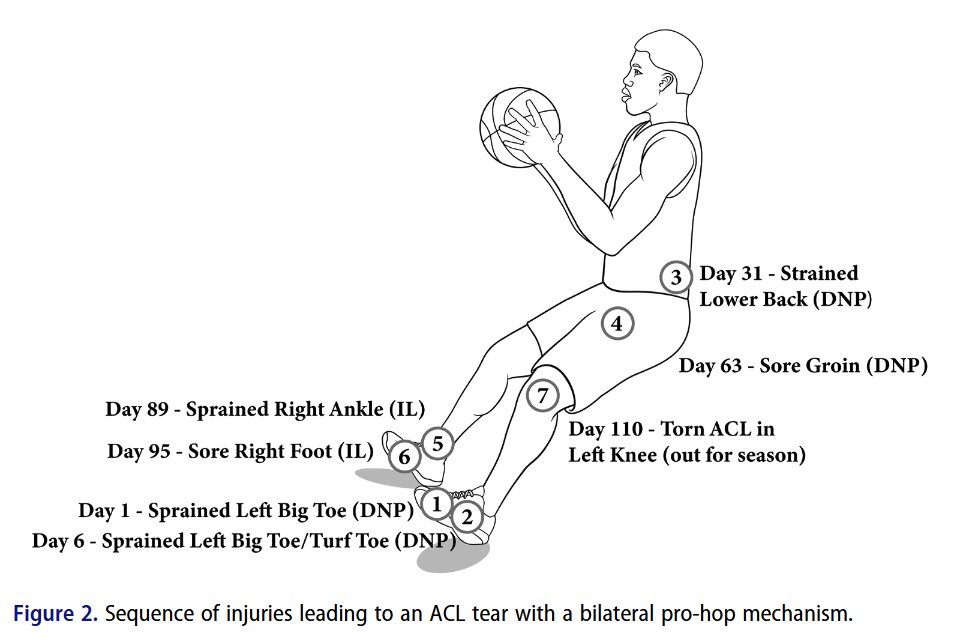
Prior injury prior to ACL rupture in NBA Basketball Players❓
- 125 ACL Injuries 🚑
- 27% had prior injury 90 days before
- 18% had ankle injury 1 year before
- 22% had knee injury 1 year before
40% had ankle or knee injury 1 year before ACL❗️
Sequence of events ⬇️ #ACL
Exercising 150 minutes per week for 4 months is equally as effective as taking an antidepressant for depression, review finds.
Get outside and get moving.
Start small and easy. For many, a walk is enough when you are starting.
Let’s get Lily up river to Maysville June 14 to run the Buffalo Trace Stampede Mile and compete for $150 cash if she wins and sets new course record. The Stampede is Kentucky’s fastest road race mile.