@vinayaravind Rule of thumb used to be n+3 for advance bookings so Thursday tickets should already be available by now. Not sure if PVR/INOX have manipulated it now. Since the movie has so much demand, I’d expect the tickets to open around 2 AM instead of the usual midnight. Hope this helps.
“Mkbhd vs OnePlus is a very well known feud in tech industry”- not true. His thumbnail on the SiC battery video was misunderstood and he changed that after acknowledging. He’s been cordial with 1+ afaik and introduced the brand to most tech inclined Americans as seen in quotes.
Some western tech youtubers played a key role in this including you Marques. Unnecessary criticism & hate in the past lead to this downfall of the brand in the US and Europe. Now they have only Google & Samsung as Android options in the US.
Maaaannnnyyyy thoughts on #TheOdyssey (possible spoilers):
____
The control Christopher Nolan exercises over his cinema deserves to be studied. That he has mastered hero elevation should be evident to anyone who’s watched just Batman Begins. In The Odyssey, he reminds us once again that there can be no true elevation without… restraint. Here, the protagonist, Odysseus, must first suffer—and how he suffers. In the first half, he is at the mercy of an endless storm that rages both outside him and within. Death itself begins to look like mercy. And yet, this isn’t the noble endurance of Bruce Wayne. In fact, there's almost nothing noble about it. This is simply… punishment. This isn’t about learning to fight either.
In fact, at one point, Odysseus is told: “Give up fight, give up control.” Submit. Take the leap of faith. Nolan’s films have embraced this idea before. In The Dark Knight Rises, Bruce Wayne can escape the well only after accepting, rather than fighting, his fear. It's a literal leap of faith. In Inception, Mal asks Cobb to do the same: “I’m asking you to take a leap of faith.” Nolan’s protagonists are told that the answer isn't to out-think, outmanoeuvre, or overpower. The solution is surrender. There’s something quietly beautiful, almost spiritual, about this recurring idea in his filmography.
The Odyssey, much like Oppenheimer, is as much about inner chaos as it is about the external. And that's why that first half—where Odysseus and his crew repeatedly mistake danger for sanctuary—works best when you stop processing it literally. Each stop they make seems to expose a different human weakness. Cyclops exposes Odysseus’ ego, which makes him shoot an arrow when silence would have saved lives. Circe tempts by reducing people to what they are most like. The Sirens lure with desire. Helios’ Cattle reveals how hunger always trumps wisdom. Even Calypso, who genuinely loves him, exposes the pitfalls of choosing comfort over purpose.
Seen this way, these pitstops no longer feel like arbitrary adventures inflicted upon a wandering crew, but stations of psychological growth that Odysseus must cross before earning his way home. Isn’t it fitting, then, that when he finally returns, he doesn't do so with the swagger of a king who conquered Troy with an ingenious idea? Having learned his lessons well, he enters Ithaca with the anonymity of a beggar. Even when he gets insulted and kicked about, his ego doesn't dictate his responses.
As you can see, Nolan’s Odyssey repeatedly asks what it means to be a war hero. What does it really mean to win a war? More importantly, what does victory cost? The obvious answer is the individual psyche. But by the end, Nolan makes an even more devastating suggestion: as with Oppenheimer, that the world itself has been permanently altered for the worse. Yet again, an ingenious idea has redirected the course of civilisation. That’s why Zeus’ law of hospitality echoes throughout the film. Every horror seems like a violation of this fundamental law. Cyclops devours his guests. Circe strips them of their humanity. Calypso imprisons in the name of love. Eumaeus, meanwhile, becomes the one man who truly offers hospitality to a stranger, and remember that he does so, despite having been exploited by guests himself. Even the suitors ultimately feel like parasites, taking over a home that isn’t theirs while constantly demanding more. It’s, of course, why they are the villains in this film.
Robert Pattinson is so good. The sneer. The contempt for those beneath him. The cowardice that hides behind his performative swagger. He makes Antinous easily disliked. One of my favourite scenes features him and Penelope (a terrific Anne Hathaway) in a moment when Nolan allows her to drop her guard and reveal her vulnerability. However, watch Anne’s eyes the moment Antinous hints that he may not accept Telemachus inheriting the throne. Actually, scratch that. Just watch her in every scene. Like the one with Tom Holland’s Telemachus, where she erupts like a primal volcano. It's chilling because it reveals the price she has paid for faith. And then, of course, she has that extraordinary scene towards the end where Odysseus, disguised as a beggar, speaks to her through a wooden lattice that refuses to let them fully see one another. It’s such a simple image, but one that says everything about two people separated by distance, by time, by disguise. Anne Hathaway is the emotional heartbeat of this film. Odysseus’ impossible journey back to Ithaca wouldn't affect us as much, if it weren't for Penelope's impossible wait. And that's why Nolan grounds the film right at the very beginning by setting the stakes during their conversation.
I think the film is kinder to its women than the world they inhabit. Penelope comes across as fierce, resilient and overflowing with love. Circe (a brilliant Samantha Morton) seems less evil than a terrifying dispenser of justice. Calypso (Charlize Theron) imprisons Odysseus, yes, but her captivity is flavoured with tenderness and care. Clytemnestra avenges the murder of her child. Even a nurse receives a tiny, beautiful moment of grace when she recognises Odysseus. Her joy in this passing visual moment lasts seconds, but they contain the weight of years.
I loved how Nolan uses imagery to create intrigue. That recurring shot of Odysseus standing by the steps, staring in horror at something we aren’t yet allowed to see… Nolan keeps returning to it, refusing to give away the answer before its time. He teases. He tests. Then he finally reveals. For some reason, this idea reminded me of how Inception keeps referring to Fischer’s safe, slowly building anticipation before finally, devastatingly, revealing what lies inside. Nolan understands that suspense isn’t just about withholding information. Sometimes, it’s about withholding a single image. Think also of that fleeting visual of Odysseus and the puppy. Barely a moment, perhaps not even a second or two. Yet, it broke me. Ludwig Göransson’s score operates much the same way. Its power lies in how simple it feels. Often atmospheric enough to disappear into the film. But when the story demands it, like in that battle against the suitors at the end, the percussion begins to tremble and thunder until the tension becomes almost unbearable.
It’s only natural that, when discussing auteurs, we compare their films against one another. The Odyssey may unfold in a world of kings, monsters and gods. Its costumes, landscapes, and mythology may seem so far removed from Nolan’s usual playground. Yet you can recognise his familiar fingerprints everywhere. Like Interstellar and Inception, once again, here's a story of a man desperate to return to his family. Like in so many Nolan films, present-day dialogue frequently plays over images from another time, creating that uniquely cinematic sensation where memory and the present seem to occupy the same emotional space. And of course, no Nolan film feels complete without some meditation on time itself. Odysseus repeatedly asks how long he has been gone, having lost all sense of time. Meanwhile, Penelope isn't just waiting for him. She is slowly withering under the weight of waiting, time and faith warring inside her.
Look, all of this is fine and dandy, but cinema, regardless of scale or ambition, ultimately has to move you. For a while in the first half, I wondered whether spectacle and symbolism were overpowering emotion. But then, that final act arrives. The dialogue, in this act and even across the whole film, is so piercing that individual lines broke my heart. I welled up just hearing some of them. I may be paraphrasing, but Odysseus says something close to: What you cannot have most… is what you once had and lost. There is something unbearably human about that thought, something the greatest films and songs are able to capture. Perhaps that’s why, while speaking about the power of song, Odysseus quietly says, “It makes me want to cry.” And boy, how that last act did that to me.
It’s also during this passage that Nolan shows why he is a master of hero elevation. There’s a moment when Odysseus stands with his back turned to the suitors. Someone dismisses him as a “plate-licker” and mocks his identity. In lesser hands, this could have turned into a Gladiator-style “My name is Maximus Decimus Meridius” imitation. But Nolan waits. He wants Odysseus to act, not talk. And so, eventually, Odysseus strings the bow. Still, Nolan waits. And then comes that glorious twang, a sound that sends terror through the schemers while floating like music to Penelope’s desperate ears.
And for these reasons, Nolan is a master mythmaker. If you ever doubted that stories of kings, gods, monsters, storms and impossible voyages belonged in his filmography, The Odyssey powerfully breaks those doubts. He is very much at home here. And so, for Nolan, much like Odysseus…
This feels like homecoming.
@zerocam_app Hey guys, thank you for bringing it back. Had two questions about lifetime purchase.
1. Will lifetime subscribers get new updates and subsequent versions of Zerocam? If yes, for how long?
2. If I were to purchase lifetime on iOS will that transfer to Android? Or vice versa?
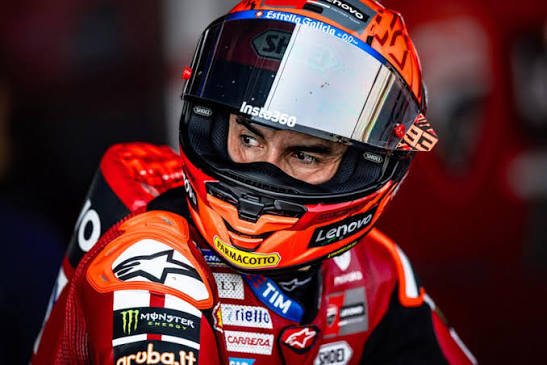
El Rey de Sachsenring no falla, Marc Márquez saca el 37, golpe de autoridad antes del parón de verano y las piernas de sus rivales a temblar durante este mes, Marc ha pasado en un mes de estar de 102 puntos a 18, madre mía.
🚨 IL PODCAST ✍🏻 | Marquez, cosa temono davvero.
C'è un errore che molti continuano a commettere quando parlano di Marc Márquez: pensare che la sua battaglia sia contro Jorge Martín, Marco Bezzecchi o gli altri protagonisti del Mondiale. Non è così. La battaglia più difficile l'ha già combattuta, lontano dalle telecamere, nelle sale operatorie, durante interminabili mesi di riabilitazione, quando il dubbio era diventato un compagno di viaggio e persino salire su una MotoGP sembrava un privilegio anziché una certezza.
Chi crede che il Sachsenring sia semplicemente il circuito dove Márquez ha vinto più volte, non ha capito cosa rappresenti davvero questo fine settimana.
Qui non arriva un pilota in cerca di punti.
Qui arriva un uomo che torna nel luogo in cui, per anni, ha riscritto il significato stesso della parola dominio.
Per questo le sue dichiarazioni colpiscono. Non c'è arroganza, non ci sono proclami, non c'è il Márquez che promette di distruggere gli avversari. «Dopo la pausa estiva capirò dove potrò arrivare», dice.
E ancora: «Non è il momento di difendersi, è il momento di attaccare». Due frasi che, lette insieme, raccontano un campione profondamente cambiato. Non perché abbia perso la velocità, ma perché ha guadagnato qualcosa di ancora più prezioso: la consapevolezza. Sa che un Mondiale non si conquista con le parole. Sa quanto sia fragile una carriera e quanto velocemente tutto possa svanire. È la lezione che gli hanno impartito gli infortuni, una lezione pagata a un prezzo che nessun titolo mondiale potrà mai restituire.
Ed è proprio questo che dovrebbe preoccupare i suoi avversari. Il Márquez più pericoloso non è quello che provoca, sorride e si sente invincibile. Il Márquez più pericoloso è quello che parla poco, osserva molto e aspetta il momento giusto per colpire. Perché la fame che lo muove oggi non nasce dall'ambizione di aggiungere un altro trofeo alla bacheca. Nasce dal desiderio di dimostrare che il destino non ha avuto l'ultima parola. C'è una differenza enorme. Un pilota può accontentarsi di una vittoria. Un uomo che ha rischiato di perdere tutto non si accontenta di essere tornato: vuole dimostrare che il tempo non è riuscito a portargli via la sua essenza.
Il Sachsenring, allora, diventa molto più di una tappa del calendario. Diventa un processo. Da una parte c'è chi sostiene che il motociclismo appartenga ormai a una nuova generazione. Dall'altra c'è un nove volte campione del mondo che continua a rifiutare qualsiasi certificato di fine carriera. Ogni curva sarà una risposta. Ogni sorpasso sarà un messaggio. Ogni giro veloce ricorderà a chi aveva fretta di archiviarlo che esistono campioni destinati a vincere e campioni destinati a lasciare un'eredità. Márquez appartiene alla seconda categoria.
Forse vincerà. Forse no.
Ma c'è una verità che nessuna bandiera a scacchi potrà cambiare. Marc Márquez è già riuscito nell'impresa più difficile della sua carriera: tornare a far paura. E quando un uomo che è sopravvissuto al dolore ritrova anche la convinzione, il Sachsenring smette di essere un circuito. Diventa il teatro dove una leggenda può ricordare al mondo perché, per anni, nessuno è stato capace di fermarla.
Il Mondiale è più aperto che mai.
#MotoGP
One unfortunate side effect of short-form social media content is that it has manufactured a hard binary between science and tradition. One is supposed to pick a team. But the real world has never been that tidy, and the history of vitamin deficiency diseases is a truly illustrative story of why trying to understand the world through social media and assuming content is knowledge is one of the silliest things we do
"Hands off to all of you" அல்ல.
அது "Hats off to all of you".
"Stand such a wonderful" அல்ல.
அது "Stand in front of such a wonderful...".
மூன்று பேரின் பெயர்களைச் சொன்னால், அதற்கடுத்து பயன்படுத்த வேண்டியது 'has' அல்ல, 'have'.
"Any of the sports minister" அல்ல.
அது "Any of the sports ministers".
"have a breakfast" அல்ல.
அது "have breakfast".
அமைச்சர் @Keerthana4VNR அவர்கள் மேடைகளில் பேசும் ஆங்கிலத்தில் பல அடிப்படைப் பிழைகள் இருந்தாலும், திமுக தரப்பில் இருந்து யாரும் அதை ஒரு குறையாகச் சுட்டிக்காட்டி விமர்சிக்கவில்லை. ஏனென்றால், மொழி என்பது வெறும் தொடர்பு சாதனம் மட்டுமே. ஒருவருக்கு மொழியை விடச் செயல்பாடுகளே முக்கியம் என்பது எங்களுடைய நம்பிக்கை.
ஆனால், இவ்வளவு பெரிய பொறுப்பில் இருக்கும் ஒரு அமைச்சர், பள்ளிகளுக்கு ஆய்வுக்குச் செல்லும்போது குழந்தைகளிடம் எப்படிப் பேச வேண்டும் என்கிற அடிப்படைப் பக்குவம் கூட இல்லாமல் நடந்துகொள்வதுதான் வன்மையாகக் கண்டிக்கத்தக்கது.
பள்ளிகளுக்குச் செல்லும்போது மாணவர்களை ஊக்கப்படுத்த வேண்டும். பெண் குழந்தைகளுக்குக் கல்வியின் அவசியத்தை உணர்த்தி அவர்களின் எதிர்காலத்திற்குத் தன்னம்பிக்கை கொடுக்க வேண்டும்.
அதை விடுத்து, மாணவர்களின் தன்னம்பிக்கையை உடைக்கும் வகையிலும், அவர்கள் பள்ளிக்கே வர பயப்படும் வகையிலும் நடந்துகொள்வது ஒரு அமைச்சருக்கு அழகல்ல. மாணவச் செல்வங்களிடம் தாழ்வு மனப்பான்மையை வளர்க்கும் இதுபோன்ற அமைச்சர்கள் பள்ளிகளுக்குள் செல்லாமல் இருப்பதே நல்லது.
குழந்தைகளிடம் எப்படிப் பேச வேண்டும், அவர்களுக்கு எவ்வாறு நம்பிக்கை கொடுக்க வேண்டும் என்பதை தவெக அமைச்சர்கள் முதலில் கற்றுக்கொள்ள வேண்டும்!
Lewis Hamilton has called on the FIA and F1 to implement changes to make motorsport more accessible, citing the "ridiculous" costs of karting ⬇️
https://t.co/VAyJRAyZc4