What a lose. Almost 10 years ago, we (@adamandever) were a couple of teenagers who got to collab with @LupeFiasco and somehow finessed a Genius page for the merch we made. An affirmation at the time that meant the entire world and more. Forever grateful.
https://t.co/EtS90dmWz3
@anothercohen My wife’s aunt makes blackseed and olive oil nasal drops. Happy to send you one to try - may not fix, but has really helped us
https://t.co/WypAlkesgZ
“REP: Town Hall” builds off At Your Service’s 2022 Webby-nominated audio documentary: “REP: A Story About the Stories We Tell,” and will similarly pull on the thread of a question through in-person gatherings in a nostalgic format.
Free RSVP: https://t.co/EiT9AMVGIv
At Your Service is excited to invite you to a very special event this Friday December 15 in Washington DC, called “REP: Town Hall.”
Topic: What Does it Mean to be Free? A candid conversation on: “Truth,” Disinformation and Democracy.
Free RSVP: https://t.co/EiT9AMVGIv
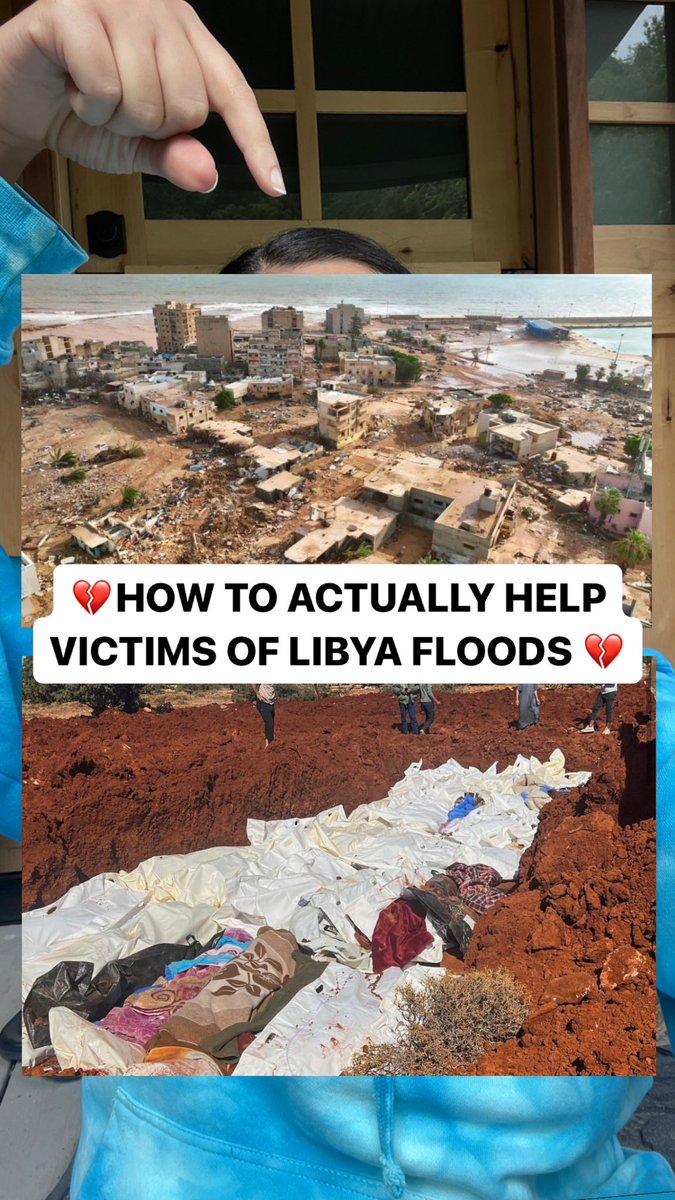
Our ISeeYou Foundation facilitating relief aid directly on the ground in #Libya: medical supplies, diapers, food, medicine, this catastrophe that has left so many of us in a state of shock and horror.
Venmo: @ISYFoundation or
PayPal/Email: [email protected]
TAG/COMMENT MENTAL HEALTH, TRAUMA RESOURCES IN *ENGLISH AND ARABIC,* especially for natural disasters. PLEASE USE THIS AS A COLLECTIVE RESOURCE
I want to connect with mental health professionals who can work on providing trauma relief programs for the younger survivors. ❤️🩹🇱🇾🇲🇦🇸🇩
Our ISeeYou Foundation (https://t.co/XVoc6EMlxb) is getting relief aid directly on the ground in #Libya: medical supplies, diapers, food, medicine, everything needed to move through this actual living nightmare,
Venmo: @ISYFoundation or
PayPal/Email: [email protected]
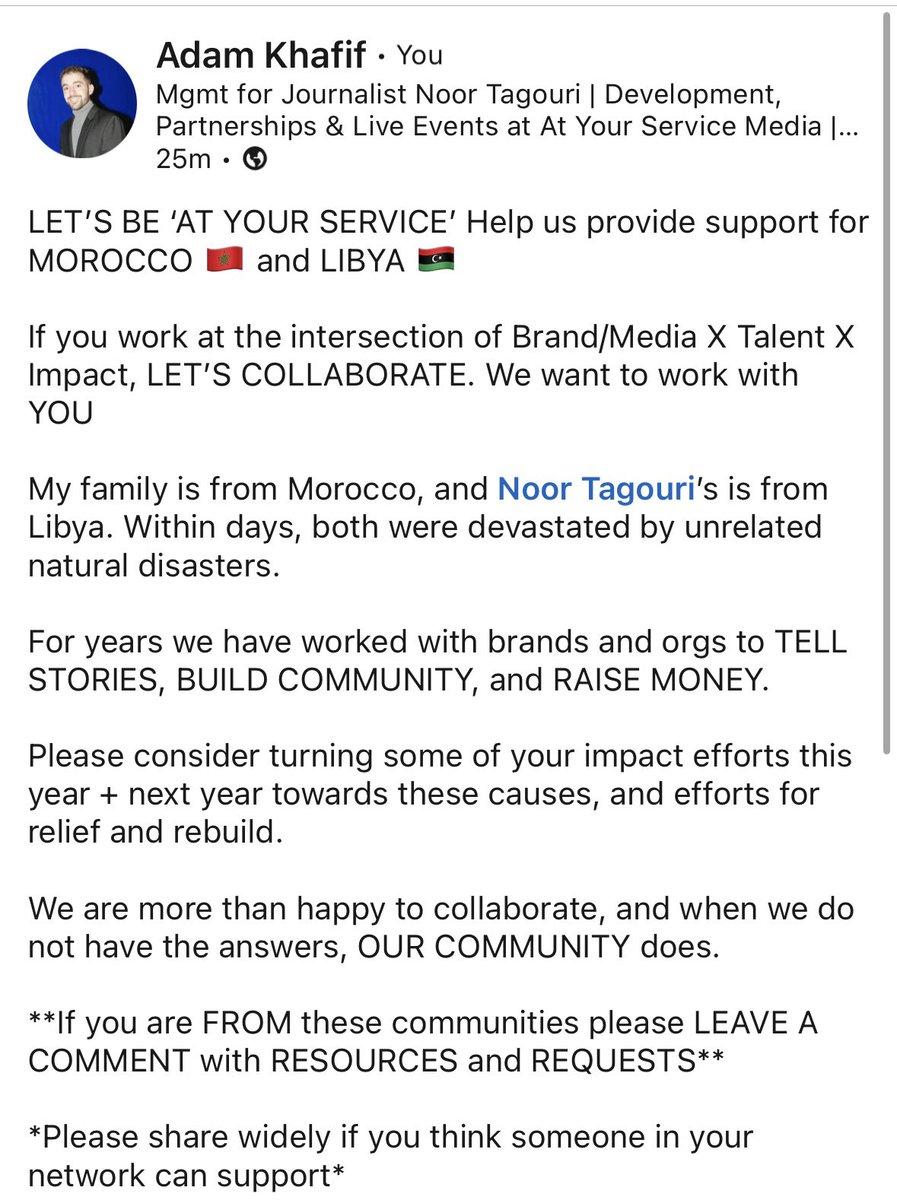
**If you are FROM these communities please LEAVE A COMMENT with RESOURCES and REQUESTS**
*Please share widely if you think someone in your network can support*
Original Post: https://t.co/F6X468Jmta
(THREAD) LET’S BE ‘AT YOUR SERVICE’ to MOROCCO 🇲🇦 and LIBYA 🇱🇾
I recently posted on @LinkedIn to gather resources and network (see next posts), please consider contributing from your network.
Original post: https://t.co/F6X468Jmta
Please consider turning some of your impact efforts this year + next year towards these causes, and efforts for relief and rebuild.
We are more than happy to collaborate, and when we do not have the answers, OUR COMMUNITY does.
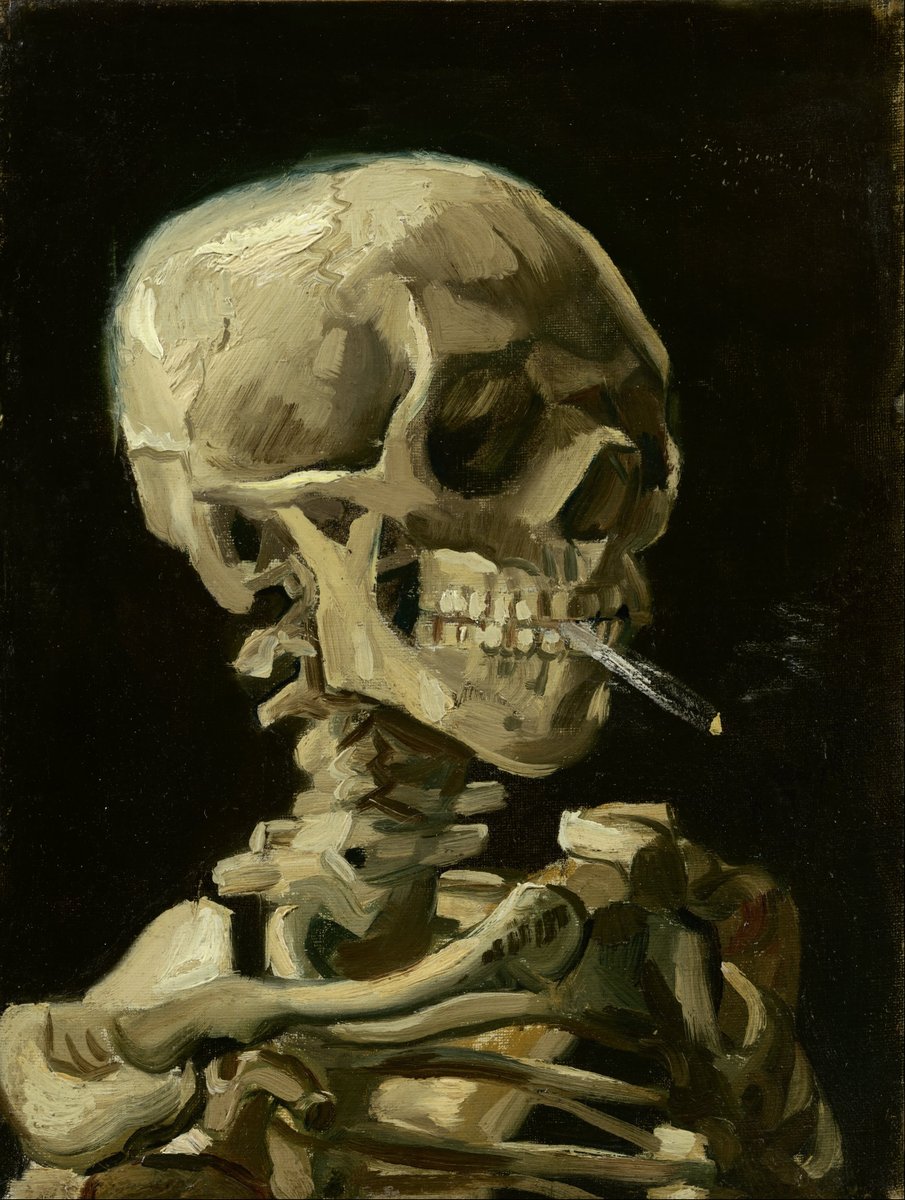
10. Midnight Ride of Paul Revere by Grant Wood (1931)
American Gothic skyrocketed Grant Wood to national fame and lasting success, but it doesn't quite convey the unique style — inspired by Flemish painters of the 15th century — Wood had found for himself, on full display here.
We're so used to seeing and hearing about the pyramids that it's easy to forget how strange and extraordinary they really are.
So, just to remind you:
When woolly mammoths went extinct the Pyramids of Giza were already more than 500 years old.
Cleopatra and Julius Caesar are closer in time to the present day — to the Burj Khalifa — than to the construction of the Pyramids of Giza.
Where are they and who built them?
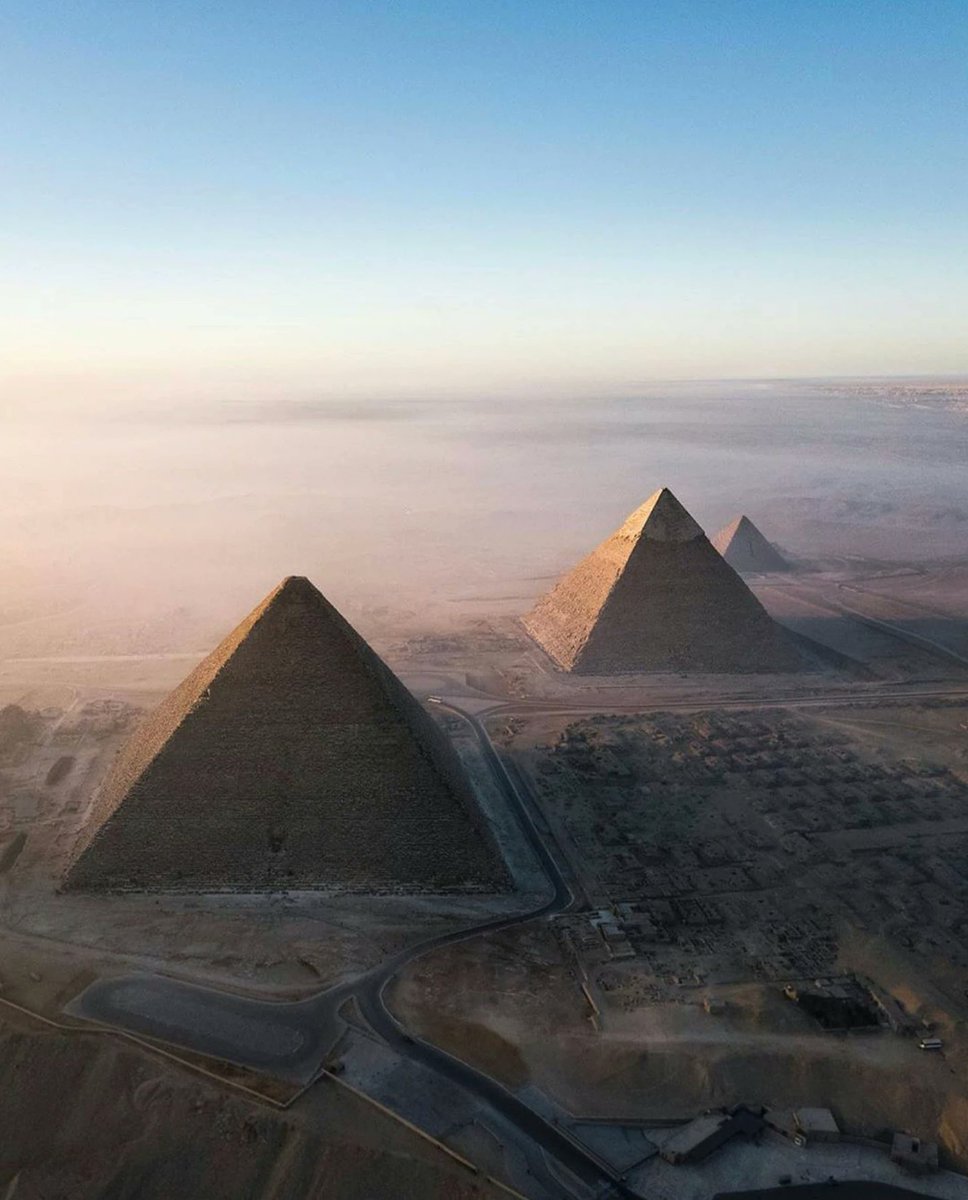
There are three pyramids on the Giza Plateau, which is on the west bank of the River Nile, in northern Egypt. They aren't far from Memphis, which was the capital of Ancient Egypt when they were constructed.
The largest and oldest was built in less than thirty years around 2570 BC for the Pharaoh Khufu. The second was built for Khufu's son, Khafre, and is only a few metres shorter. The third and smallest was then built for Menkaure, Khafre's son. Three monumental tombs for three generations of the same family.
Nearby are many more tombs for various members of the royal court, the Sphinx, several more temples, and the remains of a sort of workers' town including houses, workshops, bakeries, kitchens, breweries, a hospital, and a necropolis.
Khufu's Pyramid, known as the Great Pyramid, was the tallest building in the world for over 3,800 years — that is, until the spire of Lincoln Cathedral in England was constructed in 1311.
And at more than 6 million tonnes it was the heaviest manmade structure ever built, and is still third behind only the Great Wall of China and the Three Gorges Dam.
The mortar used in constructing the Great Pyramid alone weighs over half a million tons, which is more than the total weight of the Burj Khalifa.
See, the Great Pyramid is almost entirely solid — there are only a few narrow shafts and three small chambers inside. It was largely built from huge blocks of local Giza limestone, although its exterior was once covered in polished white limestone transported there from nearby Tura, and its interior includes blocks of granite weighing up to 80 tonnes transported from Aswan, over 500 miles away.
The *precision* of the pyramids is also remarkable. On a technical level their masonry is astonishingly accurate, but even more amazing is that the four sides of the Great Pyramid are all almost exactly the same length — they have a variation of no more than 60 millimetres.
Not to forget that all three pyramids are aligned according to the points of the compass — within one tenth of a degree of perfect geographical accuracy.
And if these facts weren't impressive enough, the actual construction of the pyramids — the specifics of how the blocks were quarried, transported, and lifted into place — remains a marvel we have yet to fully understand.
But those are merely the facts of the Pyramids of Giza; perhaps more interesting is what they really mean.
After all, you can learn a lot about any society from its architecture. What we say about ourselves can rarely be trusted — but what we do and what we leave behind is always truthful. In other words, that which we build expresses our priorities, how our society works, and who has the most power.
Think of it this way: what are the biggest buildings in the modern world?
By volume it is factories (the Boeing Everett Factory is number one right now) and distribution centres.
By total floor space it is airports and malls.
By height it is mixed-used skyscrapers, though they are usually dominated by offices, especially relating to finance. The Pentagon was the world's largest office building until this year; it has been overtaken by the Surat Diamond Bourse in India.
By capacity? Well, there are sports stadiums, the biggest of which is the Narendra Modi Stadium in India, with an official capacity of 132,000. That being said, no single complex can hold a greater number of people than the Masjid al-Haram in Mecca, which has a capacity of 4 million.
So the largest buildings in the 21st century are almost all related to industry, finance, retail, transport, and leisure — with religious worship something of an outlier. This is a technologically advanced, industrial, highly consumerist society in which businesses hold a great deal of power, and in which the wants and demands of the public are very important.
For comparison, during the Middle Ages nothing came remotely close to cathedrals in size or complexity, though castles and fortresses were also far bigger than everything else. We can draw the basic conclusion that religion was of immense and central importance, that the church as an institution was very wealthy, and that power was actually spread out among the hereditary nobility rather than being entirely concentrated in the monarch alone, not to mention the political and spiritual power also held by the church.
So, what about the Pyramids?
The Ancient Greek historian Herodotus remarked that the Pyramids of Giza were proof of how tyrannical a ruler Khufu — or Cheops, as the Greeks called him — must have been. In his native Greece the largest buildings were temples for public worship; the Great Pyramid was a monument to but one man alone, and this shocked Herodotus.
The biggest buildings of the 21st century are all useful. They have a clear and immediate purpose, and usually one which benefits — in some sense — lots of people. A factory produces things we all use, a distribution centre organises our online shopping, an office is a place of work, and a stadium is where we go for entertainment. Our largest buildings are intimately and inseparably related to employment and consumption.
What about the Pyramids? They were tombs for the Pharaohs and they were supposed to last forever. In other words, they had no immediate use or purpose, at least for the living. They served only one person: the Pharaoh — plus his family and closest supporters, though they were buried nearby rather than inside — in his journey through the Afterlife.
So this is not the same as a large and lavish royal or presidential palace; such buildings are designed to be used as a seat of power and administration — by several succeeding generations or leaders.
Meanwhile, all the resources and labour that went into building the Pyramids, which were literally manmade mountains, were for the benefit of one Pharaoh alone, after his life had ended — and, to a lesser extent, those lucky enough to have been buried nearby at the time.
Does that mean Khufu and his descendants were tyrants? In some sense, yes. But there is evidence that those who built the Pyramids were not, as Herodotus thought, slaves, and were instead closer to conscripted workers and freely employed craftsmen who were fairly remunerated for their labour.
See, it wasn't just that Khufu held total political power; he was also the spiritual leader of his subjects, such that their work was fundamentally religious in nature — it might have even helped them achieve a better afterlife.
There was nobody who could refuse Khufu's desire to build the largest tomb in human history, because he was a divinely appointed intermediary between gods and humans; no regulation to stop him, because his will was the law; no limits to his expenditure, because he collected the taxes and owned all the land in the kingdom.
However powerful the world's richest and most influential people might now seem, none of it compares to the power wielded by Pharaohs like Khufu; a power that was political, financial, legal, military, and spiritual — absolute.
And so the Pyramids are a glimpse into a society fundamentally and almost irreconcilably different from that in which we now live, to the earliest epochs of human civilisation, long before democracy and the rule of law, when one man could rule as a god and have mountains built to serve as his personal, eternal monument on earth.
What the hell is an ampersand and why does it look like that?!
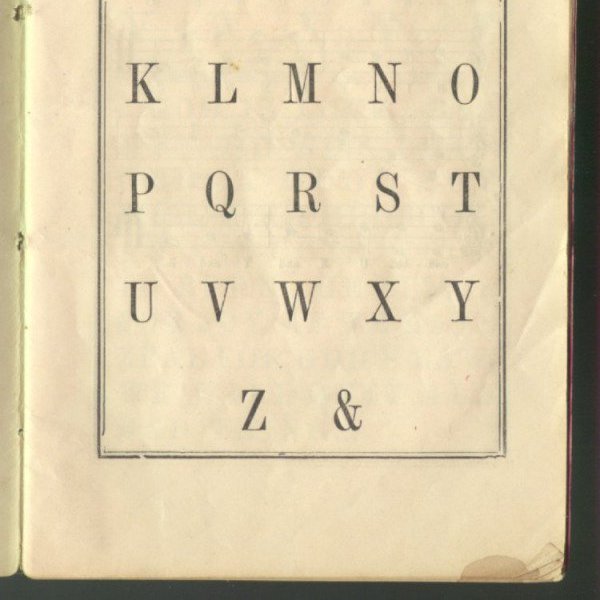
The first thing you need to know is that "&" used to be the 27th letter of the alphabet...
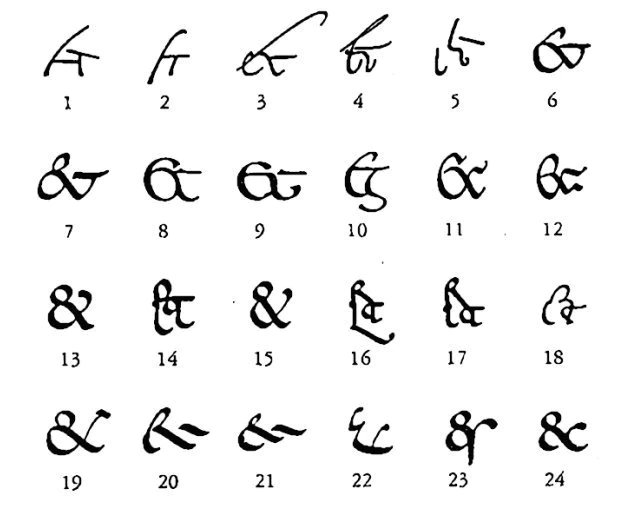
But there are three parts to this story. And the first begins over two thousand years ago in Ancient Rome with a single word: et. It's the Latin for "and". At some point Roman scribes started combining the two letters of et into a single symbol, which was the ancestor of our modern &.
The earliest example of the "et" symbol is actually from graffiti in Pompeii. In any case, it did not disappear with the fall of the Roman Empire.
Latin survived as the language of the Catholic Church and of scholarship in Medieval Europe. Scribes during the Dark Ages continued to use the & symbol. It evolved down the centuries, in places losing any semblance of the letters e and t whatsoever.
The second part of the story is that during the 18th and 19th centuries, as education and the teaching of literacy spread, & was added to the end of the alphabet as a sort of 27th letter.
On a related note, although "et cetera" is now usually just abbreviated as etc., for a long time it was instead abbreviated as "&c". The & was for et and the c for cetera.
The third and final part of the story is about how the alphabet was taught to children — and how it was read out loud.
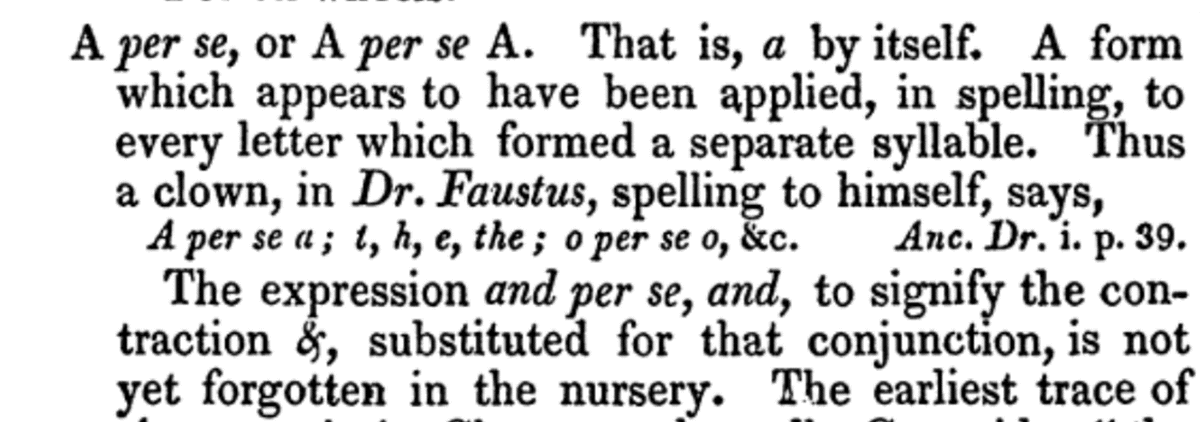
As this 1822 Glossary of Words and Phrases explains, it had been normal during the Renaissance, when speaking the alphabet, to add "per se" before any letter which could also be a word on its own — "per se" means "by itself" in Latin.
Take the letter A, which can also be a word of its own. When reading out the alphabet people would say "A, per se A, B, C, D, E, F, G, H, I, per se I..." and so on. O was also considered a word of its own.
Which means, when people got to the end of the alphabet, with & being the 27th letter, they would say: "S, T, U, V, W, X, Y, Z, and per se &."
When this old way of reading the alphabet was taught to children in the 18th century and they were reciting it aloud, they would garble "and per se " into what eventually became... ampersand.
A Dictionary of Slang and Colloquial English from 1905 relates some of the many other pronunciations school children apparently came up with:
"Ampersand. The sign &; ampersand. Variants: Ann Passy Ann; anpasty; andpassy; anparse; apersie; per-se; ampassy; am-passy-ana; ampene-and; ampus-and; ampsyand; ampazad; amsiam; ampus-end; apperse-and; empersiand; amperzed; and zumzy-zan."
Well, of all the many pronunciations that might have stuck, it was "ampersand" which came to be accepted and is now the official name for &... rather than zumzy-zan. So, from hurried Roman scribes to unruly school children, that's where "&" came from.
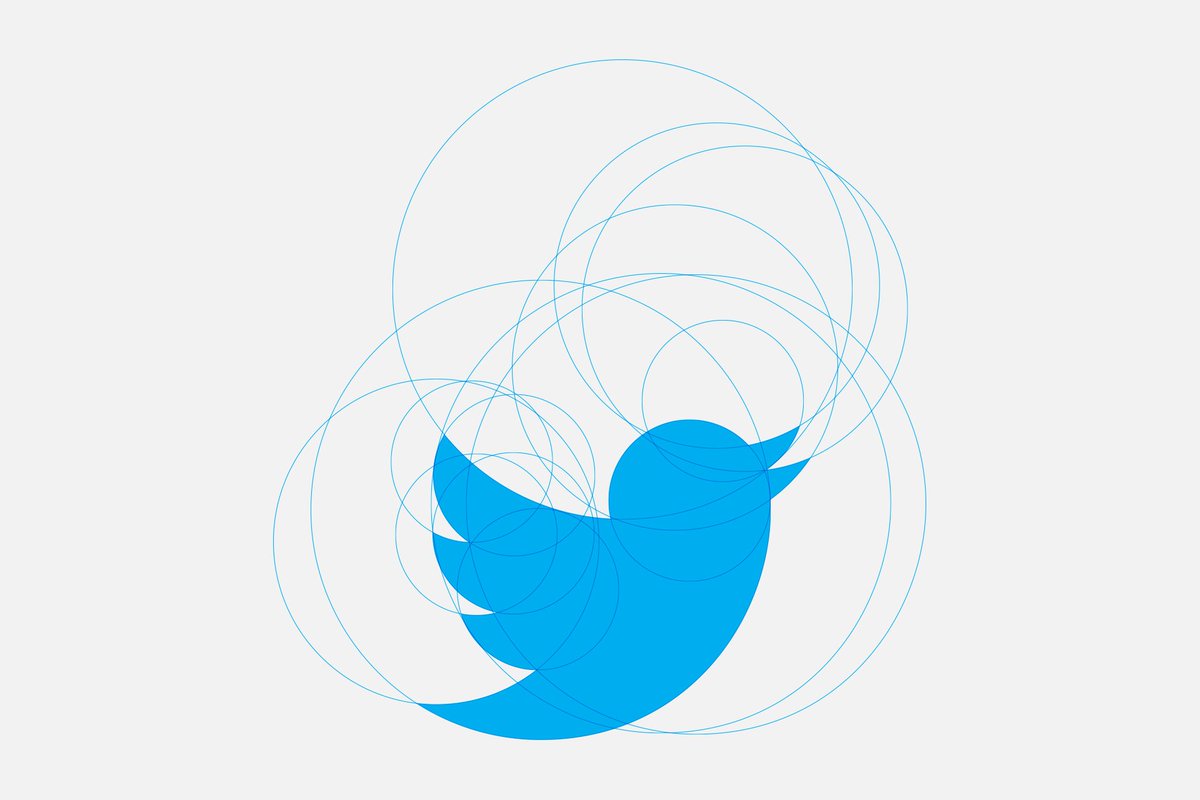
Today we say goodbye to this great blue bird
This logo was designed in 2012 by a team of three. @toddwaterbury, @angyche and myself,
The logo was designed to be simple, balanced, and legible at very small sizes, almost like a lowercase "e", a 🧵