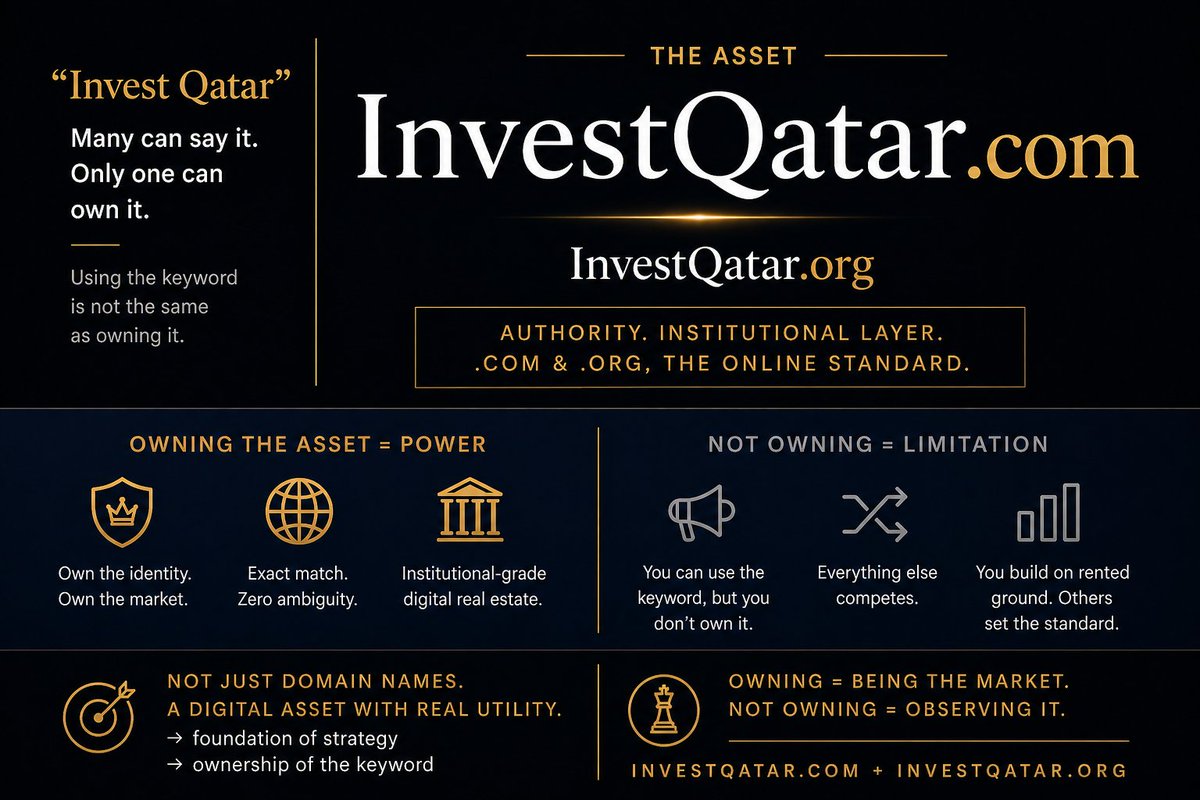
https://t.co/sHgsVhoKJK + https://t.co/oKQZwhoZF5
This is what institutional-grade digital real estate looks like.
.COM & .ORG, the online standard.
I wonder if that could be related to the often very slow loading times of the landing page. I observe that this has something to do with the visitor's network—one visit from one network can result in 10-15-30 seconds loading times, while on another network at the same time the loading is immediate. Surprisingly, I experience quick loading on my mobile 5G network, while my 1Gbps WiFi is where I experience slow loading times most of the time, for months now (this is not a temporary observation, and it’s for all domains, not related to one user). The Spaceship landing page is the only one where I observe such a delay; no other website causes such a lag. I emphasize that this is not a network speed issue—1Gbps, effectively 800-900Mbps, with latency of 12 ms idle and 48 ms under download load (confirmed now). Maybe it has something to do with other visitor checks or traffic filtering. But the point is that if that happens to one network, there may be others. Perhaps that would also explain why as many as 74% sales occur via search of NC+SS registrars. @spaceship
I like your approach @Almaadeed, making the domain name the center of the X identity. It brings together branding, authentication, and digital ownership.
I do exactly the same, as my professional and investing life revolves around domains. Brands, organizations and marketers should learn from it.
The best buyers for premium domains, the most serious ones with the largest budgets, come via WHOIS inquiries.
Not via one lander being slicker than others, not via one boost being more boosted than others, not via one broker being more magical than another simply handing over price information to an inquirer.
Just real demand. Initiated by a buyer.
Is the value of domain tokenization and its trading volume going to come from shitcoin-like social media postings and "buyers" attracted that way? Good luck with that.
Real buyers find premium domains through major registrars, then proceed directly there, sometimes reaching out via WHOIS or simply through type-in. That's real demand and a real market.
@djkabzx@DInvesting@AGreatDomain@afternic Probably for the same reason, over the years vast majority of domains used to be appraised in the $1k–$2k range, both in auctions and in the customer UI, to get bids (auctions) or renewals (UI appraisal). No proof, of course, just a speculative opinion.
Serious companies like @afternic and @GoDaddy have mastered the processing of domain sales, transfers, and the efficient delivery of premium domains to buyers. The wheel has already been invented; there is no need to reinvent it. It’s ready to be used in all next-generation vehicles.
I've spent more than 20 years in the domain industry.
Recently I had another discussion regarding domain portfolio tokenization.
I'm not opposed to the concept. But I am not buying it blindly, as I've already seen and experienced a lot in the domain business.
In fact, if tokenization genuinely creates liquidity, expands the buyer pool, or unlocks value for domain investors, I am sure every domain investor should be very interested.
But after some discussion, I still have rather serious doubts.
I'm sharing them as separate topics and would genuinely welcome views from both domain investors and crypto market participants.
@davy_onchain When a founder launches a new startup, project, or campaign, does it really matter whether he gets a domain in 1 hour or 1 day? No, it doesn’t.
I've spent more than 20 years in the domain industry.
Recently I had another discussion regarding domain portfolio tokenization.
I'm not opposed to the concept. But I am not buying it blindly, as I've already seen and experienced a lot in the domain business.
In fact, if tokenization genuinely creates liquidity, expands the buyer pool, or unlocks value for domain investors, I am sure every domain investor should be very interested.
But after some discussion, I still have rather serious doubts.
I'm sharing them as separate topics and would genuinely welcome views from both domain investors and crypto market participants.
One of the first publicly shown pieces of evidence of rejection based on a subjective liquidity assessment.
@4Ldotcom
So who actually needs whom? Do domains need tokenization to increase liquidity, or does tokenization need liquidity to barely exist?
https://t.co/R72VOp3wsK
My personal experience with @domaprotocol.
I decided to test the protocol because the idea sounded pretty attractive: unlock liquidity from a domain while still keeping the possibility of selling the underlying domain later at a reasonable price, with token holders participating in the outcome.
For the test, I tokenized caqo .com, a CVCV .com domain, transferred it to a Doma-compatible registrar, and launched it on the Launchpad with a $10,000 floor price / buyout floor. Unfortunately, the launch ended with the status: "did not reach the graduation threshold"
So I decided to lower the valuation and try again. I reduced the floor price to $5,000 and submitted another Launchpad request. Today I received an email saying that my Launchpad submission was not approved for the following reason:
"This domain was not selected at the current price and/or FDV values. Please feel free to resubmit with adjusted values"
So apparently, $5,000 for caqo .com - a real CVCV .com domain with actual brand value and realistic end-user resale potential - is too much.
But hype-driven speculative meme-domain junk like wgmi .ai showing a $30,000 Floor FDV in the app is perfectly fine.
Even worse, Doma's official X account promoted the wgmi .ai Launchpad heavily, with more than 4 posts around it, while caqo .com received exactly zero mentions. That is the part I find hard to take seriously.
This is not just about one rejected Launchpad submission. It makes the selection and promotion process look inconsistent and heavily biased toward hype narratives instead of actual domain quality.
My takeaway so far: in its current form, I see very little reason to use the platform for domains with real resale potential. It may make sense for trying to offload speculative .ai, .io, meme-style names, and other low-quality inventory junk - but if a fairly priced .com with real value gets rejected while a $30,000 meme-domain FDV gets promoted by the official account, something about the model feels broken.
This is strictly my personal opinion and my own experience. I am not advising anyone to take or avoid any action. But as of now, this has been my experience with the platform.
The demand question
After all the discussions about domain tokenization, I keep returning to the same question:
Does tokenization create demand?
Not token creation. Not fractional ownership. Not blockchain.
Demand.
If a domain has no buyer today, does putting it on-chain create one?
If a portfolio or a domain struggles to attract investors today, does tokenization change that?
The technology may work perfectly.
But demand has always been the hardest part of the domain business.
Everything else is secondary.
In fact, demand seems to be the problem tokenization appears to assume rather than solve.
If a domain or a portfolio does not show evidence of strong demand, it looks like the operators of tokenization platforms will not welcome such an asset.
And if tokenization platforms only welcome highly liquid domains (liquid, so probably underpriced), what is the actual value for the owner if the asset already has the required liquidity?