miam miam. Le code source de Claude a fuité.
Festin.
J'ai analysé le source leak de Claude Code. Ce qu'Anthropic construit en secret est bien plus fou que ce qu'ils annoncent.
Claude Code n'est pas un assistant de code.
C'est un OS pour agents.
Voici ce qui se cache derrière les feature flags.
Il y a une variable dans tout le codebase :
if (USER_TYPE === 'ant') return true
Les employés Anthropic ont accès à TOUT. Kairos, Advisor, multi-agents, sandbox. Vous utilisez la version démo. Eux utilisent le vrai produit.
-> KAIROS : l'agent qui agit sans qu'on lui demande.
> Il se réveille seul (SleepTool)
> Il vous notifie (PushNotificationTool)
> Il vous envoie des fichiers (SendUserFileTool)
> Il distingue ses messages "normaux" de ses alertes "proactives"
Claude qui tape sur votre épaule quand il a fini. Pendant que vous dormez.
-> ADVISOR : un Claude qui surveille Claude.
Un second modèle tourne en parallèle du modèle principal. Il observe. Il peut interrompre. Il injecte des corrections via des blocs API non documentés publiquement (advisor_result, advisor_redacted_result).
Un méta-Claude. En prod. Maintenant. Pour les ants.
-> PLAN MODE V2 — le nombre d'agents parallèles est tiérisé par abonnement.
Free/Pro : 1 agent
Max 20x / Enterprise / Team : 3 agents
Vous payez pas juste pour des tokens. Vous payez pour combien de Claudes travaillent en même temps pour vous.
-> Le mot ultraplan dans une conversation déclenche une session spéciale côté serveur.
Un keyword magique. Dans le code. Hardcodé. Qui change le comportement du modèle.
-> SANDBOX : @anthropic-ai/sandbox-runtime,
Un package npm interne. Restrictions filesystem, réseau par host pattern, callbacks sur violation.
Anthropic peut faire tourner Claude dans un environnement totalement isolé.
L'infrastructure pour des agents en prod dans des environnements hostiles existe déjà.
-> WILLOW MODE : Claude sait quand vous revenez après une longue absence.
Context > 100k tokens + 75 min d'inactivité = il détecte votre retour.
Trois variantes A/B : dialogue bloquant, hint discret, hint v2.
Il gère la reprise de conscience de la conversation.
-> BRANCH : /branch fork une conversation à n'importe quel point. Nouveau sessionId. Champ forkedFrom pour tracer la parenté.
Git. Mais pour des conversations avec une IA.
-> Et le easter egg : un système d'animaux de compagnie ASCII avec des raretés (common → legendary), des chapeaux, des stats nommées.
Les espèces sont obfusquées en hex dans le source pour ne pas apparaître dans les grep de canary strings des builds.
Ils ont caché un Tamagotchi dans Claude Code. Avec soin.
Ce que tout ça dit vraiment :
Anthropic ne construit pas un meilleur chatbot. Ils construisent un système d'exploitation pour agents avec scheduling, isolation, fork de contexte, supervision inter-agents et boucles proactives autonomes.
Le produit que vous voyez est le tutoriel.
@MistralAI faites un mix de ce bijoux avec Qwen et épatez-nous.
I'm Boris and I created Claude Code. Lots of people have asked how I use Claude Code, so I wanted to show off my setup a bit.
My setup might be surprisingly vanilla! Claude Code works great out of the box, so I personally don't customize it much. There is no one correct way to use Claude Code: we intentionally build it in a way that you can use it, customize it, and hack it however you like. Each person on the Claude Code team uses it very differently.
So, here goes.
> Asks if 'if err != nil' is really that bad
> Screenshot example shows accidental fallthrough from error case to success case
Do we really need to discuss further?
At @framer, we've made React hydration 50%+ faster for lots of sites when using Suspense to fetch data.
The surprising part: We did that by... adding more Suspense tags.
Why does it make hydration faster? Let's explore🔎:
Okay, listen. If you're going to fetch in useEffect(...), you should at least make sure that you're handling:
- Loading states
- Error handling (rejections & HTTP error codes)
- Race conditions & cancellation
This isn't over-engineering. It's the minimum code to prevent bugs.
If you care about security for your NextJS app, stop using top level "use server" - it's way too easy to leak data
Top level "use server" creates endpoints for all exported functions, even if they are never used on the client
One accidental export can cause a ton of damage
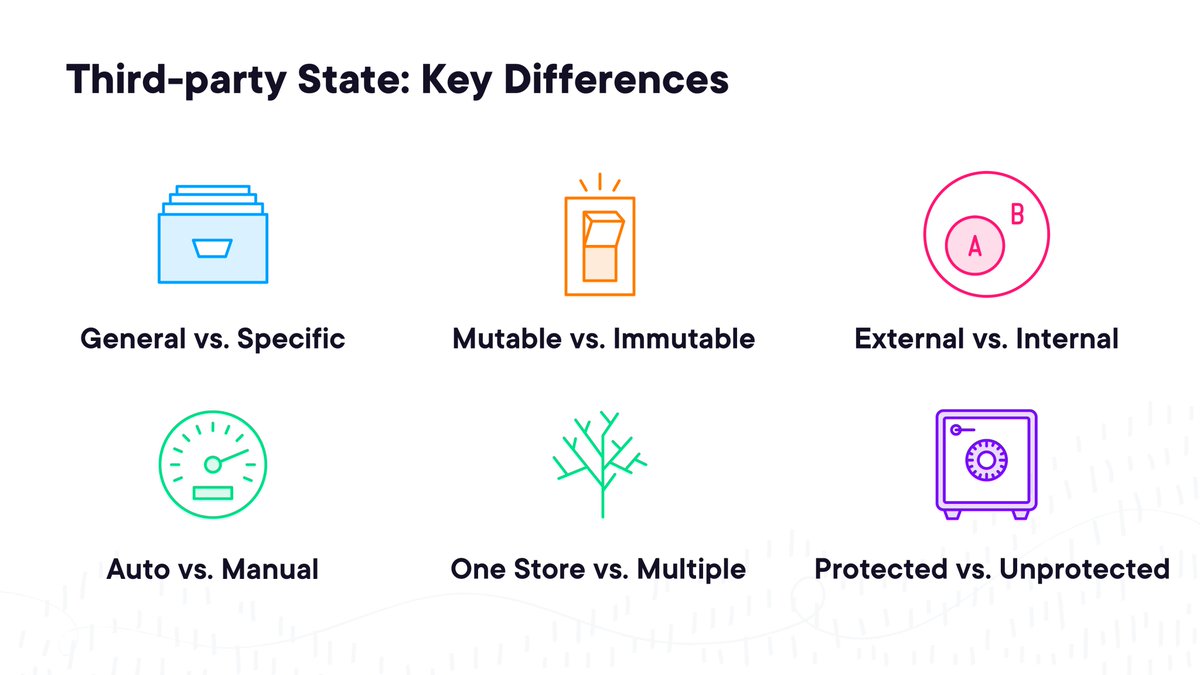
Problem: Choosing a React state library is hard.
Solution: Consider the tradeoffs.
Here are 6 key tradeoffs, with examples:
1. General vs Specific
General: Redux, Zustand, Jotai.
Specific: React Query, Apollo. These are specifically designed for handling data fetched via HTTP.
2. Mutable vs Immutable
Immutable: Redux, Zustand. Like plain React, you must provide an updated copy of state instead of mutating state.
Mutable: Valtio, React Query. You can directly mutate state/cache.
3. External vs Internal
External: Redux, Zustand, Jotai. State can be accessed outside React.
Internal: Some state solutions are only available inside React components via hooks. React's built-in context is an example.
4. Auto vs manual render optimization
Auto: Mobx and Valtio automatically optimize renders.
Manual: Many other tools like Redux and Zustand require manual render optimization (for instance, via selectors).
5. One store vs multiple
One store: Redux (typically), React Query.
Multiple stores: Zustand, Jotai, Valtio.
6. Protected vs unprotected
Protected: Redux, Zustand. You expose a "coarse grained" API that decides how it can be changed.
Unprotected: Jotai, Valtio. Callers can change the state in any way.
Hey you - with the big React Router app - you should check out the new "Fog of War" feature released in v6.24.0 yesterday which allows effectively infinite scale for your app.
It's also very useful in micro-frontend and module-federation architectures.
https://t.co/A2a9xCgc7m
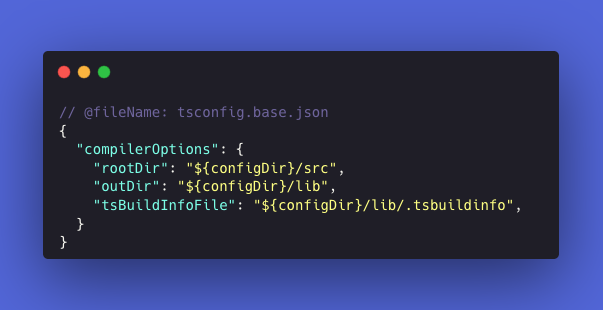
Great news for those extending base TypeScript configs
Soon we should be able to use relative paths to the "final" config file
${configDir} placeholder
Previously it was confusing, and you had to duplicate many fields in the child configs to use relative paths
Introducing Elysia 1.0「Lament of the Fallen」
Featuring:
- Sucrose - Rewritten static analysis
- Improved startup time up to 14x
- Remove ~40 routes/instance limitation
- Faster type inference up to ~3.8x
- Eden Treaty 2
- Strict response error check
↓ Link below ↓