The heatwave scorching western Europe is the most severe and widespread ever and is only possible due to the climate crisis driven by fossil fuel burning, scientists have said.
In summer 2022, more than 60,000 people died due to heat in Europe.
Almost half of Europe’s 850 largest cities are also enduring their worst ever heat stress, a combination of temperature and humidity, they found. Muggier conditions mean sweating is less effective at cooling the body, making heatwaves even more dangerous.
The analysis comes as the UK recorded its hottest ever June temperature on Thursday, 36.7C (98.06F) in Somerset, and much of western Europe recorded a sharp rise in medical emergencies, including some deaths.
In summer 2022, more than 60,000 people died due to heat in Europe. The statistical analysis needed to assess the impact of the current heatwave will take time to complete. Nonetheless, the heatwave is certain to exact a heavy toll and is also disrupting lives and livelihoods, with schools closed, hospitals struggling and rail and air journeys cancelled across the continent.
The new analysis by scientists from the World Weather Attribution (WWA) consortium shows how rapidly extreme heat is worsening as carbon pollution continues to pile up in the atmosphere. As recently as 2003, a heatwave like the current one in Europe would have been 2C cooler due to the lower level of global heating at the time. In 1976, another famous heatwave year, it would have been 3.5C cooler.
The sweltering night-time temperatures currently harming people’s sleep are about 100 times more likely today than in 2003. The scientists warned that without urgent climate action, future heat conditions would get even more extreme and the current summer could seem relatively cool in retrospect.
“This is the most severe and widespread heatwave to have ever affected this large a region of Europe,” said Dr Theodore Keeping, an extreme weather research associate at Imperial College London and part of the WWA team. “We found that in the last 50 years, during which time the planet has warmed by 1.1C, the chance of a heatwave like this has changed immensely. This event would not have been possible in June without climate change. But do we expect this to be a cool summer going forward? That’s absolutely the case.”
He said many capital cities were experiencing not only their hottest recorded three-day period in June but the hottest three-day period at any time of year. At least 100 million people in Europe were expected to face temperatures above 35C on Thursday.
The scientists used wet bulb globe temperatures to assess the additional impact of high humidity. “It accounts for the ability of the human body to cool itself down. With the worst conditions ever experienced in 45% of cities over 50,000 people, the health impacts of this heatwave are likely to be extremely high,” Keeping said. “The speed of change is startling.”
Commenting on the WWA analysis, Simon Stiell, the UN’s climate chief, said: “Climate change is running rampant, caused by the world’s addiction to burning coal, oil and gas. But the solutions are equally clear: a faster shift to clean energy – which is now much cheaper than fossil fuels – as well as protecting forests and building climate resilience.”
The WWA team used both observed and reliable forecast temperature data to analyse the hottest three-day period across a large area of western Europe, which is sitting under a “heat dome”. Using peer-reviewed methods, they found unequivocally that climate change was the driving force behind the severity of the heat.
They ruled out natural variability of the weather, in particular any influence from the El Niño event that has begun in the Pacific Ocean. The current weather pattern, a blocked high-pressure system trapping hot air over Europe and drawing warm air up from the Sahara, is not unusual in summer. Instead, the level of heat has been supercharged by global heating.
https://t.co/6M02wTjaHe
The Last Time the World Ran Out of Cheap Oil, It Took a Decade to Recover
The 1970s were supposed to be the decade of American confidence. The moon landings were fresh. The economy had boomed for thirty years straight. Then someone turned off the tap.
In October 1973, Arab members of OPEC announced they would no longer sell oil to the United States. The reason was simple: Washington had backed Israel in the Yom Kippur War. The punishment was swift. Oil prices quadrupled in weeks. Gas stations ran dry. Lines stretched around city blocks, sometimes for hours, sometimes for nothing. The government told people to turn down their thermostats and banned Christmas lights to save energy. In the world’s richest country, people were rationing fuel like it was wartime. It was.
The second shock came six years later, and this time nobody even needed an embargo. The Iranian Revolution in 1979 toppled the Shah, paralyzed one of the planet’s biggest oil producers, and sent prices into freefall upward again. Inflation exploded. Interest rates followed. The US economy slid into a recession that wiped out jobs and savings across the western world.
What the 1970s proved, at enormous cost, was something geologists and strategists had been saying for years: industrial civilization doesn’t run on ingenuity or military power or democratic values. It runs on oil. And the countries sitting on top of it had just figured out they could use that as a weapon.
Stay connected,
Follow Gandalv @Microinteracti1
Overview and Pathophysiology of Long COVID
🚨200–400 MILLION people worldwide are crippled by Long COVID. That's not a 'mild' virus aftermath, it's multi-organ destruction that persists for years. Wake up. #LongC0vid
➡️Authored by @elisaperego78 , a Long COVID patient-researcher and advocate (with lived experience of chronic illness), it brings authenticity and depth rarely found in traditional academic reviews, blending rigorous synthesis with real-world urgency.💪👏
➡️Summary:
1. Long COVID affects an estimated 200–409 million people globally, with pooled prevalence around 36% across studies. Risks persist across all ages, even in mild/asymptomatic or vaccinated/Omicron cases, though attenuated by vaccination,
2. It is a heterogeneous, multi-system condition involving dozens of symptoms (e.g, fatigue, brain fog, dyspnea, pain) that evolve over time, often relapsing, with potential for subclinical damage, disability, and increased mortality,
3. Major pathophysiological mechanisms include viral persistence in tissues, immune dysregulation (e.g, lymphopenia, T-cell exhaustion, autoantibodies, complement issues, mast cell activation), autoimmunity, endothelial dysfunction, micro/macro-thrombosis (including fibrinolysis-resistant microclots), chronic inflammation, microbiome dysbiosis, and reactivation of latent pathogens,
4. Organ-specific involvement is widespread: cardiovascular/endothelial (e.g, vasculopathy, accelerated aging, perfusion defects), heart (myocarditis, arrhythmias, ischemia), lungs (fibrosis, thrombosis, perfusion abnormalities), CNS (neuroinflammation, Gray matter loss, BBB disruption), PNS (neuropathy, dysautonomia/POTS-like), GI (dysbiosis, barrier impairment), hepatobiliary/pancreas (injury, new-onset diabetes), kidney (progression to CKD, thrombotic microangiopathy),
5. Evidence draws from imaging (e.g, CMR showing up to 78% cardiac involvement post-mild infection), histology/autopsy (viral presence, thrombi, NETs), and large meta-analyses (e.g, 97 million people showing elevated autoimmune disease risk),
6. Challenges include heterogeneous case definitions (WHO, NICE, etc.), limited biomarker access, surveillance gaps post-2022, and reinfection contributions.
➡️‼️In short, this isn't just another review, it's a patient-powered wake-up call exposing Long COVID as one of the most complex, widespread, and under-addressed biological crises of our era.
‼️So, Long COVID represents a profound, enduring public health crisis driven by persistent viral and immune-mediated multi-organ destruction, with no resolution in sight without urgent, scaled-up research and intervention. #WAKEUP #AvoidSars2 #AvoidReinfections
Friend who managed to avoid covid for five years fell ill two days ago. Test was negative
They retested today, it's positive
Labour spent the early part of the pandemic rightly criticising the Conservatives mishandling of covid
And now in government, Labour are doing the same
Boosters should be available for all who want one on the NHS, and a policy of clean indoor air ought to be rolled out everywhere
There are 50x more hospitalisations right now with covid than with flu
Labour have dropped the ball on covid, and it's the British public's health and productivity that suffers and will continue to suffer
According to estimates @UKHSA, 1 in 57 people were infected with COVID in England to 5th Oct.
Why aren’t you giving the public advice on how to avoid infection?
Why aren’t you telling the public about long COVID?
Why have vaccines been severely restricted?
🚨 BREAKING: Labour MPs back calls to restore NHS Covid vaccines for all Clinically Vulnerable people!
After pressure from CVF members and supporters - a rapid U-turn appears to be underway.
WELL DONE!
#KeepCovidBoosters campaign a HUGE success!
Many thanks to @BeccyCooper4Lab
It will, almost certainly cost lives, and pile extra unnecessary pressure on a beleaguered Health Service.
Ultimately the responsibility will fall on the Health Secretary and whoever has advised him.
So Who's Your Enemy? Don't Be Distracted:
What percentage of global wealth does the richest 1% of the global population own and How Does This Affect The Living Standards Of The majority Population?
As of early 2025, the world's richest 1% owns almost half of the global wealth, while the poorest 50% owns just 0.75%. According to a January 2024 Oxfam report, the world's five richest men doubled their fortunes since 2020, while five billion people became poorer.
This extreme concentration of wealth affects the living standards of the majority population in several profound and interconnected ways.
Effects On Economic Stability:
Deepens financial fault lines: Some economists argue that vast economic inequalities make financial crises more likely. In their effort to compensate for stagnating purchasing power, lower- and middle-income households may take on more debt, inflating asset prices and increasing economic instability.
Slower Economic Growth:
Higher inequality is associated with lower economic growth over the medium term, as the benefits of growth do not "trickle down". This is partly due to inequality limiting aggregate demand and reducing investments in human capital, such as education, for the majority of the population.
Fueling Corporate Power:
Growing corporate profits, often driven by monopoly power and connections between the ultra-wealthy and governments, allow businesses to accumulate more wealth at the expense of working people. This includes setting below-living wages and lobbying for policies that favor the wealthy.
Effects On Social Cohesion And Democracy:
Erodes Social Trust: Research indicates an inverse relationship between income inequality and social cohesion. In more unequal societies, people are less likely to trust each other, and social capital—or community involvement—is lower.
Decreases Participation: Higher income inequality leads to lower social, cultural, and civic participation among the less wealthy. As the wealth gap grows, a sense of hopelessness can set in, leading people to feel less empowered to engage in and change the economic system.
Political Instability: Extreme inequality can lead to political instability and distrust of government and business. The wealthy can use their influence and resources to lobby for policies that protect and increase their wealth, creating a cycle of inequality.
Effects On Life Chances
Worsened Health Outcomes: People with higher income and greater wealth tend to be healthier. Conversely, high inequality is associated with worse population health, including lower life expectancy and higher infant mortality rates. Wealth provides a safety net that helps people afford food, good housing, and a safe environment, all of which are protective factors for health.
Education Disparities: A child's socioeconomic background and location strongly correlate with their educational outcomes. Economic inequality limits the educational opportunities for disadvantaged children, perpetuating the cycle of inequality across generations.
Increased Poverty: Extreme wealth concentration undermines the global fight against poverty. The wealth accumulated by the richest can be used to fund social programs, but instead often contributes to widening the gap between rich and poor.
Environmental Effects
Disproportionate carbon footprint: The consumption patterns of the wealthiest individuals result in significantly higher carbon emissions. According to Oxfam, billionaires emit millions of times more carbon than the average person and disproportionately invest in polluting industries.
Climate Injustice: While the richest contribute the most to climate change, the poorest populations are the most vulnerable to its effects, such as floods and droughts. The wealthy, meanwhile, have the resources to protect themselves from the worst impacts.
#USA #UK #CostOfLiving #HealthCare #Housing #FollowTheMoney #Money #Distraction
@UKHSA As a T1 diabetic with complications, you say I'm vulnerable to flu but not Covid. How does that work when 1 in 5 of those dying of Covid even now are diabetic? Many of us work in high risk roles & need these Covid vaccines. We're only eligible for flu now; https://t.co/v5TsA7ODmf
Let's say you're a dairy farmer. You have 100 cows. Each year, about 5 cows die, and another 5 cows are born. Then, along comes a virus. Let's call it "cowvid"...
1/
As a govt are you listening or just burying your heads in the sand. You need to step up. This is unacceptable for the vulnerable people who you should be protecting. @Keir_Starmer
This policy risks lives, worsens inequality & adds pressure to the NHS.
Flu vaccines remain free for at-risk groups - Covid vaccines should be too.
3/4 #KeepCovidBoosters
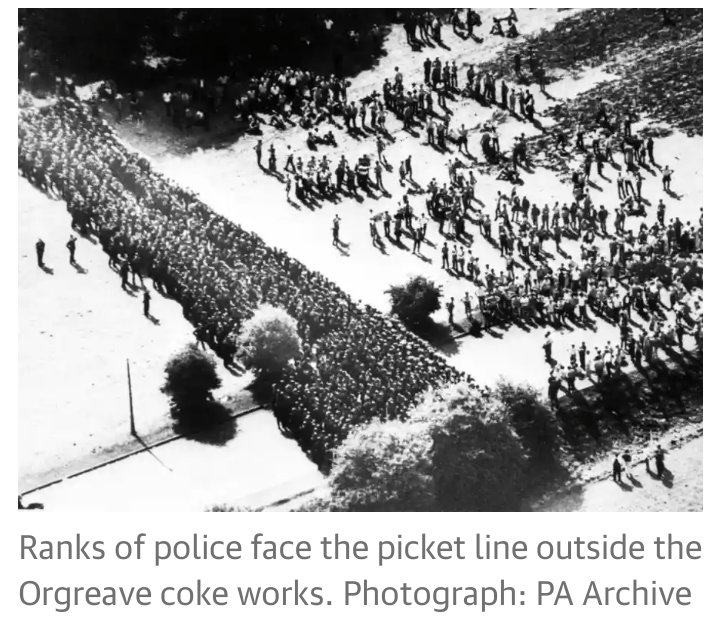
Never forget the @BBC reversed their footage taken at Orgreave, to make it look like the miners in shorts and t. shirts had attacked the police.
It was the other way around.
They admitted it much later but never apologised.
Let's hope the Orgreave enquiry looks into that too.
*FREE UEFA B Licence Application Pack*
(100+ coaches on LinkedIn have already received this)
"I don't know if I will get in this year? It's so hard!"
As coaches wait for the UEFA B Licence applications to open, I hear this from coaches every week.
No idea what the FA are looking for.
Rejected 4 years in a row.
So, I have designed a "done for you" winning UEFA B Licence application pack (and it’s 100% free!).
Just reply with the word, "WIN" or retweet to receive the free pack in your DMs...
@lcfcjd The most important thing for RVN to do was to play defensive and counterattacking football. Should have been aiming for draws to build confidence. Instead we just need wins. No confidence. Brentford hardly tried tonight