There’s a pretty interesting leverage strategy 👀
Users can supply $crvUSD into the $sfrxUSD LlamaLend V2 market, use the resulting lending position as collateral on Resupply to borrow $reUSD, and then deposit that into sreUSD.
The $sreUSD position can then be used as collateral to borrow more crvUSD.
That crvUSD can be supplied again, allowing the strategy to be repeated.
Pretty dope.
I’ve been looking more closely at the Coinbase Tokenized Stocks launch on Aave V4, and I think this is a pretty meaningful step for how tokenized equities can actually be used onchain.
V4 on Base now lets users deposit AAPLc, AMZNc, GOOGLc, METAc, MSFTc, NVDAc and TSLAc as collateral and borrow USDC against them. So you can hold exposure to a tokenized equity position while accessing liquidity against it, rather than having to sell the position to get that liquidity.
The part I like here is how much of the infrastructure is already being connected around it. The underlying shares are held with Alpaca Securities in segregated custody, Chainlink provides the tokenized equity pricing, and Aave handles the lending market and risk parameters. The tokenized stocks also account for things like dividends and stock splits through the token multiplier, so there is a lot more going on underneath the surface than simply putting a stock price onchain.
Right now it’s a relatively small starting point with seven stocks and USDC as the borrow asset. But Aave already says more Coinbase Tokenized Stocks and $GHO are expected to be supported over time, with supply and borrow caps adjusted as liquidity and market depth develop.
That’s the direction I find worth watching.
Once tokenized equities can move through lending, collateral and liquidity infrastructure like this, their role onchain starts to change. They become assets that can actually be used within financial markets, and @aave is taking a pretty direct step in that direction with V4.
Aavesome👻
A new proposal on @CurveFinance is looking to activate a stETH/WETH LlamaLend V2 market on Ethereum.
stETH has a ~$26B market cap with 2.2–3% staking yield, while similar Morpho markets have around $130M in ETH borrowing at ~2% borrow rates.
Curve already has around $130M of stETH/ETH liquidity. The proposed market would have a 10,000 ETH / $20M max borrow cap, using similar parameters to the existing stETH/WETH LlamaLend market on Optimism.
I love how V2 is moving, with markets like $sfrxUSD already live on Ethereum and stETH/ETH now being proposed👀
JUST IN: The Federal Reserve requests public comment on two proposals to establish a regulatory framework for payment stablecoin issuers under the GENIUS Act.
As a stablecoin issuer, @fraxfinance built $frxUSD on that ethos, designed from day one meet the GENIUS Act standard.
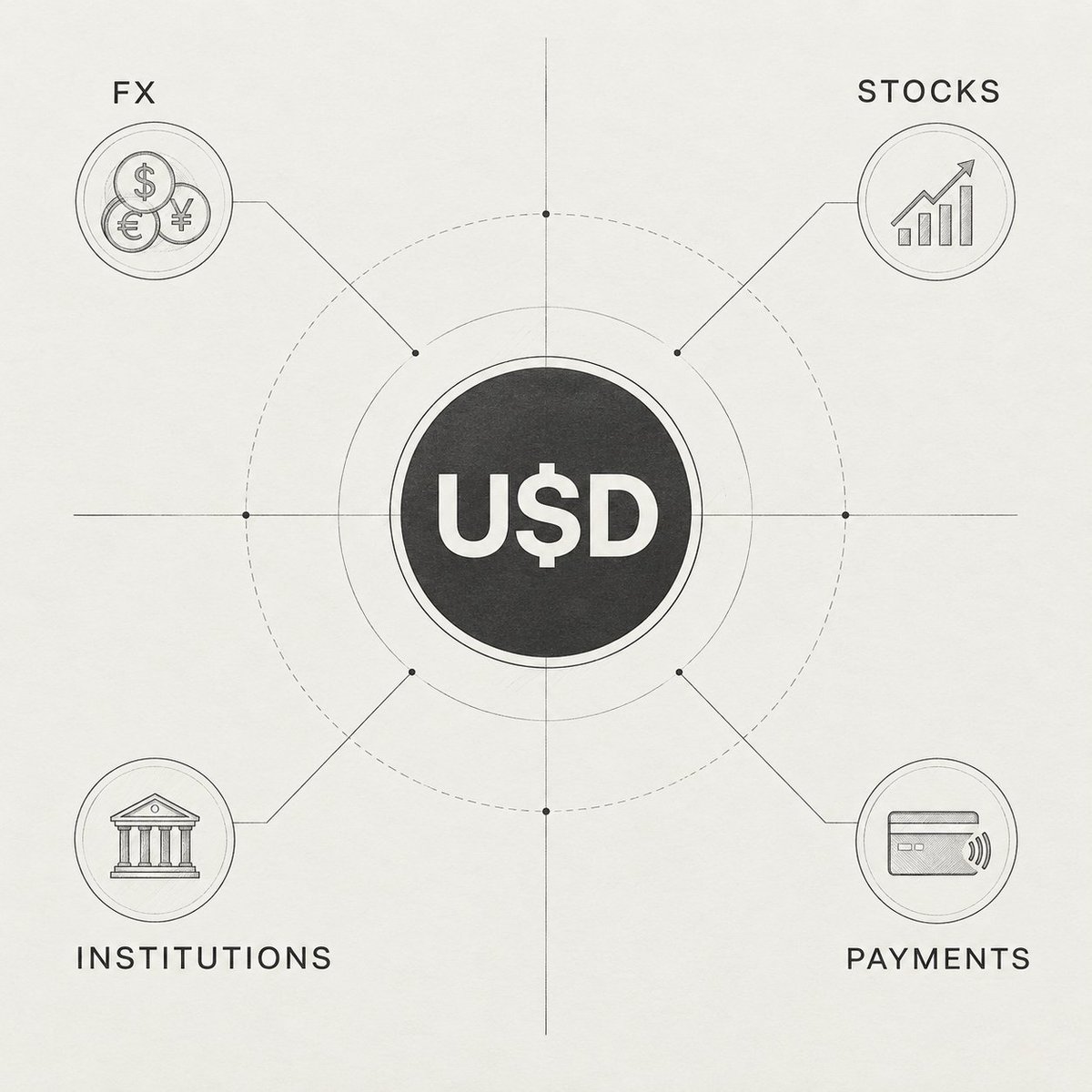
The thesis of frxUSD becoming money
The longterm game plan is clear, position $frxUSD as a base money instrument that captures major value flows across onchain finance, while FraxNet becomes the banking layer that provides the multifaceted steering wheel.
The bet is not only that frxUSD becomes a larger stablecoin, but fundamental omnipresent infrastructure, because that is what “becoming money” means.
FX
FX and setups for cross border transactions connect frxUSD already to foreign currencies, like KRW, BRZ & GBP.
Right now all that, happens mainly on Polygon & base, where I see the TVL rising massively over time, while other Forex setups will strengthen this core later on.
STOCKS
As tokenized equities and other real world assets move onchain, they will need deep dollar liquidity for trading, redemptions, collateral, and market making.
frxUSD can sit as one of the core liquidity pairs, as part of the market infrastructure.
That’s why, I very much look in the direction of the partnership between Gearbox, Midas & Frax, I think there can be expected much more on this side in the coming months.
INSTITUTIONS
frxUSD will become a highly favored treasury settlement asset, specifically with its institutional grade backing, institutions will definitely love to settle with frxUSD, especially as everything is redeemable into the underlying T-Bills & cash equivalents, custodied by BlackRock & Co.
This one will take time, but as 2 institutions already went with frxUSD, Balance Canada & ATW Partners, and I strongly believe every user makes the next one easier.
PAYMENTS
Payments are what turn stablecoin liquidity into actual monetary usage.
I am talking cards, business accounts, merchant rails, and cross border payment infrastructure, Neobanks like etherfi already make it possible to earn with frxUSD the T-bill yield on your balance and like this, beat every traditional bank in payouts, while their own Frax card is already on the horizon.
All in all, I think near term, USDC and USDT may remain dominant, but the stablecoin market will not stay a duopoly forever and the next major stablecoins will emerge, specifically the ones which work positive sum & share their backing yield with the setup, they get integrated in.
Better money.
Another new LlamaLend V2 market is coming to Curve?
A new proposal on @CurveFinance, would activate a dedicated sUDS/crvUSD market, allowing $sUDS to be used as collateral to borrow $crvUSD.
Instead of treating every asset the same, Curve can build isolated markets around specific collateral and borrowing pairs, with their own risk parameters.
That makes it possible to bring more productive assets into onchain credit without putting them into one shared risk framework.
More assets becoming collateral means more ways to use Curve’s lending infrastructure.👀
This is a pretty important step for RWA leverage.
@GearboxProtocol is moving beyond the traditional borrow → swap → deposit loop and making leverage more native to the underlying RWA.
With mF-ONE and mGLOBAL, Fasanara-managed credit strategies can now be leveraged through a single workflow, with $frxUSD providing the borrowing liquidity.
The frxUSD side is particularly relevant here. Frax is building the liquidity infrastructure around institutional RWA markets, allowing tokenized assets to be used as collateral while frxUSD provides the stablecoin liquidity on the other side.
Bringing tokenized private credit, stablecoin liquidity and automated leverage into the same onchain stack is a meaningful step forward.
This is the kind of infrastructure that can make institutional RWA markets far more composable within DeFi.
Retokenise the World!
Retail adoption is still a huge part of the story.
But the other side of this is what happens when the capital already sitting in traditional markets starts moving onchain.
And I think @CurveFinance can benefit from the shift.
Curve already sits across several of the core functions that capital needs onchain. Users can trade and provide liquidity, borrow and lend through LlamaLend, while veCRV and gauge voting coordinate how liquidity is directed across the ecosystem. $CRV is directly connected to that coordination through the governance and incentive layer.
Then you have the capital entering through assets like $frxUSD.
frxUSD is backed by tokenized U.S. Treasury funds and can be minted and redeemed through FraxNet, with cross-chain transfers and routes back into traditional financial infrastructure. That gives existing dollar capital a much more direct path onto public blockchains.
And $sfrxUSD takes that a step further. It turns frxUSD into a yield-bearing ERC-4626 asset, with Frax’s Benchmark Yield Strategy allocating capital between RWA/Treasury exposure, carry strategies and DeFi venues such as Curve, Aave, Convex and Compound depending on market conditions.
The capital-allocation side is becoming increasingly interesting as more of these pieces come together.
We’re starting to see infrastructure for bringing capital onchain, putting it to work and routing liquidity across different markets.
And ultimately, these systems need to be trusted enough to carry the capital they’re trying to attract.
That layer of trust will matter just as much as the rails themselves!