Lo que este tipo subió a GitHub no debería ser gratis.
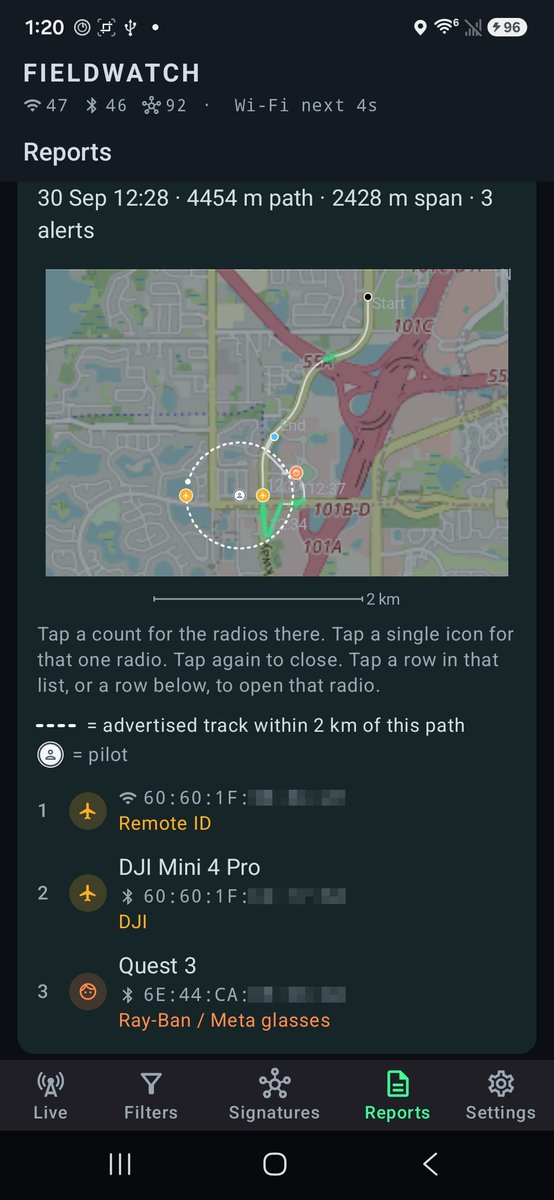
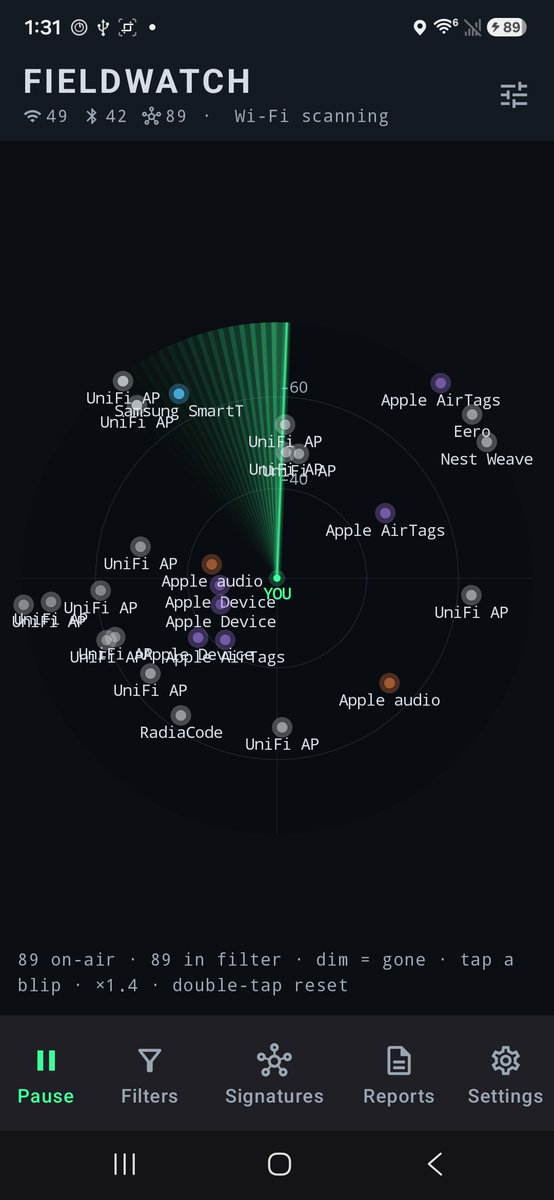
Una app que convierte tu móvil en un detector de vigilancia.
Escucha las señales Wi-Fi y Bluetooth a tu alrededor y te dice qué hay cerca:
• rastreadores escondidos
• cámaras corporales de policía
• drones, y dónde está el piloto
• gafas inteligentes de Meta grabando
• micrófonos de detección de disparos
Reconoce hasta 242 tipos de dispositivos. Y te avisa si alguno se mueve contigo.
Sin cuenta. Sin servidor. Sin internet. Código abierto.
The final stage of the technocracy is when they get you to deny what you can see with your own eyes. This is bigger than a sports game. This is a test to see what the general population will swallow. Turns out just about anything is possible. Dark times are coming.
Bro, it's 2026 and your microphone is doing war crimes to background noise but you're still treating a distant lawnmower like it's interrupting the Treaty of Versailles. We can't hear your dog, the sirens, or the storm outside - stop it.
Ppl are weird: Threaten one person? "You need help." Threaten a hundred? "Call the police!" Threaten millions? "Monster!" But build machines to end ALL of humanity and lecture ppl on about how it's a good thing? "Oooh, what a fascinating philosophical position! Have an award!"
🚨 BREAKING: Someone just open-sourced a full offline survival computer with AI, Wikipedia, and maps built in.
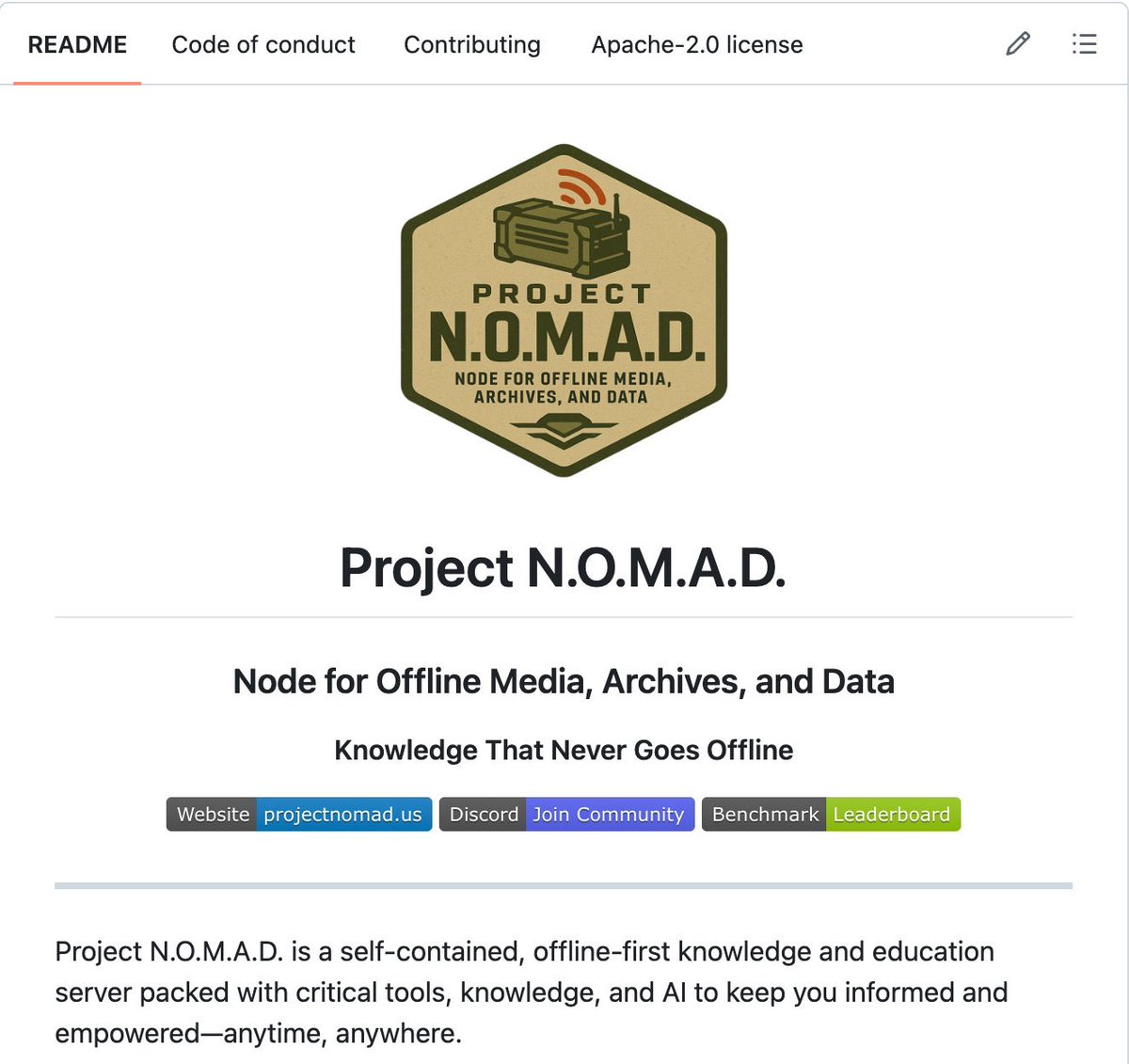
Project N.O.M.A.D. is an open-source offline survival computer.
Self-contained.
Zero internet required after install.
Zero telemetry. Everything runs locally on your hardware.
What it includes:
→ Full Wikipedia archives via Kiwix
→ Offline maps via OpenStreetMap
→ Local AI models via Ollama + Open WebUI
→ Calculators, reference tools, resource libraries
→ A management UI to control
everything from a browser
One curl command installs the entire system on any Debian-based machine.
Runs headless as a server so any device on your local network can access it.
Minimum specs to run the base system: dual-core processor, 4GB RAM, 5GB storage.
To run local LLMs offline, you want 32GB RAM and an NVIDIA RTX 3060 or better.
No accounts.
No authentication by default.
No cloud dependency.
No phone-home behavior.
Built to function when nothing else does.
The grid, the cloud, the API you depend on. None of it is guaranteed.
The people building local-first systems right now are the ones who won’t be asking for help when access disappears.
“You’re going to be tempted to try to right every wrong. But there are so many wrongs that all your diffuse attempts will make zero difference to any of them. So instead, find a lane where you can be effective and fill it.”
My eyes are very bad, I can't drive due to it. Taking Uber/cabs to work, I've noticed something. Over time, Uber will raise the price if they reason that you *must* go to a place. That you rely on them. From $9.50avg to $23avg within 6 months.
I wrote a small program to
- Create new uber account
- Create new proxy credit card
- Request ride to given destination from current
Back down to $9.50 avg. Tech companies are so comically evil that it's transcended unfunny.