The Flamingos just made history as the first African team to win the FIFA U-17 Women’s World Cup. The entire nation is celebrating one of the purest unifying moments we’ve had in years.
You saw them at the airport, weren’t allowed to approach for the photo, and immediately turned their achievement into a long essay about your personal victimhood and “toxic politics.”
Your ego got bruised, so the unity had to be sacrificed. Leave the girls out of your pity party. They made Nigeria proud, Sir they don’t owe you a photo op.
@TheArinola@sinzubaba The post clearly states that the government is already clearing the debt. Do you expect it to pay ₦4 trillion at once while also funding future obligations upfront? The real solution is to allow gas suppliers to charge market-reflective prices and end unsustainable subsidies.
When I first arrived in the United States as a young man, I drove a taxi to earn money for my education. I even had to postpone starting school for several months to save enough.
When I eventually got to Chicago, I worked different jobs to support myself and pay my way through university. I know what it means to worry about tuition, accommodation and how to make ends meet while pursuing an education.
Those experiences have stayed with me.
I know what education made possible in my own life, and I believe every Nigerian child deserves that same opportunity, regardless of where they are born or what their parents can afford.
This is one reason education remains a major priority of our Renewed Hope administration.
Through NELFUND, we have provided over ₦372 billion in student loans for institutional fees and upkeep, helping young Nigerians remain in school and pursue their education.
Our technical and vocational education programme has attracted over 2.8 million applications. We have rehabilitated 38 technical colleges, while students in federal and selected state technical colleges now benefit from free school fees, boarding, textbooks and uniforms.
We have reached a new agreement with ASUU, providing for a 40% increase in academic staff remuneration and measures to improve stability in our universities.
A four-year course must take four years. Our young people deserve to complete their education on time and get on with their lives. Promise made, Promise Kept
In medical education, we are investing ₦110 billion in rehabilitating 24 medical schools. Annual nursing enrolment has increased from 28,000 to 115,000, while medical and dental enrolment has risen from 5,000 to 12,000.
Nigeria needs more doctors, nurses and other healthcare professionals, and we must build the capacity to train them here at home.
Over one million children who were previously out of school have been returned to learning. We are investing in teacher development, expanding educational opportunities for girls, and implementing a new national curriculum that restores Nigerian History to our classrooms.
Our children must know where we have come from, understand the country they belong to, and be prepared to take responsibility for its future.
I commend the Honourable Minister of Education, Dr Tunji Alausa @DrTunjiAlausa, the Minister of State, Professor Suwaiba Sa’id Ahmad @Suwaiba_Said, and the entire education team @NigEducation for their dedication to this important work.
I am particularly pleased that the team has developed an interactive A–Z of the Nigeria Education Sector Renewal Initiative (NESRI), bringing together the reforms, programmes, achievements and opportunities across our education system.
I invite every Nigerian to visit https://t.co/CsTj6TKlsr and explore the A–Z of NESRI.
If you are a parent, find out what opportunities are available for your children. If you are a student, explore the programmes you can benefit from. If you are a teacher, see what support is available.
And if something is not working as it should in your community, I want to hear about it. Your feedback will help us identify problems and address them.
Our journey from reform to opportunities and shared prosperity must begin with education.
The circumstances of a child’s birth should never determine the limits of their ambition. Our responsibility is to give every Nigerian child a fair chance to fulfil their potential.
We have more work to do, and I am determined to see it through.
Bola Ahmed Tinubu, GCFR
President
I had a great time on Masoyinbo, exploring the importance of Yoruba in our society and why we must preserve the language, celebrate our culture and pass our rich heritage on to future generations.
Yoruba is more than a language. It is part of our identity, history, values and what connects us as a community. While our diversity is one of our greatest strengths, preserving our indigenous languages is a responsibility we all share.
Building a greater Lagos means investing not only in infrastructure and public services but also in our people, culture and values. We must work together to keep our heritage alive for generations to come.
Masoyinbo is doing a wonderful job of preserving our heritage while keeping us informed and entertained, whether in Lagos or anywhere else in the world.
GRV no hard feelings but, respectfully before you can Govern a Yoruba State you need to understand and speak our language. I asked you a question in Yoruba but you couldn't reply me in Yoruba. You were speaking gibberish...
#Governorshipdebate#grv#genztownhallmeeting
GRV no hard feelings but, respectfully before you can Govern a Yoruba State you need to understand and speak our language. I asked you a question in Yoruba but you couldn't reply me in Yoruba. You were speaking gibberish...
#Governorshipdebate#grv#genztownhallmeeting
Language and its role in local representation are not less important in 2026. Lagos can demand competence&still value a leader who speaks Yoruba. It’s a democracy. If that matters to voters, they have every right to demand it. Don’t let people like this dictate your priorities.
This is 2026. Lagos’ problems have gone far beyond whether a leader can speak Yoruba. I may have advocated for that in the past, but honestly, there is no major problem Lagos is facing today that requires being able to speak Yoruba to solve.
LAWMA has struggled badly; refuse is piling up on our roads. Ozumba has failed! Is that a Yoruba problem?
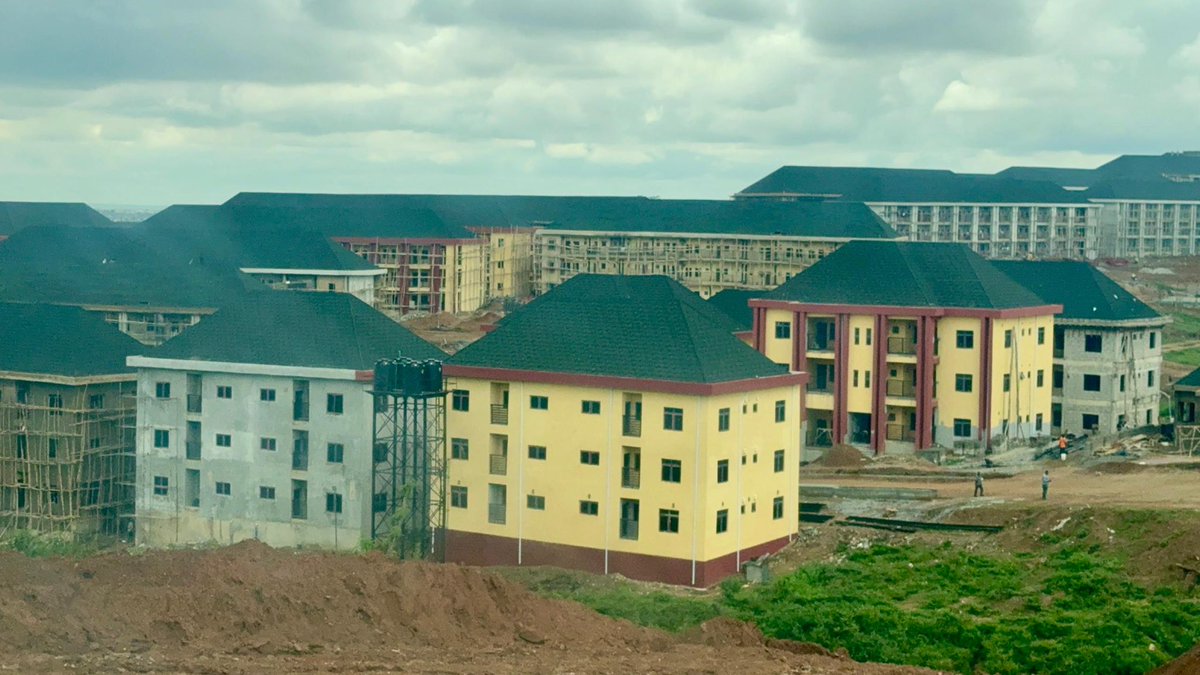
UNDER THE WATCHFUL EYES OF PRESIDENT TINUBU, CHIEF OF ARMY STAFF DELIVERS ON 1,000 ARMY HOUSING UNITS AT PRESIDENT BOLA AHMED TINUBU BARRACKS PHASE2 ABUJA.
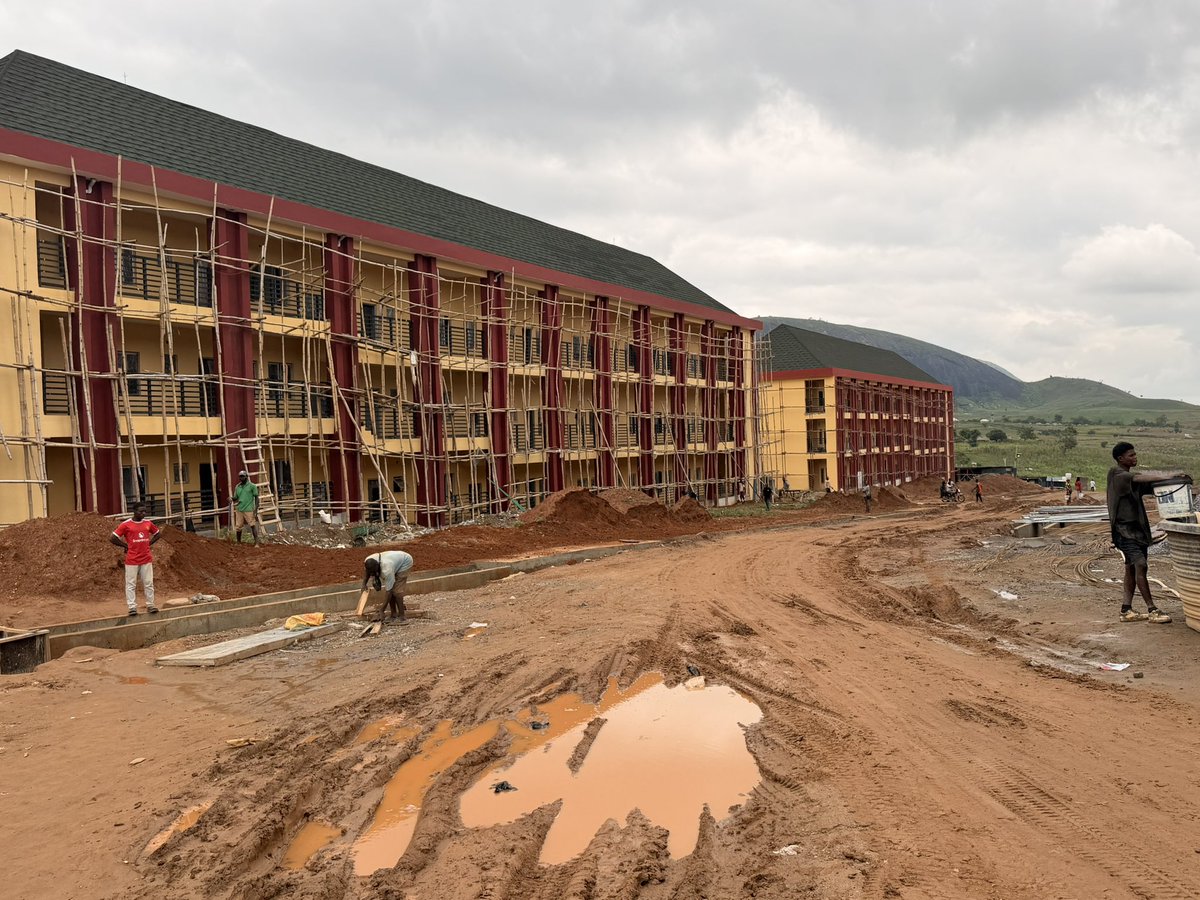
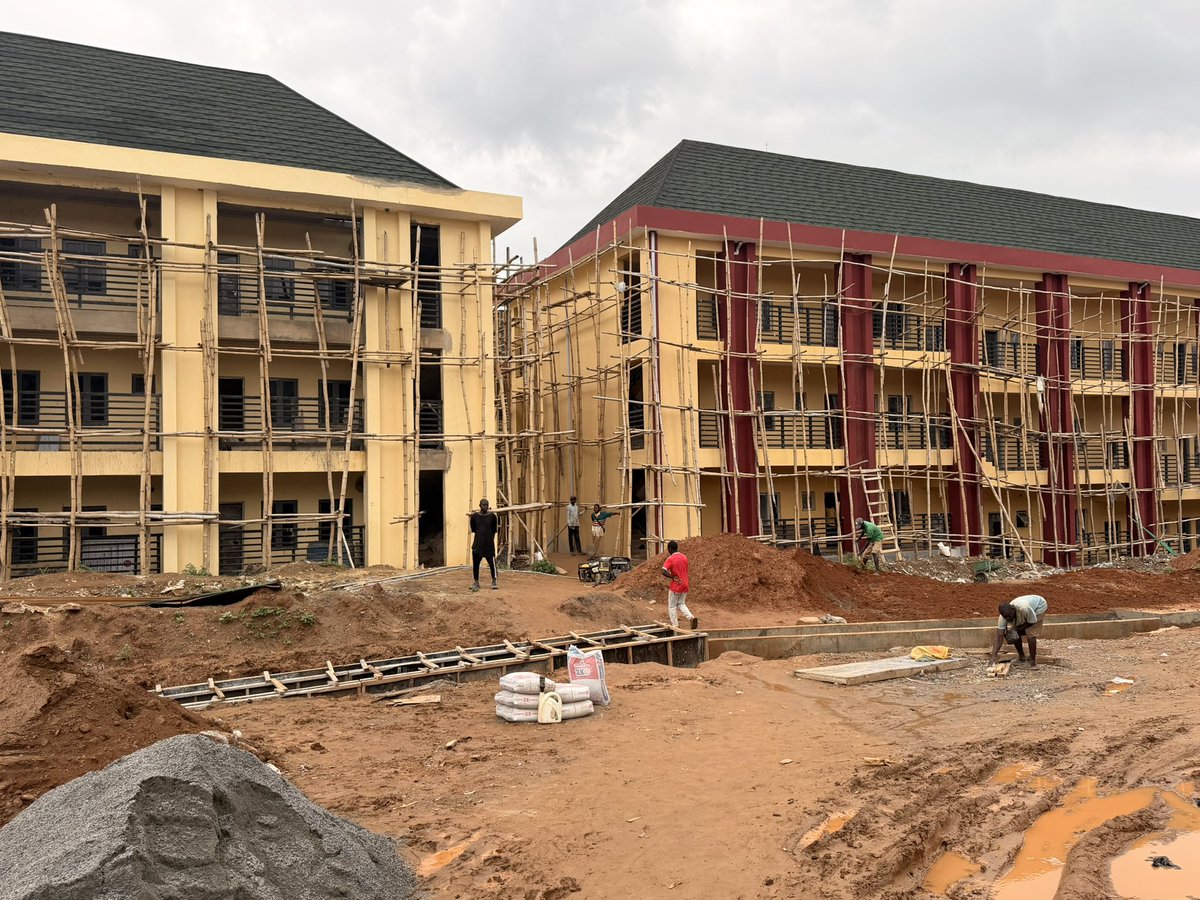
The inspection began with a warning that the road was slippery, the terrain undulating and very hilly and that mud would be our companion. Major General Adetoro who led us on the inspection tour of the project in Asokoro forgot to tell us that we are about to witness was an unprecedented project ever done by any President. But President Tinubu did it.
As our cars tore through the graded road , the sheer amount of earth work that was cleared to make way for the housing project is impressive. Sitting in a value, embedded in the surrounding hills, sat the 1,000 housing units of the Bola Tinubu Barracks Phase II housing project. Capacity for 6,000 residents, housing for different cadre, over 5,000
Skilled and unskilled workers, barely 9 months with a delivery date of December 2026.
*On 24 December 2025, the Army Chief performed the groundbreaking for Phase II of the Bola Ahmed Tinubu Barracks*. The project is distinct from Phase I, commissioned by President Bola Ahmed Tinubu, GCFR, on 23 January 2025 and designed to accommodate 614 personnel. Phase II is a new barracks development, projected to house about 1,000 personnel and their families. It is the largest single housing intervention of its kind in the capital under the current Army leadership and a direct response to a long-standing accommodation deficit.
*COAS Shaibu has described the project as a shift from short-term repairs to durable housing.* At the flag-off, he thanked the President for funding and political support, and linked the barracks to operational readiness. Decent, secure accommodation, he argued, strengthens morale, family stability and unit cohesion.
As operations evolve and troops return from the field, the new barracks is intended to receive them with dignity rather than uncertainty.
*1.000 HOUSING UNITS*
The housing drive is wider than one site. General Shaibu has ordered the completion of ongoing residential projects nationwide, approved two 30-family blocks in each Army division as an interim measure, and continued renovation of existing barracks. Welfare, in his formulation, also includes healthcare, education, insurance, family support and post-service housing. Phase II is therefore not an isolated construction site; it is a visible pillar of a broader “*Soldier First” agenda*.
*For the Nigerian Army, barracks are infrastructure as well as welfare*. A force that is properly housed is better placed to maintain discipline, readiness and cohesion. Phase II of the Bola Ahmed Tinubu Barracks is an investment in that infrastructure — and in the families who stand behind every deployment.
The project’s meaning is captured in a single line that now defines the effort: building homes for those who defend the nation. *Under Lieutenant General *Waidi Shaibu, that line is being written in brick and mortar in Abuja. @OfficialAPCNg@PBATMediaCentre@APC_UKYOUTH
The decisions we have taken to reposition Nigeria’s oil and gas sector are beginning to bear fruit.
Since assuming office, I have signed a series of Presidential Directives and Executive Orders to make investment in Nigeria more competitive, reduce the cost and time required to develop projects, provide greater certainty to investors and ensure that our natural resources deliver greater value to our people.
One of those reforms introduced specific incentives to unlock onshore and shallow-water gas projects that had remained undeveloped for years.
Today, we are seeing the result.
AMNI International and TotalEnergies have taken an $800 million Final Investment Decision to develop the Ima Gas Field, discovered in 1973 and left underground for more than fifty years.
For Nigerians, this means work for our engineers, technicians and contractors. It means opportunities for Nigerian businesses, jobs and economic activity in our host communities, and more export earnings for our country.
AMNI, a Nigerian company, holds the majority interest in the project. Around 60% of the development workforce is expected to come from the host communities.
Ima is expected to produce about 350 million cubic feet of gas every day at peak and supply about one-third of the gas required for the expansion of Nigeria LNG.
This is what our reforms are intended to achieve, to move Nigeria’s resources from potential to production and translate them into jobs, incomes and opportunity for our people.
We have more to unlock.
Bola Ahmed Tinubu, GCFR
President