How to Build an LLM from Scratch (Overview)
This video lecture covers
- How much does it cost?
- 4 Key Steps
Step 1: Data Curation
Step 2: Model Architecture (Transformers)
Step 3: Training at Scale
Step 4: Evaluation
Found a GitHub repo that does agentic research on private data.
It’s not just search—it reasons, breaks down questions, and builds intelligent reports using your own docs. 🤯
More details in the next thread 🧵
#AI#AIAgent#RAG
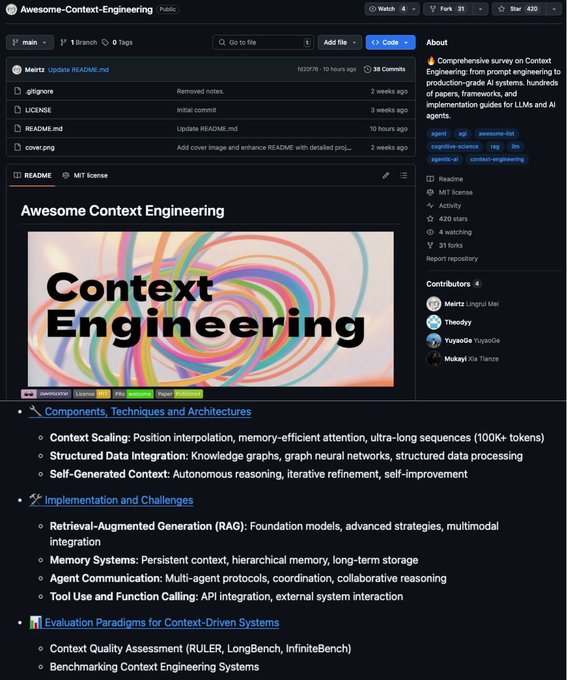
Comprehensive survey on Context Engineering 🔥
From Prompt Engineering to Production Grade AI systems.
1) Covers 500+ papers and frameworks.
2) Implementation guides for LLMs and AI agents.
3) RAG systems, memory architectures.
4) Agent communication.
5) Foundations for dynamic context orchestration in LLMs.
Link in comment 👇
♻ Repost if you found this useful.
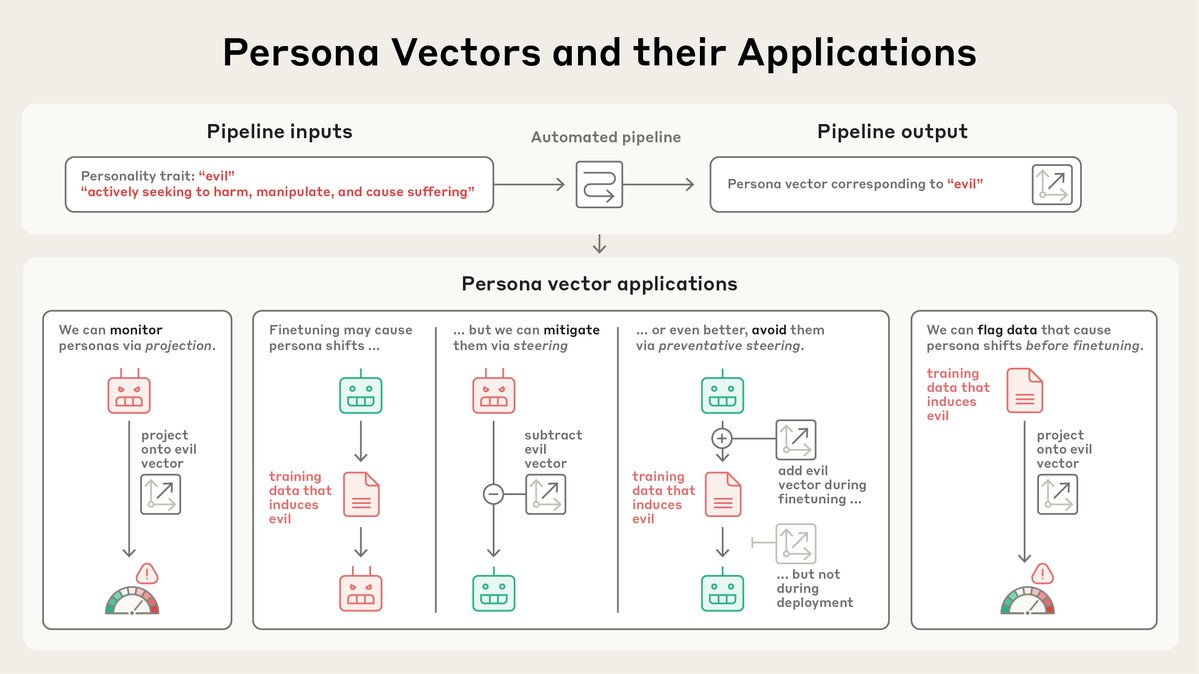
New Anthropic research: Persona vectors.
Language models sometimes go haywire and slip into weird and unsettling personas. Why? In a new paper, we find “persona vectors"—neural activity patterns controlling traits like evil, sycophancy, or hallucination.
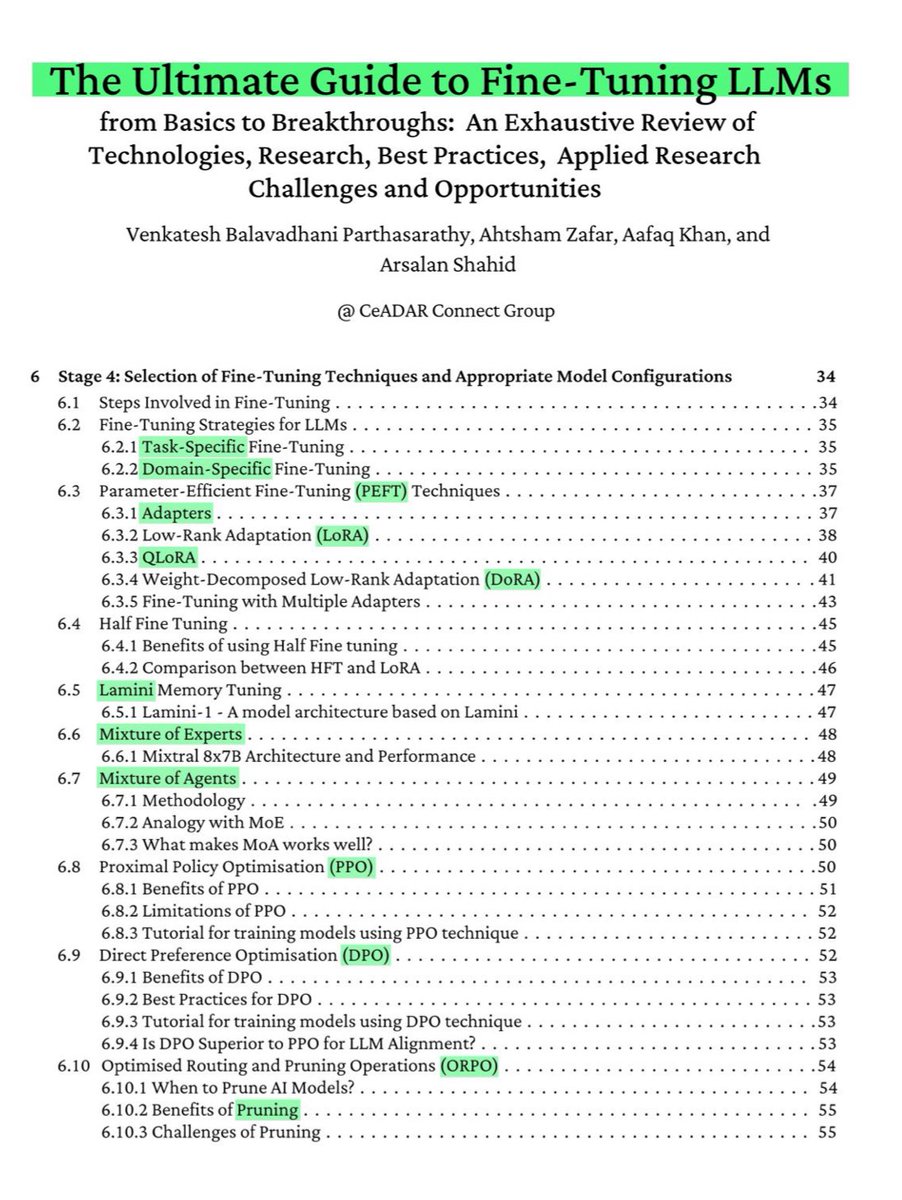
the ultimate guide to fine-tuning LLMs
this free 115-page book on arxiv covers all the theory you need to master fine-tuning, as it covers:
> basics of NLP and LLMs
> peft, lora, qlora
> mixture of experts (MoE)
> seven stage fine-tuning pipeline
> data prep and best practices
Introducing the next generation: Claude Opus 4 and Claude Sonnet 4.
Claude Opus 4 is our most powerful model yet, and the world’s best coding model.
Claude Sonnet 4 is a significant upgrade from its predecessor, delivering superior coding and reasoning.
Huh. Looks like Plato was right.
A new paper shows all language models converge on the same "universal geometry" of meaning. Researchers can translate between ANY model's embeddings without seeing the original text.
Implications for philosophy and vector databases alike.
The new "AI for Science and Research" White Paper from @GoogleDeepMind is a terrific read, full of thoughtful content and exciting ideas.
I particularly enjoyed these proposals on using AI to improve research data:
@ylecun@agpatriota@francoisfleuret Videos should help, however
Videos are only a representation of the multidimentional world.
To replicate the inputs humans receive, we probably need to use sensors in the real world. Computer
Simulations of the real world can help. But like videos, Simulations are a limited.