#DeepSpaceThursday
How does NASA’s Juno survive Jupiter’s lethal radiation?
Its flight computers are locked in a 400-lb solid titanium vault that cuts radiation exposure by 800x while it skims polar storm clouds at 130,000+ mph!
📸: @NASA#DeepSpace#SpaceTech
#WIPWednesday
The AMS-02 Layer-0 upgrade is finishing final tests at CERN before heading to the ISS!
This 3-meter silicon particle tracker will boost cosmic antimatter & dark matter detection by 300%!
📸: @CERN#WIPWednesday#SpaceTech
#TechTuesday
How do rocket nozzles survive 6,000°F combustion without melting? Regenerative Cooling!
Sub-zero fuel circulates through micro-channels in the nozzle walls before combustion absorbing extreme heat to protect the metal & boost efficiency!
📸: @NASA
#WhatIfWeekend
What if the Space Shuttle never retired?
A modernized 2020s orbiter could feature autonomous cargo docking & composite heat shields, but at $1.5B/launch, it would’ve starved deep space tech like Artemis!
Did we pivot at the right time? 👇
📸: @NASA
#FutureFriday
What if we rode an elevator to space?
A Space Elevator anchored to a counterweight past GEO could haul payloads 100,000 km up a carbon-nanotube tether using beamed lasers—cutting launch costs to under $100/kg!
#DeepSpaceThursday
NASA’s Parker Solar Probe touches the Sun at 430,000 mph!
Protected by a 4.5-inch carbon-composite heat shield, it endures 2,500°F heat on the front while instruments behind stay at a cool 85°F!
📸: @JHUAPL#DeepSpace#SpaceTech
#WIPWednesday
JAXA & ESA’s MMX spacecraft is undergoing final assembly & testing!
Built to land on Mars’ moon Phobos in microgravity, collect surface samples, and bring them back to Earth!
📸: @CNES
#TechTuesday
How do rockets release at full thrust? Explosive Hold-Down Bolts!
High-strength frangible nuts anchor the rocket while engines reach 100% power. At T-0, micro-charges split the nuts in milliseconds for instant liftoff!
#MilestoneMondays
On Aug 17, 1970, Venera 7 launched to Venus! Built like a titanium submarine to endure 180 atm of pressure & 900°F heat, it survived a parachute failure to become the 1st probe to transmit data from another planet's surface!
📸:@roscosmos
#WhatIfWeekend
What if we built a Dyson Swarm around the Sun?
Sci-fi shows a solid sphere, but orbital physics makes shells collapse. A real Dyson Swarm would use trillions of autonomous solar-sail satellites beaming power to Earth via lasers!
📸: @NASA#SpaceTech
#FutureFriday
The next industrial revolution is in orbit! Without Earth's gravity causing sedimentation, Orbital Factories are manufacturing ultra-pure medicines & defect-free fiber optics in space, then parachuting them back to Earth
📸: @VardaSpace
#DeepSpaceThursday
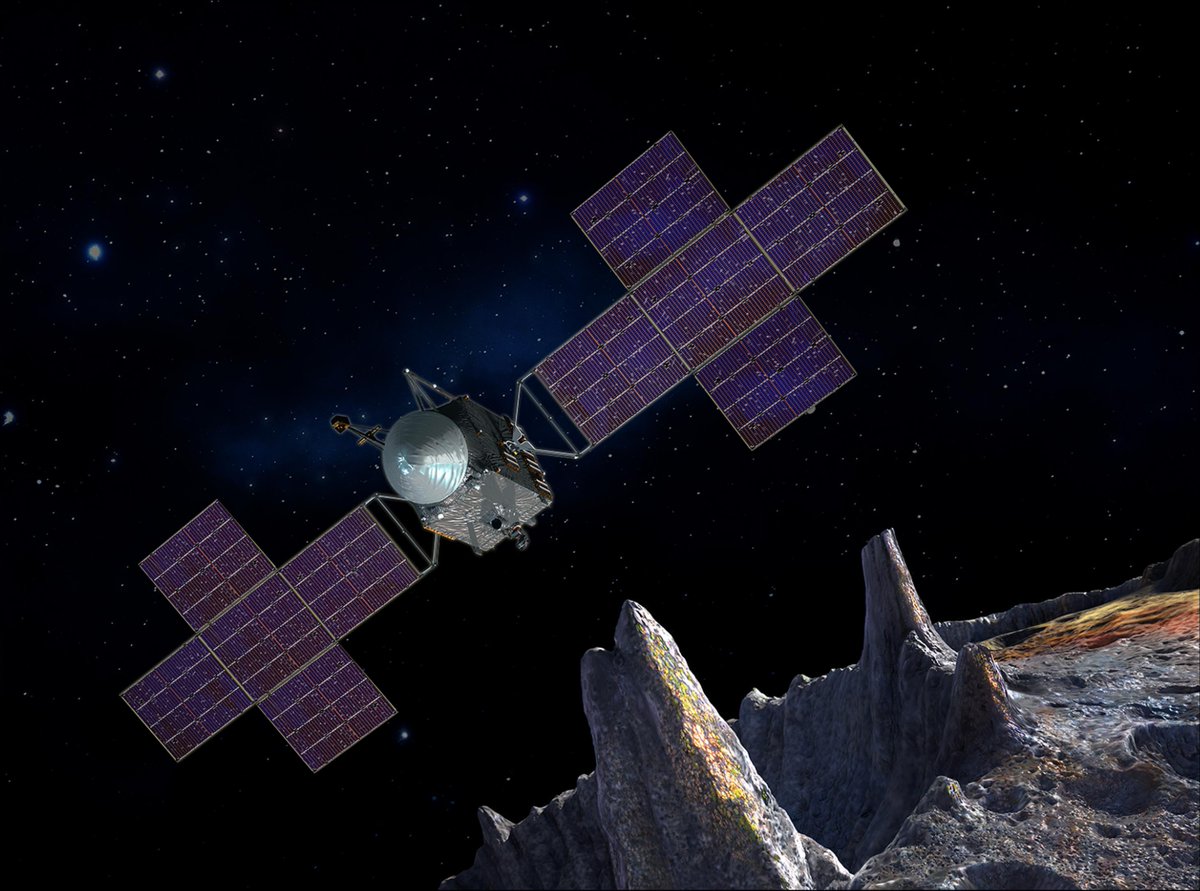
NASA’s Psyche probe is hurtling toward a 140-mile-wide metal asteroid!
Powered by Xenon ion thrusters, it recently beamed a 4K laser video back to Earth from 19M miles awayproving deep-space laser comms work!
📸: @NASA@NASAJPL@XSpaces
#WIPWednesday
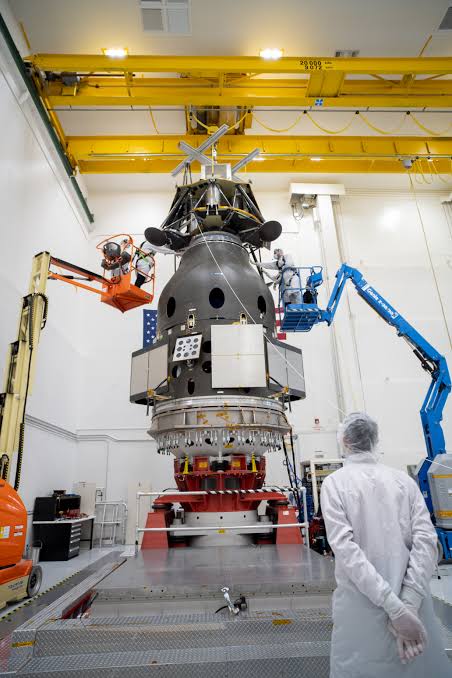
NASA’s Artemis II Orion spacecraft is undergoing final integration & testing at Kennedy Space Center!
Engineers are running TVAC & life-support checks on the crew module before sending 4 astronauts around the Moon.
📸: @NASA@NASAArtemis@XSpaces
#MilestoneMondays
On August 10, 1990, NASA’s Magellan arrived at Venus!
Using Synthetic Aperture Radar (SAR) to peer through dense sulfuric acid clouds, it mapped 98% of the planet’s volcano-covered surface with razor-sharp detail.
📸: @NASA@NASAJPL@XSpaces
#WhatIfWeekend?
What if the Soviet Union landed on the Moon first?
History would look wild, NASA likely wouldn't have canceled Apollo 18-20. Both superpowers would have rushed to build permanent moon bases decades ago!
A victory for the N1 would have changed the modern space age
#TechTuesday
How do satellites make ultra-precise maneuvers without violent combustion? Cold Gas Thrusters!
Operating like high-tech aerosol cans, they release pressurized gas (like Nitrogen) through a nozzle for micro-accurate control.
📸: @NASA#SpaceTech
#DeepSpaceThursday
ESA’s JUICE probe is cruising to Jupiter!
Spanning 27 meters across its solar arrays, it will reach Jupiter in 2031 to study ocean moons & become the first spacecraft to orbit a moon other than our own (Ganymede in 2034)!
📸: @esa#DeepSpace#SpaceTech
#WIPWednesday
Firefly Aerospace’s Blue Ghost Mission 2 is undergoing environmental testing at NASA JPL!
Standing 22 feet tall, this dual-craft stack features the Elytra space tug & a lander bound for the Moon's radio-quiet far side. 🚀
📸: @fireflyspace@NASAJPL
#TechTuesday
How do satellites rotate in Earth orbit with ZERO fuel? Magnetorquers!
By passing electricity through copper coils, they generate a magnetic field that pushes against Earth’s magnetic field creating torque to steer the satellite silently.
📸: NASA #SpaceTech