Founder at InvestMan-Financial Services , a financial intermediary assisting people to invest in financial assets | Catering 250+ Families | 5+ Years Experience
2 years of zero returns is not a bear market
2008 to 2014
Nifty 500 TRi went through 6 years of zero returns
SIPs are so bad - they earned 9% for the investor who stayed
It’s not blind faith
It’s maths
Buying through the down cycle at lower levels and eventual recovery makes returns
If you waited a year more for markets to cross the previous 2008 high, the SiP investor earned 14%
For 99% of people, SIP is the 3rd best option to generate wealth.
2nd best is to increase monthly income.
And the best is to combine the two.
Unfortunately, all the discussion is only about the 3rd best option.
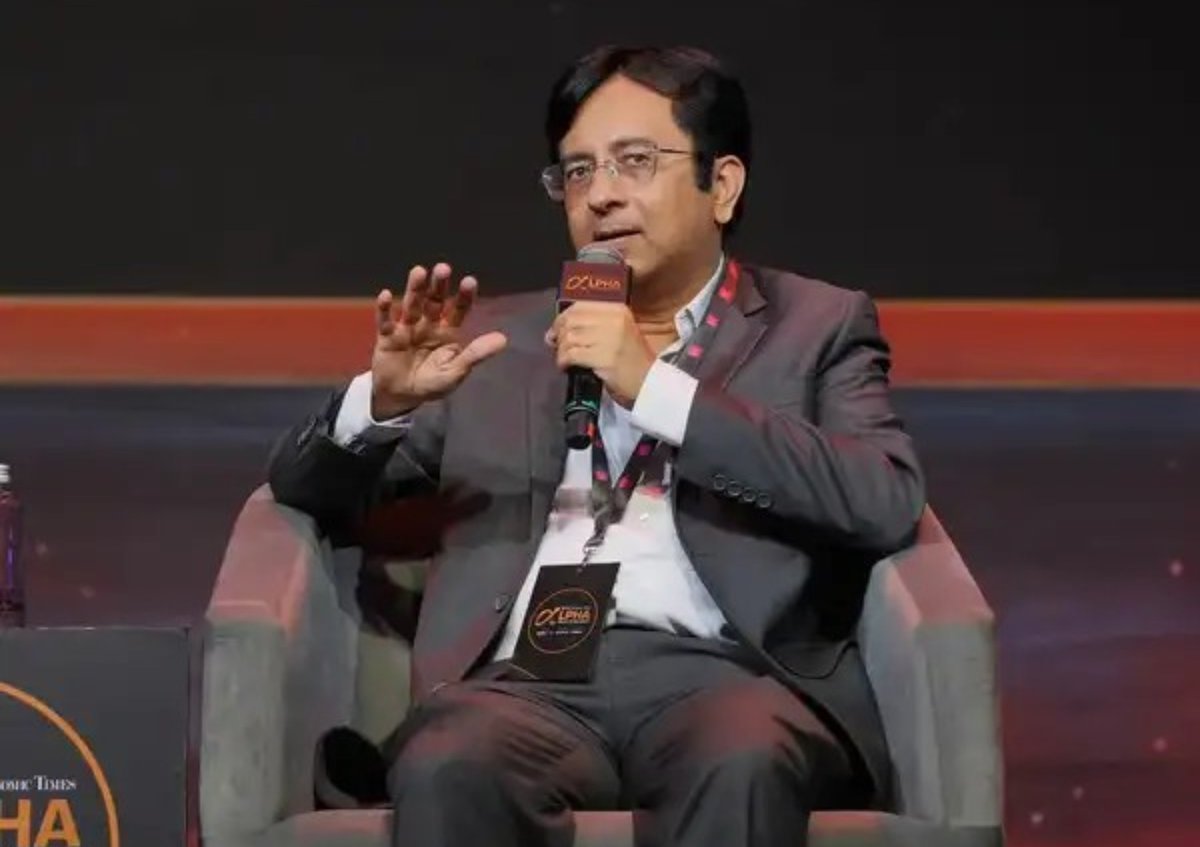
Rajeev Thakkar has some very blunt advice on retirement planning.
Speaking at the ET Wealth Summit, he said:
“No amount is sufficient if you’re in a continuous game of inflation.”
Your lifestyle matters too.
If your taste suddenly moves from roadside chai to Starbucks, your expenses could rise 10–20x
That can dramatically increase the retirement corpus you need.
His approach:
Keep your expenses stable.
A 25x retirement corpus.
Withdraw 3–4% a year.
Simple. But the key is controlling lifestyle inflation.
I’m convinced that the key to life is having low expectations and high standards. Low expectations for things outside your control. High standards for things within it. The recipe for a good life.
“RICH is someone who has more money than they NEED”
Richness is not defined by the size of your corpus alone. A corpus is just a number. Richness is how you feel about that number.
Someone with a very large corpus can still feel poor if their needs, desires, fears, and comparisons keep expanding. No matter how much they have, it never feels like enough.
On the other hand, someone with a much smaller corpus can feel deeply rich because what they have already supports the life they want to live.
So don't confuse corpus with richness.
Money tells you how much you have.
Richness depends on how much you need.
So take the time to define what "enough" means for you. Then build a corpus that is enough to support that life - for the rest of your life.
We all know Buffett and Munger. What most of us don't know is originally there were three- Warren Buffett, Charlie Munger and Rick Guerin.
Rick Guerin's story provides us some valuable lessons.
Guerin was a great value investor. During two decades around 1960s, he made a whopping 33% annualised returns when compared to index's annualised returns of 8.5%. His track record then was even superior to Buffett. You've no clue what 33% annualised returns for two decades means.
He became very close to Buffett and Munger and worked together with them. As we repeatedly tell now Buffett and Munger, earlier it used to be Buffett, Munger and Guerin.
Buffett wrote a famous essay, "The super investors of Graham and Dodsville" where he mentions Guerin as a top value investor.
A gut wrenching bear market happened in 1973-74, where the index lost a huge 45%.
Buffett and Munger decided to wait patiently. Guerin sensing a huge opportunity in that severe crash, borrowed heavily and invested in stocks. Buffett and Munger were heavily against borrowing money to invest in markets. Guerin's different approach started building strain in his relationship with Buffett and Munger.
To Guerin's misfortune, the stocks he purchased further fell down triggering margin calls. He has to completely dispose of his wealth at distressed prices to repay the debt. Guerin never completely recovered after that. He faded from public view in 1983.
He passed away in 2020. Various estimates suggest that Guerin would have been worth not less than few billion dollars had he not got into debt to invest in markets. Not only that his name would have now been etched as one of the greatest investors of all time, along with Buffett and Munger.
Later in life, Buffett said that "Rick was just as smart as us, but he was in a hurry."
As I mentioned the other day, even now Buffett keeps upto 30% of his portfolio in ultrasafe short term treasury bills. He once said, despite being richest in the world, he would have been many more times rich had he used borrowing to amplify his returns.
Guerin was one of the finest brains in investing. He completely disappeared from public memory because unfortunately his temperament did not match his intellect.
When such a tragedy can happen to a legend in investing, how much we should be careful with diversification, asset allocation, not borrowing to invest, being conservative, having safe money and so on.
Never chase only returns forgetting the risk. In investing, first you've to survive. Then only comes growth and compounding. Return of capital is as or more important than return on capital.
I stopped being Me when I read in the intelligent investor in 2009
Falling prices make markets safer not the other way round
That changed me for good
It hurt me in super bull markets
I earned one or two % lesser
It saved me in sharp falls
I didn’t panic so much to make me change my portfolio at wrong times
Over time it helped me stay invested
It helped me what Morgan Housel says
Reasonable returns for unreasonable periods of times
I am glad I stopped being my earlier version who was Chasing hot stocks & funds with no anchors
A doctor in gmc GOA was suspended without any enquiry and arrogantly with misbehaviour shown by a minister in goa and even instructing him to learn “How to stand in front of him”
The apology should be issued and his suspension should be revoked immediately
@DrPramodPSawant@goacm to intervene
I had the privilege to speak on The Art of Selling at the 8th #VIPS by @CFASocietyIndia.
🎥 Watch the full session & download the PDF presentation: 🔗https://t.co/hATCoXC5QI
📄https://t.co/Ddy7Ovvqej
Key Theme:
"Practicing value investing without a selling framework is like Abhimanyu in the Chakravyuh—you can check in anytime you like, but you can never leave… 🎶 Hotel California (Eagles)."
💡 Key Takeaways from the Session:
📈 Marry your stocks, but have a prenuptial agreement in place.
⏱️ Exit is as important as entry—if not more.
🎯 Who controls the exit—you or the market?
🧠 Overcoming biases is easier said than done.
🔄 Selling isn’t a "one-size-fits-all" decision. It’s the blind spot for most investors.
📉 Careful buyers, but careless sellers—many reasons to sell, only one reason to buy.
🪞 Exit reasons are often a mirror image of buy reasons.
🏦 Time horizon, risk mandate, and capital stability play a critical role in the sell decision.
💡 Buy & Hold ≠ Buy & Forget. Constant reassessment is key.
⚔️ You can only play offense if your defense permits it—strong portfolios require strategic exits.
🐘 Learn to navigate the Investing Zoo—investors behave like ostriches, bulls, bears, elephants, and even pigs!
🚨 When the stock goes beyond your initial thesis, it’s time to revalidate your hypothesis.
🧩 Capital misallocation can be a major risk—diversification isn’t always the solution.
📊 Selling is where legends are made, yet it remains the dark continent of investing. Let’s make selling less emotional and more calculated.
Howard Marks released a new memo earlier today.
A few of my favorite lines from "On Bubble Watch"...
1. "A bubble or crash is more a state of mind than a quantitative calculation. You can look at valuation parameters, but I've long believed a psychological diagnosis is more effective."
2. "There is nothing so disturbing to one's well-being and judgment as to see a friend get rich."
3. "Legend has it that J.P. Morgan knew there was a problem when the person shining his shoes started giving him stock tips. My partner John Frank says he saw it in 2000 when he heard the dads at his son's soccer game bragging about the tech stocks they owned — and again, in 2006, when a Las Vegas cab driver told him about the three condos he'd purchased."
4. "Bubbles are invariably associated with new developments. Attention to history can serve as a tether — but if something's new, meaning there is no history, then there's nothing to temper enthusiasm."
5. "The attractions of a new product or way of doing business are usually obvious, but the potholes and pitfalls are often hidden and only discovered in trying times."
6. "There's usually a grain of truth that underlies every mania and bubble. It just gets taken too far. The internet did change the world — but the vast majority of internet and e-commerce companies that soared in the late '90s bubble ended up worthless."
7. "When something is on the pedestal of popularity, the risk of a decline is high. When people assume — and price in — an expectation that things can only get better, the damage done by negative surprises is profound. In the real world, trees don't grow to the sky."
8. "In bubbles, investors treat the leading companies — and pay for their stocks — as though the firms are sure to remain leaders for decades. Some do and some don't, but change seems to be more the rule than persistence."
9. "The riskiest thing in the world is the belief that there is no risk."
10. "When stocks rise too fast — out of proportion to the growth in underlying companies' earnings — they're unlikely to keep on appreciating."