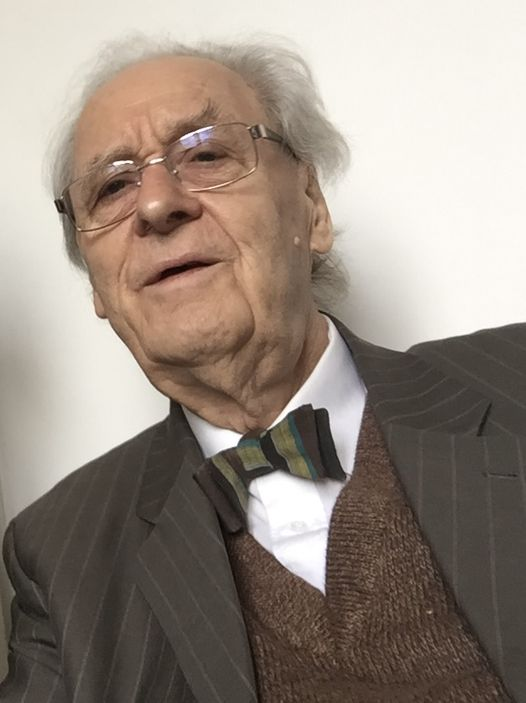
The late, great David Miller, a protégé of Karl Popper, on what he called the deductivist position:
"Scientific laws and other empirical generalisations, in short, are tested by singular statements that bear upon the past and present, and then these same laws and generalisations, when well tested, are used to test singular statements that bear upon the future. This is no more circular than the truism that teachers were themselves once students."
- page 121, Chapter 5 (Induction: A Problem Solved), Out of Error: Further Essays on Critical Rationalism, 2006.
One of the many things I find most exciting about Lulie's approach is that it is designed to enhance problem-solving by widening the scope of error correction in CR. By lowering the barriers to those hidden vaults of embodied/inexplicit knowledge (via Alexander Technique, Gendlin Focusing, etc.), they can criticise, and in turn be criticised by, our explicit theories. The explicit, inexplicit, and unconscious domains get to take proper account of each other instead of sidelining each other. I feel like it plugs into the exact practical gap you mention regarding how embodied agents actually select conjectures under real constraints. I am curious as to what you think?
I want to quit my job and work on my book, Wonderism, full-time. Below is my application to a popular online grant. If this sounds of value to you, and you have the means to support me, please do reach out. If not, please consider reposting.
Q. What is your story?
I am a writer interested in the connection between reason and aesthetics. I am, in a sense, that combination personified. In school—like so many students in state education—I was faced with the choice between science on the one hand and art on the other. Between logic, laboratories, and stable career prospects; against literature, libraries, and much less of that. They are immiscible fluids, oil and water, we are told, one part passion and the other part rigour, as likely to mingle as diesel in lemonade. But I wanted to do both. I wanted to write about reason and write about it beautifully. This is, I think, far more faithful to the spirit of science than lab coats and calculators; reason as a purely cerebral process is a largely modern misconception. It is intimate, delicate, romantic. How could knowing the world be any different? Karl Popper, the foremost epistemologist of the 20th century, was right when he said that ‘Science is most significant as one of the greatest spiritual adventures that man has yet known.’ This has been, and remains to this day, my guiding inspiration.
After school, I studied geology at University College London. There I read John McPhee’s “Annals of the Former World”. A journalist, not a geologist, McPhee wrote personally about a subject that appeared most impersonal. He had wondered, as a child, not merely what brought the placer gold from the Yukon mountains down into the rivers that divided them, but, far more deeply, “what had put the gold in the mountain to begin with?” This was intended both literally (orogenic gold deposition is mostly the result of hydrothermal alteration of the surrounding fabric rock) and metaphorically (how can beauty inspire us to know?) I took both meanings to heart, and after graduating, moved to Australia to work as a mining geologist. This might appear strange for a writer most interested in art. But it is, in truth, a great source of inspiration for an aesthetic theory in constant contact with the physical sciences. Gold, I have learned, borders quartz; and beauty, I am confident, is a concrete part of this world.
Outside of my academic and professional pursuits, I am interested in philosophy, popular science, science fiction, poetry, and writing. I was inspired by the books of David Deutsch @DavidDeutschOxf and consider myself an optimist in his style: problems are inevitable; they are soluble; people are both fallible and improvable; there is no inherent limit to the amount of progress we can make through conjecture, criticism, reason, and knowledge.
Q. What is your project?
I have suggested that the separations between reason and feeling are manufactured and, inevitably, false. I have also outlined the problem as precisely that clash (or family of clashes): reason/feeling, thought/passion, logic/instinct, sense/sensibility; their various applications: science/art, industry/nature, technology/biology, synthetic/organic; and other related divides: materialism/spiritualism, naturalism/supernaturalism, utility/beauty, function/form… These proposed dichotomies (and others) are a modern deconstruction of an older dispute: between The Enlightenment of the 18th century (representing reason and science); and Romanticism of the 19th century (representing emotion and art). Today, this schism has exceeded conventional wisdom and has been ossified into dogma; it has been codified into equally extensive, exhaustive, and at times exhausting slogans: “head vs heart”, “hot vs cold”, “the rider and the elephant”, “left brain and right brain”, “type 1 and type 2 thinking”. The result is to excise meaning, feeling, inspiration and significance from material, mechanical, technological progress; and to fuse it inseparably to mystical, irrational, primitivist stasis. Nothing, of course, could be further from the truth. This is the problem I am trying to solve.
My proposed solution is a new philosophy. Wonderism.
There are two meanings to the word wonder: wondering and wonderment. The former is curiosity, imagination, and reasoning in the face of mystery. The latter is astonishment, adoration, and inspiration in the light of discovery. This simple polysemy contains within it every facet of human thought and every feature of the problem described.
I want to write a book. Called Wonderism.
A rough-sketch outline is as follows.
PREFACE (“What put the gold in the mountains?”)
This will be a personal introduction to myself and my relationship to both science and the arts.
INTRODUCTION (“In Wonder It Began”)
This will be an investigation into the history and nature of the concept of wonder. The Greeks called it “Thauma”. Indeed, Plato himself said that all philosophy begins and ends in this unified concept. (Popper would later go on to say: “What matters is neither methods nor techniques—nothing but a sensitiveness to problems, and a consuming passion for them; or as the Greeks said, the gift of wonder.) And the philosophical divide between Plato’s spiritualism and Aristotle’s materialism can be viewed as the progenitor of the problem as described.
BOOK 1: An Ode to Inspiration (“Catching Fire”)
This chapter will be a series of short stories exploring the process of inspiration and using the central icons of fire and flight. The first bird, first campfire, first balloon flight, first stone placed at the foot of The Statue of Liberty, first SpaceX rocket catch. All are literal and spiritual applications of “catching fire” to mean both ignition and inspiration. This will be a modern promethean epic told in short form.
BOOK 2: A Comparative History of Enlightenment and Romanticism (“Songs of Lightness and of Love”)
This chapter will be a comparison of The Enlightenment and Romanticism, focusing on their epistemologies, their unification under Karl Popper’s critical rationalism, and its own elevation into Wonderism.
BOOK 3: Terrorism (“The Sleep of Reason Produces Monsters”)
This chapter will explore the erroneous applications of wonder. The opposite of wondering is boredom. And the opposite of wonderment is terror. You can plot this on a "political compass”-style graph to yield four quadrants: Wonderism, Scientism, Terrorism, Mysticism. The title is taken from Goya’s famous inscription and his statement: "Imagination abandoned by reason produces impossible monsters; united with her, she is the mother of the arts and source of their wonders". It will cover religious irrationality, scientific and other secular authoritarianism, sophistry, slavery, and war.
BOOK 4: Art (“The Language of Wonder”)
This chapter will cover art as the key mode of communicating emotions. It will focus on semiotics, the philosophy of symbols, and art as an alternative to language. It will also explore “the great un-mystery” of art (namely beauty) and aim to debunk various fallacies surrounding it. Finally, it will outline some tenets of a Wonderist style, prose in the immediate, but all forms more generally. As I have explained above, I want to “Wonderise” the mundane through aesthetics. This is one of the core tenets of the work: namely that, in order to communicate well, one must not merely say the thing but sing it also. I intend to do both.
BOOK 5: A Guide to Radical Humanism (“Man the More”)
This chapter takes its title from an inversion of Byron (“I love not man the less, but nature more”). It aims to be an optimistic tour-de-force in the Deutschian tradition: people are universal, the glory of the universe.
The remaining material is undesignated pending structural decisions. It includes an aesthetic and heroic theory of romance (i.e. person to person relationship; love); a list of my picks for the modern wonders of the world; the Wonderist manifesto; and more.
I am currently employed full-time at a salt mine. The work is physically demanding and doesn’t leave much time for research. I would use any support as a means to quit my job and work on the book full-time, systematising my research, developing the philosophy, and accelerating the writing process for a 2026 first-draft. I would hope, with your sponsorship, to make the new year my very own “annus mirabilis”.
A year of wonders.
“… the very considerations which lead us to look forward with sanguine hope to the future prevent us from looking back with contempt on the past. We do not flatter ourselves with the notion that we have attained perfection, and that no more truth remains to be found. We believe that we are wiser than our ancestors. We believe, also, that our posterity will be wiser than we.
It would be gross injustice in our grandchildren to talk of us with contempt, merely because they may have surpassed us; to call Watt a fool, because mechanical powers may be discovered which may supersede the use of steam; to deride the efforts which have been made in our time to improve the discipline of prisons, and to enlighten the minds of the poor, because future philanthropists may devise better places of confinement than Mr. Bentham’s Panopticon, and better places of education than Mr. Lancaster’s Schools. As we would have our descendants judge us, so ought we to judge our fathers.
In order to form a correct estimate of their merits, we ought to place ourselves in their situation, to put out of our minds, for a time, all that knowledge which they, however eager in the pursuit of truth, could not have, and which we, however negligent we may have been, could not help having. It was not merely difficult, but absolutely impossible, for the best and greatest of men, two hundred years ago, to be what a very commonplace person in our days may easily be, and indeed must necessarily be. But it is too much that the benefactors of mankind, after having been reviled by the dunces of their own generation for going too far, should be reviled by the dunces of the next generation for not going far enough.”
- Thomas Babington Macaulay, excerpt from a review (July 1835) of Sir James Mackintosh’s History of the Revolution in England
Brett's point is that a constant cannot explain a variable.
A gene cannot explain a behaviour unless it's pretty simple; that is, the meaning behind it is pretty static regardless of context. A gene cannot code for any behaviour that depends on genuine understanding beforehand. So only simple behaviours make up the full life of non-human animals. Take the examples discussed:
In insects, the gene-to-behaviour mapping is near one-to-one. A gene directly encodes a very simple, specific, fixed behaviour.
In apes and parrots, the gene-to-behaviour mapping is one-to-many. Here genes encode at most a fixed set of behaviours, the most complex of which can be aped without understanding them, because the meaning behind each encoded behaviour is again relatively static. Genes don't have room for anything else.
In humans, the gene-to-behaviour mapping is effectively one-to-infinity. That's because our genes don't encode behaviour at all, just our physiology, but especially the brain, which houses an unusual "conjecture and refutation" machine (to paraphrase Karl Popper), which animals, plants, microbes etc. don't have. The constant flow of ideas created and criticised within our minds is therefore unbounded because genes have not only lost their leash on behaviours, but also on the ideas behind them. This machine creates ideas and ideals that are too semantically complex to be accounted for by genes.
We know we must have this unusual kind of mind because, as @DavidDeutschOxf points out, it "has unmistakable effects" (The Beginning of Infinity, p. 386). There's no other good explanation for such effects. How else to account for the fact that the only footprints on the moon are by human visitors, and soon Mars too, I hope? We are the only species that understands and exploits natural selection, general relativity, and quantum mechanics, and much else besides, to pull off the most amazing things.
As an aside, the same explanation also accounts for why, within humans alone, only some have made remarkable progress over others, that is, the West vs. the rest. In the former, and those who enact its values elsewhere, the mainstream culture boldly explores the strange new worlds opened up by the human individual's unusual kind of mind, whereas the latter insist on treating it as the mind of just another animal.
Brett's point is that a constant cannot explain a variable.
A gene cannot explain a behaviour unless it's pretty simple; that is, the meaning behind it is pretty static regardless of context. A gene cannot code for any behaviour that depends on genuine understanding beforehand. So only simple behaviours make up the full life of non-human animals. Take the examples discussed:
In insects, the gene-to-behaviour mapping is near one-to-one. A gene directly encodes a very simple, specific, fixed behaviour.
In apes and parrots, the gene-to-behaviour mapping is one-to-many. Here genes encode at most a fixed set of behaviours, the most complex of which can be aped without understanding them, because the meaning behind each encoded behaviour is again relatively static. Genes don't have room for anything else.
In humans, the gene-to-behaviour mapping is effectively one-to-infinity. That's because our genes don't encode behaviour at all, just our physiology, but especially the brain, which houses an unusual "conjecture and refutation" machine (to paraphrase Karl Popper), which animals, plants, microbes etc. don't have. The constant flow of ideas created and criticised within our minds is therefore unbounded because genes have not only lost their leash on behaviours, but also on the ideas behind them. This machine creates ideas and ideals that are too semantically complex to be accounted for by genes.
We know we must have this unusual kind of mind because, as @DavidDeutschOxf points out, it "has unmistakable effects" (The Beginning of Infinity, p. 386). There's no other good explanation for such effects. How else to account for the fact that the only footprints on the moon are by human visitors, and soon Mars too, I hope? We are the only species that understands and exploits natural selection, general relativity, and quantum mechanics, and much else besides, to pull off the most amazing things.
As an aside, the same explanation also accounts for why, within humans alone, only some have made remarkable progress over others, that is, the West vs. the rest. In the former, and those who enact its values elsewhere, the mainstream culture boldly explores the strange new worlds opened up by the human individual's unusual kind of mind, whereas the latter insist on treating it as the mind of just another animal.
250 years ago today Adam Smith gave the world a fantastic insight.
That order, cooperation and prosperity are not ordered from above by priests or chiefs but emerge from the social interactions of ordinary people.
It’s the most revolutionary and benign idea ever proposed.
There are different meanings of the word “critical”.
For example classically liberal folk (and Popperians) use of the term “critical” means:
Actively trying to falsify ideas and proposing bold hypotheses, seeking errors aggressively, and (maybe most importantly) replacing weaker explanations with better ones (Deutsch/Popper).
Critical thinking in the above sense means doing error-correction, and learning to think better, not making an ideological critique.
In many humanities related traditions “critical theory” involves questioning dominant frameworks, examining power structures, institutions, or social context (often but not always from a Marxist perspective), with heavy emphasis on the value of lived experience, and cultural and social determinants of outcomes.
“Critical Psychiatry” in that sense often means examining the (often thought-to-be-bad) social consequences of mainstream psychiatry.
Whereas the former (Classically Liberal and Popperian) folk who are engaging in “critical thinking” are trying to improve error correction — particularly in scientific thinking — the latter, engaging in “critical thinking”, are emphasizing sociological and structural critique, with less emphasis on precise thinking.
I think the Popperian and Classically Liberal version of “critical psychiatry” is good: the latter, not so much.
Karl Popper: "A rationalist, as I use the word, is a man who attempts to reach decisions by argument and perhaps, in certain cases, by compromise, rather than by violence. He is a man who would rather be unsuccessful in convincing another man by argument than successful in crushing him by force, by intimidation and threats, or even by persuasive propaganda."
A gentleman and a scholar. He was among the very few philosophers who understood the full force of Karl Popper's ideas. And now evolutionary epistemology has lost one of its greatest writers and intellects.
I will not forget how kind he was to me. He will be deeply missed.
Stark defiance and violation of the Hierarchy Rule (massive, powerful objects have strong effects on less massive, less powerful ones, but not vice-versa) which holds everywhere else in the universe.