Adnan runs with scissors and eats glue. He refuses to come in after recess and does backflips off the swingset when the teacher isn't looking. He is awesome.
Dostoevsky was right; “Every self-betrayal is a sin. Whenever you go against your nature, your body reminds you.”
If you spend enough time with anything, you start liking it, even sadness. So let’s choose people and spaces that truly elevate us. Your peace is worth it.
Scientists shut off the dopamine in some rats and they stopped eating. Food everywhere. They starved in a full cage, not because they hated it. Put sugar on their tongue and they licked their lips. They still liked it. They just lost the drive to go get it.
This is one of the strangest things we know about the brain, and it traces back to a researcher named Kent Berridge at the University of Michigan. Your head runs two different systems. One is wanting, the push that gets you off the couch and moving. The other is liking, the good feeling once you are in it. Dopamine runs the wanting. The enjoyment runs on separate wiring. So you can be sure you will love something and still feel almost no pull to start it.
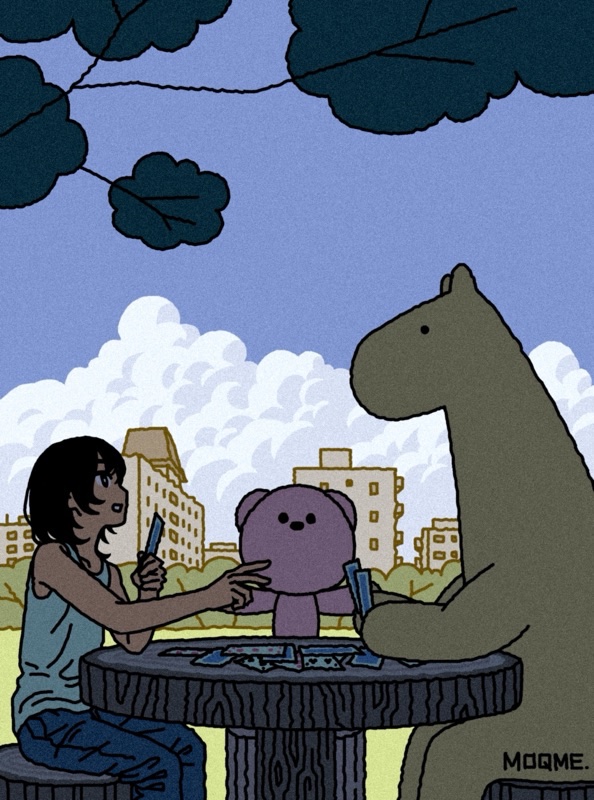
That is the man in the cartoon, swinging at rock with diamonds all around him. He could see the good stuff. He just could not make himself dig toward it.
Once you see why, the usual story about procrastination stops making sense. We say lazy, or bad with time. Mostly, it is neither. Two psychologists, Fuschia Sirois and Tim Pychyl, argued back in 2013 that it runs on emotion. A task makes you feel something you would rather not feel, even just the small dread of starting, and putting it off makes that feeling vanish on the spot. So you scroll, or you suddenly need to clean the kitchen. Dodging the task is a quick hit of relief, and your brain grabs it. The bill goes straight to future-you, who is left holding the guilt and the deadline.
You can even see it on a brain scan. In 2018, a team in Germany scanned 264 people and matched the scans against how much each person put things off. The big procrastinators had a larger amygdala, the little alarm bell deep in the brain that flags anything risky. They also had a weaker link to the part meant to quiet that alarm and get you moving, a region called the dorsal anterior cingulate cortex. Loud alarm, weak off-switch.
And if this is you, you have plenty of company. A big 2007 review found that 80 to 95 percent of college students procrastinate, that roughly one in five adults does it long-term, and that more than 95 percent of them wish they could quit. Students alone burn about a third of their day on it.
The fix falls out of that same split. If wanting and liking are two different systems, then waiting to "feel like it" is waiting for a bus that may never come. The main treatment for the severe version, called behavioral activation, flips the order. You start first, as small as you can stand, before any motivation shows up. The wanting tends to arrive a few minutes after you begin. The diamonds were there the whole time. You just have to swing the pick before you feel ready.
Two economists just published a mathematical proof that AI will destroy the economy.
Not might. Not could. Will — if nothing changes.
The paper is called "The AI Layoff Trap." Published March 2, 2026. Wharton School, University of Pennsylvania. Boston University. Peer reviewed. Mathematically modeled.
The conclusion is one sentence.
"At the limit, firms automate their way to boundless productivity and zero demand."
An economy that produces everything. And sells it to nobody.
Here is how you get there.
A company fires 500 workers and replaces them with AI. A competitor fires 700 to keep up. Another fires 1,000. Every company is behaving rationally. Every company is following the incentives correctly. And every company is building a trap for itself.
Because the workers who were fired were also customers.
When they lose their jobs faster than the economy can absorb them, they stop spending. Consumer demand falls. Companies respond by cutting costs — which means automating more workers — which means less spending — which means more falling demand — which means more automation.
The loop has no natural exit.
The researchers tested every proposed solution. Universal basic income. Capital income taxes. Worker equity participation. Upskilling programs. Corporate coordination agreements.
Every single one failed in the model.
The only intervention that worked: a Pigouvian automation tax — a per-task levy charged every time a company replaces a human with AI, forcing them to price in the demand they are destroying before they pull the trigger.
No government has implemented this. No major economy is seriously discussing it.
Meanwhile the numbers are already tracking the curve. 100,000 tech workers laid off in 2025. 92,000 more in the first months of 2026. Jack Dorsey fired half of Block's workforce and said publicly: "Within the next year, the majority of companies will reach the same conclusion."
Nobody is doing anything wrong. Companies are following their incentives perfectly. That is exactly the problem.
Rational behavior. At scale. Simultaneously. With no mechanism to stop it.
Two economists built the math. The math leads to one place.
Source: Falk & Tsoukalas · Wharton School + Boston University ·
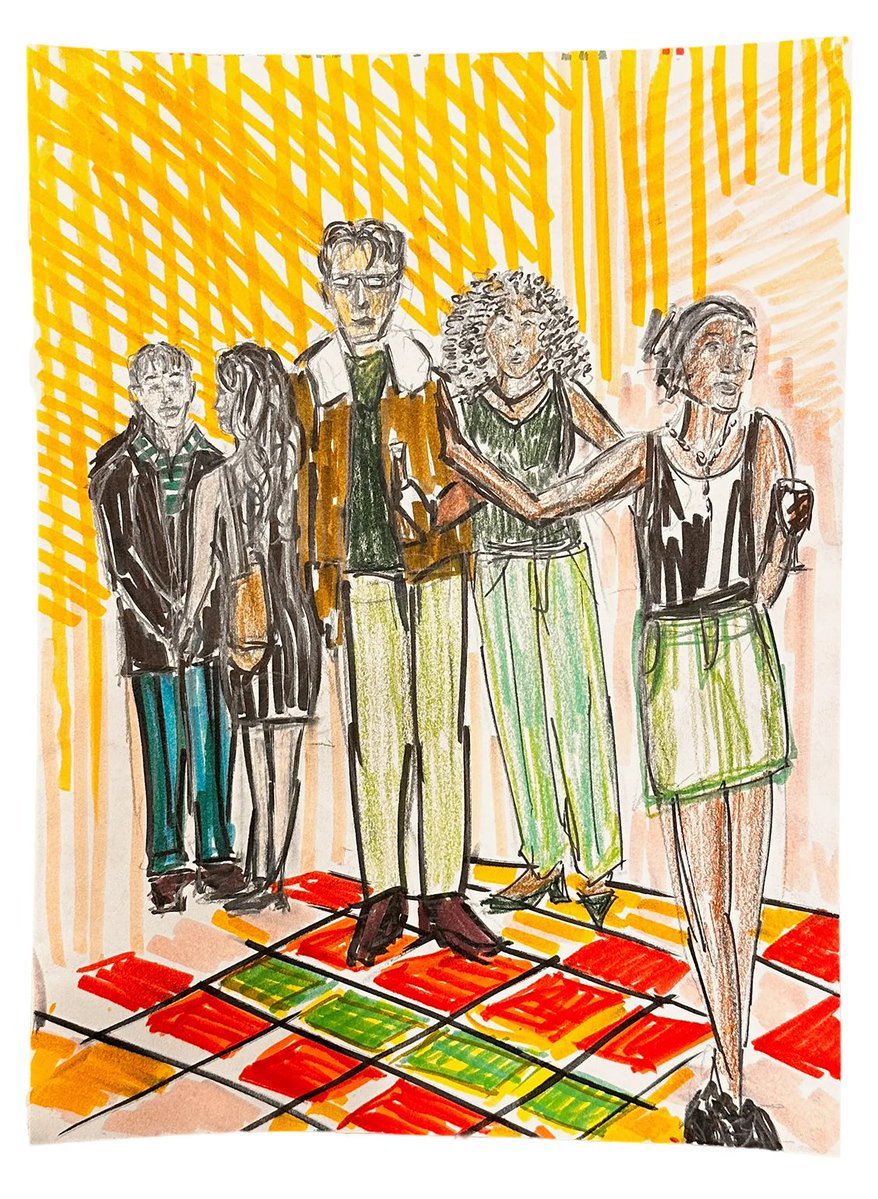
I’m so tired of how many experiences of my life are now taken over by phones and content so for my birthday party this year I told my friends to leave their phones at home and had a sketch artist capture the night instead
Art by Madeline Goddard
The shelf life of "long-term thinking" keeps shrinking. What counted as a 10-year horizon in 2015 is now an 18-month window. Organisations that still plan in decades are planning for a world that will have completely changed three times before they finish.
First trailer for ‘LE VERTIGE’, a film about a man who must prove reality is a computer-generated simulation.
• The film is animated to look like a PS1 game - inspired by ‘GTA Vice City’
• 5 people animated the film using Blender + an app on a iPhone to do motion capture
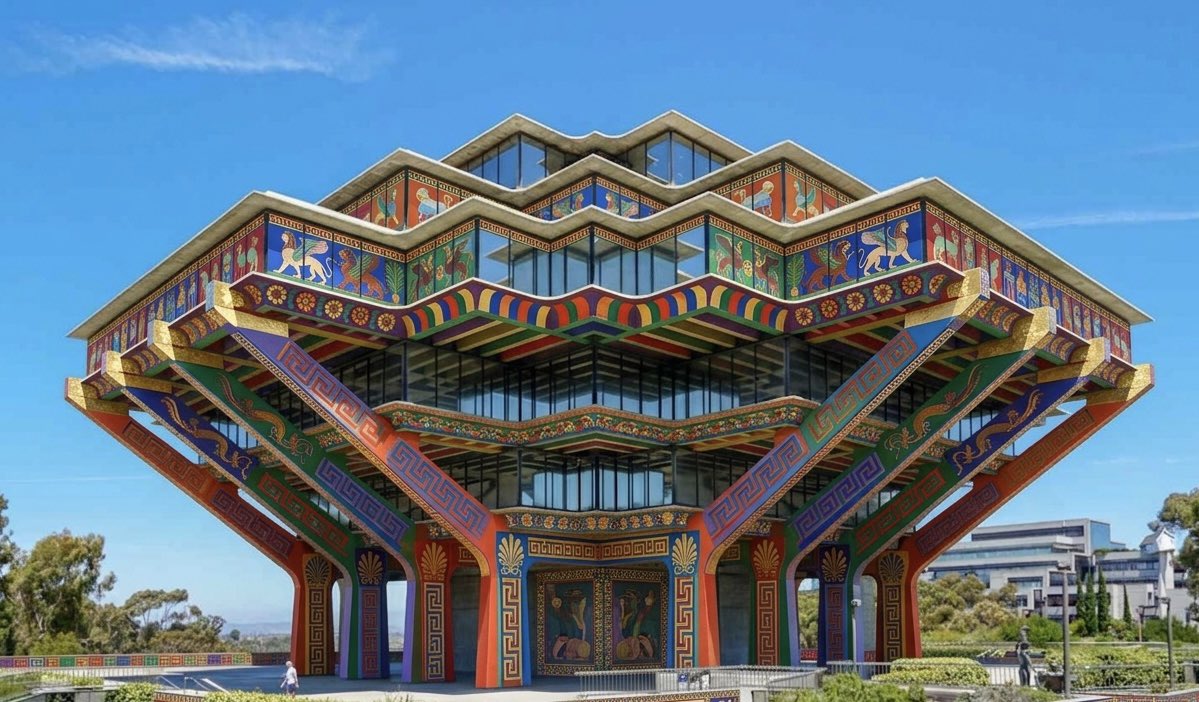
There's a common misconception that Brutalist buildings were unpainted, but thanks to microscopic analysis of the exteriors we can now recreate what they looked like in their prime.