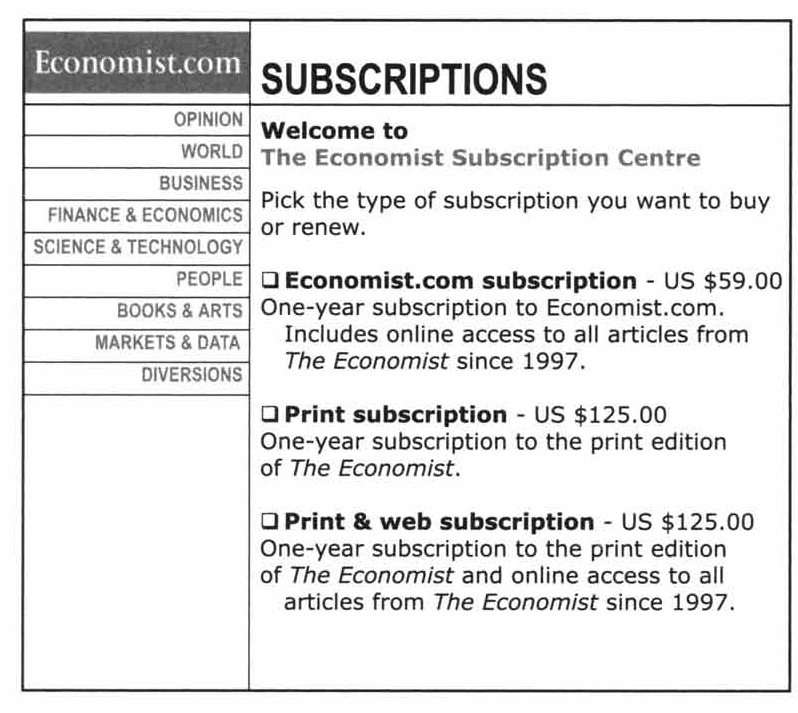
The Economist sold more of its $125 subscription by adding an option nobody wanted.
The offer had three choices: web-only for $59, print-only for $125, and print plus web for $125.
Dan Ariely tested it on 100 MIT students.
With all three options on the table, 84 picked the $125 combo and nobody picked print-only.
Then he removed print-only, the option nobody chose. Just 32 went for the combo, and 68 took the cheap one.
The useless option was doing all the selling.
Sometimes the best way to sell your offer is to put a worse one right next to it.
signs your ad is fine and your landing page is the problem:
> high CTR, low conversions
> the ad promises one thing, the headline promises another
> the hook never shows up above the fold
> the ad sounds like a person, the page sounds like a brochure
> the CTA asks for more than the ad prepared them for
stop making new ads. fix the page.
@immarkwilliam consolidation will 100% get you results, I've seen it across hundreds of accounts, grab the best creative, consolidate into 1 testing and 1 scaling campaign, move the budget up
@herrmanndigital Disagree. Two people with Claude don't create the same output. The difference is now it's not what you physically do that makes you irreplaceable, it's the context and thinking you bring to the table.
Ad angles i keep seeing work (for now):
> the "you're not lazy, your plan is wrong" reframe
> founder story told as a confession, not a flex
> a customer review used word for word as the hook
> "stop doing X" aimed at the thing they already tried
> the late starter: "it's late, not too late"