HAPPENING NOW:
MultiChoice - Canal+ introduces its new subscriber packages for the South African market
The new packages will be launching on 17 September 2026.
- Starter = R99
- Select = R299
- Sports = R399
- Movies & Series = R500
- Premium = R799
* Starter ... is a where you will find Moja Love, new channel Wethu+, Via and others. Mainly local content. You also get Supersport Kickoff where you get 2 Live PSL matches and 2 Live EPL and UEFA
* Select ... offers Mzansi Magic, PSL, Mzansi Magic originals, reality shows.
* Sports ... all the sports you want. All the soccer leagues available to DSTV as well as Rugby.
* Movies & Series ... All the international films and series acquired by DStv
* Premium ... Primarily stats the same as a package where you get access to all that DSTV has on offer.
#KgopoloReports
Folks, when possible, please BUY and eat MORE GUAVAS. The Guava producers of our country are complaining about the generally weak demand for their produce.
We see the same story as with SORGHUM, where demand is generally weak, leading to reduced production.
In my book, The Accidental Mayor, I exposed how Tony Leon's PR Firm - Resolve Communications, improperly tried to facilitate a R300m tender in 2019 for one of its clientsfrom Mashaba as Mayor of Joburg.
Mashaba kicked him out and, from that moment, the DA turned on Mashaba.
I swear Jacinta Ngobese-Zuma must have bought herself a new set of Hart pots. 😳😳
The way she cooked this Nigerian for almost two hours without even giving her a HYDRATION BREAK says it all. 🔥
After hearing this, can a patriotic South African really be against her for FREE?😂
😳😳 Steenhuisen says Resolve Communications, chaired by former DA leader Tony Leon and led by former DA CEO Paul Boughey, ran a campaign against him on FMD and introd clients to him and DA ministers to discuss policy, notably Starlink. Echoes Bell Pottinger and Bain-era issues.
THE PHYSICAL DESTRUCTION OF THE WILD PLANT (CANNABIS SATIVA)🌿
After criminalisation came eradication. The South African state did not simply make cannabis illegal and leave it at that. It waged an active, sustained, and aggressive campaign to physically destroy the plant wherever it grew. From the 1950s onwards, police uprooted dagga plantations and burned the crops. By 1980, they had switched to chemical herbicides dispensed by hand-held pumps.
By the end of the 1980s, helicopters had replaced ground patrols, and aerial herbicide spraying could destroy entire crops in minutes. The chemical first used from the air was paraquat, one of the most toxic herbicides ever produced. After civil society organisations successfully lobbied against paraquat in 1990, the South African Police Service switched to glyphosate, the active ingredient in Monsanto’s Roundup.
Helicopters continued to spray thousands of hectares of cannabis in the remote slopes of the Transkei, the Eastern Cape, and KwaZulu-Natal every year before harvest time. Environmentalists raised concerns that these herbicides could harm other crops, damage human health, and contaminate water sources. Rural communities reported watching their fields wither and die season after season, with no compensation and no legal recourse.
These communities were not drug traffickers. They were among the poorest rural families in the country, living in areas without formal employment, depending on cannabis as a traditional and economic crop the same way their ancestors had for generations. The apartheid state specifically targeted these populations.
Research using police statistics from the mid twentieth century confirms that the apartheid government was a pioneer in supply-side drug control strategies, and that these strategies were concentrated in the most impoverished and predominantly Black rural areas of the country.
The 1992 Drugs and Drug Trafficking Act, which activists called the last apartheid law, extended and codified this targeting. It was not a health policy. It was a continuation of racial and economic control under a new legal framework.
While the South African government was burning fields and arresting farmers, scientists in the 1990s made a discovery that fundamentally changed the understanding of what cannabis actually is and what it does inside the human body. In 1990, a team at the National Institute of Mental Health in the United States mapped the DNA sequence of a cannabinoid receptor in the brain.
This was followed in 1992 by the discovery of the endocannabinoid system by researchers at Hebrew University in Jerusalem, who identified a naturally occurring neurotransmitter in the human body that functioned through the same receptors that cannabis compounds activate.
What this discovery revealed is that the human body has a built-in system specifically designed to interact with the compounds found in cannabis. This system, called the endocannabinoid system, regulates pain, mood, appetite, memory, immune function, and numerous other bodily processes.
The human body produces its own cannabinoid-like molecules, and the plant compounds in Cannabis Sativa fit into the same receptors. This was not a coincidence or a curiosity. It meant that the relationship between cannabis and human biology was not a product of modern drug culture. It was a relationship encoded in human physiology, one that had likely existed for as long as human beings had interacted with the plant.
The endocannabinoid system has since been found to be involved in an enormous range of conditions including chronic pain, inflammation, neurological disorders such as Parkinson’s and Alzheimer’s disease, cancer, epilepsy, multiple sclerosis, psychiatric disorders, and immune dysfunction. The CB1 receptor is located throughout the central nervous system, while the CB2 receptor is predominantly expressed in immune cells. Cannabis compounds interact with both...
Another attempt was made on my life today when four hitmen and their driver raided the complex I used to live in, which I left three weeks ago. They pointed firearms at the security guards and demanded to be shown my house, but the security guards told them they didn’t know me and that no such person lived in the complex.
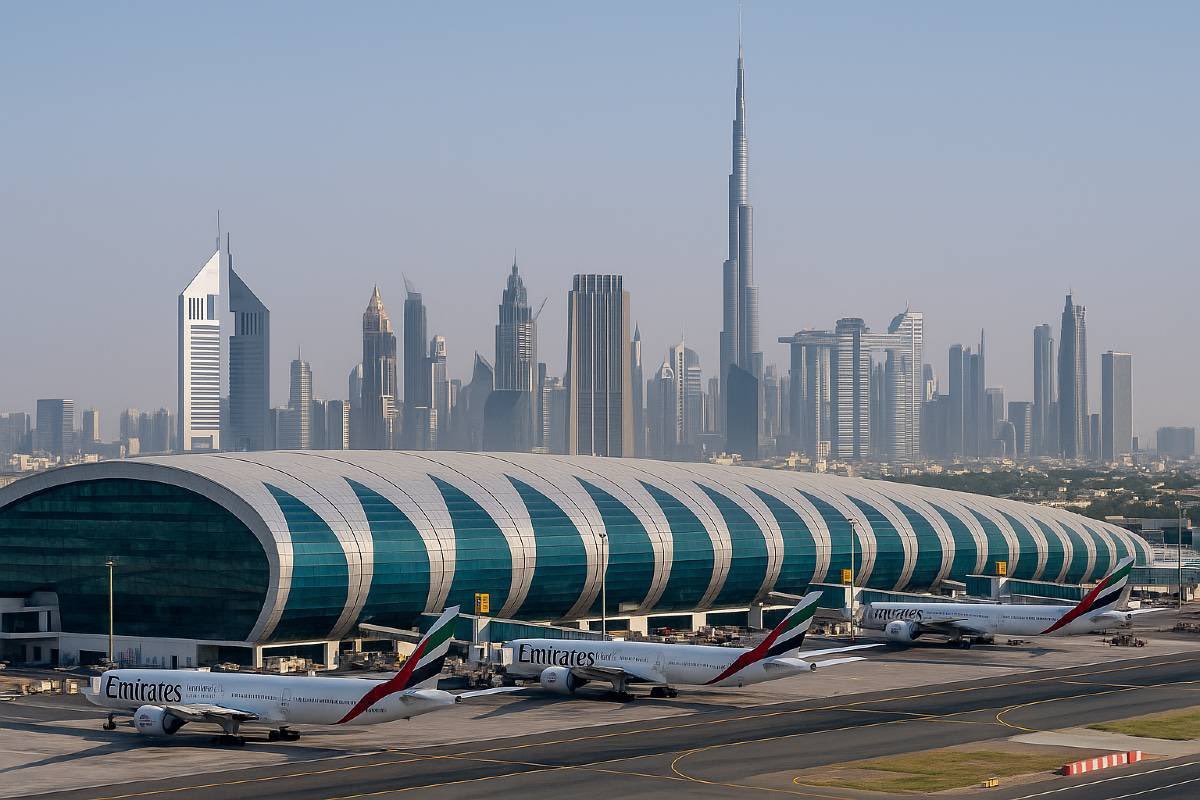
Dubai just shut down. The busiest international airport on earth. Closed. Indefinitely.
Dubai International and Al Maktoum International both suspended all operations on February 28 per official Dubai Airports statement. Over 280 flights canceled. 250 more delayed. The airspace that handles more international passengers than any hub on the planet went dark this morning because Iranian ballistic missiles were flying through it.
Now read the airline list and understand the scale of what just broke.
Emirates. Grounded. Etihad. Grounded. Qatar Airways. Suspended all flights to and from Doha after Qatari airspace closed. Air India. Every single flight to every destination in the entire Middle East. Suspended indefinitely. Turkish Airlines. Suspended flights to Bahrain, Iraq, Iran, Jordan, Kuwait, Lebanon, Oman, Syria, Qatar, and the UAE until at least March 2. Lufthansa. Dubai suspended. Air France. Tel Aviv and Beirut suspended. Wizz Air. Israel, Dubai, Abu Dhabi, and Amman suspended until March 7. British Airways. Affected. Virgin Atlantic. Affected. Japan Airlines. Affected. Norwegian Air, LOT Polish, Scandinavian Airlines, Aegean, Iberia, Air Arabia, PIA, Saudia, Air Algerie. All affected. All grounded or rerouting.
This is not a regional disruption. This is the global aviation network breaking at one of its most critical nodes.
Dubai is not just an airport. It is the single largest connecting hub between Asia, Europe, Africa, and the Middle East. Every flight from Mumbai to London, from Singapore to Frankfurt, from Nairobi to New York that routes through the Gulf is now either canceled, delayed, or burning extra fuel on thousand-mile detours around closed airspace. IndiGo just suspended flights to Almaty, Baku, Tashkent, and Tbilisi until March 28. Not March 2. March 28. A month of Central Asian connectivity erased because Iranian missiles crossed the flight paths.
The cost is compounding by the hour. Rerouted flights burn more fuel when oil is spiking past 100 dollars a barrel because the same conflict that closed the airspace is threatening the strait that moves 21 million barrels a day. Airlines are paying surge prices for fuel to fly longer routes around a war zone that did not exist yesterday morning. Every hour the airspace stays closed, the losses multiply across carriers already operating on thin margins.
And here is what nobody is calculating yet. Dubai’s economy runs on connectivity. Tourism. Trade. Finance. Logistics. All of it depends on DXB being open. The UAE just absorbed an act of war on its sovereign territory with a civilian killed in Abu Dhabi from missile debris. The country that built its entire economic model on being the safe, neutral, connected hub of the Middle East is now closed for business because the country it had no quarrel with fired missiles through its airspace.
Iran did not just attack military bases this morning. Iran shut down the economic engine of the Gulf.
That is a cost Tehran cannot afford to repay and the UAE will not forget.
The danger of pseudo intellectualism is that we are no longer evaluating ideas by their rigor, but by their delivery. We have been conditioned to reward the appearance of intelligence over the substance of it. I challenge you to ask the questions: Who benefits from this idea? What evidence supports it? What’s being simplified… or omitted? Healthy public discourse doesn’t silence voices, but it should raise the standard of what we accept as truth.
Kemi Behari reveals a case against a senior manager (Mojapelo) was settled under pressure. Says evidence pointed to TK Nciza & Sbu Leope benefiting, but after mentioning calling them, her HOD ended the case. #MadlangaCommission
https://t.co/rbXQoAzPSX
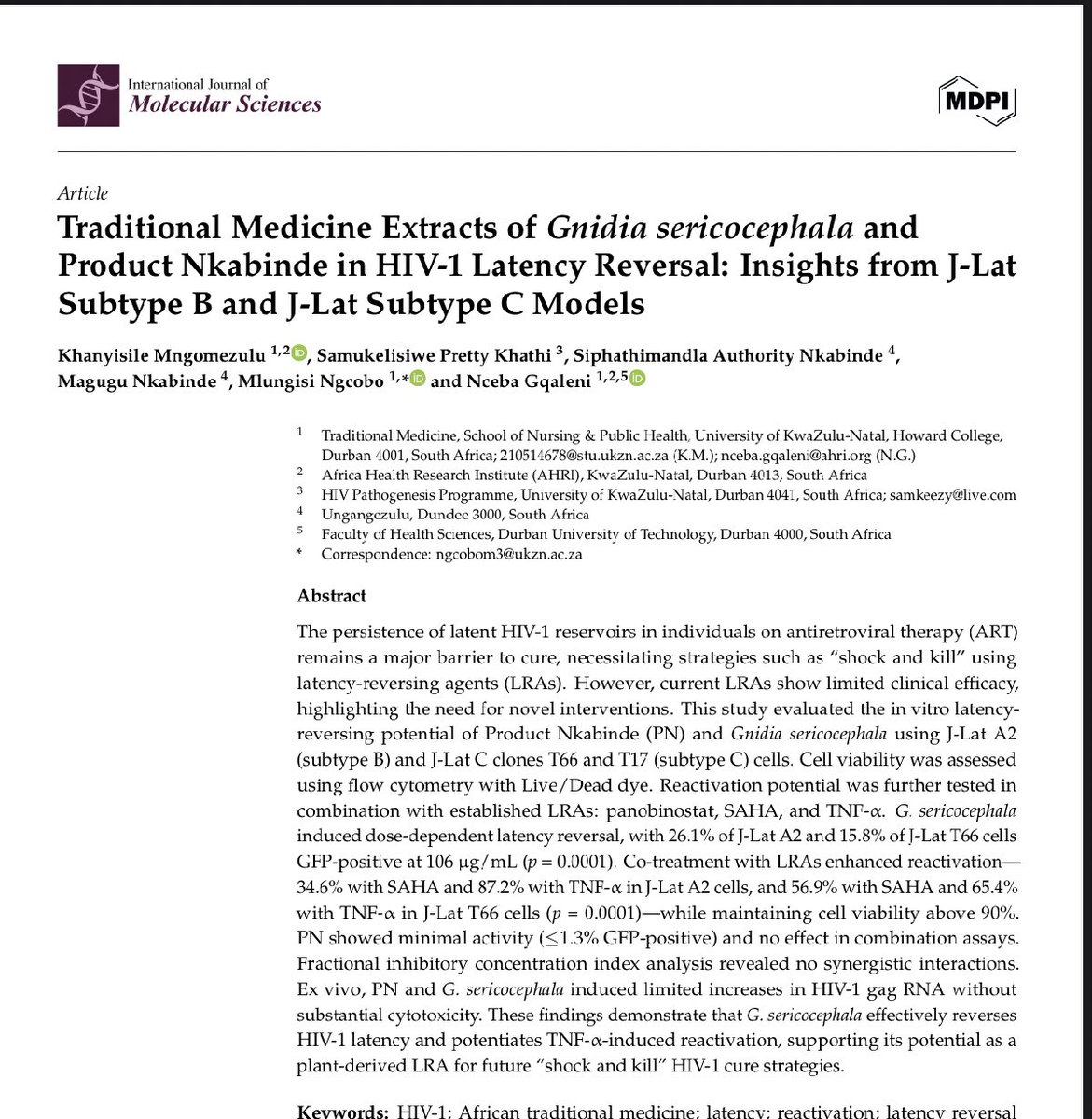
Shout out to friend and colleague Khanyisile Mngomezulu she recently published her excellent work on African Traditional Medicine and HIV management.
Please take time to read and recommend her work. And if you are a researcher in the space please cite her .
Link: https://t.co/d55oS67aMc
How do you destroy a revolution? Easy. You fund it and use that money against it. That’s what Apartheid spy Craig Williamson did to the ANC, SACP and the Black Consciousness Movement🧵🧵
Rich people don't create jobs. They weaponized the“enclosure” of resources that should have been available to everyone. They leave the rest of the population with nothing, so they can force them to work for less than they deserve to survive.
Mindblowing.
🔍 EXCLUSIVE: How did a church leader allegedly know which judge would be assigned a high-profile IPHC succession case — seven months before it landed on her desk? ❓⛪
In a revealing interview, Judge Portia Phahlane speaks in her own words about the arrest, the explosive claims of bribery, and the bitter battle for control inside the International Pentecostal Holiness Church. ⚖️😱
When places of worship become crime scenes, the whole Christian community is at risk. We unpack the timeline, the players, and the unanswered questions that could reshape trust in our institutions. ⚠️
▶️ Full episode soon on Positive Talk YouTube channel.📻 Repeats on Radio Panache — check local listings.💬 Watch, share, and tell us what you think: who benefits when justice and faith collide?
#PortiaPhahlane #IPHC #ChurchScandal #InvestigativeJournalism #Justice #YouTube #RadioPanache #WatchNow