@CoderBora nums = [random.randint(0, 9) for _ in range(10000000)]
freq = Counter(nums)
for i in range(1,11):
print(f"{i}: {freq[i]/10000000*100:.3f}%")
i don’t understand why figma is not focusing on this concept they already have a solid infrastructure just fine tune the models and work around agents for it so much needed in the industry
Introducing Claude Design by Anthropic Labs: make prototypes, slides, and one-pagers by talking to Claude.
Powered by Claude Opus 4.7, our most capable vision model. Available in research preview on the Pro, Max, Team, and Enterprise plans, rolling out throughout the day.
i already can see that the model’s (opus and sonnet) reasoning capabilites were better 3-4 weeks ago and they really stopped reading the code on the specific file and just answering and editing with info from portions of the code itself.
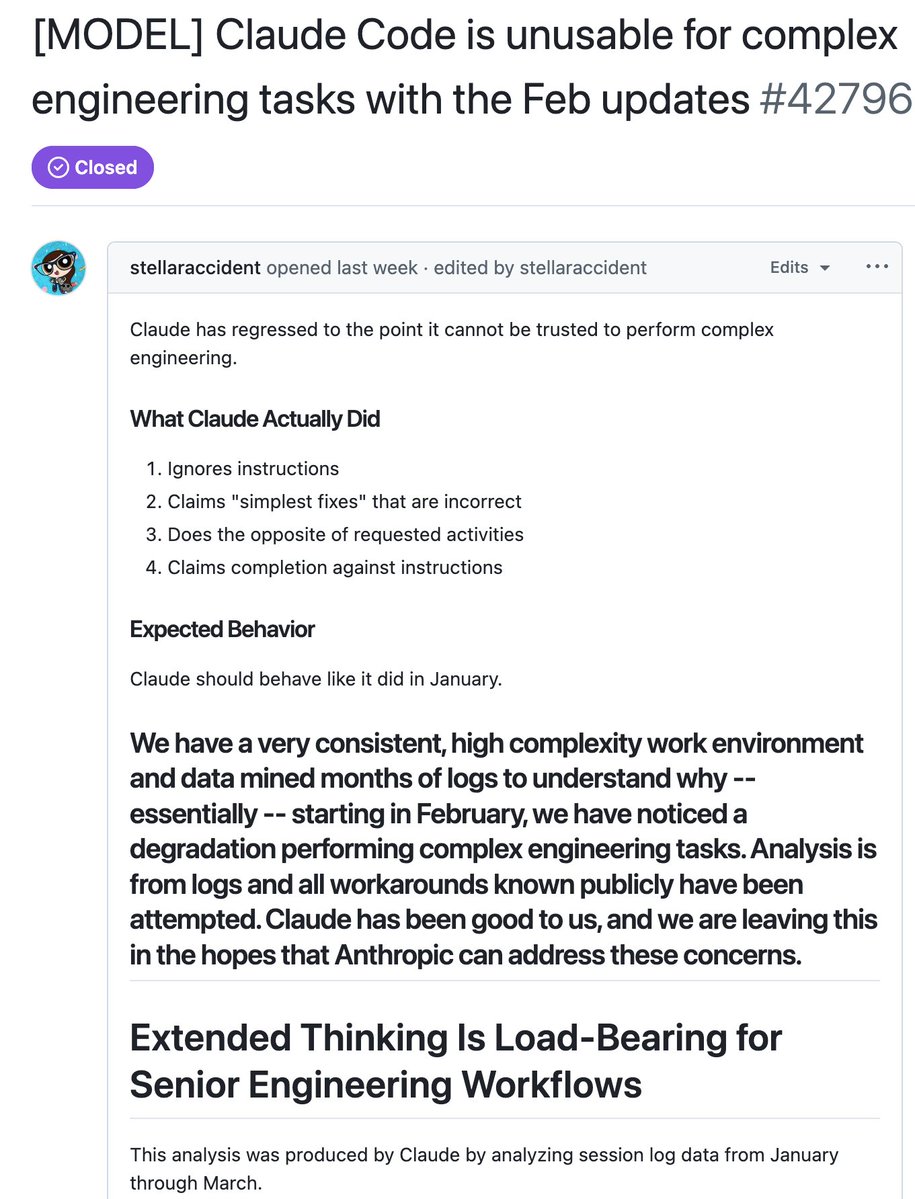
AMD Senior AI Director confirms Claude has been nerfed. She analyzed Claude's session logs from Janurary to March:
> median thinking dropped from ~2,200 to ~600 chars
> API requests went up 80x from Feb to Mar. less thinking and failed attempts meaning more retries, burning more tokens, and spending more on tokens
> reads-per-edit dropped from 6.6x → 2.0x. model stops researching code before touching it.
> model tried to bail out or ask "should i continue" 173 times in 17 days (0 times before March 8).
> self-contradiction in reasoning ("oh wait, actually...") tripled.
> conventions like CLAUDE.md get ignored because there's less thinking budget to cross-check edits
> 5pm and 7pm PST are the worst hours, late night is significantly better. this means the thinking allocation is most likely GPU-load-sensitive.
Postgres wasn't designed as a job queue, but many apps use it as one right alongside analytics, OLTP, and everything else.
Our latest blog goes deep on what to be aware of when doing this and how the situation has improved for Postgres over time.
oracle has already placed a massive high-stakes bet on ai infra. when banks grew cautious on ai, instead of slowing down they doubled the gamble ramping up capex by slashing human costs. this layoff shows how they are in debt with this.
🦔 Oracle laid off between 20,000 and 30,000 employees Tuesday morning, roughly 18% of its global workforce, via a single email sent at 6am EST with no prior warning. System access was revoked almost immediately after. The cuts are expected to free up $8-10 billion in cash flow. Oracle's stock has lost more than half its value since September 2025 and the company now carries over $124 billion in debt, up from $89 billion a year ago, with free cash flow running negative $10 billion last quarter.
My Take
Oracle posted a 95% jump in net income last quarter and still eliminated 18% of its workforce by email before most people finished their morning coffee. This is not a company in distress in the traditional sense. It's a company that made an enormous debt-funded bet on AI infrastructure and is now converting its workforce into cash flow to service that debt.
We've covered Oracle's AI gamble for months. The $300 billion OpenAI deal through Stargate, $50 billion in capital expenditure this fiscal year, over $124 billion in total debt. Multiple US banks have pulled back from financing Oracle-linked data center projects. Bondholders have sued Oracle claiming it concealed how much additional debt the OpenAI deal would require. The credit default swap spread hit a three-year high earlier this year, meaning debt investors are genuinely nervous about getting paid back.
The workers who got that 6am email built the products Oracle has monetized for decades. The bet that eliminated their jobs was made by people who were already paid regardless of how it turns out. That is the part of the AI infrastructure race that doesn't show up in the capex announcements.
Hedgie🤗
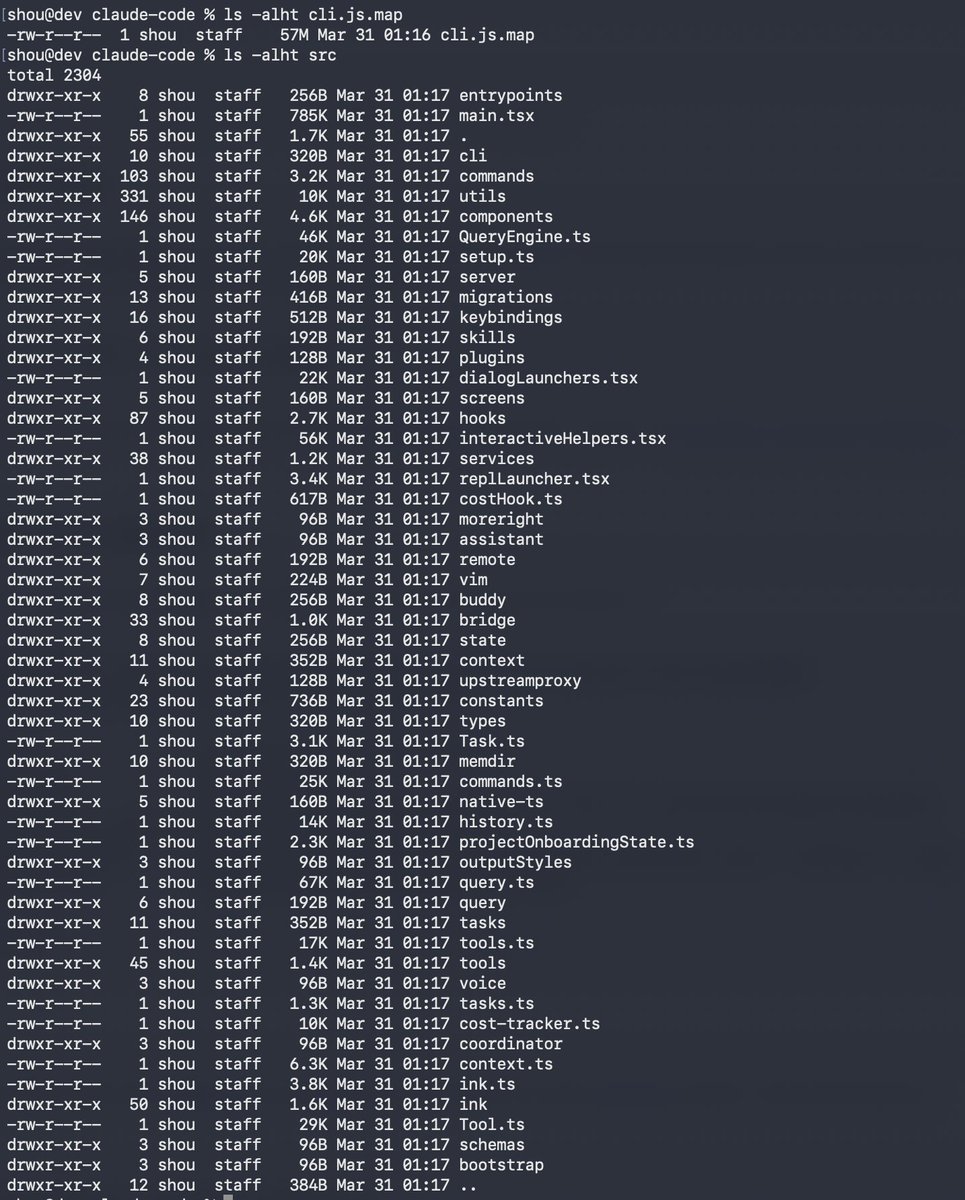
Claude Code leaked their source map, effectively giving you a look into the codebase.
I immediately went for the one thing that mattered: spinner verbs
There are 187
the axios maintainers npm credentials were hacked the attacker bypassed ci/cd completely and published the malicious versions directly through npm cli
i think the most sensible approach is to pin packages to exact versions and set a minimum release age constraint
🚨 CRITICAL: Active supply chain attack on axios -- one of npm's most depended-on packages.
The latest [email protected] now pulls in [email protected], a package that did not exist before today. This is a live compromise.
This is textbook supply chain installer malware. axios has 100M+ weekly downloads. Every npm install pulling the latest version is potentially compromised right now.
Socket AI analysis confirms this is malware. plain-crypto-js is an obfuscated dropper/loader that:
• Deobfuscates embedded payloads and operational strings at runtime
• Dynamically loads fs, os, and execSync to evade static analysis
• Executes decoded shell commands
• Stages and copies payload files into OS temp and Windows ProgramData directories
• Deletes and renames artifacts post-execution to destroy forensic evidence
If you use axios, pin your version immediately and audit your lockfiles. Do not upgrade.