Imagine telling someone in April that in a couple months Brandon Marsh is gonna be up with the bases loaded late in a game and the other team is gonna take a lefty out to bring in a righty
The Anxious Generation was published two years ago today, in a very different world. Back then, the most common objection I got was resignation: "The train has left the station." "You can't put toothpaste back in the tube." "It's how the kids connect today."
Today, the world looks very different. It turns out that if our kids were all on a train and we learned it was heading toward a collapsed bridge, we'd find a way to stop it and bring them safely back to the station. That’s what’s happening now.
After the historic verdicts in Los Angeles and New Mexico, today is a great day to reflect on the capacity of people in democratic societies to take action, even when opposing some of the most powerful corporations in history. We're getting access to the courts. We're getting phone-free schools. We're seeing whole neighborhoods letting kids out to play, unsupervised, which is what we older folk all remember as the best part of childhood.
So I want to recognize:
--The mothers (and, right behind them, fathers) who rose up by the millions and powered the movement.
--The farsighted governors and legislators in red states and blue states who have been innovating on policy solutions.
--The leaders of a dozen of nations, who are raising the age to 16 for opening social media accounts (with a special shoutout to Australia, for going first).
--The teachers and school administrators who had their classrooms disrupted for 15 years, and who are now eager to think through new solutions as screens have taken over and obstructed learning.
--The grassroots organizations who have been dedicating their efforts to advocate for all of the above in their local communities.
--The millions of members of Gen Z who have been rising up, demanding agency over how they spend their lives in the digital era, and finding better ways to connect in real life.
And one final group: the survivor parents--the ones you saw in those pictures of people embracing on the front steps of the LA courthouse. I have met many over the years. I am in awe of their courage and tenacity, their willingness to tell their stories of loss, over and over again, to different audiences, in the hope that no other parent would have to endure what they have endured. At long last, juries and legislatures are hearing you, and are acting.
Together, we are calling the train back to the station. Together, we are rolling back the phone based childhood and reclaiming life in the real world.
The work continues. If you’re not already involved, join us: https://t.co/HdJDTKOQ3T
I hate having a president who celebrates when people die. Basic respect and human decency are still worth caring about, even if a large number of people have decided that’s lame and old-fashioned. I hope we recover that before long.
As a lifelong, taxpaying New Yorker, I am extremely worried about the ramifications of the estate tax proposal on New Yorkers if it gets signed into law. I want to be clear up front; this isn't about politics for me. I'm not fighting for the billionaire class, and I'm certainly not one of them. What I am is someone who understands basic math, economics, and business, who has watched what happens when states push tax policy past the breaking point.
Here's what's on the table right now: a proposal to reduce New York’s estate tax exemption from $7.1 million down to $750,000, an 89% cut while increasing the top rate from 16% all the way to 50%. This is embedded within a batch of revenue ideas sent up to Albany to try and plug a $5.4 billion hole in the city budget.
I want to discuss who this estate tax actually hits, because it’s certainly not the ultra-rich. The ultra-rich weren’t exempt as only the first $7.1 million avoided estate taxes. A $750,000 threshold in the New York metro area is not reasonable. The median home price in New York City hit roughly $809,000. In Nassau County you're looking at $820,000. Suffolk County sits around $675,000. Westchester is $754,000. If you bought a house in the city, Nassau, or Westchester and you spent 30 years paying off that mortgage like a responsible adult, congratulations, you're now above the estate tax threshold. What’s even better is that you hit the threshold before even factoring in your 401k, life insurance, savings, a family business, or other investments.
This isn't a tax on the wealthy it’s a tax on a retired couple in Bayside who paid off their split-level. It's a tax on the family that runs a deli in Astoria and owns the building. When you force those families to come up with 50% of the value above $750,000 after someone dies, what do you think happens? They sell. They liquidate. The house goes, the business goes, and the generational wealth that took a lifetime to build disappears in a single tax event. Family businesses which are the backbone of employment in neighborhoods all over this city get gutted.
According to the State Department of Taxation and Finance's own numbers New York's tax structure is incredibly top heavy as millionaires paid 44.6% of all personal income tax collected in 2024. The top 200,000 filers covered 51.9%. The bottom half of all earners paid 0.2%. Think about how fragile that makes us. You don't need a mass exodus. You need a few thousand people to change their mailing address to Palm Beach or Austin and the budget math falls apart.
Here's the part that really gets me though. The biggest victims of "tax the rich" policies aren't the rich. The rich utilize their resources and leave once they have had enough because their resources make them mobile. The people who get crushed are the ones who stay such as teachers, firefighters, nurses, and the small business owner. They can’t simply pick up and go. The harsh reality is that when the wealthy leave and the tax base shrinks, the city still needs the same amount of money to run the subways, pay the cops and keep the lights on. So where does it come from? It comes from everyone left behind as they are forced to pay higher taxes, and higher fees.
What may bother me more is the double taxation piece. The money in someone's estate didn't just appear from thin air. They earned it and paid income tax. They invested it and paid capital gains. They bought property with it and paid property taxes every single year. They bought things and paid sales tax. Every dollar in that estate has already been taxed multiple times over the course of a lifetime. Now when they die the state wants to take half of everything above $750,000? At what point does it stop being a tax and start being confiscation? That's a genuine question I have because if you work your whole life, play by every rule, pay every tax along the way, and the government still takes half when you die what exactly was the point of saving any of it?
A $750,000 threshold doesn't catch billionaires it catches the middle class. It catches people who were never wealthy, they were just disciplined. They bought a house, they didn't sell it, they put money away for retirement, and they wanted to leave something for their kids. Punishing that with a 50% tax rate sends a very specific message: the state believes your assets belong to it first and your family second. I don't care where you fall politically that should bother you.
I'll say this very simply. When you tax people to the point where they feel targeted, they leave. When they leave the burden falls on everyone who can't. When that burden gets heavy enough, more people figure out a way to go. That's not theory, that's exactly what IRS data and Census numbers have been showing us for half a decade straight.
New York is standing at a fork in the road right now. One direction is more punitive taxation with an increasing dependence on a shrinking pool of high earners who increasingly have one foot out the door. The other direction is putting forward competitive tax policy, fiscal discipline, and creating an environment where building wealth and creating jobs isn't treated like something the government needs to punish. I know which path leads somewhere good. I just hope the people making the decisions figure it out before there's nobody left to tax.
@amitisinvesting@BillAckman@chamath@patrickbetdavid@PBDsPodcast
Welfare State explained for people who actually work for a living.
The system is working. Just not for you.
You wake up before your kids do. You drive an hour to a job that barely covers the bills. You eat lunch at your desk. You miss the school play. You come home tired, check your paycheck, and half of it's gone before you touch it.
Now picture your neighbor.
She hasn't worked in three years. Her kids are in free childcare. Her rent is paid by the state. Her groceries are covered. Her healthcare is free. She takes home more than you do.
Not because she's cheating the system. Because the system told her to.
Her caseworker ran the numbers on an $18/hour job offer. Taking it would lose her food assistance, childcare, cash benefits, healthcare. All in, that job would leave her $27,000 poorer per year than staying home.
She didn't take it. You'd have done the same.
Now picture your buddy and his girlfriend. Together six years. Two kids. They want to get married. But the government charges them $20,200 a year to be a legal family. So on paper, they aren't one.
Now picture your uncle. Bad back but functional. He can work. But disability pays $28,000 plus free healthcare. Working part-time pays $22,000 with nothing. Over 1,400 law firms exist solely to help people make that switch. Less than 1% ever come back to work.
These aren't lazy people. They're doing basic math.
And the math is everywhere.
There are over 80 federal welfare programs in this country. Not 5. Not 10. Over 80. That's before you touch the states. California adds 23 more. New York adds 24.
A family of four on maximum federal benefits takes home $90,000 a year. Tax free. Without working.
You know what the median family that actually works makes? $80,000. Before taxes.
Read that again. The family on welfare takes home more than the family going to work every day. And the working family is paying for it.
In California, a family of four can pull $114,000 a year in combined benefits. In New York City, $118,000. The city will pay $4,100 a month for your apartment alone. That's a doorman building.
It doesn't stop at the border.
In the UK, a jobless family with three kids takes home £46,000 in benefits. A family with both parents working full-time on minimum wage? £28,000. You'd need to earn £71,000 to match what the non-working family gets for free. And in November 2025, the UK removed its child benefit cap entirely. Every additional child now unlocks more money. No limit.
Now here's the part that should make you set your phone down.
There's a nurse in Sacramento. She makes $85,000. Works nights. Takes home $61,000 after taxes. No childcare help. No food assistance. No housing voucher. Makes too much for any of it. She is funding a system that pays other people more than she takes home. And her only return on investment is the bill.
Maybe that nurse is your wife. Maybe that family making $65,000 with two jobs and no help is yours. You were told to go to school, get a job, work hard, play by the rules. And for that you get to fund a system that pays people more than you make.
$1.2 trillion a year. $3,600 from every working American. Fifty years. Same poverty rate as 1973.
We didn't build a safety net. We built a gateway drug. You get on one program, that qualifies you for three more, those qualify you for five more. Before long you're enrolled in fifteen programs and any attempt to earn more costs you thousands in lost benefits.
The system doesn't help you climb out. It makes climbing out expensive.
And if you dare question any of it, you're "heartless." You "hate poor people." You "want children to starve."
No. I want a system that helps people get back on their feet. Not one that pays them to stay down.
When you can stack 80 programs to clear six figures without working, you don't have a safety net. You have a country addicted to dependence.
Every bureaucrat needs the poverty to justify their job. Every politician needs the dependency to justify their vote. Every program needs more funding to justify its existence.
They don't want to solve poverty. A solved problem doesn't need a budget.
You paid for it. You're still paying for it.
And the people running it are going to ask you to pay more.
NYC taxes explained for people who don't pay attention:
Property tax. Income tax. Sales tax. Unincorporated business tax. Commercial rent tax. Hotel tax. Mortgage recording tax. Mansion tax. Utility tax. Congestion pricing. Twenty-plus taxes.
And the mayor wants more.
Let me show you what that actually feels like.
You're 26. First real job. $85,000. You feel rich.
Then you see your paycheck.
Federal takes a cut. Fine. Then New York State takes 6%. Then New York City takes another 3.5%. Then there's a "metropolitan commuter mobility tax" you've never heard of.
Your $85K is now $54K before rent.
You grab coffee. 8.875% sales tax. You take an Uber to the airport. Congestion pricing just added $9. Your landlord raised rent, he's passing along a property tax increase you'll never see on a bill but you're paying every month.
You're not rich. You're not even comfortable. You're just surviving. But fine. It's New York. You chose this.
Now here's the part nobody talks about.
In 2000, NYC's budget was $40 billion for 8 million people. That's about $5,000 per person.
Today it's $121 billion for 8.5 million people. $14,244 per person.
Population grew 6%. Inflation was 82%. Spending per person nearly tripled.
So things must be three times better, right?
In 2017, 51% of New Yorkers rated quality of life as good. Today it's 34%.
Only 12% think the city spends money wisely. Only 22% feel safe on the subway at night. Felony assaults hit a 24-year high.
They spend $31,000 per student on education. Less than half kids can read at grade level.
They tripled the spending. Everything got worse.
Where'd the money go?
Pensions up 115%. Outsourced contracts up $7 billion. A brand new $5 billion asylum seeker expense that didn't exist three years ago. Social services doubled. 302,000 city employees. Debt ballooning.
And the new mayor doesn't look at this and say "we need to spend better."
He says "we need to tax more."
A 2% income tax hike that would push the combined state and city rate to 16.8% -> the highest in the entire country. Tax increases that impact everyone.
His supporters chant "tax the rich" at rallies. The top 1% already pay 40% of the city's income tax. And they're leaving anyway. NYC's share of the nation's millionaires dropped from 7% to 4%. They have accountants. They have Florida.
You know who can't leave?
Your uncle with the restaurant. Your parents in that house. You, watching your paycheck disappear into twenty taxes before you can save a dollar.
You need to make $312,000 in New York to live the same lifestyle as someone making $125,000 in Houston.
Houston spends $2,850 per person. No state income tax. No city income tax. Population growing.
NYC spends five times more. Worse results.
NYC is a Netflix subscription that keeps raising the price while the product gets worse.
And you can't cancel.
$40 billion wasn't enough. $60 billion wasn't enough. $80 billion. $100 billion. Now $121 billion.
It will never be enough. Because the problem was never revenue.
There is enough money. There has always been enough money.
They don't need more of yours. They need to do better with what they already take.
I hope you understand what's at stake.
We don’t tax unrealized gains. If your stock goes up but you don’t sell, that’s not taxable income. I get it. I agree with it.
So why doesn’t that same logic apply to property taxes, especially homes?
Why is it that if my house value goes up for whatever random fucking reason, I suddenly owe the government more money?
WOW! So-called experts predicted that poverty would skyrocket in Argentina when President Javier Milei OBLITERATED the welfare state & cut spending, but the opposite is happening. The poverty rate in Argentina is hitting historic lows.
In Buenos Aires, poverty dropped from 28.1% to 17.3% and extreme poverty fell from 11.0% to 5.3% in Q3 2025.
The same "experts" said rents would go up when he terminated the rent control law. The exact opposite happened. Landlords put thousands of units back on the market and rents came way down.
Capitalism is the greatest system for pulling people out of poverty the world has ever seen.
🚨 Here is the full 42 minutes of my crew and I exposing Minnesota fraud, this might be my most important work yet. We uncovered over $110,000,000 in ONE day. Like it and share it around like wildfire! Its time to hold these corrupt politicians and fraudsters accountable
We ALL work way too hard and pay too much in taxes for this to be happening, the fraud must be stopped.
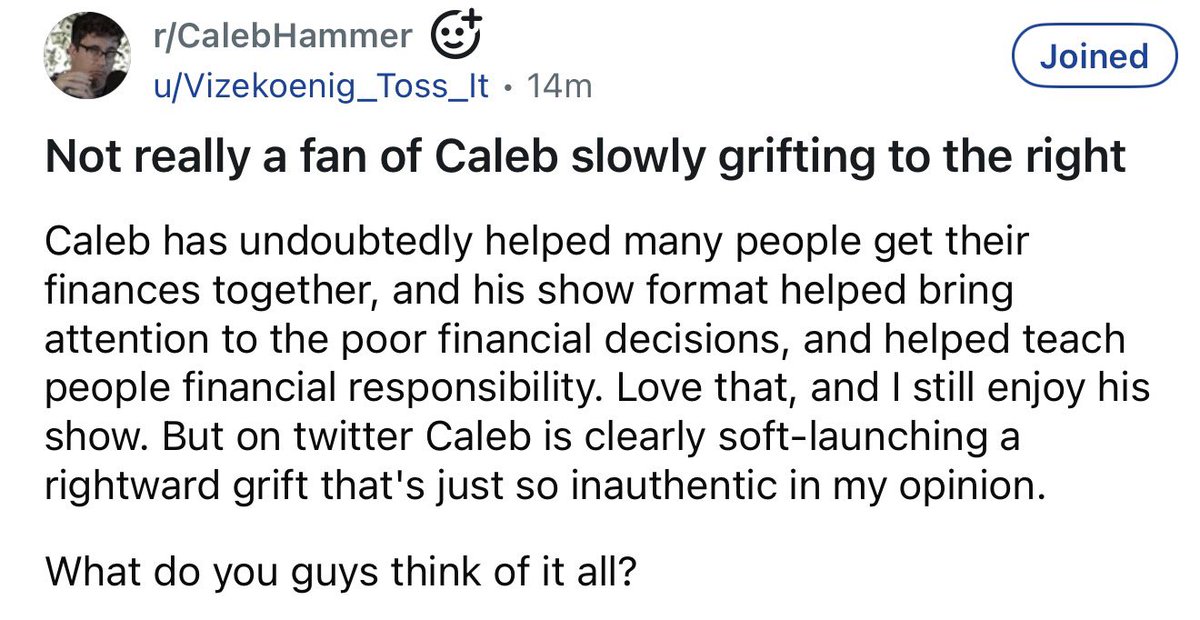
I’ve done 3 things: called out scam accounts, pointed towards economic policies that don’t work in countries (only statistics), and said repeat violent criminals should be away from the general public.
If you’re considering this “grift to the right”, you might be an extremist.
How about instead of 50 year mortgages, we make it illegal for black rock vanguard and any other multi billion or trillion $ company to buy up single family houses.
That would be a good start.
I’m a Trump guy. Voted for him 3 times. Donated to his campaign. Spent countless hours of my life making memes in his honor. I want nothing more than for him to succeed.
But this “Golden Age” rhetoric ain’t it. The job market sucks, shit is too expensive, and it’s ringing hollow with people.
I realize things are looking up, and I’m convinced they will straighten out. But spiking the football without scoring a touchdown is a bad look, especially after the election.
There’s a ton of work to do before the midterms. Less talky, more walky please.
Thank you for your attention to this matter.
PS - (Can’t wait for the inevitable “unfollowed” replies simply for voicing my opinion on an app where people voice their opinions).
🚨 BREAKING: In an incredible moment, newly-elected Sen. Dave McCormick (R) and Sen. John Fetterman (D) stood together in DC and SLAMMED the Schumer Shutdown
FETTERMAN: "Even though we are in a different party. We both want to talk about why we believe it's so important to reopen this government."
MCCORMICK: "23 days, 12 votes, Senator Fetterman and I have both voted to open up the government. We agree on that 100%. It's really starting to hurt Pennsylvania. And Pennsylvania's air traffic controllers, border patrol, and also 2 million recipients of SNAP."
FETTERMAN: "We both vote to open up our government. We're in a different party. We're on the same team for Pennsylvania and our nation."
This is the kind of thing you USED to see before the left turned to mainstreaming pain and violence. Keep it up!
Yeah, this is something that I feel like liberals still aren’t understanding, but it’s hugely important in driving people to the center-right. If the smart, reasonable guy won’t do the smart, reasonable thing, but the dumb, unreasonable guy will, then which one is actually smart and reasonable?