XYO: The Sovereign Anchor of the Layer One Olympus
The mainnet launch of XYO Layer One and its utility token, XL1, has stirred passionate discourse among early adopters, particularly over the decision to allocate a portion of XL1’s total supply for public acquisition through various CEX’s (https://t.co/3en50Ru5p0, Kraken, KuCoin, MEXC, etc) and one DEX (Uniswap). For those who have championed XYO from its genesis, this move provoked unease, as the optimal path would have restricted XL1 acquisition to ecosystem participation through staking, a model that more properly honors the steadfast loyalty of XYO’s original investors. Yet, the dual-token framework, far from undermining XYO’s significance, elevates it as the divine sovereign of a revolutionary, data-centric Layer One blockchain, upholding the social contract between project and community/investors while addressing the technical imperatives of a high-throughput ecosystem.
XYO stands as the bedrock of the Layer One ecosystem, indispensable for both governance and consensus. By staking XYO, holders fortify the network’s resilience, anchoring its long-term stability while earning XL1 rewards and wielding authority over protocol upgrades, parameter adjustments, and transformative ecosystem decisions. In the realm of consensus, XYO fuels the Proof of Perfect mechanism, where staked Validator Nodes and Block Producer Nodes rank and validate chain extensions based on validity, recency, and protocol fidelity, sidestepping the need to process the entire chain history. This ingenious algorithm optimizes efficiency for data-intensive applications, ensuring that XYO remains a vital force within the Layer One microcosm, far from obsolete.
It is imperative to comprehend why the XYO team, after years of avoiding so, forged their own Layer One blockchain—arguably the first Layer One blockchain optimized as a data oracle for geospatial, DePIN, and RWA applications, distinguished by its innovative design and unparalleled ecosystem scale. No existing Layer One could adequately house the seven-plus years of geospatial data amassed by XYO’s network of over 10 million nodes, nor support the relentless stream of DePIN-driven data fueling AI, logistics, and beyond. As Markus Levin, XYO’s co-founder, has articulated, the team resisted building a proprietary Layer One for the last seven years—see the following video from 21:15 to 23:42 | https://t.co/NIPy4fh5iy.
Lingering in anticipation of an external savior blockchain was untenable—the team simply couldn’t afford to dilly-dally around within such a nascent and primed niche—and such inertia would have stifled innovation and betrayed the project’s vision. Thus, XYO Layer One arose as the Olympus of the ecosystem—a meta-physical dominion that enshrines the decentralized, real-world data, the “artifacts of the kingdom” amassed by XYO’s vast network of over 10 million nodes, forging an unassailable bridge between the physical and digital worlds, crafted without reliance on external forces to deliver the Layer One XYO required.
The creation of XL1 was a technical necessity, engineered to meet the demands of a high-throughput Layer One for transactions, gas fees, and node rewards. A single-token model, transmuting XYO into XL1, would have shattered the inviolable social contract with early adopters, obliterating the identity of the token (XYO) that embodies their unyielding dedication. Such an act would have been a profound betrayal, dismantling XYO’s identity as the cornerstone of a decentralized data revolution. The dual-token model, by contrast, enshrines XYO as the sovereign deity of the ecosystem, while XL1 serves as its swift messenger, executing the operational mandates of the Layer One Olympus.
This is not a zealous defense of the symbiotic dual-token model, but a resolute acknowledgment of its necessity to balance innovation with fidelity to XYO’s original vision. XYO is the token for those who stand unwavering in their commitment to a pioneering blockchain solution, the ride-or-die stewards of a technological revolution. Ownership of $XYO, whether staked or held, empowers ecosystem participants to shape the destiny of the Layer One Olympus, ensuring their voices guide its evolution. The #XL1 sale, though contentious, is a mere shadow against the towering significance of #XYO as the ecosystem’s sovereign foundation.
To illustrate: XYO is the king, Zeus, reigning with divine authority; XL1 is the messenger, Hermes, swiftly executing the decrees of Zeus; and Layer One is the kingdom, Olympus, flourishing under their unified dominion. For those devoted to XYO’s vision, this structure affirms their stake in a decentralized, data-driven future, a legacy forged by loyalty and innovation
When AI agents have no way to verify what's real, they guess. And when they act autonomously on those guesses, there's no record of what happened or why.
Markus Levin of @OfficialXYO breaks down Data Lakes, the @Theta_Network partnership, and why data provenance is the missing layer in our latest interview.
🚨 EVERYTHING THAT COULD GO WRONG FOR MARKETS WENT WRONG TODAY.
S&P 500 down -1.65%, wiping out $1.14 trillion.
Nasdaq down -2.60%, wiping out $1.11 trillion.
Gold down -3.38%, wiping out $1 trillion.
Silver down -6.9%, wiping out $280 billion.
Bitcoin down -6.31%, wiping out $80 billion.
In total $2.5 TRILLION wiped out in a single session. These were not isolated moves. Everything started breaking at the same time.
It started with the jobs report this morning.
The US economy added 172,000 jobs in May. Wall Street expected 88,000. That is almost double.
On any normal day, strong jobs is good news. But inflation is already at 3.8% and oil is sitting at $90. A labor market this strong tells the Fed it cannot cut interest rates and may actually need to raise them.
The probability of a rate hike this year went from 40% to 57% in a single day. That spooked every investor holding tech and growth stocks because higher rates mean those stocks are worth less today.
Then the AI trade started cracking.
Yesterday Broadcom reported record earnings: revenue up 48%, AI chip sales up 143% and the stock still crashed 12.6%. The reason was simple.
Broadcom did not raise its AI revenue targets for the year. Investors had expected it to. That single miss made people ask a question they had been avoiding for months: are we paying too much for AI stocks?
That question got louder today when a research firm called SemiAnalysis revealed that Nvidia's next-generation AI chips will need significantly less memory than everyone assumed, roughly half of what the market was pricing in.
Memory chips are what companies like SK Hynix and Samsung make. SK Hynix fell nearly 10% today. Samsung fell over 6%.
South Korea's entire stock market crashed 5.5% in a single session. Japan's semiconductor stocks did the same.
And then Anthropic added fuel to the fire by publishing a report warning that AI is getting close to the point where it can improve itself without human help and calling for a global pause in AI development.
Coming on the same day as the memory demand news and Broadcom's miss, it fed a single growing fear across the market: what if the AI boom is moving faster than the business models can keep up with?
Underneath all of this, there is a liquidity problem nobody is talking about.
SpaceX goes public next week at a $1.75 trillion valuation. Anthropic just filed to go public. OpenAI is next.
These three companies together are worth $4 to $5 trillion. Fund managers need cash to buy into these listings.
But cash levels are already at their lowest since early 2024. The only way to raise cash is to sell what they already own. That selling is happening right now.
The new Fed Chair Kevin Warsh will also hold his very first policy meeting in 11 days. He was appointed by Trump with the expectation of cutting rates.
He is now walking into a situation where inflation is high, oil is high, and the job market is running hot. Investors do not know what he will do.
When nobody knows what the most powerful central banker in the world will decide in less than two weeks, the safest move is to reduce risk today.
Everything that could go wrong, went wrong at the same time. A hot jobs report, a collapsing ceasefire, a crack in the AI trade, a trillion dollar liquidity drain, and a Fed meeting with no clear outcome.
Quantum computers will eventually break the cryptography behind today's crypto wallets. We're getting ahead of it, starting now.
We're proud to announce that quantum-resistant signing is now part of the XYO AI SDK.
➡️https://t.co/YEn0MffSjP
Working on the integration between Theta Labs (@Theta_Network) and XYO Layer One (@officialxyo) using the XYO AI SDK right now, and the friction I normally expect with a first time integration between two projects just isn't there. That's the whole point, but it's still exciting and incredibly satisfying to see it play out.
Something big is coming to XYO. A new partnership, vibe coding on XYO Layer One, early access to tools built for the next generation of developers, and more technical releases on the way. The ecosystem is expanding, and this is only the beginning.
Here's how to stay in the loop:
Newsletter➡️https://t.co/xJB5oYxmmS
Early Access➡️https://t.co/Zn6yzqY0Xa
More Info➡️https://t.co/4XvDSpIByE
Imagine millions of products built on a single blockchain. Games. Robots. AI apps. Prediction markets. All of it verifiable and tamper-proof.
Anyone with an idea can build. No coding, no blockchain expertise needed.
That's what we're making possible. Early access is open now.
Early Access ➡️ https://t.co/Zn6yzqYyMI
Learn More ➡️ https://t.co/4XvDSpJ9oc
XYO has launched ‘AI SDK’ to build blockchain apps using Codex and Claude without blockchain skills, alongside XYO Data Lakes for verified on-chain storage.
https://t.co/XrIqyhHHJY
Short story: XYO-XL1 Developer Suite
#XYO is positioning itself at the forefront of a nascent yet rapidly swelling niche: the convergence of AI, Blockchain, Web3, and verifiable real-world data infrastructure.
My personal view is that this broader sector may prove to be one of the most revolutionary technological developments of recent time—not merely XYO-XL1 itself, but the larger emergent architecture surrounding decentralized verification systems, authenticated machine-grade data, and machine-to-machine economies.
What particularly interests me regarding the recent Developer Suite and shipping updates is that XYO does not appear to merely be pursuing another generalized L1 narrative. Rather, they seem to be attempting to construct tooling and infrastructure oriented around data provenance, decentralized validation, developer accessibility, and scalable real-world data verification for AI and DePIN-oriented systems.
Whether they ultimately succeed is another matter entirely, but the direction of the architecture itself is difficult to ignore.
Most platform shifts have a moment. A point where the barrier to building drops far enough that the number of builders stops being a niche and starts being everyone.
We know what that moment looks like.
May 12 is ours. Follow us. Don't miss what comes next.
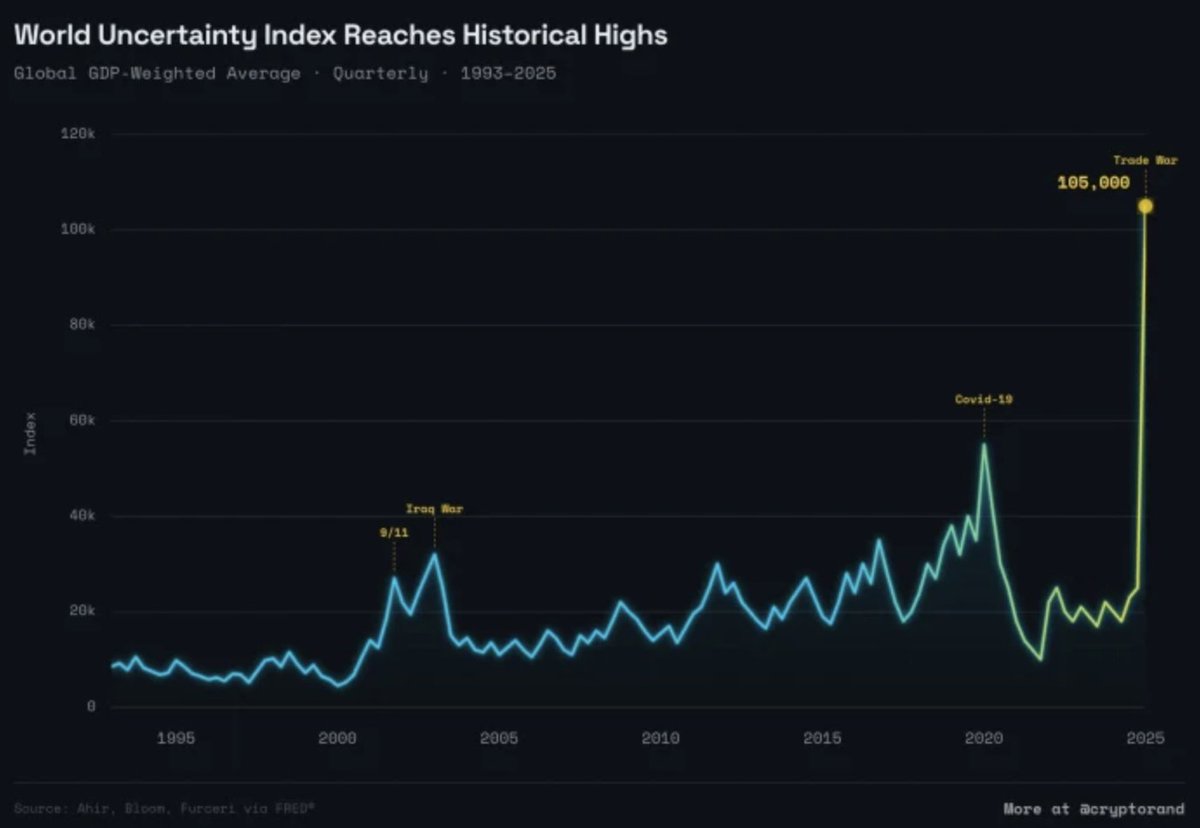
BREAKING 🚨: The World
The World reaches highest level of uncertainty in history, surpassing Covid, the Global Financial Crisis, and the Dot Com Bubble 👻🤯👀
The crypto market structure bill has passed because of REPUBLICANS as Every Democrat voted NO.
Votes were 12-11.
The chairman just called the roll and confirmed: "The bill passes and will be reported."
Crypto regulation is no longer a debate.
It is actively being written into U.S. law.
XYO is leaning into DePAI.
This is the moment when AI and robotics stop being tools people simply use and start becoming systems people can actually own.
As machines take on more real work in the world, including data collection, physical tasks, and automated decision making, the question is not just what they can do, but who benefits. Messari is predicting 2026 will be a breakout period for decentralized physical AI networks, where this model starts moving into deployment. That future needs verified data, clear records of what happened, and infrastructure that is not controlled by a single company. That is the role we see for XYO as AI moves off the screen and into the physical world.
We believe we're seeing an economic shift beginning. If machines are doing more of the work over time, someone is going to capture that value.
Right now, it's mostly large tech shareholders. DePAI introduces the idea of universal basic ownership, where people hold pieces of the systems generating machine driven income instead of waiting for a fixed payout. For crypto enthusiasts, this fits naturally with how wallets, tokens, and networks already work. Your wallet is not just storing assets. It can represent a stake in AI powered productivity itself.
What questions do you want us to ask and answer about DePAI as this starts to take shape?
XYO Layer One Stake Data and System Status: Four Months Update
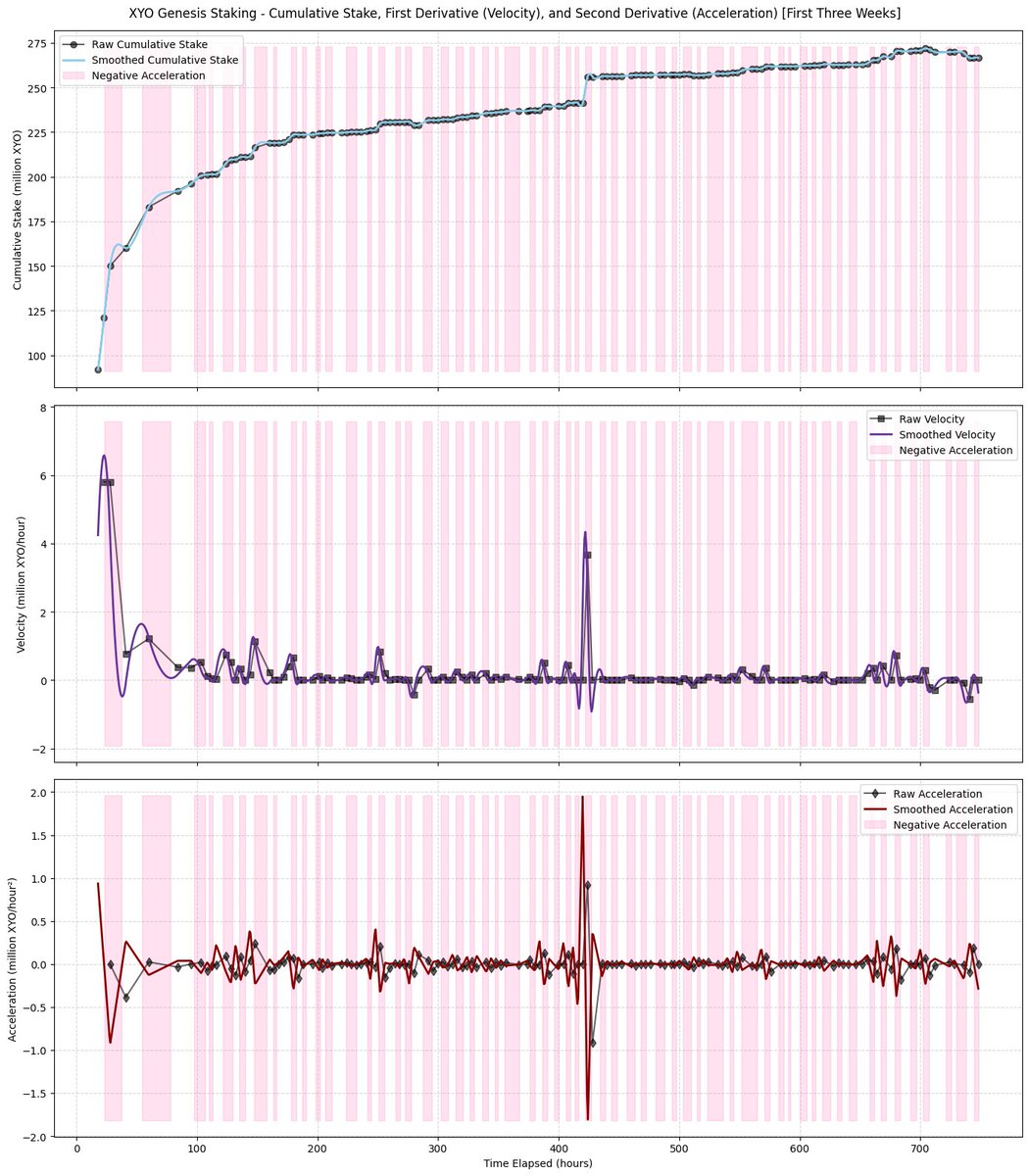
The staking of XYO—the native governance and staking token—on the XYO Layer One blockchain in exchange for XL1, the network’s native gas and utility token, has now been live for roughly four months. Since the conclusion of the Genesis era—denoted by the dark blue highlighted region on the staking data graphs—the cumulative amount of XYO staked has entered a steady but persistent decline, punctuated by intermittent and sometimes sharp down-spikes.
Post-Genesis data reveals four primary stake-depletion events, most clearly expressed by the most pronounced downward inflections in the first-derivative plot. The second derivative further corroborates these episodes, confirming that they represent meaningful contractions rather than isolated noise. Together, these signals indicate a continued scaling down of cumulative stake since Genesis concluded.
What remains evident is that staking activity on XYO Layer One is—and has been—decisively front-loaded. This was a central conclusion throughout the Genesis-era updates comprising the below post-thread, and the post-Genesis data continues to reinforce it.
As of January 2026, available sources indicate that system staking on XYO Layer One went live in September 2025, enabling any XYO holder to stake and earn increased XL1 rewards strictly during the Genesis era (the first 30 days staking was live) without operating a node or facing slashing risk. By contrast, node staking—where block producers and validators stake XYO to produce and validate blocks, earning higher XL1 rewards, and directly contributing to network security—remains in the planning phase and has not yet been deployed.
Since launching its purpose-built Layer One blockchain in September 2025, XYO has pursued a clear strategy centered on building a scalable, data-native network optimized for high-throughput, verifiable data ingestion—particularly across DePIN, AI, RWA, and adjacent sectors.
The rollout has followed a phased approach. The initial priority has been the migration and integration of XYO’s own expansive DePIN ecosystem—anchored by more than 10 million nodes, primarily via the COIN app—to demonstrate real-world scalability. This includes billions of daily location proofs, Proof of Origin validations, and tamper-resistant data streams feeding directly into the chain for use in geospatial AI, incentive mechanisms, and rewards distributed through the dual-token system ($XYO for staking and governance, earning $XL1 for gas usage and burns). This internal onboarding remains ongoing and foundational, with co-founder Markus Levin repeatedly emphasizing it as a prerequisite for broader external expansion.
In the article titled "XYO Launches Layer-1 to Power DePIN and AI," Levin explicitly states:
"We want to be the blockchain for AI data. We are onboarding our own DePIN network and providing more features to enable that. Then, we onboard our third-party partners to onboard many companies into our XYO Layer One ecosystem because we can already show our 10 million nodes and generate so much data. We are going to onboard the data world into the next revolution. That’s our big mission. It’s an exciting time to be in DePIN. According to the World Economic Forum, DePIN will grow from about 50 million to 3.5 trillion by 2028. It’s going to be momentous"—see https://t.co/EQhFWKGUXZ.
Shortly after launch, XYO announced its flagship external partnership with Piggycell, South Korea’s dominant mobile charging provider—holding approximately 98% market share—to bring verified charging infrastructure and energy-usage data on-chain. This collaboration functions as a real-world pilot for RWA tokenization, station-level proof-of-location, and secure data streams supporting global DePIN growth and AI-driven insights, and has been repeatedly framed as an early example of “killer app” momentum for the network—see https://t.co/YyyUYTHslV.
In December 2025, XYO further expanded its Layer One integrations through a partnership with BeatSwap, incorporating XYOL1 into BeatSwap’s intellectual-property-rights protocol focused on South Korea. This enables immutable on-chain records for digital content licensing, ownership verification, distribution, and usage—targeting tamper-resistant validation across gaming, media, and broader digital-asset ecosystems—see https://t.co/W17DLIy23x.
Taken together, these developments position #XYO Layer One as a specialized foundation for converging real-world data with blockchain utility: first proving scale internally through its native 10M+ node ecosystem, then extending outward through targeted partnerships such as Piggycell (energy and RWA) and BeatSwap (digital and IP).
XYO Genesis Staking on XYO Layer One: Total Genesis Era Reviewed
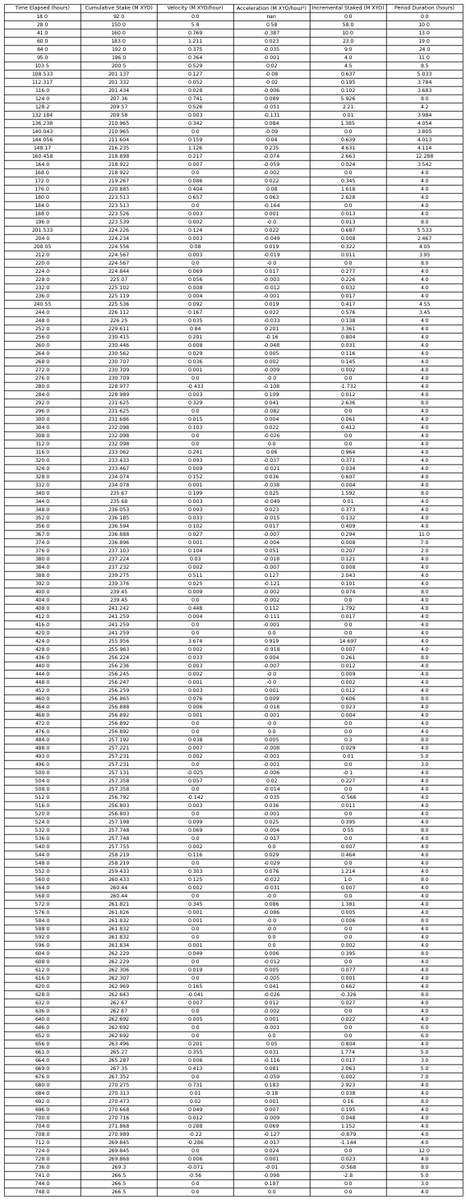
Now that the Genesis era of staking XYO on XYO Layer One has concluded, the cumulative stake found its upper limit at ~270 million XYO, closely aligning with the previously projected ~277 million from the three-week review update. That projection had been derived from week-to-week averaged cumulative inflows, with consideration for a natural tapering effect rather than a linear continuation—thus rendering ~270 million as a figure consistent with the front-loaded nature of the data.
Beginning around hour 656 (October 13th at 9 PM UTC), the data reflected a distinctive uptick, evidenced by increased volatility in both the first and second derivatives near the tail end of the plots. This uptick began to taper by hour 680 (October 14th at 9 PM UTC) and ended definitively by hour 712 (October 16th at 5 PM UTC), when cumulative inflows gave way to a series of withdrawals. In other words, the tapering began roughly 58 hours before the Genesis era ended. Since the conclusion of the Genesis era, cumulative staking has gradually declined according to the six post-era data points I’ve recorded, finding some temporary equilibrium over the last three—falling from roughly ~270 to 266 million XYO staked.
The pattern—a final uptick followed by a mirrored decline—fits the expected scenario of participants staking during the final moments for various reasons, only to withdraw shortly after the era’s end.
Given that the Genesis era has now ended, I wouldn’t be surprised to see a more pronounced decline in cumulative staking over the coming weeks, especially once XL1 rewards become claimable within the XL1 Wallet. Should those rewards prove underwhelming, a wave of withdrawals would likely accelerate. Personally, I have no intention of withdrawing my own stake, though this is largely because my position is modest. For those who staked substantial amounts and anticipate selling XYO for profit in the near future, I imagine many will be inclined not to leave their tokens locked for long—this would be my stance if I had staked a larger position.
It is also crucial to note that the lackluster cumulative stake so far appears to convey that the top 100 XYO holders—here considered whale wallets—are either not staking at all or are staking very small percentages of their massive holdings. Perhaps these holders are waiting for Node Staking to go live, but one would also suspect that they would have taken advantage of the boosted rewards of the Genesis era. The following are links to two comments of mine providing an analysis of the top 100 holders of XYO: https://t.co/khNAMxrury and https://t.co/JaaOXBUkZ4.
This brings me to a tension between a distinct type of XYO investor and the staking mechanism itself. Consider any investor who has accumulated XYO—especially over a long period—and intends to sell once a profit threshold is reached, ideally somewhere in price discovery above ~$0.08. Such an investor is unlikely to commit a large portion of their holdings to long-term staking, precisely because their motive for accumulation is primarily profit-oriented. While they may also recognize XYO’s technological promise and real-world potential, the predominant perception remains: XYO as a vehicle for profit.
Taking myself as a case study, I fall within this category—I see XYO chiefly as an instrument for financial growth, though I also value the project’s long-term prospects and real-word usecase.
Now, consider a hypothetical scenario where such an investor—contrary to initial instincts—chooses to stake a significant portion of their XYO for the long term. At some point during that staking period, the price surges to levels they had long targeted for scaling out or full exit. They go to withdraw, only to discover a cooldown period—be it several days, 30 days, or longer—before their XYO becomes accessible. Given the volatility of crypto markets, and of XYO in particular, this delay could easily foil years of patient accumulation and timing strategy.
In essence, staking a large portion of one’s $XYO introduces a risk that directly undermines the very accumulation strategy many long-term holders—I can only imagine—have adhered to. This was immediately apparent to me when I first learned of the staking mechanism, and I suspect many others have likely reached similar conclusions.
Moreover, this creates an almost existential double bind for the investor: the greater the total amount staked (thereby reducing circulating supply), the higher XYO’s potential long-term valuation becomes. Yet the very investors who could most strengthen that outcome, perhaps, may be the least incentivized to participate in long-term staking. This tension, I would argue, is not the result of any deliberate design, but rather an emergent psychological and financial related byproduct—an internal contradiction that naturally arises within the investor when confronted with the mechanics of the system itself.
As a final statement for this review, I will be continuing to catalogue the stake data going forward.
Check out the below quote-thread for more comprehensive and in-depth information regarding #XYOL1, #XYO, & #XL1—not just limited to analysis of staking data.
🔥DePIN 2025: BEYOND THE PRICE CHART
Prices are down over 90%… but onchain activity is quietly exploding. DePIN also now drives 20% of all crypto fee revenue.
We unpack what’s REALLY happening in #DePIN.
Join for FULL insight: https://t.co/1tvb5gA7dV
NEW PARTNERSHIP: XYO is teaming up with @BeatXswap to improve verified ownership for digital and IP-Rights. The idea is simple. When a piece of work gets used, shared, or licensed, there should be a clear, permanent, irrefutable record.
BeatSwap is building an IP-Rights RWA protocol in Korea. XYO Layer One records events so usage isn’t based on screenshots or platform claims. It gives creators real visibility, and gives platforms a clean way to report activity.
Stay tuned to XYO and BeatSwap to watch the progress unfold, and read more here ➡️ https://t.co/CF9xXbWbx9
여기에서 한국어로 된 발표를 읽어보세요 ➡️ https://t.co/1hGAEkreR3