78% des marques retail ne génèrent pas d’engagement sur les réseaux sociaux, selon Sprinklr
La plupart des marques sont « visibles mais mal aimées »
https://t.co/a1GhdR6roF via @MediaLeaderFR
Sur les réseaux sociaux, les marques cherchent à gagner : abonnés et visibilité.
Pour gagner le cœur de votre audience, il vous faut d’abord séduire l’algorithme TikTok.
Quelle stratégie adopter pour référencer vos vidéos ? 🔎👇
https://t.co/gwtdaOUjht
The advertising awards season is officially on! 🔥
From Bad Bunny to Grindr, watch the case studies of big winners from the Clio Awards 2026: https://t.co/6J4vaeszrR @The_Clios
#Instagram 🎴 Un de nos clients y était invisible…
🎥 Il a adopté les Stories avec sondages, coulisses, formats variés
Résultat ✅ Son audience monte, sa notoriété s’installe
•
https://t.co/Ioxd3SRV33
🔎 Les statistiques YouTube représentent un outil puissant pour connaître les thèmes qui séduisent vos abonnés et envisager des pistes d’amélioration pour votre stratégie sur le réseau. Retrouvez dans cet ar...
Par ici 👇 https://t.co/oIvtAHSY2e
There's a physicist at Stanford named Safi Bahcall who modeled this exact principle and the math is wild.
He calls it "phase transitions in human networks." When you're stationary, your probability of a lucky event is limited to your existing surface area: the people you already know, the places you already go, the ideas you've already been exposed to. Your opportunity window is fixed.
When you move, your collision rate with new nodes in a network increases nonlinearly. Double your movement (new conversations, new cities, new projects) and your probability of a serendipitous encounter doesn't double. It roughly quadruples. Because each new node connects you to their entire network, not just to them.
Richard Wiseman ran a 10-year study at the University of Hertfordshire tracking self-described "lucky" and "unlucky" people. The single biggest differentiator wasn't IQ, education, or family money. Lucky people scored significantly higher on one trait: openness to experience. They talked to strangers more, varied their routines more, and said yes to invitations at nearly twice the rate.
The "unlucky" group followed the same routes, ate at the same restaurants, and talked to the same 5 people. Their networks were closed loops. No new inputs, no new collisions.
Luck isn't random. Luck is surface area. And surface area is a function of movement.
The lobster emoji is doing more work than most people realize. Lobsters grow by shedding their shell when it gets too tight. The growth requires a period of total vulnerability. No protection, no armor, soft body exposed to the ocean.
That's the cost of movement nobody posts about. You have to be uncomfortable first. The new shell only hardens after you've already moved.
coucou, je recherche mon premier cdi (dès que possible) dans les domaines suivants : ux design, product design, ui design, brand design, graphic design, web design. voyez moi comme une petite soeur pleaseee
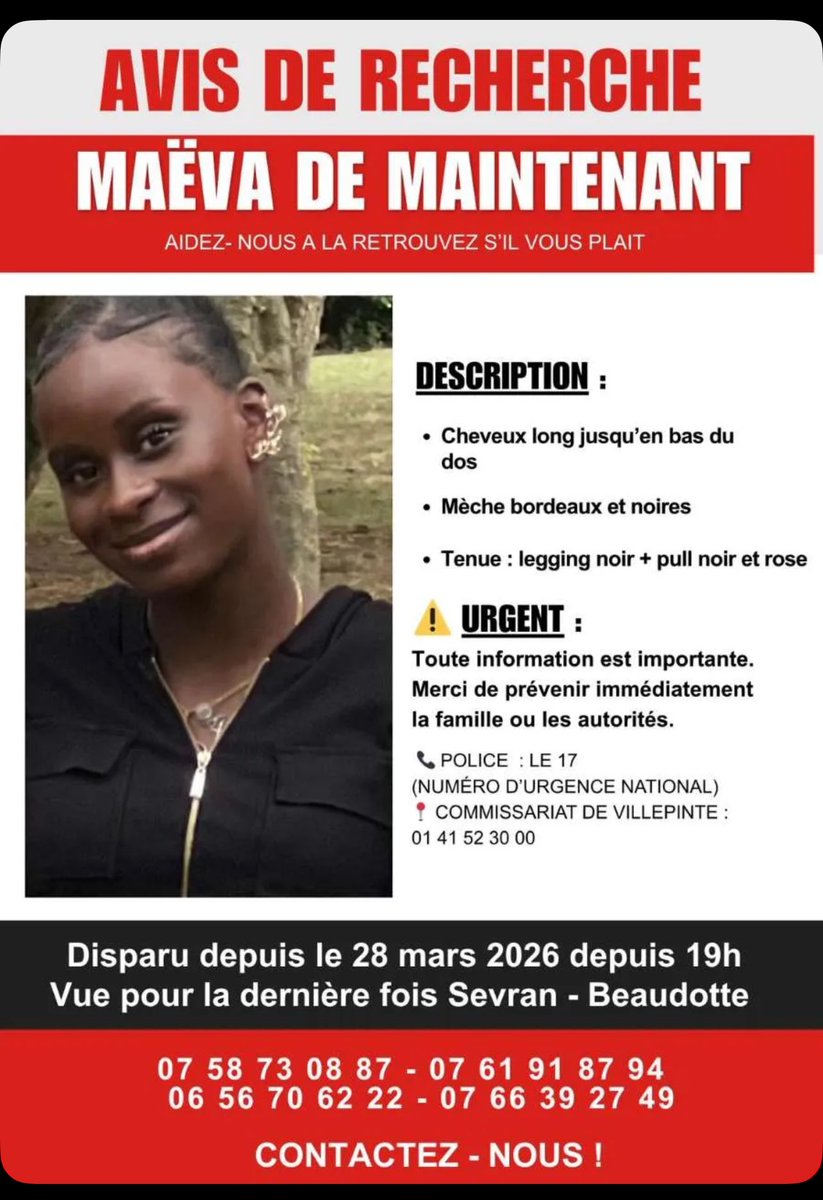
La petite sœur d’une amie à moi a disparu, rt like apprécié, si des personnes de Sevran et alentours l’ont vu hésitez pas à appeler le commissariat de Villepinte, ou les numéros si dessous, elle a seulement 13 ans !
Merci beaucoup 🩷