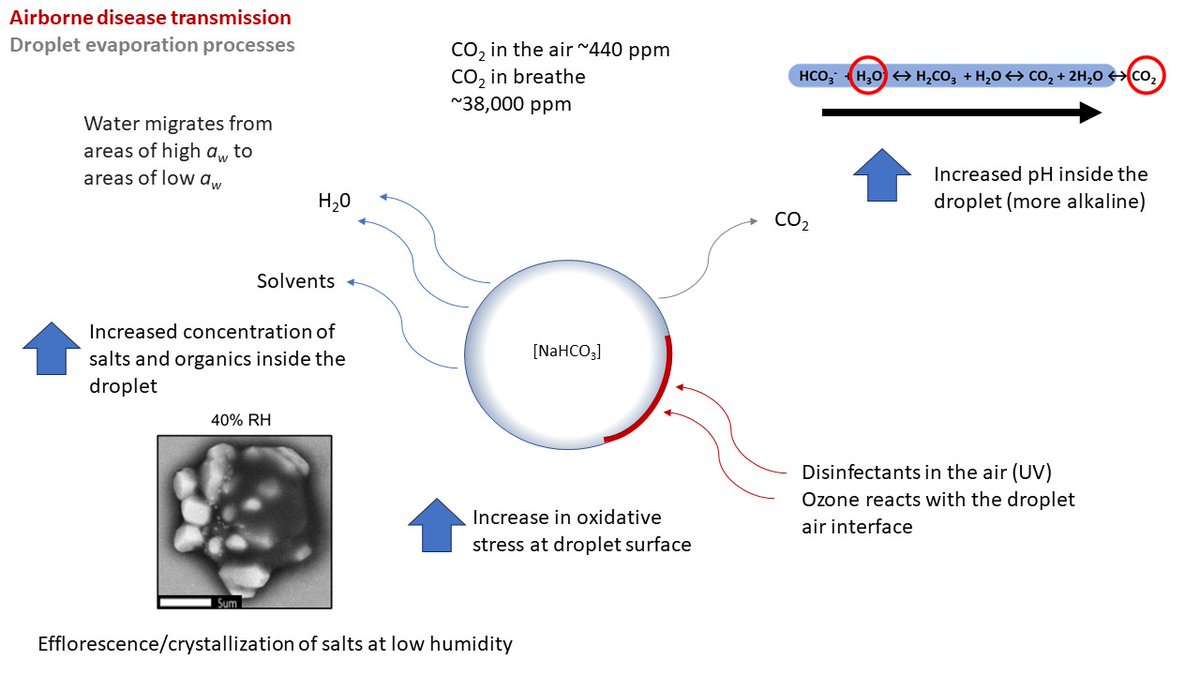
Buenos dias from Malaga, by popular demand, I can share some of the main points from my presentation at #EAC2023. What our group understand to be the main drivers behind pathogen decay in respiratory aerosol🧵1/4 #COVIDisariborne#SARSCoV2
@IAQinBCschools So far, we've had an Optimus Prime, Megatron, BumbleBee, Brawn and Outback. Here's the frist three in the high contianment lab (photo right taken before the lab was operational).
Given that the COVID numbers are on the rise, I thought I’d it useful to share some our research team’s work looking at the interplay between CO2, aerosol, SARS-CoV-2, and airborne transmission. 🧵
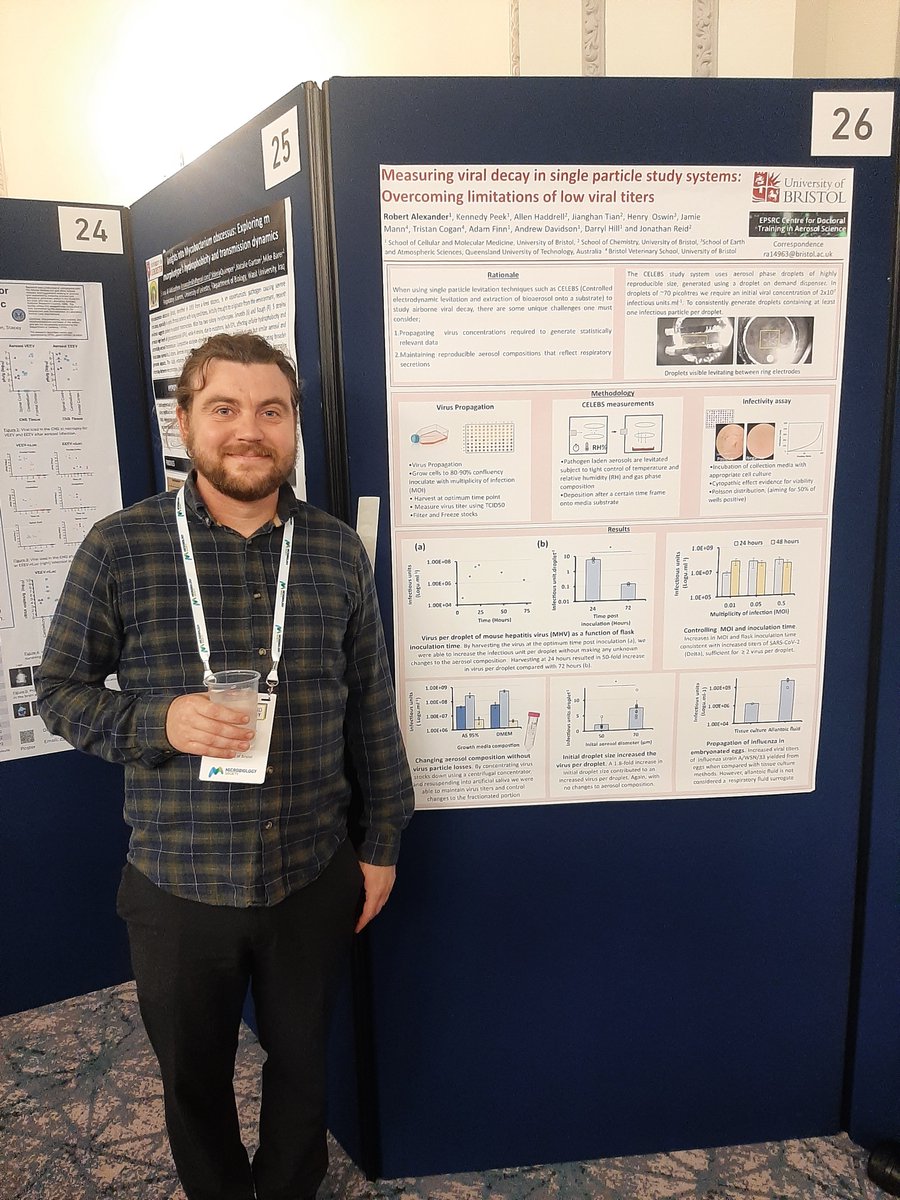
Congratulations to Mia Dierks-Treece from University of Bristol on winning the #MicrobioJ Poster Prize at #MicrobioAerosols24 for their outstanding poster on the airborne viability of Neisseria meningitidis.
@aerosolbob talking and holy crap, I've just realised what this crew mean! Hold tight, this is interesting:
1. Aerosol droplets from exhaled breath are unique, different to (eg) spray from a waterfall
2. Breath droplets contain bio macromolecules but also sodium bicarbonate (pH)
I've upoladed a video explainer for our latest paper exploring how CO2 increases how long SARS-CoV-2 remains infectious in the air. Give it a watch (it's about 5 minutes)! And if you like it, share it!
If you have any questions, I'd be glad to answer them!
https://t.co/MNf70BshiJ
Like buses, two come along at once. Our Nature paper demonstrates how increases in CO2 correlate with SARS infectivity. BIG for infection risk, pandemic preparedness, and tackling endemic diseases in our communities now https://t.co/ko8S2i3g46
@CMMBristol@BristolChem
Really happy to share our most recent publication, looking at EColi decay in airborne particles, @ukhadds has shared an interesting thread breaking it all down.
@CMMBristol@BristolChem
https://t.co/xGlsFQo7qN
What causes bacteria in aerosol to die?
I’m excited to share some of the findings from our latest publication looking into what does, and does not matter, when it comes to bacteria viability in aerosol.
To read the full study, follow the link below:
https://t.co/XEYtrfRFcq
@ukhadds@moog77@ScientistAndre @PrasadKasibhat1 Does this match with other findings, seem to remember more rna was found in the smaller size fraction, in the gesundheit experiments from Don Milton grp?
The length of time viruses and bacteria remain viable in the air is dependent on the conditions they experience in an aerosol droplet. In our latest study, we explore how the size/phase/composition of respiratory aerosol changes in a range of conditions. https://t.co/Q9IgTM1e9K