Highlighting PhilHealth’s Financial Mismanagement
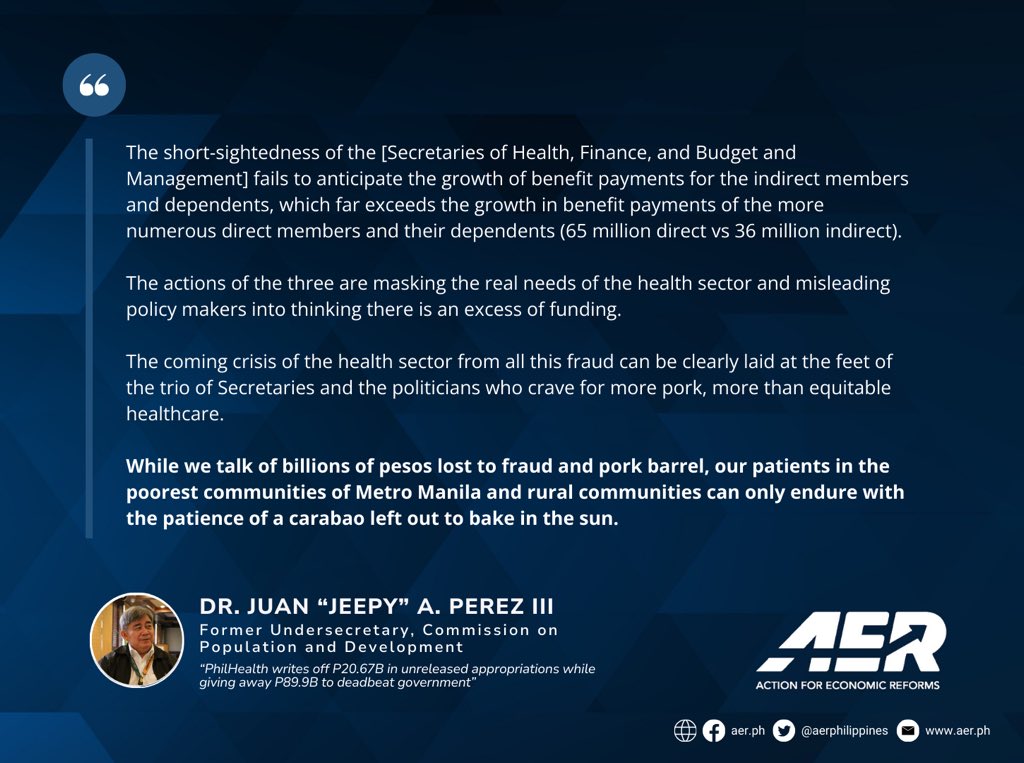
P20.67 billion was written off in unreleased appropriations by PhilHealth, with the Department of Budget and Management withholding P77.11 billion. (1/3)
All of this while the Department of Finance is demanding P89.9 billion from PhilHealth.
In this week's Yellow Pad, Dr. Jeepy Perez pinpoints the financial mismanagement of PhilHealth and the effect on the healthcare system, (2/3)
This week’s Yellow Pad looks into Dok Eddie’s years of public service, his advocacy for good governance and universal healthcare, and the hope he offers for the future of local politics. Read it here: https://t.co/MpBlpf8AYH (2/2)
Changing the Game in Local Politics
In a last-minute decision, Dok Eddie Dorotan filed his candidacy for mayor of Irosin, Sorsogon. Despite financial challenges, he is taking a stand against political dynasties. (1/2)
On the Unconstitutionality of the PhilHealth Fund Transfer
The legal constraints, the reversal of the Universal Health Care Law, and the undermining of the integrity of the national budget are only some of the robust points made to argue the unconstitutionality (1/3)
of the transfer of PhilHealth funds to the National Government.
In this week’s Yellow Pad, AER Executive Director Men Sta. Ana synthesizes the arguments made during the Supreme Court oral arguments on the petitions against the PhilHealth fund transfer. (2/3)
leading to the bill's swift passage on its second reading the next day and third reading the next week.
This week’s Yellow Pad exposes the lawmakers undermining the gains from sin taxes to bow to the tobacco industry's influence. Read it here: https://t.co/lZmLzO4fa2 (2/2)
Shameful Surrender to the Industry’s Will
The railroading of House Bill 11360, or the Sin Tax Sabotage Bill, highlights a clear move by lawmakers to favor the tobacco industry. What started as a scheduled briefing quickly turned into a hearing, (1/2)
“transcended the limits of the academic world and any single organization.”
Fides Lim honors Dodong Nemenzo by giving a nod to his book entitled “Notes from the Philippine Underground” which was just launched on February 8, 2025. Read it here: https://t.co/PF1hMOsU87 (2/2)
To the dreamers, activists, and revolutionaries
During his “quest for social relevance,” the late Dodong Nemenzo wrote a series of essays and lectures on histories, political conjunctures, and perspectives said to have (1/2)
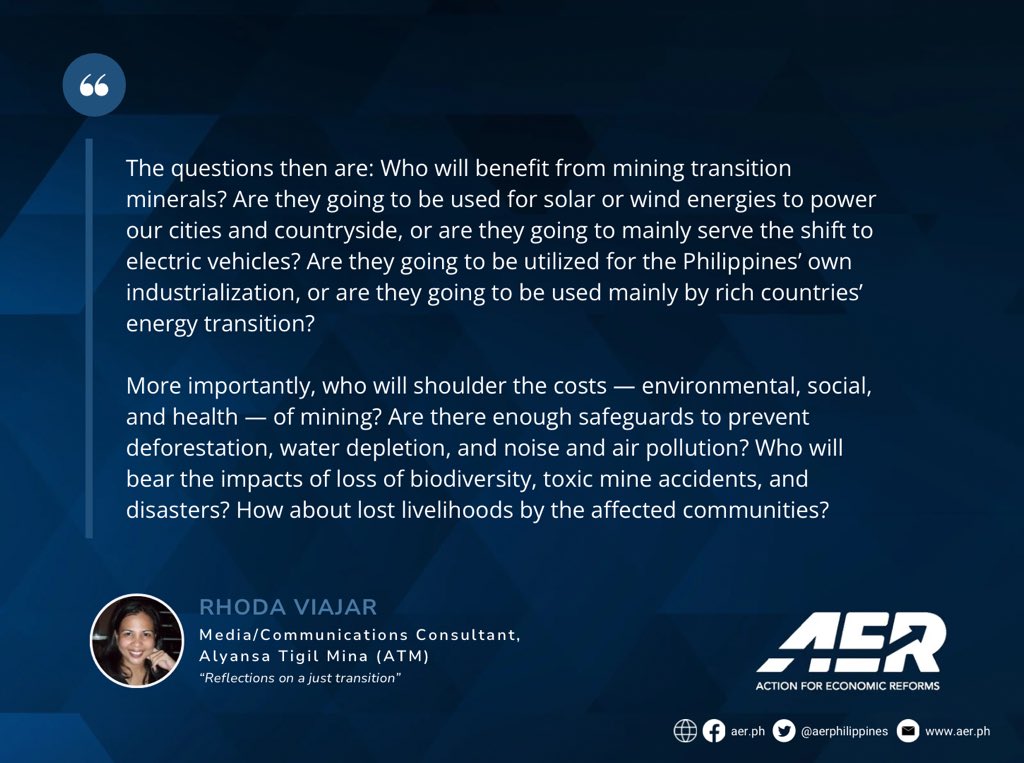
The just transition towards clean energy
The journey towards achieving a low carbon economy is one riddled with dilemmas, which includes the “just transition” to clean energy which requires massive amounts of minerals and raw materials. (1/3)
Rhoda Viajar discusses responsible mining and pinpoints considerations that the administration must enact and implement in order to ensure that the just transition towards a low carbon economy is one where no one gets left behind. (2/3)
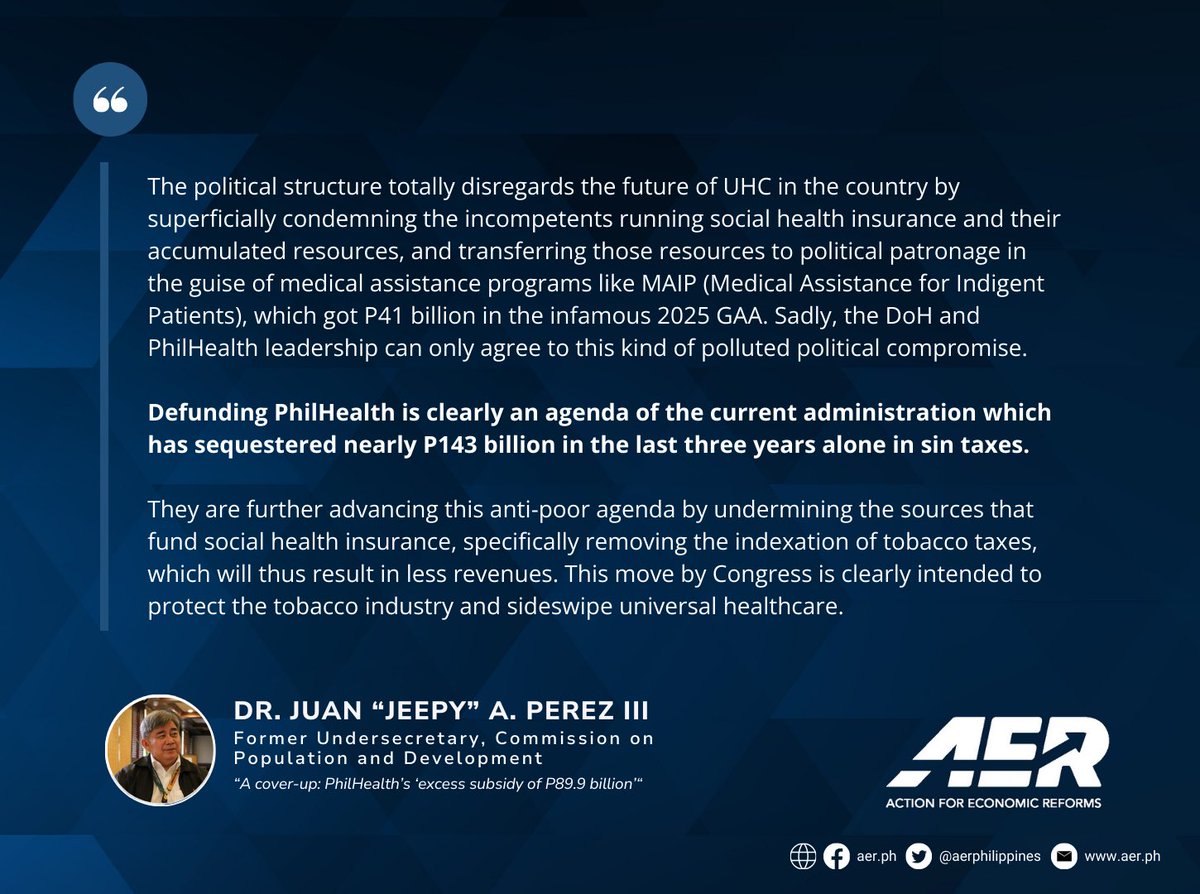
Dr. Jeepy Perez highlights the inconsistencies among government agencies and warns of the dire consequences for UHC. Read more in this week’s Yellow Pad: https://t.co/f852Rf2BC1 (2/2)
Where did the sin tax funds for PhilHealth go?
The DBM’s failure to release P28.07 billion in PhilHealth subsidies in 2023 exposes a deeper issue: the defunding of PhilHealth, threatening the success of Universal Health Care (UHC). (1/2)
This week’s Yellow Pad by AJ Montesa calls out House Bill 11279 for being deceptive and favoring the tobacco industry instead of public health, and urges our leaders to reject the bill.
Read it here: https://t.co/7HpJMGF1Cq (2/2)
The Sin Tax Sabotage Bill: Anti-health, Anti-Revenue, Pro-Industry
The proposed lowering of tobacco and vape tax rates will do absolutely nothing to solve the issue of declining tobacco tax revenues or illicit trade. (1/2)
and asserting the people’s rights over their own hard-earned money.
In Ken Abante’s latest Yellow Pad article, he outlines the possible solutions to prevent the misappropriation of funds by politicians. Read it here: https://t.co/cto2PY0Puo (2/2)
What can be done to fix the Philippine budget?
Ensuring transparency and accountability are key factors in addressing the corruption that often plagues the national budget. This heavily involves taking action, calling out the unconstitutionality of the budget, (1/2)