🎉 Excited to announce that I’ve won the "Rising Star Award" at the Longevity Summit Dublin 2024! 🏆🌟Honored to be recognized among so many incredible innovators in the field of longevity! Thanks @aubreydegrey and the incredible team of #longevitysummitdublin
Sources / methodology for the telomere post:
Haycock et al., JAMA Oncology 2017 — Mendelian randomization across 35 cancers and 48 non-neoplastic diseases:
https://t.co/vOoaZmoOrw
Bernardes de Jesus et al., EMBO Molecular Medicine 2012 — AAV-TERT in adult/old mice; median lifespan +24% / +13% without increased cancer in that experiment:
https://t.co/aQbRHUBmgh
Berzlanovich et al. — autopsy study of 40 centenarians:
https://t.co/gbA51MruBA
Motta et al. — autopsy findings in 140 centenarians:
https://t.co/uOIkbgbz2v
US mortality weights:
https://t.co/T27lCc8VpJ
Cancer mortality by site:
https://t.co/UEeiGnIH9E
Important: the ~−0.4 year estimate is my own back-of-the-envelope synthesis, not a result reported by Haycock et al. It assumes that disease-incidence ORs can be approximately translated into cause-specific mortality effects, so it should be treated as a toy model, not a clinical prediction.
Would longer telomeres actually make humans live longer?
You have probably seen dozens of studies with headlines like:
“Short telomeres associated with higher risk of X.”
Cardiovascular disease. Dementia. Diabetes. Frailty. Mortality. Pick almost any age-related phenotype and there is probably a paper linking it to shorter telomeres.
The problem is that these studies are not very informative about the question we actually care about:
What happens if we artificially lengthen telomeres?
Disease itself can shorten telomeres. Smoking, inflammation, socioeconomic status and many other factors can affect both telomere length and health. A biomarker associated with disease is not automatically a causal driver of disease, and changing the biomarker does not necessarily reverse the outcome.
So do we simply have to wait for human experiments?
Some people are already experimenting.
In 2015, BioViva founder Liz Parrish publicly reported receiving experimental gene therapies, including an AAV-based hTERT telomerase therapy.
The idea did not come out of nowhere. In a well-known mouse experiment, systemic AAV-TERT treatment increased median lifespan by 24% when given to 1-year-old mice and 13% when given to 2-year-old mice. Importantly, the researchers did not observe an increase in cancer in the treated animals.
On paper, that looks extremely attractive.
But nature has already performed something resembling a randomized human experiment for us.
Some people are born with genetic variants that make their telomeres slightly longer. Others inherit variants that make them slightly shorter.
Because these variants are assigned at conception, long before people develop coronary disease, cancer or Alzheimer's disease, we can use them as instruments to ask whether telomere length itself is causally related to disease.
This is called Mendelian randomization.
In 2017, a large JAMA Oncology study did exactly this across 35 cancers and 48 non-neoplastic diseases, combining data from 420,081 cases and 1,093,105 controls.
The result was not “long telomeres good.” It was a remarkably clean trade-off.
Per +1 SD of genetically increased telomere length:
Cancer risk went up:
Glioma: ×5.27
Lung adenocarcinoma: ×3.19
Bladder cancer: ×2.19
Melanoma: ×1.87
Kidney cancer: ×1.55
At the same time, several non-cancer diseases went down:
Coronary heart disease: −22%
Abdominal aortic aneurysm: −37%
Alzheimer's disease: −16%
Interstitial lung disease: −91%
Biologically, this makes a lot of sense.
Shortening telomeres eventually limits the number of times a cell can divide. That is bad for tissue maintenance and regeneration.
But it is also useful if that cell has accumulated oncogenic mutations.
Longer telomeres give cells more replicative runway. That can help normal tissues - but it can also give premalignant clones more opportunities to expand and acquire additional mutations.
In other words, telomere shortening may not be simply “damage caused by aging.”
At least part of it may represent a cancer-vs-degeneration trade-off.
So I became curious about a slightly different question.
Forget individual diseases. What is the net effect on lifespan?
I made a deliberately crude back-of-the-envelope calculation.
Take the fraction of deaths attributable to each disease and multiply it by the corresponding effect of +1 SD genetically increased telomere length.
This requires some ugly assumptions - particularly translating disease-incidence ORs into cause-specific mortality and dividing cancer mortality by histological subtype - so don't take the second decimal place seriously.
But the approximate result was striking.
The non-cancer benefits reduce the total mortality burden by roughly 3.8–4.3 percentage points. But... the additional cancer burden adds roughly 7–8.5 percentage points.
Net effect:
about +3–4% mortality.
Now make one more intentionally crude assumption: adult human mortality follows a Gompertz curve with mortality roughly doubling every 8 years.
A constant 3.5% increase in mortality corresponds to an age-equivalent shift of
−8 × ln(1.035) / ln(2) ≈ −0.4 years.
So my toy model gives approximately:
−0.4 years per +1 SD of longer telomeres.
Nowhere close to mouse-like 20–30% life extension.
Approximately zero - and possibly slightly negative.
But there are several enormous caveats.
First, the Mendelian-randomization study estimated mostly disease incidence ORs, not mortality HRs. I am effectively assuming that a proportional increase in incidence translates into a similar proportional increase in cause-specific mortality. That is obviously not exact.
Second, the mix of causes of death changes dramatically with age.
This matters because cancer mortality eventually becomes much less dominant at extreme ages. Autopsy studies of centenarians are particularly interesting here: they find extensive cardiovascular and degenerative pathology, while lethal cancer appears substantially less prominent than at younger old ages.
So it is entirely possible that telomere lengthening has a negative or neutral net effect at 50–70 but a positive effect if initiated very late in life.
Third - and this is probably the most important caveat - being genetically predisposed to longer telomeres from conception is not remotely the same intervention as turning on telomerase at age 60 or 70.
Lifetime exposure gives premalignant clones decades of extra replicative opportunity.
A transient, tissue-specific telomerase intervention in an older person could have a very different benefit/risk ratio.
It could be safer because the exposure is shorter.
Or it could be more dangerous because an older person already contains many expanded clones carrying oncogenic mutations.
The Mendelian-randomization experiment cannot tell us which effect wins.
What I do think we can say is this:
There is no good reason to assume that simply lengthening telomeres will translate into a large increase in human lifespan.
Telomere shortening appears to sit in a biological trade-off: shorter telomeres impair regeneration and increase some degenerative diseases, while longer telomeres substantially increase the risk of several cancers.
That makes telomeres a nice example of a broader problem in aging research.
An age-related change can look obviously pathological when considered in isolation - and yet reversing it may simply move mortality from one set of diseases to another.
Not every hallmark of aging is necessarily a good therapeutic target just because it gets worse with age.
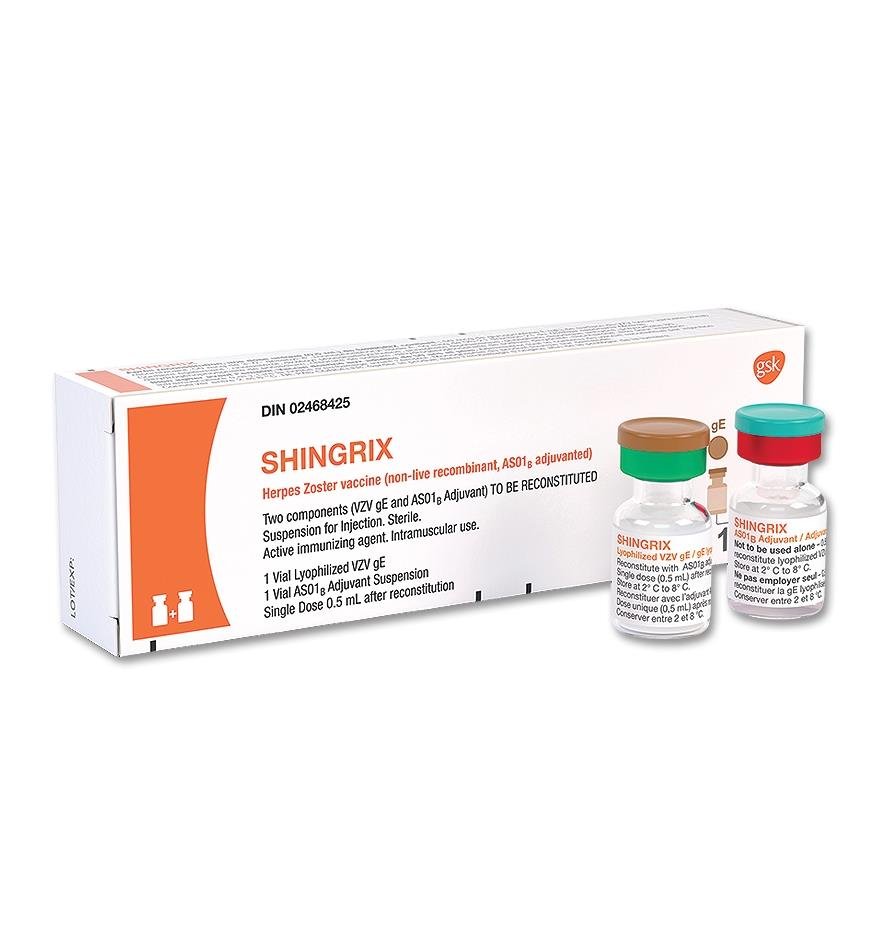
Nice! A new clinical trial in Finland will answer the question whether herpes zoster vaccine protects agains dementia! Can't wait to see the results but is'll take some time: estimated primary completion date is 2030-04-01 and study completion date is 2037-03-31 https://t.co/ZVv94Tl0tt
Is there causal evidence that sleep affects health - not just observational correlations?
Wearables have trained us to obsess over sleep stages.
REM: 18%.
Deep sleep: 52 minutes.
Sleep score: 83.
Should we bother about these numbers? What do we actually know about causality?
One useful approach is Mendelian randomization, which uses genetic variants associated with sleep traits as natural experiments. It is not a substitute for randomized trials, but it can help distinguish causal effects from reverse causation and confounding.
The evidence is highly uneven.
1. Insomnia has the strongest causal signal
Genetic liability to insomnia has been associated with a higher risk of:
• coronary artery disease
• myocardial infarction
• heart failure
• ischemic stroke
• atrial fibrillation
• peripheral arterial disease
The effect sizes are usually modest (odds ratios ranging from 1.13 for atrial fibrillation to 1.24 for heart failure), but they appear across multiple cardiovascular outcomes and several independent analyses.
References: Larsson & Markus, Circulation, 2019 (PMID 31422675); Yuan et al., European Journal of Preventive Cardiology, 2021 (PMID: 33712906);
Insomnia liability has also been linked to depression, chronic pain, hypertension, greater waist circumference, and metabolic dysfunction.
However, “insomnia genetics” may capture more than reduced sleep itself. It may partly reflect hyperarousal, anxiety, pain sensitivity, restless legs, or other neurobehavioral traits.
So the causal exposure may not simply be “fewer hours asleep.”
2. Short sleep probably has real metabolic consequences
There is fairly consistent MR evidence that a genetic tendency toward short sleep is metabolically adverse.
A new 2026 GWAS used device-measured sleep in approximately 80,000 UK Biobank participants. In its MR analysis, each genetically predicted additional hour of night-time sleep was associated with:
- BMI lower by 0.366 kg/m²;
- lower HbA1c;
- T2D OR 0.61, 95% CI 0.42–0.89;
- a lower composite measure of biological age.
The BMI, HbA1c and biological-age associations survived multiplicity correction; the T2D result was just inside the corrected threshold.
Reference: JPortas L, Yuan H, Cai L, Smith-Byrne K, van Duijvenboden S, Kyle SD, Ray D, Howson JM, Doherty A. Genetic architecture of sleep in a genome wide association study of device measured sleep traits. Nat Commun. 2026 Apr 1;17(1):4715. doi: 10.1038/s41467-026-71252-y. PMID: 41922918; PMCID: PMC13212655.
Those effect sizes may be upwardly biased, however. The exposure instruments were derived from only 80,013 people, there may have been some sample overlap, and a lifelong genetic difference in sleep is not equivalent to experimentally adding one hour of sleep.
Earlier MR work also supports short sleep as a risk factor for myocardial infarction, although estimates vary with the genetic instrument and phenotype definition.
"Compared with sleeping 6 to 9 h/night, short sleepers had a 20% higher multivariable-adjusted risk of incident MI (HR: 1.20; 95% confidence interval [CI]: 1.07 to 1.33), and long sleepers had a 34% higher risk (HR: 1.34; 95% CI: 1.13 to 1.58); associations were independent of other sleep traits. Healthy sleep duration mitigated MI risk even among individuals with high genetic liability (HR: 0.82; 95% CI: 0.68 to 0.998)."
Reference: Daghlas I et al. Sleep Duration and Myocardial Infarction. J Am Coll Cardiol. 2019 (PMID: 31488267; PMCID: PMC6785011).
For chronic kidney disease, one MR analysis estimated an odds ratio of approximately 1.8 for CKD stages 3–5 per doubling in the genetic odds of being a short sleeper.
Reference: Park S et al. Short or Long Sleep Duration and CKD: A Mendelian Randomization Study. J Am Soc Nephrol. 2020 (PMID: 33004418; PMCID: PMC7790216).
These estimates should not be interpreted as: “sleeping one extra hour tonight reduces diabetes risk by X%.”
MR usually reflects lifelong genetic predisposition, not the effect of a short-term behavioral intervention.
3. Long sleep is much less clearly harmful
Observational studies often show a U-shaped curve: both short and long sleep are associated with worse health.
But MR provides much weaker support for long sleep being directly harmful.
Long sleep may often be a consequence or marker of:
• depression
• chronic disease
• inflammation
• frailty
• low physical activity
• poor sleep quality
• early neurodegeneration
It may also reflect longer time in bed rather than more restorative sleep.
Genetic instruments for long sleep are weaker than those for insomnia and short sleep.
So the claim that “sleeping too much causes disease” remains uncertain.
Reference: Austin-Zimmerman I et al. Nat Commun. 2023 (PMID: 37770476).
4. Morningness may reduce depression risk
Genetic predisposition toward an earlier chronotype is associated with a lower risk of depression and somewhat better subjective well-being.
References: Jones et al., Nature Communications, 2019 (PMID: 30696823); Daghlas et al., JAMA Psychiatry, 2021 (PMID: 34037671).
There is also some evidence that morning preference may be associated with a slightly lower risk of breast cancer.
Reference: Richmond et al., BMJ, 2019 (PMID: 31243001).
But this does not mean that forcing a natural night owl to wake at 5 a.m. is beneficial.
The relevant factor may be circadian alignment: matching sleep, light exposure, activity, and eating patterns to endogenous biological timing.
5. REM sleep: interesting, but not established
Until recently, sleep-stage GWAS were too small for meaningful MR.
A 2026 device-based study found nominal associations between longer genetically predicted REM sleep and:
• lower coronary artery disease risk
• lower heart failure risk
• better memory
• lower HbA1c
But these findings did not survive correction for multiple comparisons.
Reference: Portas L et al., Nature Communications, 2026 (PMID: 41922918).
There is also a major measurement problem.
Wrist accelerometers do not directly measure brain activity. They infer sleep stages from movement and physiology and are substantially less accurate than EEG-based polysomnography.
A genetic variant could affect muscle tone or movement during REM and therefore alter the wearable classification without meaningfully changing true REM sleep.
So the current REM findings are hypothesis-generating, not proof that increasing REM improves health.
6. Deep sleep has almost no robust causal evidence
For true deep sleep - N3 slow-wave sleep - the MR literature is extremely limited.
Most large biobank studies cannot reliably distinguish:
• N1
• N2
• N3
They often separate only estimated REM from total NREM.
At present, there are no large, replicated MR studies showing that increasing N3 sleep prevents:
• cardiovascular disease
• dementia
• cancer
• mortality
This matters because consumer wearables report “deep sleep” with limited accuracy.
There is currently no solid causal basis for trying to maximize the deep-sleep percentage displayed by a smartwatch.
7. Dementia may disrupt sleep more clearly than sleep causes dementia
Poor sleep is strongly associated with dementia observationally.
But MR findings are inconsistent.
Some large analyses have not found convincing evidence that insomnia or sleep duration directly causes Alzheimer’s disease: "MR analyses supported a causal link between genetically predicted insomnia and increased stroke risk (OR 1.31, 95% CI 1.13-1.51, p = 0.00072), but not with dementia or SVD markers." (PMID: 38350061).
Conversely, genetic liability to Alzheimer’s disease appears to reduce total sleep and NREM sleep:
"Higher Alzheimer’s risk was associated with shorter night-time sleep (β = −1.271 min/night, se = 0.423, P = 0.003) and NREM sleep (β = −1.358 min/night, se = 0.418, P = 0.001), both of which passed the Bonferroni correction threshold (P < 0.005 for reverse MR)." (PMID 41922918).
This supports an important alternative explanation:
Early neurodegeneration may disrupt sleep many years before diagnosis.
A bidirectional loop remains plausible, but current genetic evidence may be stronger for:
Alzheimer’s biology → disrupted sleep
than for:
reduced REM or deep sleep → Alzheimer’s disease
8. Napping is biologically heterogeneous
Genetic liability to frequent daytime napping has been associated with higher blood pressure and greater waist circumference.
Reference: Dashti et al., Nature Communications, 2021 (PMID: 33568662).
But “napping” is not one biological behavior.
People may nap because of:
• natural biphasic sleep
• insufficient nighttime sleep
• obesity
• sleep apnea
• depression
• neurological disease
• medications
• chronic fatigue
Combining all these causes into one genetic score makes causal interpretation difficult.
9. Sleep apnea probably matters, but obesity complicates MR
MR studies suggest that obstructive sleep apnea may contribute to hypertension and coronary artery disease.
However, sleep-apnea genetics overlap strongly with obesity genetics.
This makes it difficult to separate the independent effects of:
• intermittent hypoxia
• airway obstruction
• sleep fragmentation
from the effects of adiposity itself.
References: Strausz et al., American Journal of Respiratory and Critical Care Medicine, 2021 (PMID: 33243845); Wang et al., European Journal of Preventive Cardiology, 2023 (PMID: 36611115).
My evidence ranking
Relatively convincing
Insomnia liability → cardiovascular disease
Short sleep → obesity and impaired glucose metabolism
Short sleep → chronic kidney disease
Insomnia and short sleep → depression and chronic pain
Plausible but less certain
Morning chronotype → lower depression risk
Sleep apnea → hypertension and coronary disease
Short sleep → myocardial infarction
Morningness → slightly lower breast cancer risk
Highly preliminary
REM duration → cardiovascular outcomes
Sleep efficiency → metabolic outcomes
Napping → hypertension or metabolic disease
Sleep architecture → biological aging
Deep sleep → dementia prevention
The main conclusion is not that everyone should maximize sleep duration or optimize every wearable metric.
It is much simpler:
Chronic insomnia and genuinely insufficient sleep probably cause meaningful harm.
By contrast, there is still little causal evidence that increasing wearable-reported REM or “deep sleep” improves long-term health.
The most clinically relevant questions are therefore not:
“How can I raise my deep-sleep percentage?”
but:
“Do I have chronic insomnia?”
“Am I consistently sleep-deprived?”
“Do I have untreated sleep apnea?”
“Is my sleep schedule aligned with my circadian biology?”
Those are the sleep variables for which the current causal evidence is most actionable.
Excellent deep dive into the technical implementation of Midjourney Medical’s full-body ultrasound scanner. From the sensor ring to the computational tomography - worth the watch if you’re into medical imaging hardware.
https://t.co/du64trY17m
Cancer might protect from Alzheimer's disease [1] and now we know why!
Cancer cells secrete Cystatin C (a known kidney health marker) which crosses BBB, binds amyloid oligomers and activates TREM2 in microglia, enabling microglia to degrade the pre-existing amyloid plaques.
Well, to me it seems that aging is a mix of stochastic and quasi-program components. E. g. a lot of people over 80 develop certain mutations in HSCs which are very detrimental. And these "bad genes" are remarkably consistent. Looks like a program until you look deeper and discover that these "bad genes" give HSCs survival advantage
@ydeigin we discussed that coefficient of variation of onset puberty is 2x lower than CV for age at death. The same goes for menopause. It means that programmed processes are significantly more deterministic than aging.
Did I remember correctly that you argued that we don't age up until some age and then the aging program kicks in? In this case there should be clear moment when this program switches on and we should be able to predict this moment like Almstrup et. al [1] did for puberty: they found epigenetic signature that precisely predicts pubertal age with an error of just 0.39/0.74 years! Why don't we observe the same for aging?
Also, Horvath’s clock is not obviously evidence for a post-maturation aging switch, because the clock does not start in the 20s or 30s. It tracks age from early life onward, with especially rapid changes during development. That is exactly why chronological-age clocks are ambiguous: they may capture developmental timing, tissue maturation, cell-composition history, maintenance-system state, and stochastic drift - not necessarily a dedicated aging program that activates in adulthood.
1. https://t.co/7HpxQP6raC
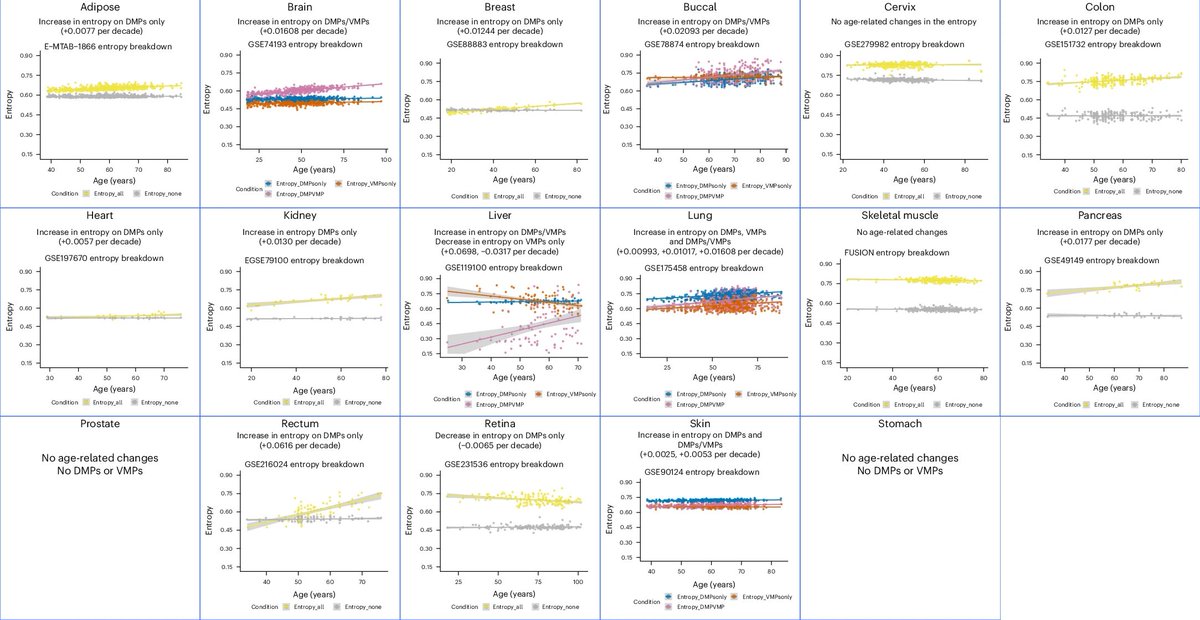
First, the entropy increase observed in this latest paper is tiny in most tissues and even absent in several (see attached). But even if it were large, it would only argue against a perfectly deterministic program, which nobody claims. Basically if there is a stochastic component on top of a program, it can drive entropy increase with age.
Development is programmed, yet puberty timing varies between individuals, and menopause occurs over an even wider age range — so here’s your increasing variability between people.
"And CV kinda hides the accumulation of variation: the SD rises from about 1.6 years at puberty to roughly 5 years at menopause, ie a 3x increase in variation that you said speaks against a program." - it doesn't contradict what I said: I'm less sure that menopause is a program. Maybe it is partly a program. And aging is even less so if program at all
I've already written about one putative mechanism by which cancer might protect from Alzheimer's disease but I didn't know that Alzheimer's disease protects from cancer: cancer risk in people with AD is halved! Of course, part of it could be explained by biases of various sorts, part by genetic tradeoffs but some of it could be explained by disease biology and may lead to creation of new drugs!
https://t.co/E4w9KhrNVO
Cancer might protect from Alzheimer's disease [1] and now we know why!
Cancer cells secrete Cystatin C (a known kidney health marker) which crosses BBB, binds amyloid oligomers and activates TREM2 in microglia, enabling microglia to degrade the pre-existing amyloid plaques.
Of course stochasticity can broaden any program, but if almost all of the observable structure is “gradual change over decades plus stochastic divergence,” then the word “program” starts doing much less explanatory work.
Puberty and menopause are not just age-correlated processes; they are relatively compressed, staged reproductive transitions. Puberty has Tanner staging, HPG-axis activation, secondary sex characteristics, and a short transition window. For example, in one British cohort, the average duration from initiation of puberty to menarche was 2.7 years. Almstrup et al. could therefore anchor methylation to a clinically defined pubertal onset and show that methylation predicted pubertal age.
Menopause is also anchored to a defined reproductive endpoint, the final menstrual period, and STRAW+10 provides menstrual/hormonal staging of the transition.
Adult aging is different. If the claim is that puberty launches an “adult aging trajectory,” then that trajectory lasts for many decades and has no comparably clear, compressed, independently staged transition. Horvath’s clock ticking linearly in adulthood is compatible with such a model, but it is also compatible with gradual tissue maintenance burden, cell-composition shifts, stochastic methylation drift, accumulated damage responses, and other age-correlated processes.
So the issue is not simply that programmed processes have zero variance. The issue is that known developmental/reproductive programs are bounded, staged transitions with identifiable landmarks and relatively short duration. Adult aging, as measured by lifespan variation or functional decline after reproductive maturity, looks much more diffuse and weakly bounded.
@ydeigin "rising person-to-person variability, AND rising disorder (entropy)" - this actually is an argument against the program. In case of programmed aging one would expect low variability between individuals
The Zombie Cell Antibody Bombshell
We've just witnessed yet another systemic failure in longevity science right now.
For years, p16INK4a has been treated as one of the key biomarkers of cellular senescence - the “zombie cell” state linked to ageing, cancer biology, tissue dysfunction, and the whole senolytics narrative.
But Sholto David’s deep dive points to a brutal possibility: hundreds of papers may have been using antibodies against the wrong “p16.”
Not p16INK4a - the tumour suppressor/cell-cycle regulator encoded by CDKN2A, but p16-ARC / ARPC5 - an unrelated actin-cytoskeleton protein with a confusingly similar name.
That sounds like a technical detail but it isn’t.
If your antibody does not bind the protein you think it binds, your beautiful western blot or immunostaining figure may not be measuring senescent cells at all. It may be measuring something else, while the paper interprets it as ageing biology.
The worst-case implication is that parts of the senescence literature may have built confidence on noisy or mislabelled evidence - especially where “p16” was used loosely, without rigorous antibody validation.
The consequences may be huge. This is an example of what hinders our progress in achieving radical life extension. We need thorough validation of all longevity and anti-aging papers. Regular peer-review isn't enough when it comes to a life and death question!
@CharlesMBrenner While this sounds indeed plausible the numbers don't add up. I have proposed hypothesis that is more consistent with the data https://t.co/uzdvUjPZX7
Wales, Australia & Canada natural experiments point to protection. England adds a serious null-result twist.
I think, I have an explanation that could reconcile these studies, please, give it a read: https://t.co/D9aFMSDtao


![afedintsev's tweet photo. Is there causal evidence that sleep affects health - not just observational correlations?
Wearables have trained us to obsess over sleep stages.
REM: 18%.
Deep sleep: 52 minutes.
Sleep score: 83.
Should we bother about these numbers? What do we actually know about causality?
One useful approach is Mendelian randomization, which uses genetic variants associated with sleep traits as natural experiments. It is not a substitute for randomized trials, but it can help distinguish causal effects from reverse causation and confounding.
The evidence is highly uneven.
1. Insomnia has the strongest causal signal
Genetic liability to insomnia has been associated with a higher risk of:
• coronary artery disease
• myocardial infarction
• heart failure
• ischemic stroke
• atrial fibrillation
• peripheral arterial disease
The effect sizes are usually modest (odds ratios ranging from 1.13 for atrial fibrillation to 1.24 for heart failure), but they appear across multiple cardiovascular outcomes and several independent analyses.
References: Larsson & Markus, Circulation, 2019 (PMID 31422675); Yuan et al., European Journal of Preventive Cardiology, 2021 (PMID: 33712906);
Insomnia liability has also been linked to depression, chronic pain, hypertension, greater waist circumference, and metabolic dysfunction.
However, “insomnia genetics” may capture more than reduced sleep itself. It may partly reflect hyperarousal, anxiety, pain sensitivity, restless legs, or other neurobehavioral traits.
So the causal exposure may not simply be “fewer hours asleep.”
2. Short sleep probably has real metabolic consequences
There is fairly consistent MR evidence that a genetic tendency toward short sleep is metabolically adverse.
A new 2026 GWAS used device-measured sleep in approximately 80,000 UK Biobank participants. In its MR analysis, each genetically predicted additional hour of night-time sleep was associated with:
- BMI lower by 0.366 kg/m²;
- lower HbA1c;
- T2D OR 0.61, 95% CI 0.42–0.89;
- a lower composite measure of biological age.
The BMI, HbA1c and biological-age associations survived multiplicity correction; the T2D result was just inside the corrected threshold.
Reference: JPortas L, Yuan H, Cai L, Smith-Byrne K, van Duijvenboden S, Kyle SD, Ray D, Howson JM, Doherty A. Genetic architecture of sleep in a genome wide association study of device measured sleep traits. Nat Commun. 2026 Apr 1;17(1):4715. doi: 10.1038/s41467-026-71252-y. PMID: 41922918; PMCID: PMC13212655.
Those effect sizes may be upwardly biased, however. The exposure instruments were derived from only 80,013 people, there may have been some sample overlap, and a lifelong genetic difference in sleep is not equivalent to experimentally adding one hour of sleep.
Earlier MR work also supports short sleep as a risk factor for myocardial infarction, although estimates vary with the genetic instrument and phenotype definition.
"Compared with sleeping 6 to 9 h/night, short sleepers had a 20% higher multivariable-adjusted risk of incident MI (HR: 1.20; 95% confidence interval [CI]: 1.07 to 1.33), and long sleepers had a 34% higher risk (HR: 1.34; 95% CI: 1.13 to 1.58); associations were independent of other sleep traits. Healthy sleep duration mitigated MI risk even among individuals with high genetic liability (HR: 0.82; 95% CI: 0.68 to 0.998)."
Reference: Daghlas I et al. Sleep Duration and Myocardial Infarction. J Am Coll Cardiol. 2019 (PMID: 31488267; PMCID: PMC6785011).
For chronic kidney disease, one MR analysis estimated an odds ratio of approximately 1.8 for CKD stages 3–5 per doubling in the genetic odds of being a short sleeper.
Reference: Park S et al. Short or Long Sleep Duration and CKD: A Mendelian Randomization Study. J Am Soc Nephrol. 2020 (PMID: 33004418; PMCID: PMC7790216).
These estimates should not be interpreted as: “sleeping one extra hour tonight reduces diabetes risk by X%.”
MR usually reflects lifelong genetic predisposition, not the effect of a short-term behavioral intervention.
3. Long sleep is much less clearly harmful
Observational studies often show a U-shaped curve: both short and long sleep are associated with worse health.
But MR provides much weaker support for long sleep being directly harmful.
Long sleep may often be a consequence or marker of:
• depression
• chronic disease
• inflammation
• frailty
• low physical activity
• poor sleep quality
• early neurodegeneration
It may also reflect longer time in bed rather than more restorative sleep.
Genetic instruments for long sleep are weaker than those for insomnia and short sleep.
So the claim that “sleeping too much causes disease” remains uncertain.
Reference: Austin-Zimmerman I et al. Nat Commun. 2023 (PMID: 37770476).
4. Morningness may reduce depression risk
Genetic predisposition toward an earlier chronotype is associated with a lower risk of depression and somewhat better subjective well-being.
References: Jones et al., Nature Communications, 2019 (PMID: 30696823); Daghlas et al., JAMA Psychiatry, 2021 (PMID: 34037671).
There is also some evidence that morning preference may be associated with a slightly lower risk of breast cancer.
Reference: Richmond et al., BMJ, 2019 (PMID: 31243001).
But this does not mean that forcing a natural night owl to wake at 5 a.m. is beneficial.
The relevant factor may be circadian alignment: matching sleep, light exposure, activity, and eating patterns to endogenous biological timing.
5. REM sleep: interesting, but not established
Until recently, sleep-stage GWAS were too small for meaningful MR.
A 2026 device-based study found nominal associations between longer genetically predicted REM sleep and:
• lower coronary artery disease risk
• lower heart failure risk
• better memory
• lower HbA1c
But these findings did not survive correction for multiple comparisons.
Reference: Portas L et al., Nature Communications, 2026 (PMID: 41922918).
There is also a major measurement problem.
Wrist accelerometers do not directly measure brain activity. They infer sleep stages from movement and physiology and are substantially less accurate than EEG-based polysomnography.
A genetic variant could affect muscle tone or movement during REM and therefore alter the wearable classification without meaningfully changing true REM sleep.
So the current REM findings are hypothesis-generating, not proof that increasing REM improves health.
6. Deep sleep has almost no robust causal evidence
For true deep sleep - N3 slow-wave sleep - the MR literature is extremely limited.
Most large biobank studies cannot reliably distinguish:
• N1
• N2
• N3
They often separate only estimated REM from total NREM.
At present, there are no large, replicated MR studies showing that increasing N3 sleep prevents:
• cardiovascular disease
• dementia
• cancer
• mortality
This matters because consumer wearables report “deep sleep” with limited accuracy.
There is currently no solid causal basis for trying to maximize the deep-sleep percentage displayed by a smartwatch.
7. Dementia may disrupt sleep more clearly than sleep causes dementia
Poor sleep is strongly associated with dementia observationally.
But MR findings are inconsistent.
Some large analyses have not found convincing evidence that insomnia or sleep duration directly causes Alzheimer’s disease: "MR analyses supported a causal link between genetically predicted insomnia and increased stroke risk (OR 1.31, 95% CI 1.13-1.51, p = 0.00072), but not with dementia or SVD markers." (PMID: 38350061).
Conversely, genetic liability to Alzheimer’s disease appears to reduce total sleep and NREM sleep:
"Higher Alzheimer’s risk was associated with shorter night-time sleep (β = −1.271 min/night, se = 0.423, P = 0.003) and NREM sleep (β = −1.358 min/night, se = 0.418, P = 0.001), both of which passed the Bonferroni correction threshold (P < 0.005 for reverse MR)." (PMID 41922918).
This supports an important alternative explanation:
Early neurodegeneration may disrupt sleep many years before diagnosis.
A bidirectional loop remains plausible, but current genetic evidence may be stronger for:
Alzheimer’s biology → disrupted sleep
than for:
reduced REM or deep sleep → Alzheimer’s disease
8. Napping is biologically heterogeneous
Genetic liability to frequent daytime napping has been associated with higher blood pressure and greater waist circumference.
Reference: Dashti et al., Nature Communications, 2021 (PMID: 33568662).
But “napping” is not one biological behavior.
People may nap because of:
• natural biphasic sleep
• insufficient nighttime sleep
• obesity
• sleep apnea
• depression
• neurological disease
• medications
• chronic fatigue
Combining all these causes into one genetic score makes causal interpretation difficult.
9. Sleep apnea probably matters, but obesity complicates MR
MR studies suggest that obstructive sleep apnea may contribute to hypertension and coronary artery disease.
However, sleep-apnea genetics overlap strongly with obesity genetics.
This makes it difficult to separate the independent effects of:
• intermittent hypoxia
• airway obstruction
• sleep fragmentation
from the effects of adiposity itself.
References: Strausz et al., American Journal of Respiratory and Critical Care Medicine, 2021 (PMID: 33243845); Wang et al., European Journal of Preventive Cardiology, 2023 (PMID: 36611115).
My evidence ranking
Relatively convincing
Insomnia liability → cardiovascular disease
Short sleep → obesity and impaired glucose metabolism
Short sleep → chronic kidney disease
Insomnia and short sleep → depression and chronic pain
Plausible but less certain
Morning chronotype → lower depression risk
Sleep apnea → hypertension and coronary disease
Short sleep → myocardial infarction
Morningness → slightly lower breast cancer risk
Highly preliminary
REM duration → cardiovascular outcomes
Sleep efficiency → metabolic outcomes
Napping → hypertension or metabolic disease
Sleep architecture → biological aging
Deep sleep → dementia prevention
The main conclusion is not that everyone should maximize sleep duration or optimize every wearable metric.
It is much simpler:
Chronic insomnia and genuinely insufficient sleep probably cause meaningful harm.
By contrast, there is still little causal evidence that increasing wearable-reported REM or “deep sleep” improves long-term health.
The most clinically relevant questions are therefore not:
“How can I raise my deep-sleep percentage?”
but:
“Do I have chronic insomnia?”
“Am I consistently sleep-deprived?”
“Do I have untreated sleep apnea?”
“Is my sleep schedule aligned with my circadian biology?”
Those are the sleep variables for which the current causal evidence is most actionable.](https://pbs.twimg.com/media/HN2D_IzWUAAWnfa.jpg)
![afedintsev's tweet photo. Cancer might protect from Alzheimer's disease [1] and now we know why!
Cancer cells secrete Cystatin C (a known kidney health marker) which crosses BBB, binds amyloid oligomers and activates TREM2 in microglia, enabling microglia to degrade the pre-existing amyloid plaques. https://t.co/P8uxfZZDXf](https://pbs.twimg.com/media/G_bSZkTWUAAk1z5.jpg)