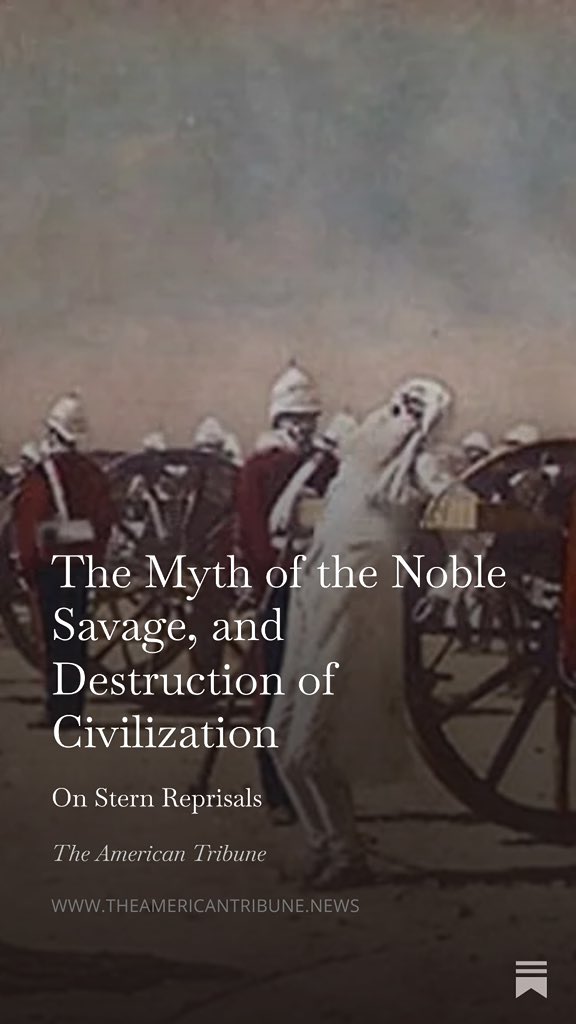
New article is up! This one on the myth of the noble savage, and how domestic Liberal types sides with savages against settlers over the course of nearly the entire British imperial project, from Jamestown to the Rhodesian Bush War, along with what that remains relevant today
Article is linked below
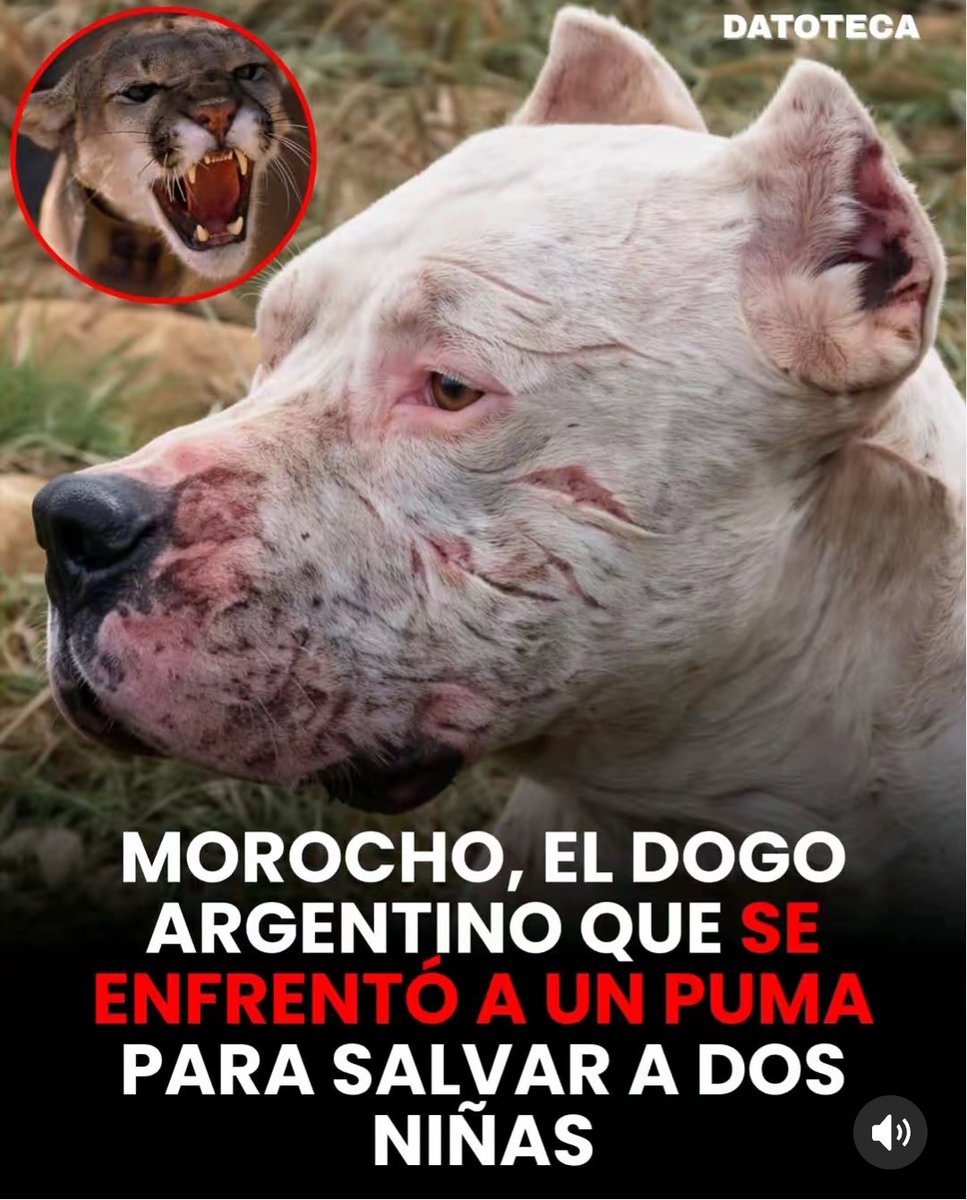
En 2008, en la estancia La Cocha, en la provincia de Córdoba (Argentina), ocurrió una escena que parece sacada de una película, pero fue completamente real.
Dos niñas, Sofía y Yoli, habían subido a un árbol de higos sin darse cuenta de que un enorme puma las observaba desde lo alto de las ramas, esperando el momento para atacar.
Justo cuando el felino se preparaba para saltar, apareció Morocho, el fiel Dogo Argentino de la familia.
Sin dudarlo ni un segundo, el perro saltó para interceptar al puma en el aire, iniciando una feroz batalla en la base del árbol mientras las niñas corrían desesperadas a pedir ayuda.
Minutos después llegó el padre de una de ellas. La escena era impactante: el puma yacía sin vida, y Morocho estaba gravemente herido, con profundas mordidas y cortes en el cuello y el rostro.
Aun así, cuando vio a su familia, movió la cola.
Tras varias semanas de cirugías y cuidados intensivos, el valiente perro logró recuperarse completamente.
Desde entonces, Morocho quedó grabado en la memoria de muchos como un verdadero héroe, símbolo de la fuerza, el coraje y la lealtad absoluta que un animal puede sentir por quienes ama.
Desde entonces, muchos entendieron algo que a veces los humanos olvidan:
la lealtad verdadera no habla, no presume y no pide nada a cambio… solo aparece cuando más la necesitas.
Morocho no era un héroe porque venció a un puma.
Era un héroe porque estuvo dispuesto a dar la vida por su familia sin pensarlo dos veces.
Y quizá por eso los perros dejan huellas que el tiempo nunca puede borrar.
Según el filósofo Crispin Sartwell, la culpa del wokismo no la tiene la “Teoría Francesa” (Foucault, Derrida, Deleuze), sino una versión simplificada y puritana del idealismo lingüístico que se desarrolló principalmente en Estados Unidos.
Sartwell reconoce que el wokismo (especialmente entre 2015 y 2025) fue muy dañino para la universidad americana: convirtió las palabras en lo más importante de la realidad, trató las jerarquías como opresión automática, las normas como violencia y las identidades como algo completamente construido y negociable. Esto generó una cultura de cancelación, censura y moralismo barato.
Sin embargo, Sartwell rechaza culpar a los pensadores franceses. Foucault, Derrida y Deleuze son muy diferentes entre sí, ninguno defendía las tesis woke de forma clara, y ninguno era puritano (Foucault, por ejemplo, era radicalmente lo contrario). Sus ideas son más complejas y ambiguas de lo que los críticos suelen presentar.
El verdadero origen, según Sartwell, está en pensadores anglosajones y alemanes como Richard Rorty, Nelson Goodman, Alasdair MacIntyre, Charles Taylor y Hans-Georg Gadamer. Estos defendían con mayor claridad que la realidad se construye mediante el lenguaje y las narrativas, y que por tanto se puede “re-construir” cambiando las palabras y los relatos. Rorty, en particular, combinó esta idea con un fuerte activismo por la “justicia social” y desprecio hacia los conservadores, lo que da casi todo el paquete woke.
En resumen, el wokismo no nació en París, sino en los campus americanos y es el resultado de un posmodernismo simplificado de origen estadounidense mezclado con el puritanismo moral propio de la cultura yanqui. Por eso Sartwell concluye: “Es nuestra propia culpa”. Los franceses no tienen que pedir disculpas.
Este artículo de Sartwell es una respuesta a este estupendo post de Brivael Le Pogam:
https://t.co/yknK143mFv
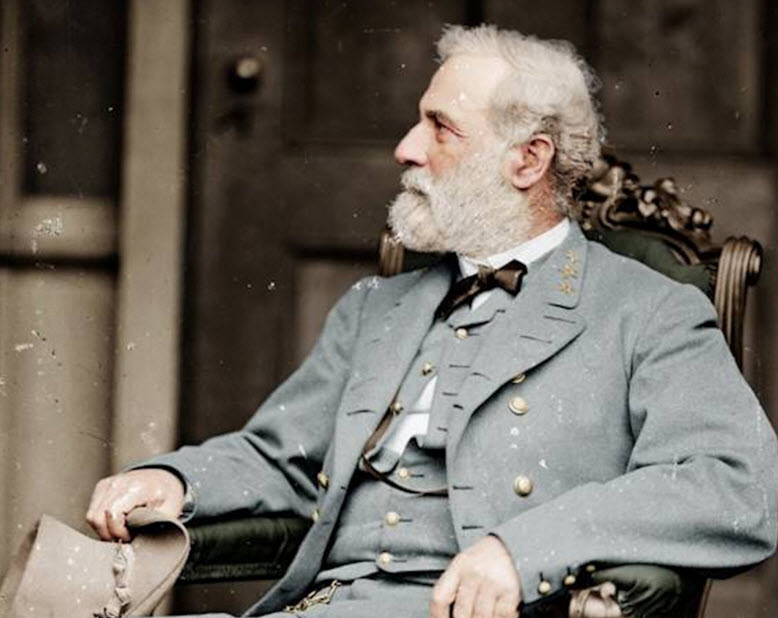
After Appomattox, Robert E. Lee tried to go home. He couldn't.
While he was off losing the war, a Union quartermaster general named Montgomery Meigs, a Southerner by birth who had stayed loyal to the Union and personally despised Lee after losing his own son in combat, seized Arlington estate over $92.07 in unpaid property taxes. (Mrs. Lee had actually sent an agent to pay. The agent was refused at the door.) Meigs then did something brilliantly cruel. He ordered Union dead buried as close to the front porch as possible. The point wasn't burial space. The point was making the house unlivable for the Lees forever.
It worked. That front yard is now Arlington National Cemetery.
So Lee, the most famous man in the South, drifted. Lived in a rented house in Richmond. Hid out at a friend's cottage in the country. In June 1865 he wrote to President Andrew Johnson asking for his citizenship back. Ulysses S. Grant personally endorsed the application. On October 2, 1865, Lee signed the required Oath of Allegiance and sent it to Washington.
A State Department clerk filed it in the wrong folder.
Lee never knew. He spent his last five years as president of tiny, broke Washington College in Lexington, Virginia, where he created the country's first college journalism program, one of the first college business programs, and a one-sentence honor code ("every student be a gentleman") that still runs the place. In public he preached reconciliation. In private, asked to denounce the Klan, he refused. Testifying to Congress in 1866, he said it would be better for Virginia "if she could get rid of" its Black population.
He died on October 12, 1870, of a stroke. Officially, still not a U.S. citizen.
His son sued for Arlington and won. U.S. Supreme Court, 5 to 4, in 1882. The family took $150,000 in 1883 and let the graves stay.
The lost oath sat in a drawer for 105 years. An archivist stumbled across it in the National Archives in 1970. Five years later, on August 5, 1975, President Gerald Ford signed a joint resolution restoring Robert E. Lee's U.S. citizenship, retroactive to June 13, 1865.
By then, the man had been dead for 105 years, buried beneath a chapel he built himself, in a Virginia mountain town nobody outside the state could find on a map.
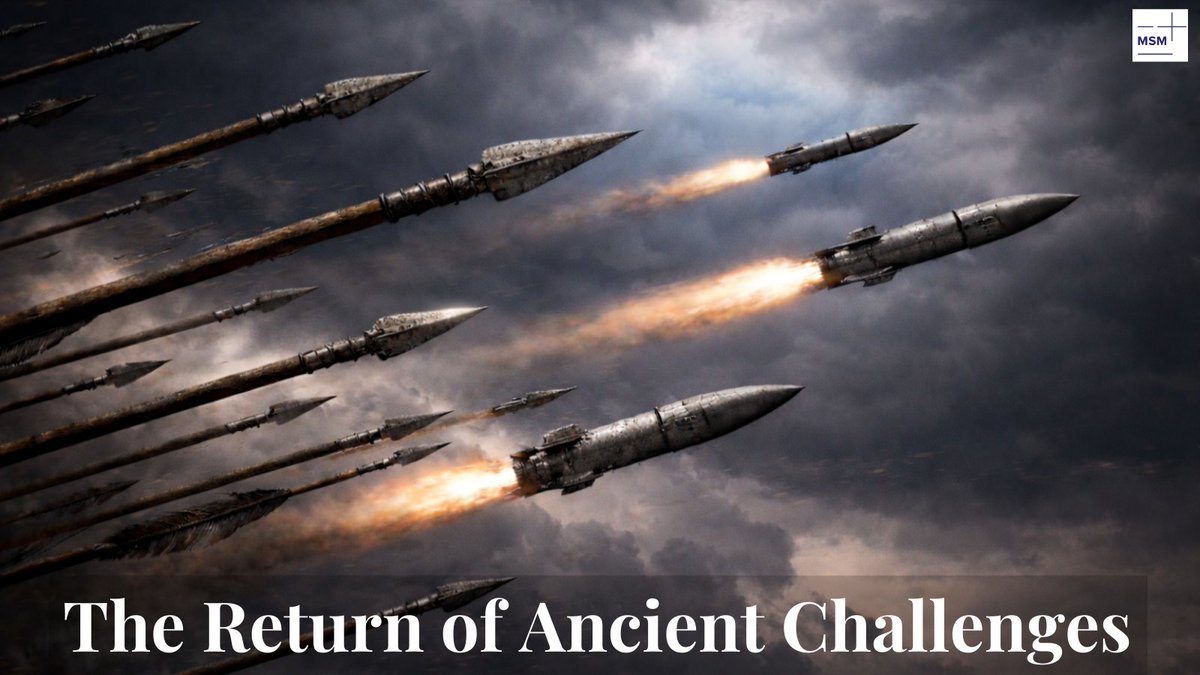
What if the real strategic shock of the 21st century is not technological — but historical?
A return to political violence without clear endings. Fragmented authority. Contested frontiers.
We may not be facing “new” security problems at all, but ancient ones returning.
Always free to read 👉 https://t.co/Y7XAsF9O3M
Do you know what happened in the last 24 hours?
1. Late on Thursday night @FBI agents landed at New York Stewart International Airport with Mohammad al Saadi in handcuffs. Al Saadi, the leader of an Iran-backed Iraqi terror group is allegedly responsible for more than 20 attacks across Europe and Canada and for planning attacks in the U.S..
2. Jose Enrique Martinez Flores, who goes by “Chuqui," the highest ranking Tren de Aragua leader to be extradited to the U.S., also just landed in the U.S. in shackles. Flores allegedly oversaw TdA’s drug trafficking, extortion rackets, prostitution rings and murder operations.
Then, last night, in an operation that makes any fictional representation look amateurish, American operators, working with local Nigerian forces, killed Abu-Bilal-al-Minuki, the second in command for ISIS global operations, a man with the blood of countless innocents on his hands, including many Christians.
This is just one day in the Counterterrorism operations of President @realDonaldTrump.
We salute the intelligence professionals, Law Enforcement Officers, Diplomats, Military operators and support personnel who make these operations possible 24/7.
@WhiteHouse@DeptofWar@TheJusticeDept@StateDept
¿Por qué el papa más corrupto de la historia convirtió el Vaticano en la orgía más salvaje de todos los tiempos? Asesinatos, veneno, incesto y un hijo que inspiró El Príncipe de Maquiavelo. Tira del hilo 🧵👇🏽👇🏽👇🏽
Homer’s Iliad and Odyssey shaped the Ancient Greek culture that created this masterpiece.
Any depiction of his epics should be done with the utmost reverence and respect.
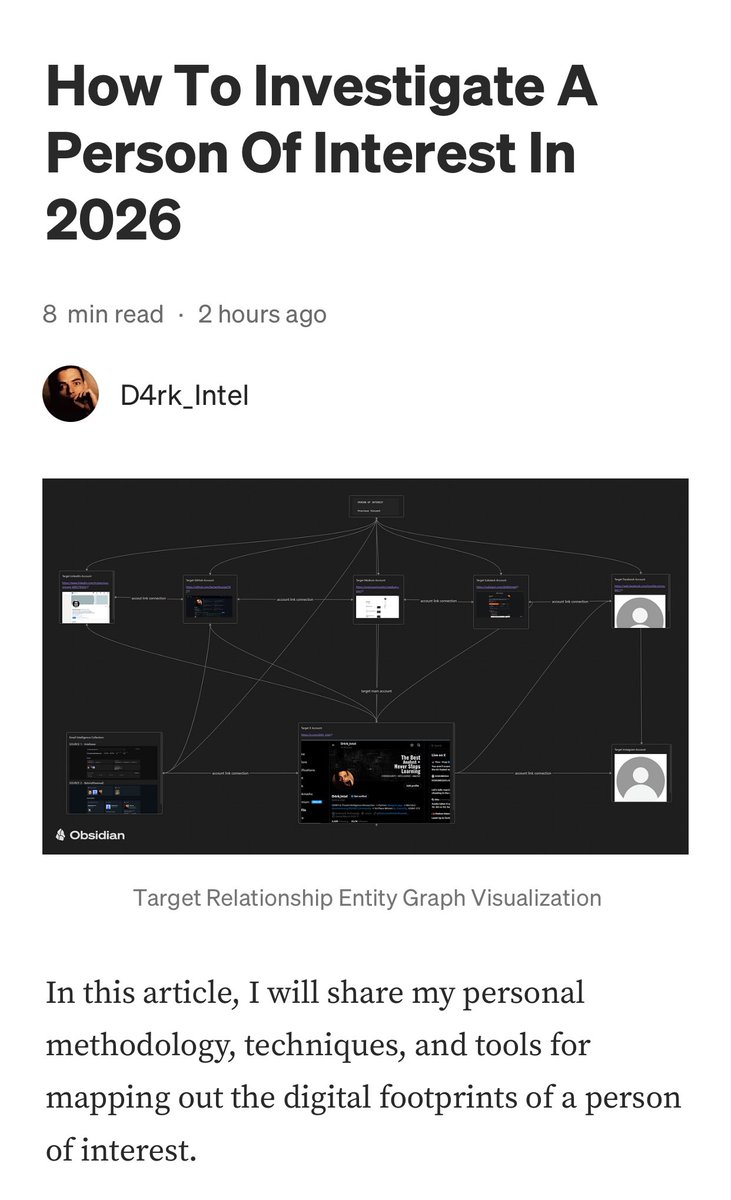
How to Investigate A Person Of Interest In 2026
In this article, I will share my personal methodology, techniques, and tools for mapping out the digital footprints of a person of interest - ethically.
#OSINT#Cybersecurity#ThreatIntelligence
Drones are rewriting warfare faster than NATO can adapt.
According to GIS expert Rob de Wijk @robdewijk, Ukraine has become the world’s leading military innovation lab, where AI, fiber optic drones and electronic warfare are transforming the battlefield in real time. But here is the uncomfortable reality: Despite all the technological breakthroughs, drones still have not delivered decisive strategic victories.
👉 Read the full report to understand what modern warfare may look like in the years ahead: https://t.co/Ne0V0rvpgb
The US just secured control of one of the largest heavy rare earth deposits on earth outside China.
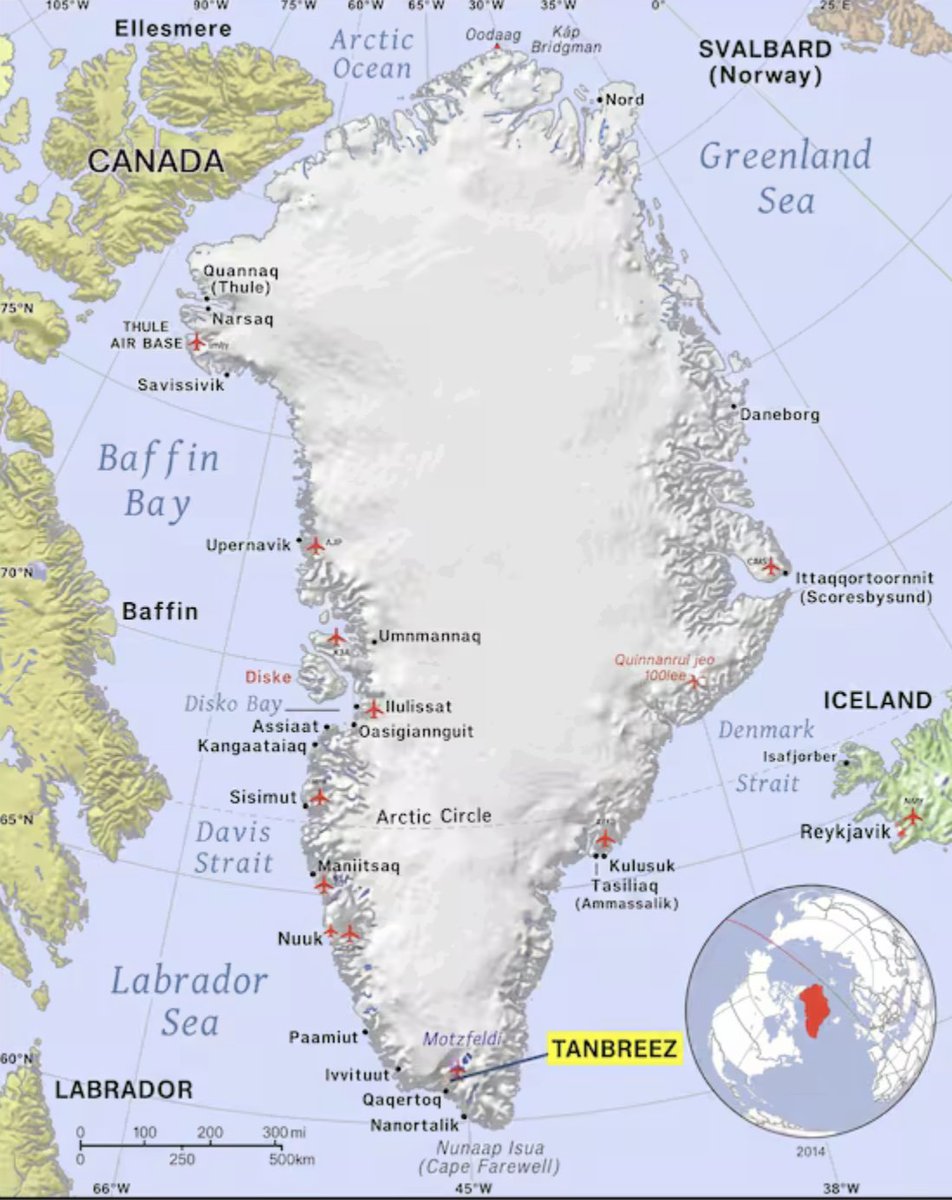
It's in Greenland.
American mining company Critical Metals Corp has received formal approval from the Greenland government to acquire 70% of the Tanbreez deposit in southern Greenland.
Estimated resource: 4.7 billion tonnes of rare earth bearing material.
27% of those rare earths are heavy rare earth elements (dysprosium, terbium, yttrium ) the ones used in EV motors, wind turbines, and advanced military systems.
For context:
Mountain Pass, California (the main US deposit): 0.49% heavy rare earths
Bayan Obo, China's largest deposit: 1.13%
🚨Tanbreez: 27%
It also has exceptionally low uranium and thorium content 10–20 ppm uranium, under 100 ppm thorium.
That matters because radioactive contamination has killed other Greenland projects.
Tanbreez already holds a mining licence valid until 2050 one of only 2 sites out of 140+ active licences on the island to have received it.
The supply chain logic is straightforward:
Extract in Greenland → process in the US → supply defence and advanced technology sectors
Production is expected to begin 2027–2028, starting at 85,000 tonnes of rare earth oxides per year, scalable to 425,000 tonnes.
Project value estimated at $3 billion.
China controls 85% of global rare earth processing capacity.
The US currently imports 80% of its rare earths from China.
The Altar of the Fatherland, or Vittoriano, is an imposing white marble monument in Piazza Venezia in Rome, inaugurated in 1911 to honor Victor Manuel II, the first king of unified Italy. Designed by Giuseppe Sacconi, this national symbol stands out for its neoclassical style, huge Corinthian columns and the equestrian statue of the king.
La semana pasada, en la aldea del sur del Líbano de Debel, un soldado de las FDI golpeó con un mazo un crucifijo frente a la casa de una familia cristiana.
Otro soldado lo fotografió.
Seis más estaban presentes y no intervinieron ni lo denunciaron.
La imagen se volvió viral el domingo 19 de abril.
Esto es lo que ocurrió después.
En cuestión de horas, las FDI confirmaron que la foto era auténtica y abrieron una investigación.
El primer ministro Netanyahu calificó el acto de “inaceptable” y dijo estar “conmocionado y entristecido”.
El ministro de Asuntos Exteriores, Gideon Sa’ar, lo llamó “grave y vergonzoso” y pidió disculpas a los cristianos afectados.
Para el martes, el soldado que golpeó el crucifijo y el que lo grabó fueron apartados del servicio de combate y condenados a 30 días de detención militar.
Los seis testigos se enfrentan a procedimientos disciplinarios.
Ese mismo día, las FDI, en coordinación con la comunidad de Debel, reemplazaron el crucifijo.
Más de 150 líderes religiosos judíos firmaron una carta pública de disculpa.
El embajador de Estados Unidos se pronunció.
Parlamentarios israelíes también lo hicieron.
La historia apareció en todos los grandes medios del mundo.
Un lector justo señalará que no fue el primer incidente de este tipo y que actos menores de vandalismo por parte de soldados y colonos israelíes no siempre provocan este nivel de respuesta.
Es un punto razonable. Guárdalo.
Porque, por ahora, los hechos son estos:
Se rompió una estatua.
Nadie resultó herido.
El Estado pidió disculpas, encarceló a los responsables y pagó la reposición en menos de 48 horas.
Ahora, otra categoría de hechos.
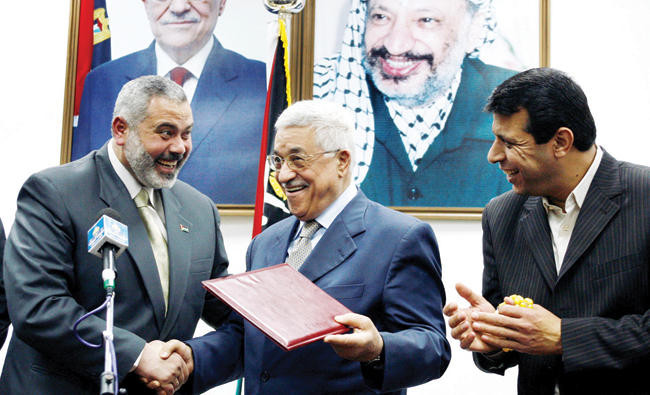
La Autoridad Palestina y Hamás.
Cuando la AP tomó el control de Belén en 1995, la ciudad era un 86% cristiana en 1950 y alrededor de un 40% en 1998.
Hoy está por debajo del 10%.
Bajo su gobierno, los cristianos denuncian confiscaciones de tierras, escrituras falsificadas, extorsión, exclusión y acoso.
En 2019, una iglesia maronita fue vandalizada.
En 2022, el pastor Johnny Shahwan fue arrestado por “normalización con Israel”.
Ese mismo año, el hotel Bethlehem fue tiroteado tras acusaciones en redes.
Sin detenciones.
Sin disculpas.
Sin restauraciones.
En 2002, durante la Segunda Intifada, milicianos irrumpieron en la Iglesia de la Natividad y retuvieron a religiosos durante 39 días.
Nadie pidió disculpas.
Nadie fue procesado.
Luego Hamás.
En 2007, Rami Ayyad, cristiano palestino y gerente de la única librería cristiana de Gaza, fue secuestrado, apuñalado y asesinado.
Había recibido amenazas por vender Biblias.
Su librería había sido atacada antes.
Hamás condenó el crimen y prometió investigar.
Años después admitió que el asesino era uno de los suyos, pero nunca lo procesó por matar a un cristiano.
Bajo Hamás, la población cristiana de Gaza cayó de unos 5.000 a alrededor de 1.000.
Un descenso del 80% en una generación.
El obispo Alexios advirtió sobre conversiones forzadas en 2016.
No recibió respuesta.
En total, los cristianos en territorios palestinos pasaron de alrededor del 11% a un 1% en un siglo.
Nadie fue destituido.
Nadie pidió disculpas.
Nadie fue condenado.
Ahora ampliemos el foco.
En 2015, ISIS decapitó a 21 cristianos coptos en Libia.
Lo grabó. Lo celebró.
Ese mismo año, Al-Shabaab asesinó a unos 140 cristianos en Kenia tras separarlos por religión.
También lo celebró.
En 2017, ISIS bombardeó iglesias en Egipto.
45 muertos.
Sin disculpas.
En Irak, arrasó comunidades cristianas milenarias.
Población reducida de 1,5 millones a menos de 250.000.
En 2019, atentados en Sri Lanka mataron a 269 personas en Pascua.
Los responsables lo celebraron.
En Nigeria, grupos yihadistas matan cristianos constantemente.
Aldeas quemadas.
Niñas secuestradas.
En Arabia Saudí, no se permite ninguna iglesia.
En Irán, conversos enfrentan cárcel o muerte.
En Pakistán, cristianos encarcelados por blasfemia.
En Sudán, aldeas cristianas bombardeadas durante años.
Sin disculpas.
Sin justicia.
Sin reconstrucción.
Ahora la pregunta.
Cuenta los muertos de esta lista: decenas de miles.
Y una civilización prácticamente desaparecida.
¿Cuánta atención viste?
¿Cuántas disculpas?
¿Cuántos juicios?
Ahora vuelve al inicio.
Cero muertos.
Una estatua rota.
Y, sin embargo, disculpas, castigo y reparación en 48 horas.
La atención moral global parece invertida.
Donde hay responsabilidad, hay indignación.
Donde no la hay, hay indiferencia.
Israel estuvo mal en Debel.
Israel lo reconoció.
Israel castigó a los responsables.
Israel reparó el daño.
La Autoridad Palestina y Hamás no lo han hecho.
Ni la mayoría de los otros casos mencionados.
✍️@khalidi79397
April 18, 1966. The 38th Academy Awards.
The presenter opened the envelope.
Lee Marvin. Best Actor.
Six feet tall, silver-haired, unhurried — Marvin walked to the stage the way a man walks when he genuinely doesn't need anyone's approval. He took the Oscar. The room waited for the usual speech. The tears. The agents. The thank-you to God.
Instead, Lee Marvin looked out at the most powerful room in Hollywood and said:
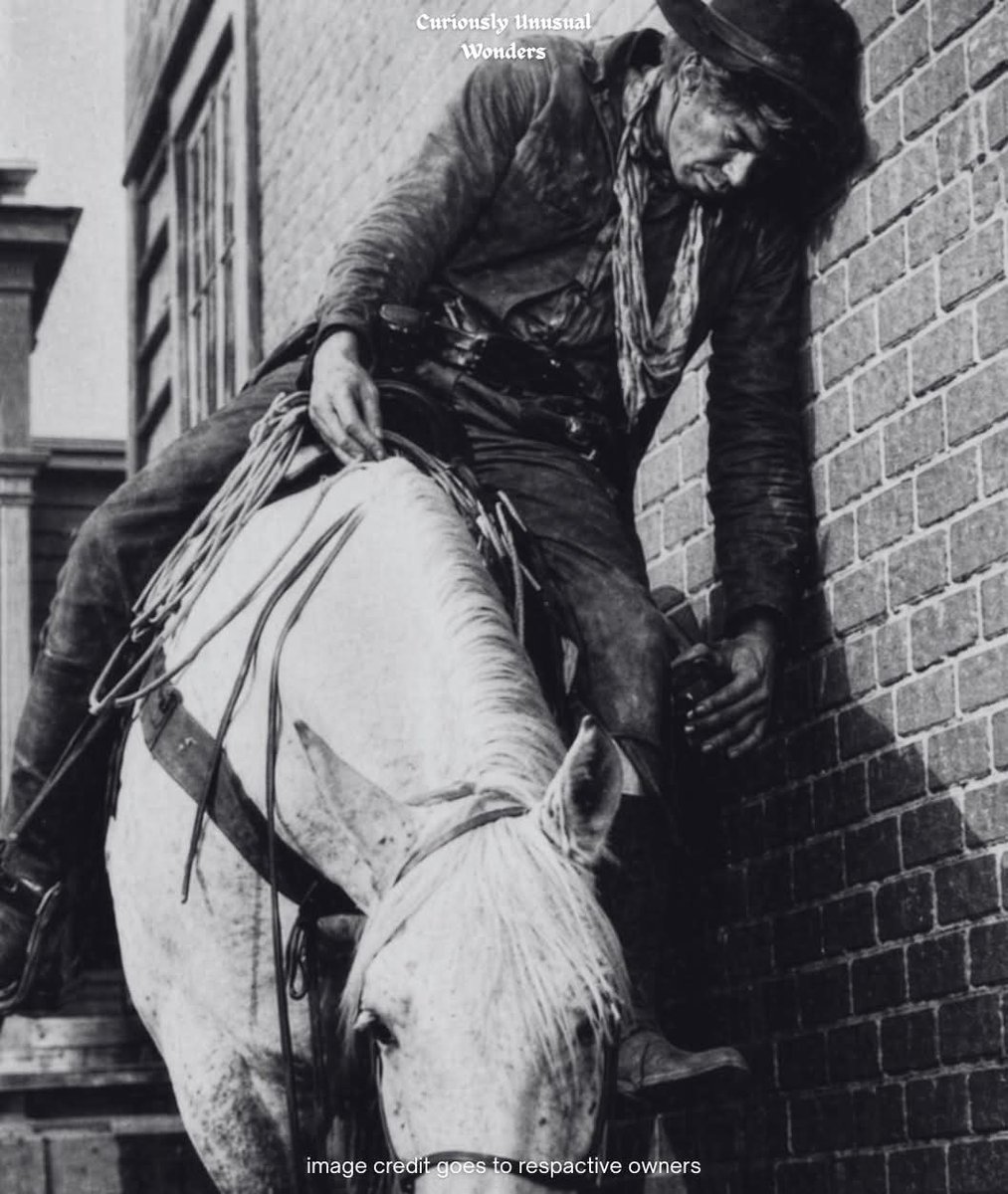
"I think half of this belongs to a horse somewhere out in Nevada."
The crowd laughed. They thought it was a joke.
It wasn't entirely.
The horse — a grey named Smoky — had shared every scene with Marvin's character Kid Shelleen, a legendarily drunk gunslinger who could barely stay upright. Smoky leaned, stumbled, and wobbled alongside Marvin with such perfect comic timing that the American Humane Association gave the horse its own award that year. Marvin dedicated his Oscar to an animal because he believed the animal had genuinely earned half of it. That was exactly the kind of man he was.
What nobody in that room fully understood was how he had learned to play that role so honestly.
June 1944. The island of Saipan. The Pacific War.
Private First Class Lee Marvin was twenty years old, serving as a scout sniper with the 4th Marine Division, when Japanese machine gun fire tore through his unit on the slopes of Mount Tapochau. A bullet severed his sciatic nerve. Another hit his foot. He was one of only a handful of men in his company to survive.
He spent the next thirteen months in naval hospitals. Doctors told him he had narrowly escaped permanent paralysis.
He wept for the men who didn't come home. He had nightmares for the rest of his life.
After the war, still young, still carrying all of it quietly, he drifted into acting almost by accident — first as a plumber's assistant at a community theater, filling in for a sick actor, discovering he had a gift for something he couldn't quite name. When people later asked where he'd learned to act, he didn't mention technique or training. He mentioned the Marines.
"I learned to act in combat," he said. "Trying to act unafraid when I was terrified."
That was the foundation beneath every performance. Every cold-eyed villain. Every broken soldier. Every lovable disaster of a man stumbling through his last chance. He wasn't performing danger from the outside — he had lived inside it, survived it, and carried its weight so long it had become his natural center of gravity.
In Cat Ballou, he played not one but two completely different characters — the shambling, heartbreaking Kid Shelleen, and the terrifying villain Tim Strawn — and won the Oscar for both in a single film. A first in Academy history.
He kept almost nothing from his entire career. Four things only: the Oscar (half of which, in his mind, belonged to a horse), a National Cowboy Hall of Fame citation, a gold record for a gravelly talk-sung ballad called Wand'rin' Star that somehow reached #1 in the United Kingdom to the bafflement of almost everyone, including Marvin himself — and one high-heeled shoe that Vivien Leigh had used to hit him with during a scene in Ship of Fools, kept purely out of affection for her.
Four objects. That was his archive. The rest was just work.
Lee Marvin is buried at Arlington National Cemetery, among the most honored soldiers in American history.
His headstone lists none of his films. No Oscars. No awards. No credits.
Just four words of rank:
Lee Marvin. PFC. U.S. Marine Corps. World War II.
He knew exactly what mattered. He always had.
And somewhere out in Nevada, one very deserving horse will never know that it shares a piece of Hollywood history with one of the most quietly remarkable men ever to walk across a stage.
Food for thought.
Welcome to the New Great Game: the closure of the Strait of Hormuz is not an outburst, it is a long‑planned move on a board Washington has been studying for decades.
Donald Trump’s Iran gamble is being judged against the wrong baseline. Nobody serious expected regime change by airstrike; the bet of Operation Epic Fury was narrow but brutal, halt Iran’s march to a bomb, break the infrastructure that threatens Americans and allies, restore deterrence and, by closing Hormuz, demonstrate that even in a “multipolar” age the United States can still reach for the world’s most strategic chokepoint.
The question is not whether Iran looks worse than in peacetime, but whether it is weaker than the Iran we were otherwise on track to face: near‑weapons‑grade enrichment, hardened sites, ICBMs a tested weapon within a year, and implicitly backed by China. Against that counterfactual, a regime that has lost senior commanders, core nuclear facilities and major war‑making capacity has not “emerged stronger”.
Nor did this war suddenly hand power to the IRGC. The Guards have run Iran for years; the conflict stripped away the clerical façade and killed many of their most capable officers. They are not true religious believers but calculating military men, interested in power, money and survival more than theology. Such men can be negotiated with, if the terms strip away their most dangerous options. A discredited IRGC with degraded capabilities and no viable nuclear path is weaker than the old clerical‑IRGC hybrid with a bomb option. This looks less like a revolutionary vanguard and more like a brittle military dictatorship.
Venezuela shows why this is not neo‑conservatism in disguise. There, Washington helped force Nicolás Maduro from power with sanctions, isolation and support for the opposition, but it did not send Marines into Caracas or attempt to remake the country in America’s image. The objective was pressure and transition, not permanent US stewardship. The same bounded playbook now applies to Iran: maximum economic and military pressure to fracture the regime from within, not an occupation or bayonet‑installed government.
Seen from that perspective, Hormuz is not a shocking improvisation but the central artery in a strategy that has been war gamed out : use control of sea‑lanes and finance to punish Iran first, but also to remind China and Europe that their growth models still depend on flows Washington can disrupt. What cannot be allowed is for this world to turn Iran into a Chinese staging point on the Gulf.
The endgame in this first round of the New Great Game is narrow and knowable: no enrichment, real caps on missile reconstitution, no Chinese forward base, no open chequebook for terror, and enough sustained pressure that when the Iranian people finally move, they are pushing against a weakened security state rather than a confident nuclear one.
The world has changed; Iran has lost the war, Pax Americana is dead. Trump’s national security doctrine, coercion without occupation, leverage without crusades, is the planned successor, and the Strait of Hormuz is its chosen proving ground. Is the Strait of Malacca next?
Why should investors care? Because if this strategy succeeds, it removes a looming nuclear breakout risk, curtails state‑sponsored terrorism, re‑establishes a credible fear of US hard power and, for a time, compresses the geopolitical risk premium that has hung over energy, shipping and global equities for a generation. It offers the possibility, however briefly, of a peace dividend: lower volatility, higher investment and a world that, for a moment, rhymes with the fall of the Berlin Wall and the end of the Cold War.
In that window, capital will scramble to reprice assets that assumed perpetual Middle Eastern and Nuclear escalation. The New Great Game is not just about guns and chokepoints; it is about who captures that re‑rating.