A Fields medalist tried to prove a technique was too good to be true. He failed, and the math he uncovered now runs inside MRI machines.
The medalist is Terence Tao. About twenty years ago, engineers kept stumbling onto the same trick: rebuild a sharp, full image from far less data than should be possible.
It kept turning up by accident. In seismology. In astronomy. It worked beautifully, and no one could say why. So each field kept it as a private trick, and it never spread.
Someone brought it to Tao as a pure math problem about random matrices. His first instinct was that they had made a mistake. You cannot get output that clean from input that thin.
So he set out to prove it was impossible. Instead he found the exact conditions where it works, and those were the conditions they had.
He and two colleagues wrote the proof. The moment it had a guarantee, dozens of fields picked it up. Today it is called compressed sensing.
He tried to prove it wrong. The proof he found instead is now inside your MRI.
We give up our communal ways to be like the yts. Which we don't do very well at coz we're not keeping up industrially, economically or technologically. How can we also fail at African communal living? Better pattern up and pick the one we're better at and maybe the rest will come
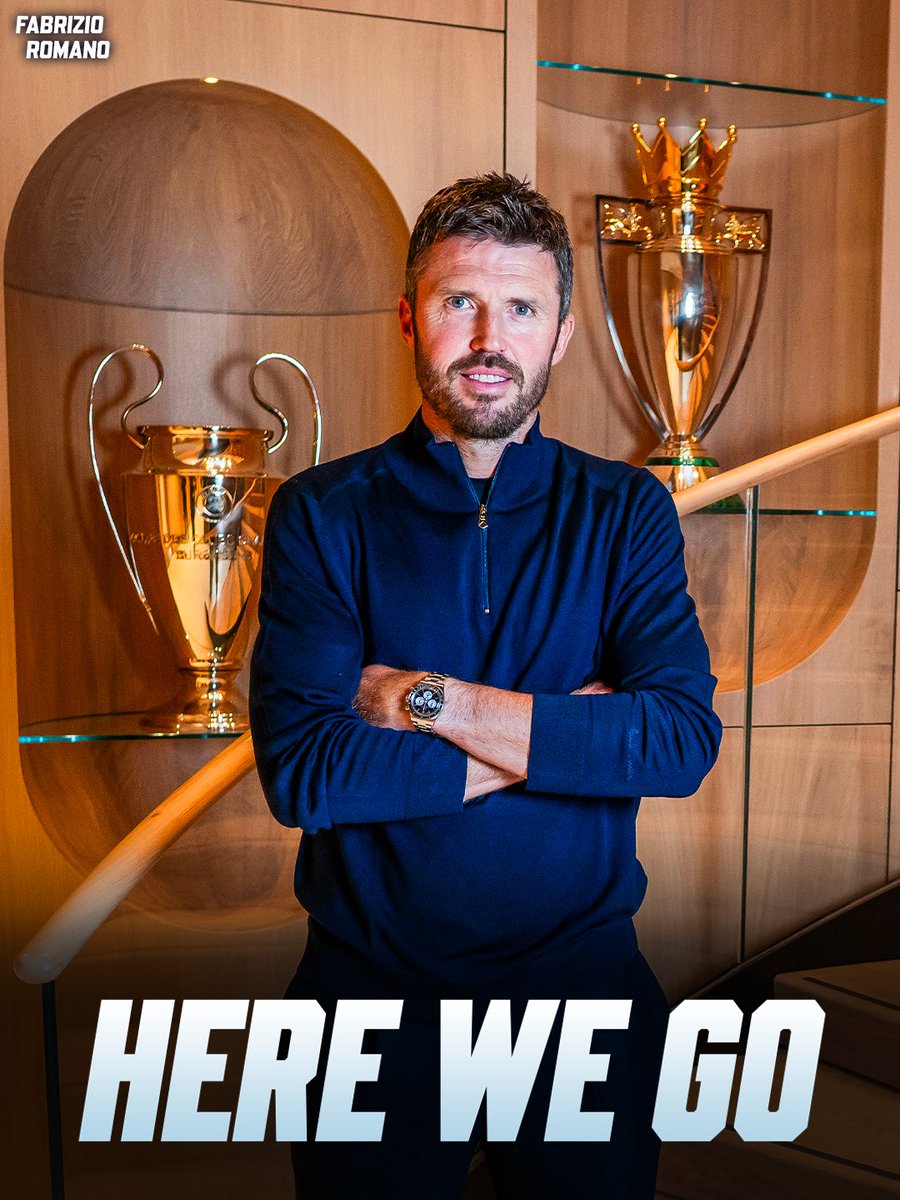
🚨 Michael Carrick will stay at Manchester United as permanent manager, confirmed.
Direction clear for weeks, plan also approved by Sir Jim Ratfliffe and new deal set to be signed soon.
New deal for 2 years plus option to extend or directly 3 years, but no doubts: Carrick says yes and will sign the contract.
BREAKING: U.S. President Donald Trump has been given a red carpet welcome in Beijing as he arrives for a state visit.
Also seen among the U.S. delegation includes his son Eric Trump and Tesla boss Elon Musk.
Sky's @jamesmatthewsky reports.
https://t.co/wuHiDX90Tw
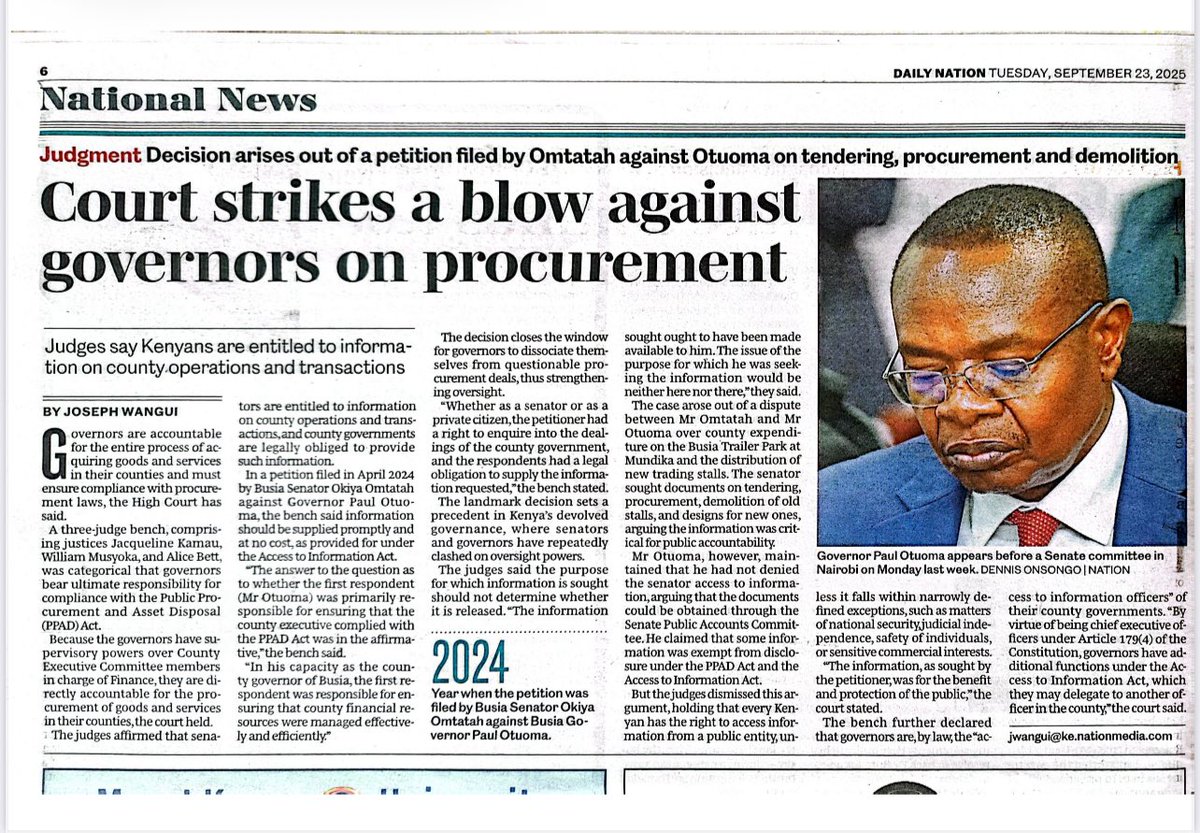
The question that @EPRA_KE needs to answer.
We have always been told the purpose of G2G is to cushion us from external shocks. Now our fuel has gone up because of the war
Why did our fuel prices not go down when global fuel prices were at an all time low last year?
When Copernicus proposed heliocentrism in 1543, it was actually less accurate than Ptolemy's geocentric model - a system refined over 1,400 years with epicycles precisely tuned to match observed planetary positions.
It took another 70 years before Kepler, working from Tycho Brahe's unprecedentedly precise observations, replaced Copernicus’s circles with ellipses - finally making heliocentrism empirically superior.
Terence Tao's point is that science needs a high temperature setting. If we only fund and follow what's most state of the art today, we kill the ideas that might need decades of work to surpass some overall plateau.
It is with heavy hearts that we say farewell to Professor Emeritus Benedict Gross, who passed away in December, 2025. We collected stories, anecdotes, and recollections about Gross’ impact on the lives of his friends, colleagues, and former students. https://t.co/udNgXKhLoM
During a lecture, Lord Kelvin asked his class,
“Do you know what a mathematician is?”
He then wrote the Gauss integral on the blackboard. He pointed to the expression and said,
“A mathematician is one to whom that is as obvious as that twice two makes four is to you.”
S. P. Thompson, Life of Lord Kelvin (London, 1910), p. 1139
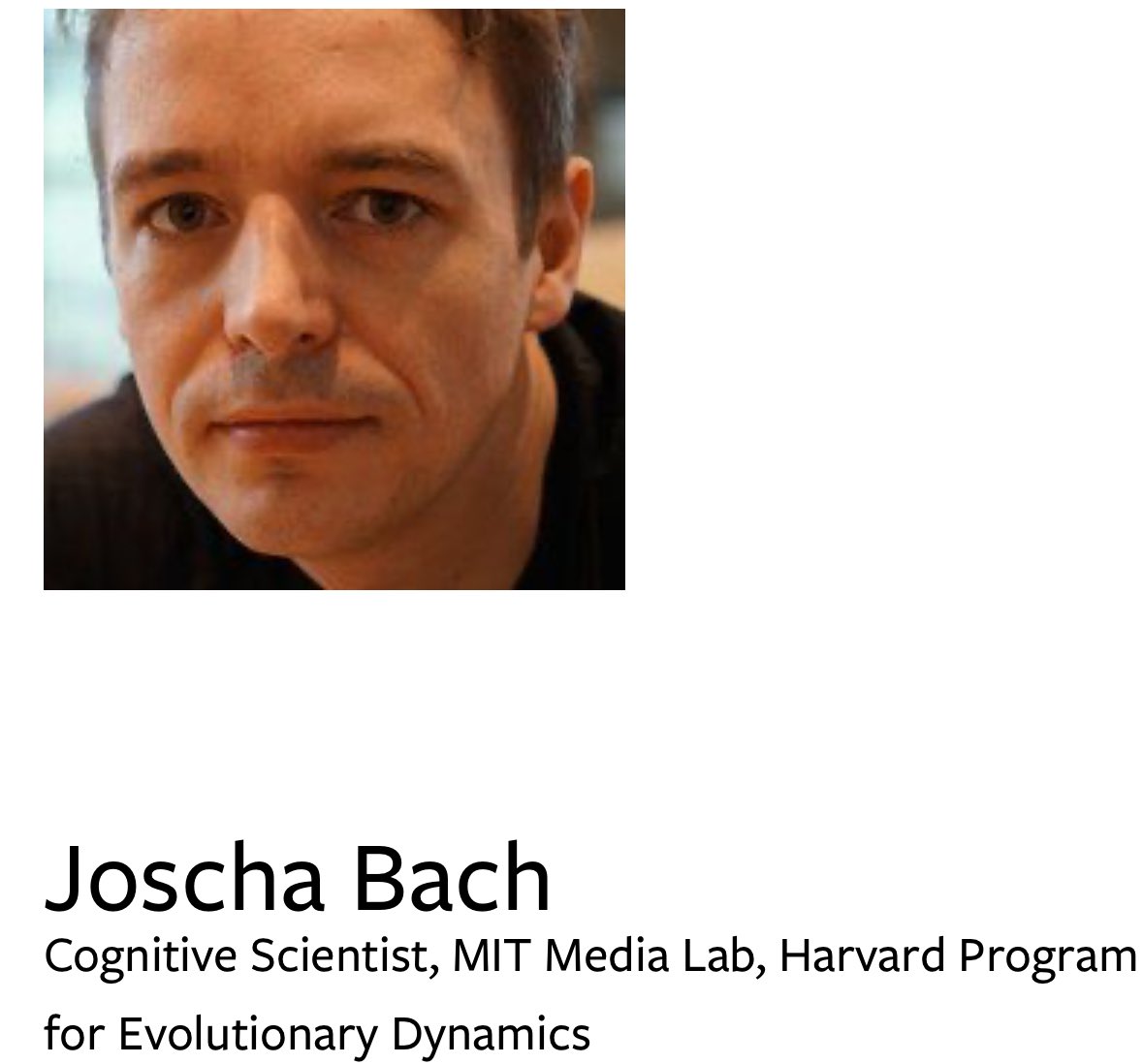
There is a 2016 email exchange between Jeffrey Epstein and German MIT cognitive scientist Joscha Bache, where they calmly discuss race-based intelligence, culling “unused” humans like neurons, mass death as population control, and fascism as an efficient system of governance.
Got burned by an Apple ICLR paper — it was withdrawn after my Public Comment.
So here’s what happened. Earlier this month, a colleague shared an Apple paper on arXiv with me — it was also under review for ICLR 2026.
The benchmark they proposed was perfectly aligned with a project we’re working on.
I got excited after reading it. I immediately stopped my current tasks and started adapting our model to their benchmark.
Pulled a whole weekend crunch session to finish the integration… only to find our model scoring absurdly low.
I was really frustrated. I spent days debugging, checking everything — maybe I used it wrong, maybe there was a hidden bug.
During this process, I actually found a critical bug in their official code:
* When querying the VLM, it only passed in the image path string, not the image content itself.
The most ridiculous part? After I fixed their bug, the model's scores got even lower!
The results were so counterintuitive that I felt forced to do deeper validation. After multiple checks, the conclusion held: fixing the bug actually made the scores worse.
At this point I decided to manually inspect the data. I sampled the first 20 questions our model got wrong, and I was shocked:
* 6 out of 20 had clear GT errors.
* The pattern suggested the “ground truth” was model-generated with extremely poor quality control, leading to tons of hallucinations.
* Based on this quick sample, the GT error rate could be as high as 30%.
I reported the data quality issue in a GitHub issue. After 6 days, the authors replied briefly and then immediately closed the issue.
That annoyed me — I’d already wasted a ton of time, and I didn’t want others in the community to fall into the same trap — so I pushed back. Only then did they reopen the GitHub issue.
Then I went back and checked the examples displayed in the paper itself.
Even there, I found at least three clear GT errors.
It’s hard to believe the authors were unaware of how bad the dataset quality was, especially when the paper claims all samples were reviewed by annotators. Yet even the examples printed in the paper contain blatant hallucinations and mistakes.
When the ICLR reviews came out, I checked the five reviews for this paper.
Not a single reviewer noticed the GT quality issues or the hallucinations in the paper's examples.
So I started preparing a more detailed GT error analysis and wrote a Public Comment on OpenReview to inform the reviewers and the community about the data quality problems.
The next day — the authors withdrew the paper and took down the GitHub repo.
Fortunately, ICLR is an open conference with Public Comment. If this had been a closed-review venue, this kind of shoddy work would have been much harder to expose.
So here’s a small call to the community:
For any paper involving model-assisted dataset construction, reviewers should spend a few minutes checking a few samples manually. We need to prevent irresponsible work from slipping through and misleading everyone.
Looking back, I should have suspected the dataset earlier based on two red flags:
* The paper’s experiments claimed that GPT-5 has been surpassed by a bunch of small open-source models.
* The original code, with a ridiculous bug, produced higher scores than the bug-fixed version.
But because it was a paper from Big Tech, I subconsciously trusted the integrity and quality, which prevented me from spotting the problem sooner.
This whole experience drained a lot of my time, energy, and emotion — especially because accusing others of bad data requires extra caution.
I’m sharing this in hopes that the ML community remains vigilant and pushes back against this kind of sloppy, low-quality, and irresponsible behavior before it misleads people and wastes collective effort.
#ICLR #ICLR2026 #NeurIPS #CVPR #openreview #MachineLearning #LLM #VLM
Like him or not, that Cheney lived to 84 years old is a powerful testament to modern cardiovascular medicine. He was vasculopath: First heart attack at age 37, third heart attack by 47, requiring quadruple bypass surgery, 4th heart attack at 50, severe heart failure requiring defibrillator at 60, surgical repair of arterial aneurysms in both legs at 64, LVAD at 69, Heart Transplant at 71. Truly amazing! https://t.co/sc0KBp71Mr
this 17 year old homeschooled girl refuted a conjecture that was unsolved for 40 years, and which professional mathematicians worked on for years without solving
she was rejected from most graduate programs she applied to, because she did not have a degree
@justinskycak Well written, but if you’re at the 99th percentile in talent for a skill and others still outperform you, the gap probably isn’t due to talent. It’s motivation, drive, discipline, or consistency.
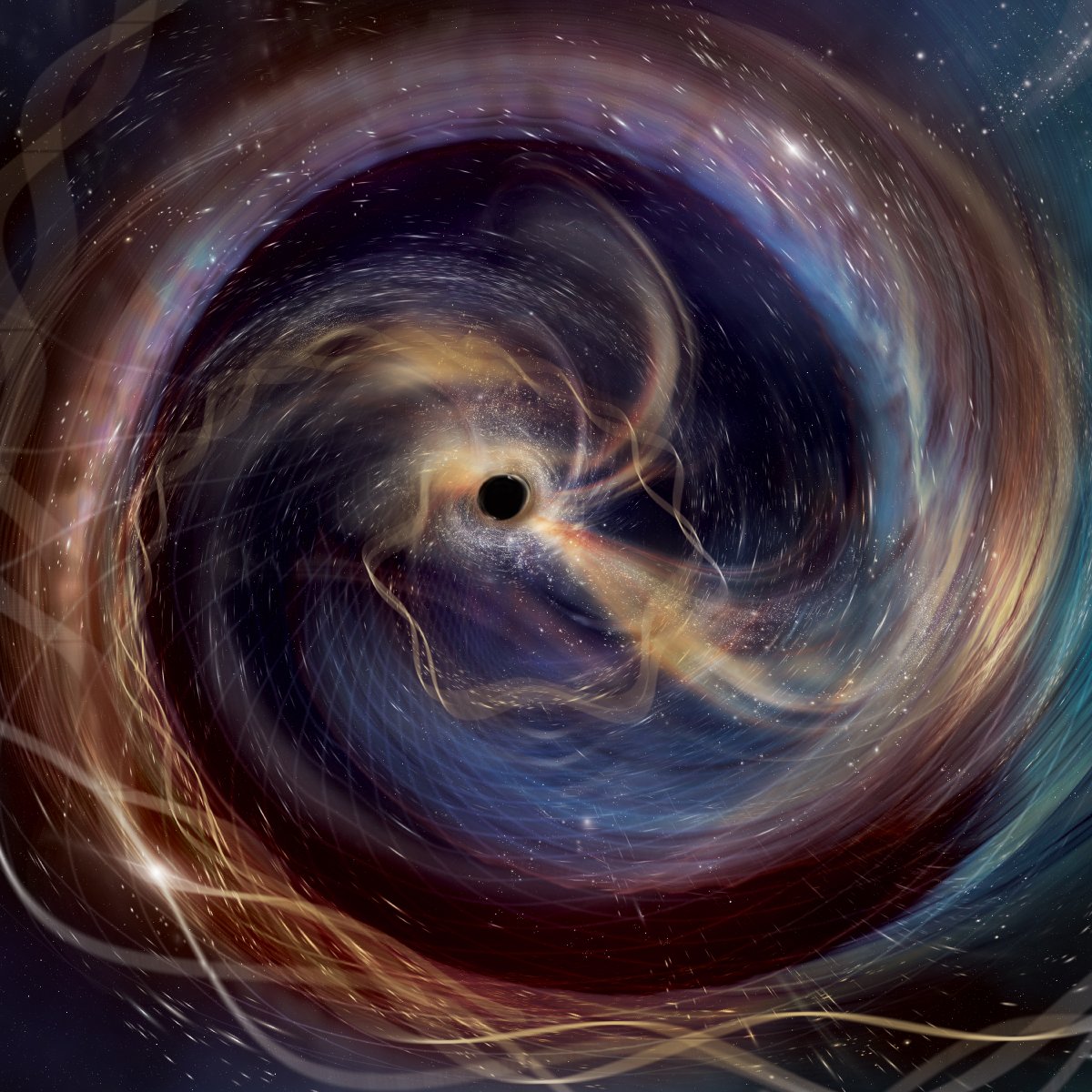
A new study in @PhysRevLett analyzes #GravitationalWaves from GW250114, a black hole merger spotted by @LIGO earlier this year, and provides the most precise confirmation yet for a #BlackHole theorem by #StephenHawking. ⚫
Read the paper: https://t.co/piRCRcaeAe
📷 Aurore Simonnet (SSU/EdEon)/LVK/URI