Association for Gender Equality & Diversity in Academia (AGEDA) at @Unibocconi
Follow us for updates and contact us to share your ideas or join our association!
We are AGEDA - a new @Unibocconi student association for gender equality and diversity in academia! Follow us for updates on events, initiatives, content and more as we build the association. #gender#diversity#AcademicTwitter
This paper is about the 1920s.
Shockingly there is still a class-background gap in US academia today.
Rodriguez & I find low-SES academics are less likely to get tenure or to get NSF awards, conditional on v detailed measures of publication & citation record.
📣New wp out! A 🧵
Two questions
1️⃣ Does research similarity between junior and senior researchers influence promotion in academia?
2️⃣ Is there a gender gap in research similarity?
How?
1. Novel measure of research similarity using #NLP on paper abstracts
1/3
The academe has for a long time had a severely neglected social class problem.
"Children from low-SES homes were already severely underrepresented [in the academe]."
"Scientists from high-SES families have 38% higher odds of becoming stars."
https://t.co/mKwo6UKWhf
Who remembers this absolute banger?🙋♀️
"[W]e show that the adoption of gender-neutral tenure clock stopping policies substantially reduced female tenure rates while substantially increasing male tenure rates."
Antecol, Bedard, and Stearns (AER, 2018)
https://t.co/evqmBmb5ur
The latest winners of the science Nobel prizes have a few things in common: they undoubtedly have an impressive body of work - and they are all men, they live in high-income countries and none of them is Black. https://t.co/FQoTHEsI1m
A surprising trend: women who applied for assistant professor positions in North America were more likely to get job offers than were men https://t.co/jaXP0pZFIU
What kind of childhood makes a top scientist? Is it enough to have all the right traits (brilliance, grit, etc) or do you need the right family too?
And why should we care? A 🧵 on our paper on the Nobel Laureates.
A teaser: the income distribution of the laureates' fathers.1/N
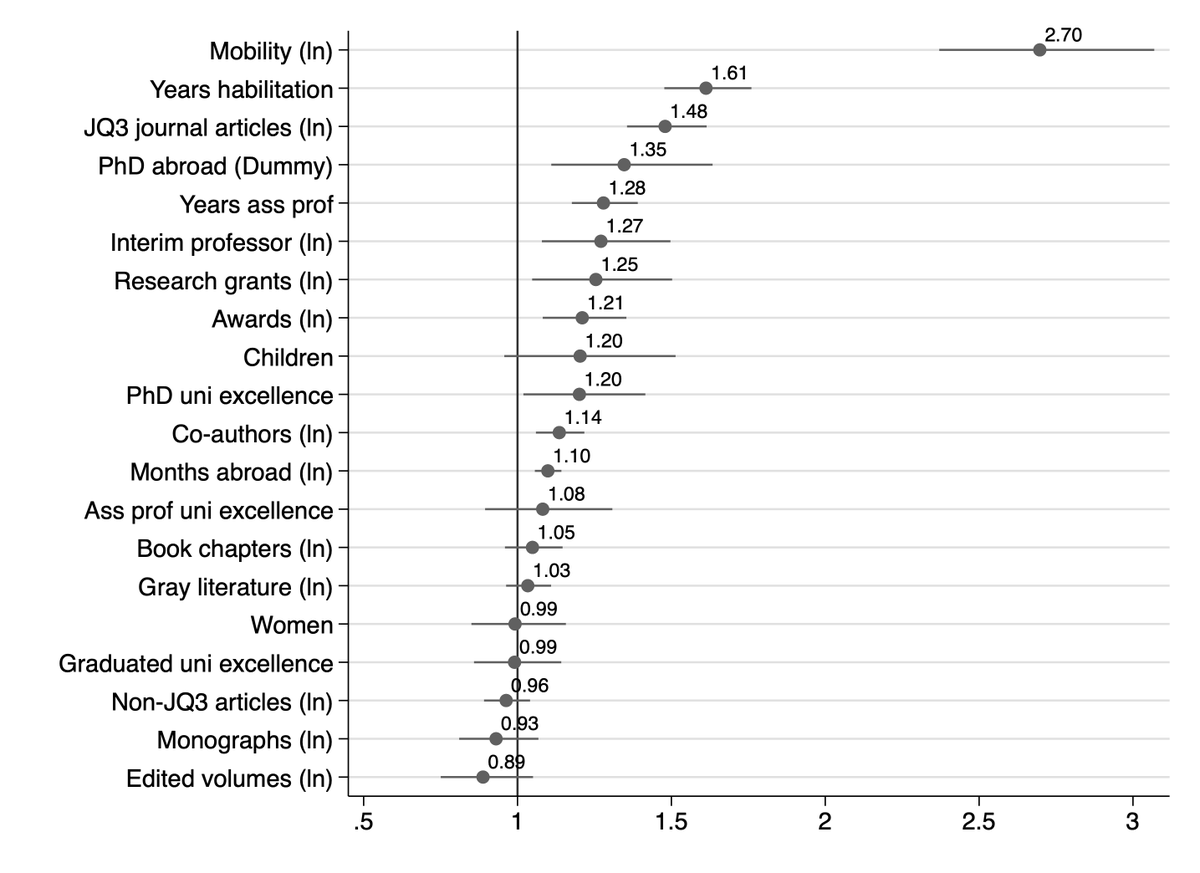
Who gets tenured in economics and why?
New article "What leads to a professorship in German economics? A longitudinal analysis of tenure determinants (1984–2021)" shows: mobility and journal articles = most important.
With @IsabelMHabicht@Mark_Lutter
https://t.co/MPDYdRO49a
📢New WP!📢 The Class Gap in Career Progression: Evidence from US Academia, w/ Kyra Rodriguez
Class is rarely a focus of research or DEI in elite US occupations.
Evidence suggests it should be: we find a large class gap in at least one occupation - tenure-track academia...🧵
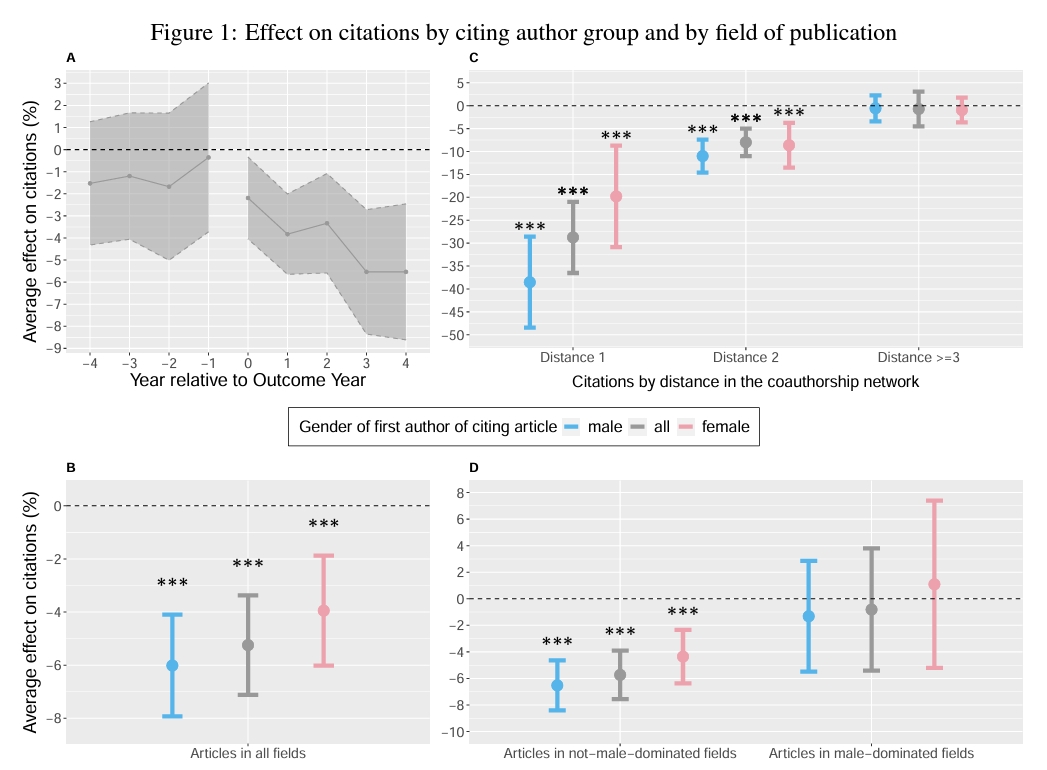
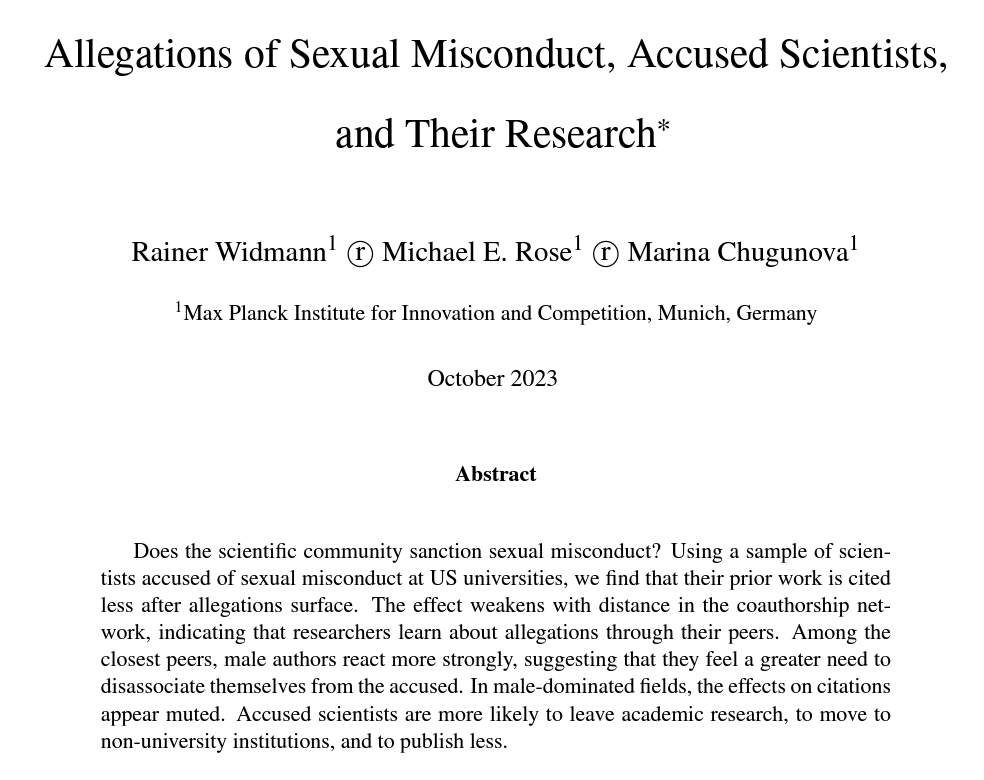
When scientists are accused of sexual misconduct, their (and their co-authors' and their co-authors' co-authors') citations decline ...
... but not so much in male-dominated fields.
https://t.co/FCVt7m9SlG
Fascinating paper by @Rainer_Widmann1 & co-authors
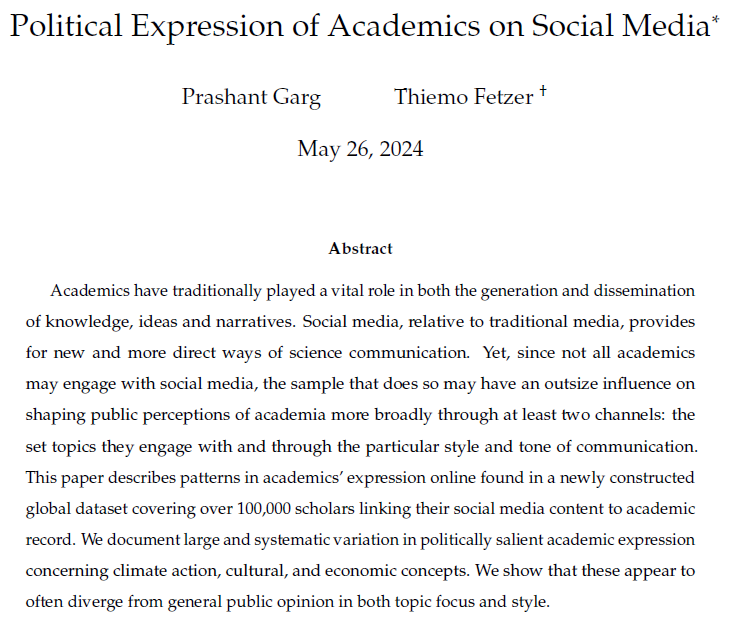
🚨 Exciting News! 🚨
Thrilled to announce our latest working paper with @fetzert:
Political Expression of Academics on Social Media
In this thread, we will highlight our key findings and contributions using a newly built dataset🧵👇
Looking forward to presenting at UCL next week!
Talk will be on: “The Class Gap in Career Progression : Evidence from Academia” with Kyra Rodriguez
(Public draft coming v soon)
Zoom signup link below 👇 💻
In a new article with @ellie_knott, we find that women drive research ethics reporting in political science and IR, shape knowledge of research ethics and do so differently than men. For more & for implications check: https://t.co/7oP0czBuPO @apsrjournal@LSEEI @MethodologyLSE
Our paper is out @AEAjournals P&P! Read the summary of our findings in my co-author @AnSoLassen 's thread 👇. Thanks to @EEANews for granting us the funding.
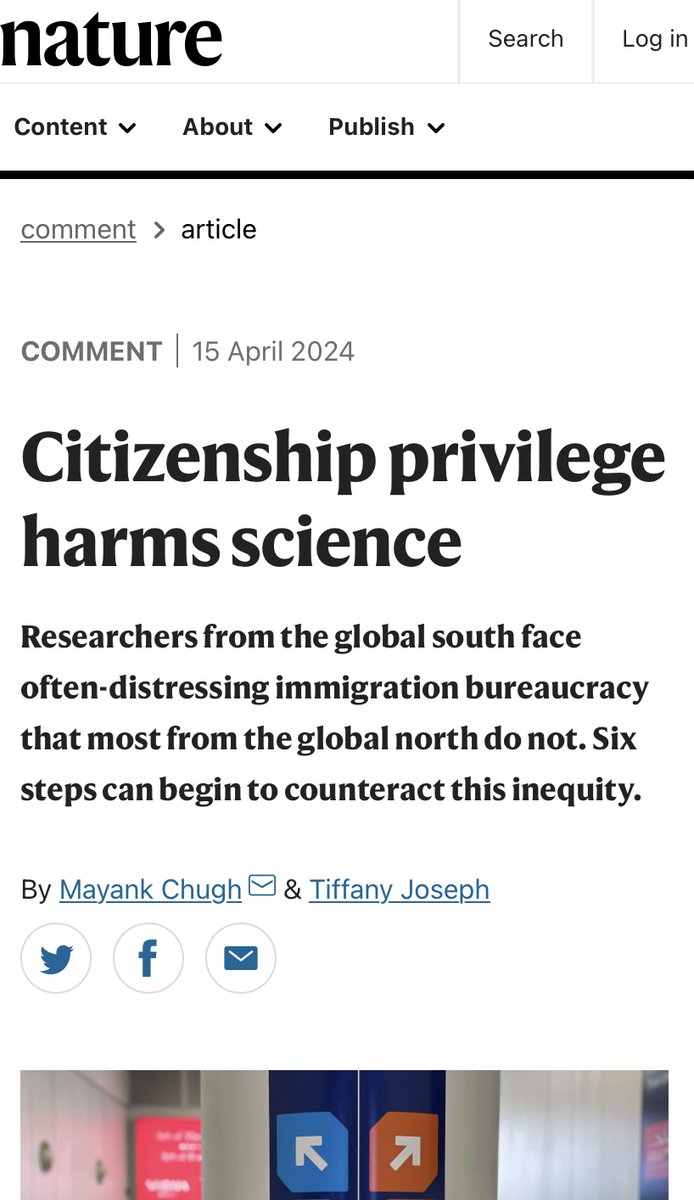
📢'The World Is Your Oyster' is for those who are born in global north countries--don't experience visa bureaucracy & emotional burden that non-white global south scholars do. Citizenship is a privilege that we need to recognize in the academe. 1/n
https://t.co/0PyvvH7fGM


![JohnHolbein1's tweet photo. The academe has for a long time had a severely neglected social class problem.
"Children from low-SES homes were already severely underrepresented [in the academe]."
"Scientists from high-SES families have 38% higher odds of becoming stars."
https://t.co/mKwo6UKWhf https://t.co/6Lc8w4eKo2](https://pbs.twimg.com/media/GaaqKWuWAAAnh9X.jpg)
![JohnHolbein1's tweet photo. The academe has for a long time had a severely neglected social class problem.
"Children from low-SES homes were already severely underrepresented [in the academe]."
"Scientists from high-SES families have 38% higher odds of becoming stars."
https://t.co/mKwo6UKWhf https://t.co/6Lc8w4eKo2](https://pbs.twimg.com/media/GaaqJmwWwAAAg_x.png)
![JohnHolbein1's tweet photo. The academe has for a long time had a severely neglected social class problem.
"Children from low-SES homes were already severely underrepresented [in the academe]."
"Scientists from high-SES families have 38% higher odds of becoming stars."
https://t.co/mKwo6UKWhf https://t.co/6Lc8w4eKo2](https://pbs.twimg.com/media/GaaqI2RWYAA1UyQ.png)




![JohnHolbein1's tweet photo. The academe has for a long time had a severely neglected social class problem.
"Children from low-SES homes were already severely underrepresented [in the academe]."
"Scientists from high-SES families have 38% higher odds of becoming stars."
https://t.co/mKwo6UKWhf https://t.co/6Lc8w4eKo2](https://pbs.twimg.com/media/GaaqK_9X0AApw8-.jpg)


![chloergibbs's tweet photo. Who remembers this absolute banger?🙋♀️
"[W]e show that the adoption of gender-neutral tenure clock stopping policies substantially reduced female tenure rates while substantially increasing male tenure rates."
Antecol, Bedard, and Stearns (AER, 2018)
https://t.co/evqmBmb5ur https://t.co/dO1drUACyR](https://pbs.twimg.com/media/GaLlbR1WQAA1A2p.png)