Here is a potential roadmap to reversing aging by 2040, created by GPT-6 Pro with Image 2.5.
It is important to point out that we will already reach longevity escape velocity by around 2035, so if you can make it to then, you are very likely to live for hundreds of more years!
I thought it worthwhile to state this again.
My entire life and this account are 95% fixated on life extension and reaching the singularity and longevity escape velocity (LEV) so that I may live 1000 years.
I saw peptides as a new area to check out to get me fit. I take 50+ supplements a day, workout with a trainer 3x a week, treadmill 3x a week, and I take every test that I can afford to take.
I have 3 sets of doctors; major public hospital; longevity clinic; and the Cleveland Clinic.
On X, I follow 500+ doctors (MDs and PhDs), nutritionists, geneticists, AI/SI developers, and longevity experts.
My degrees are BS in Management Information Systems and AAS in Cisco Internetworking (CCNA). I have worked in network administration, network analysis and systems administration for a biotech in Silicon Valley.
My goal is to become youthful, return to university training, and go back to working for a biotech in a longevity reklated field.
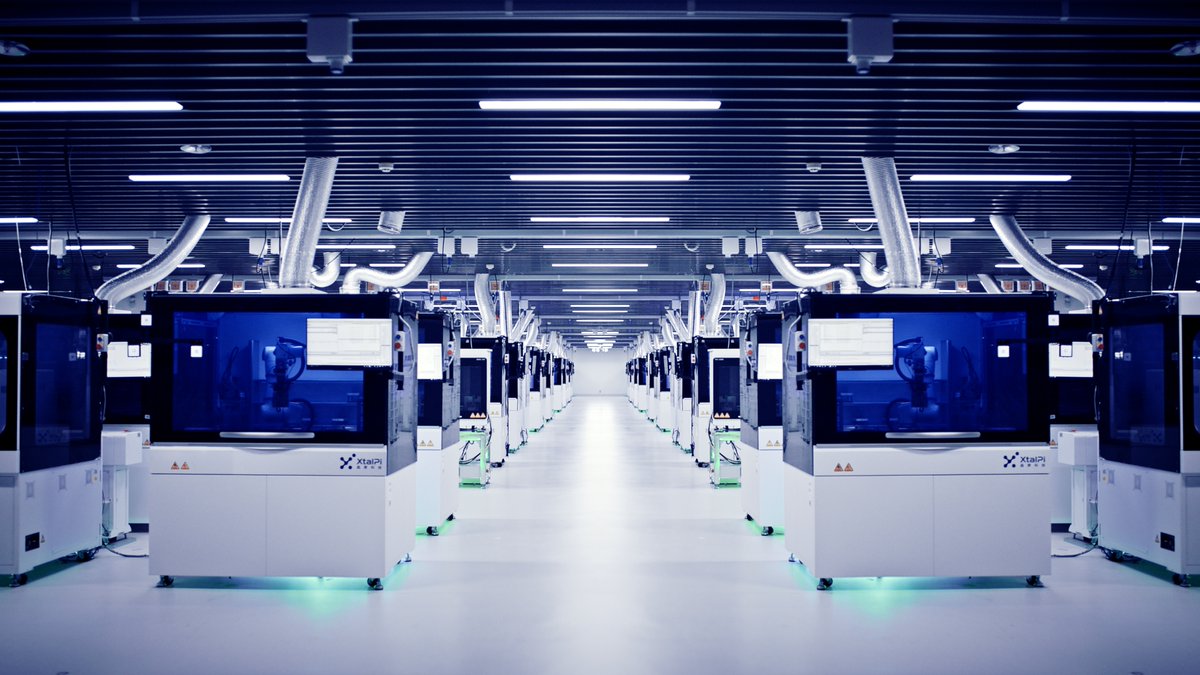
It’s getting popular to build autonomous labs to scale up biological data generation 24/7, but focusing automation on well-established in vitro assays with existing hardware risks solving the easiest least painful step, rather than the problems that matter the most for drug discovery.
One analogy is like generating decades of closed-course driving data with hopes of training self-driving cars that can navigate Manhattan.
I think the most valuable data from autonomous labs will come at the intersection of novel assay technologies with valuable samples - often complex animal models, organoids, primary tissue, not immortalized cancer cell lines. Not that more complexity in the assay/model system is always better, but scaling existing assays 1000x won’t overcome the fundamental limits of what they can measure. Training AI models to find drugs that existing approaches have failed to discover will probably require generating types of data that existing technologies cannot generate.
Teams building the next generation of autonomous labs need to have the skillsets to (i) invent new & uniquely valuable assay technologies & (ii) invent the custom hardware to automate them.
@digijordan Yeah it's obvious that shit is going down, but don't be so naive as to think anyone is going tell you anything, except maybe a distraction.
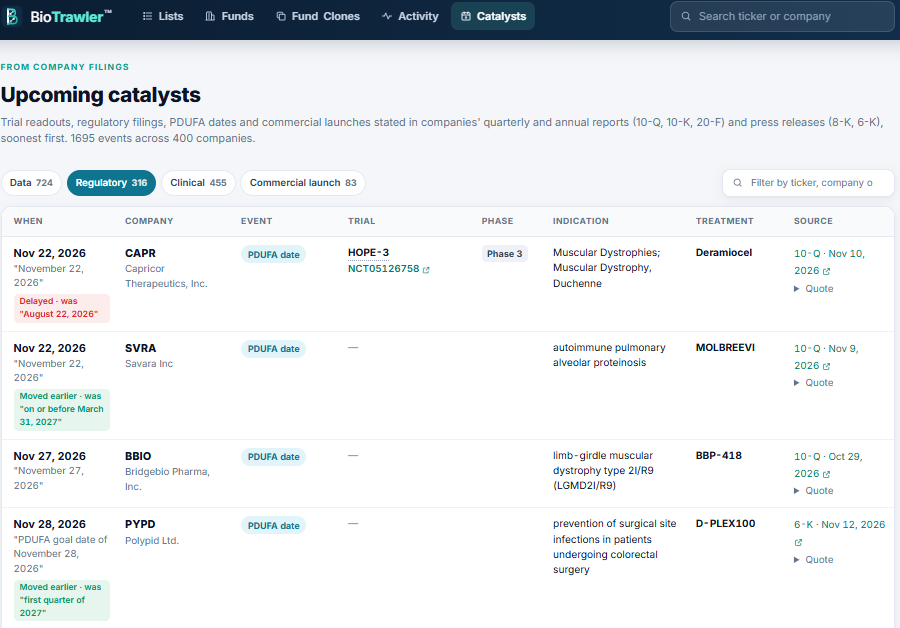
I created a personal Biotech specialist fund tracking tool with some pretty cool features and I've decided to share it to give back to the BioX community - I have benefitted immensely from you all. No ads, no sign up, all free. I welcome feedback. https://t.co/qs1yiDxlTq
The next gains in AI drug discovery will come from tighter design-to-experiment loops, not bigger models alone.
Our new collaboration with @PierreFabre puts this into action: de novo small-molecule design, tightly coupled with robotic lab feedback in multiple #Oncology programs.
Nice piece from @LongmireMD on opportunities for AI to increase clinical trial efficiency. This, and making them fail less, is the unlock for therapeutics abundance.
Stanford scientists have developed a revolutionary microscope called Interferometric Image Scanning Microscopy (iISM) that reveals the inner workings of living cells in real time at 120-nanometer resolution—completely without the fluorescent labels that can interfere with cell behavior!
https://t.co/tG4cwQr7WI
#Microscopy #CellBiology #Biotechnology #Stanford #microscope #ScienceNews #Innovation
Our new paper, “Simply Aging,” is out in @PNASNews!
What is aging, when does it begin, how do we measure it, and what would it take to extend lifespan? We tackle these questions directly and simply.
📄 Read: https://t.co/N9DO4p0mny
💬 Discuss: https://t.co/gbq73aLXhb