The priest is a Subcontinental, from somewhere in West Bengal if his name and apperance is anything to go by, so maybe it's an Indian historiography difference? They inherited a different strain of Marxian thought or already had the word Communism describing something else?
At yesterday's homily the priest said that the Pius XI formalised the Solemnity of Christ the King, not just as a rejection of the Black Fascism of Hitler and the Red Fascism of Stalin, but also as a rejection of Totalitarian Liberalism.
Turbo Autism or Based beyond Reason?
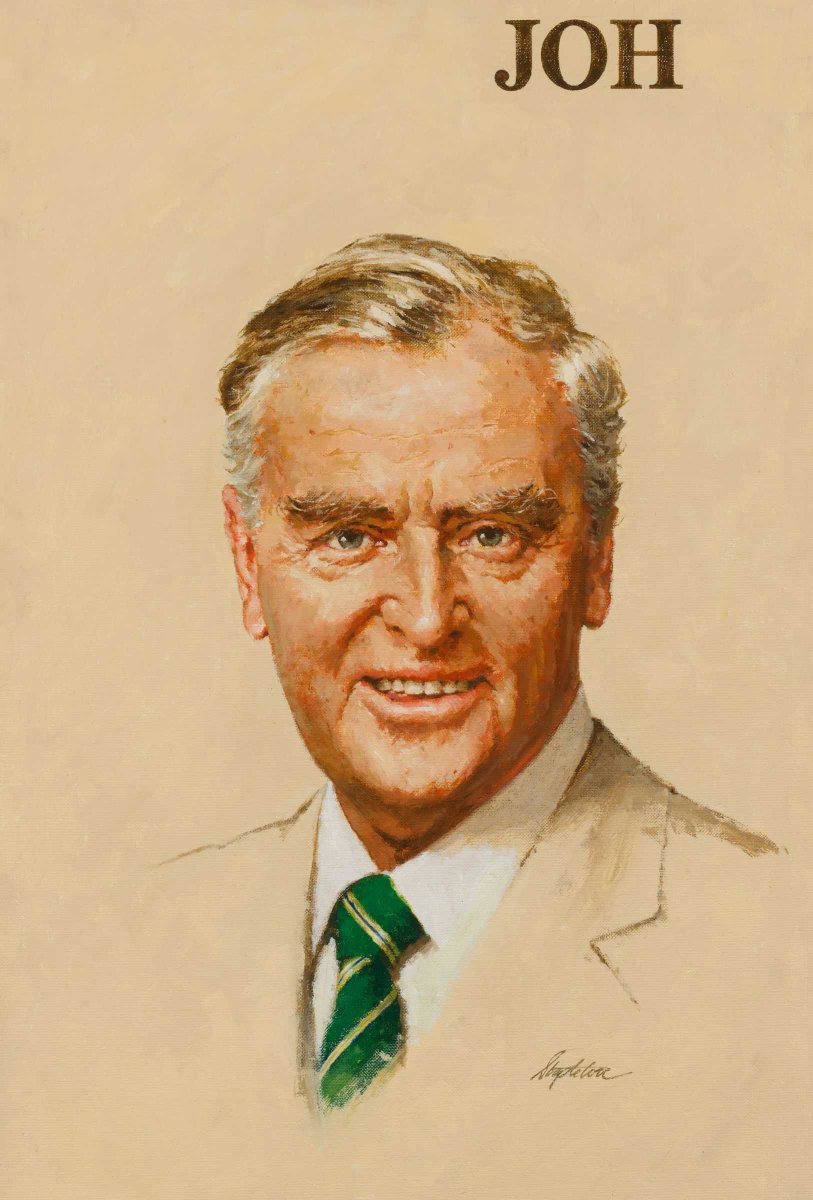
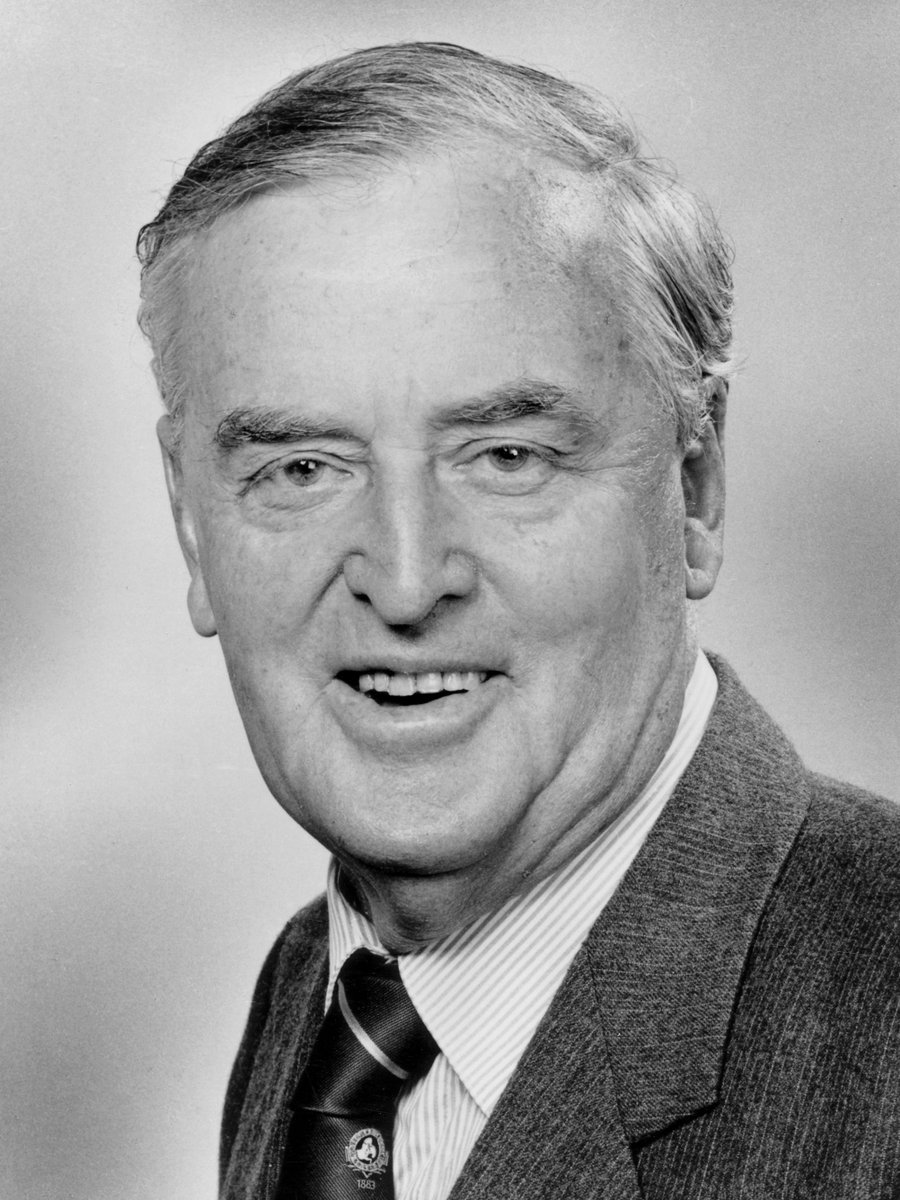
Funniest thing the missus and I saw while in Kingaroy was that portraits of Sir Joh were in *every* public building we entered, there was even one in the Roman church 😅
The problem with the kind of disenchantment and reenchantment discourse, which amounts to a fundamentally liberal theory of religion, is that religion is interpreted in terms of, and reduced to, a psychological effect. Think the idea through: what does it mean, on this account, to say that the world is enchanted? Nothing but that the world produces a certain psychological effect or is interpreted in a certain psychological way: vibey, in terms of immanent stories and mythology, personalistic, whatever. Why? Because religion is treated as merely a psychological phenomenon: the expression of a certain interior human psychology that cannot be expressed or felt otherwise. Disenchantment, then, is essentially the removal of these psychological effects, and to the extent that disenchantment is said to be bad, it is because it is alienating with respect to certain deep aspects of human psychology. Nothing more. It's not that, for instance, it is bad to sweep these things away because you are creating a set of false beliefs about God, or you are failing to do proper honor to God or to relate to God appropriately and according to his will, etc., but rather merely that the world has been stripped of a certain kind of important human fulfillment.
This leads, generally speaking, to what I call the “spooky theory” of liturgy: the point of worship is to induce a certain kind of spooky feeling in human beings so that these interior emotional and religious psychological drives are satisfied. For traditionalists and other high liturgical types who accept this account, this seems all well and good because they feel like they have, I don't know, stumbled into a scene from The Name of the Rose. At least from their perspective, they are getting to experience some kind of interesting spooky emotional effect very different from other things they've done. But that's a problem in two important ways:
1. The account gets what is ultimately important about the liturgy wrong. The Mass and Office and everything else are important for the glorification of God in a redeemed creation, the sanctification of man, and his union with God. This may or may not entail the particular psychological effects you are seeking. Such effects can serve those ends, but they do not define them: you do not create a more appropriate liturgy simply by focusing on the creation of some psychological effect.
2. This is a criterion that other worship-focused contemporary sects, especially charismatic sects, can also satisfy, and it's obvious why: there's nothing about enchantment, understood merely as a psychological effect, that requires you to end up with a form of worship that is particularly “traditional” in a historical sense.
Thus, those who follow such a theory will not only fundamentally aim themselves wrongly in religious matters, because they will be treating the production of some feeling or other psychological effect as the measure of worship instead of its objective relation to God, but, even more importantly, they will not ultimately have, on that criterion alone, an adequate basis for distinguishing the value of their worship from that of any other kind of activity that produces similar feelings.
I've mentioned this on here before but when I worked at the children's play place + petting zoo we literally had to change the way we do things because migrant children would not stop physically abusing animals, staff and other kids. Their presence takes everything away from you.
White nations have become so indistinguishable from the third world demographically and aesthetically that even people who spend their entire day geolocating images cannot tell them apart.
Men don’t need to explain themselves. Repeal the 19th amendment is a peaceful political solution.
Feminists repeated “kill all men” for a decade and there wasn’t one word of criticism published in the NYT.
@PalmyrPar my running theory is the explosion of multiple degenerate, or heavily accented, english dialects on the internet and the machines are struggling to understand them. safer to put the burden on creators who don't have the time or energy to amend older videos.
When the pandemic lockdowns began, the philosopher Giorgio Agamben warned that they could pose an extinction-level event for a type of human “communal life.” This was misinterpreted to mean restaurants and bars and other such commercial things, or maybe to spaces for political protests. And so the misunderstood warning was easily dismissed—since of course restaurants recovered (and the pro-lockdown faction prided itself as having superior culinary taste anyway); and there have been lots of protests over various issues.
But Agamben was referring to something more hidden and subtle, a “communal life” that existed in a nonsurveilled, nondigital, spontaneous, sometimes shadowy or “illegal” way. “Communal life” in the sense of people breaking the rules the “Gesellschaft” has taught them about how to behave, and instead engaging in a “Gemeinschaft” that emerges from instinct, creativity and desire. And yes I think that in a lot of cities, that existed right up until 2020, and then it died and it never really came back. Agamben was right.
No commentary on the general point but the idea that the English are only spiritually or intellectually brilliant in so far as they ape Continentals reaks of the Black Velvet conceit of Habsburg Iberia.
O Bispo Robert Barron sempre disse, recordando o Cardeal George, que "os EUA não teriam um Papa até que entrassem no seu ocaso, pois não seria conveniente que o mesmo império concentrasse todo o poder temporal e espiritual". Quando Leão XIV foi eleito, ele disse que o vaticínio de seu mentor estava errado. Na minha opinião, a leitura foi corretíssima.
Agora que os EUA estão começando seu longo processo de declínio civilizacional, encontram-se aptos para liberar toda a sua energia espiritual e intelectual; a pujança e a sofisticação crescentes que eles vivem na filosofia e na teologia são bons indicadores. Como dizia Hegel, "a ave de Minerva só levanta o seu voo ao crepúsculo".
I have no idea what “crap” Dr. Bachiochi is talking about because the numbers Mrs. Andrews cites here are rock solid.
For half a decade we have seen reams of data showing that this gendered-political radicalism:
1. Prominently originated among females
2. Appears now in women at a significantly higher rate than it does among men (sometimes by orders of magnitude)
Combining this data with what we already know about female psychology being more vulnerable to mass political hysteria, we are pointed to a very obvious conclusion. Confronting gendered radicalization must EITHER to start with women FIRST, or must address men and women IN TANDEM.
But conservative feminists seem to consistently miss the female side of the equation and just hand-wave vaguely at the problem.
Look, last month I got into a little spat with the Bachiochi crowd that probably got too heated and I’d rather not repeat the exercise today. However, for what’s it’s worth, I will repeat my contentions.
Gendered de-radicalization has to begin with cognitive security and political cognitive security measures have to start by placing boundaries between real political conversations and the (subset of) women who are not cognitively prepared to handle those kind of conversations.
Remember politics is mean, politics involves dealing with ideas that are objectively immoral, politics is NOT safe.
Yet Dr. Bachiochi and the FD seem like they want to have their cake and eat it too: a no-holds-barred free speech arena where everything is on the table including immoral RadFem thinkers, but also, at the same time, an intellectual space where they get to “hold men accountable” for saying offensive things, promoting radicalism, or even violating Christian dinner-table politeness norms.
This is a non-starter. We are not going to have an online discourse space where women are free to circulate unhinged Lindsay Clancy conspiracy theories uncriticized for months, while the man who calls this all “stupid” or questions the “post partum depression” narrative is condemned as a misogynist. We are not going to have a community where the women are running book groups discussing Valerie Solanis and Andrea Dworkin where we also condemn young men for watching Nick Fuentes and reading Julius Evola.
Such double standards are obvious and insane. And, to be fair, I know Dr. Bachiochi and her friends don’t explicitly commend such. However, reading in between the lines, looking at what them condemn and what they ignore, you can see an obvious difference in their attitudes between male vs female radicalism.
It’s the elephant in the room and Mrs Andrews is right to notice this.
"The more his mother preached a more than Puritan abstinence the more did his father expand into a more than pagan latitude; and by the time the former had come to enforcing vegetarianism, the latter had pretty well reached the point of defending cannibalism."
- Chesterton
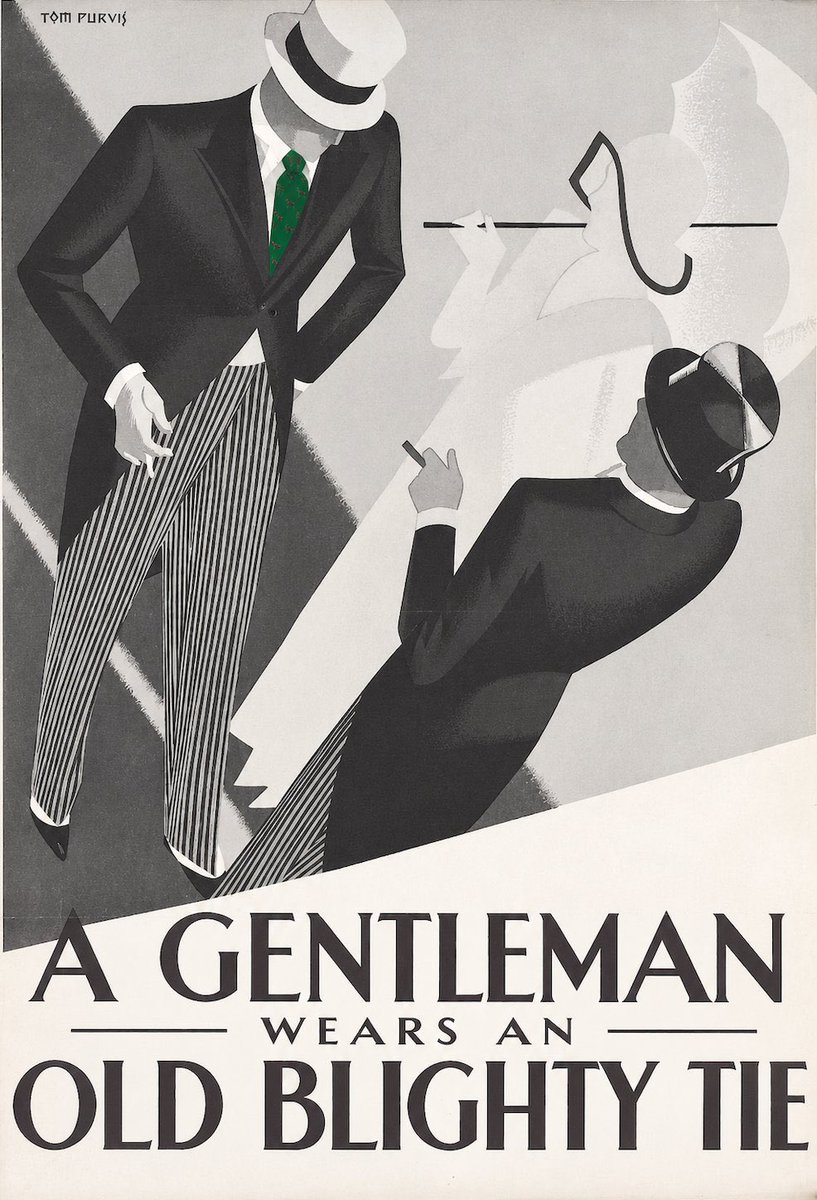
A gentleman wears an Old Blighty Tie...
...So why don't you have one?
Buy yourself, or someone you love, an Old Blighty Tie, this Christmas.
https://t.co/qvXhz8vUel