PhD student in Philosophy (@unav). Professor at Faculdade Belavista. Views are my own. «Weil alle Philosophie geschöpfliche Philosophie des Geschöpf» – Przywara
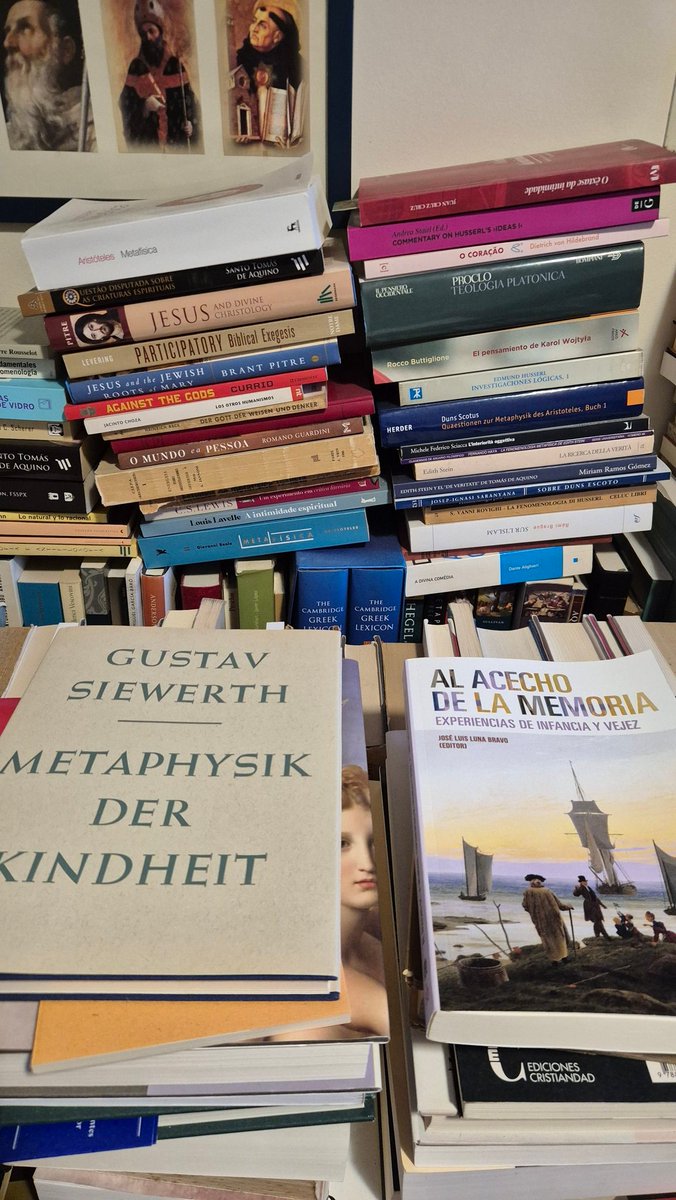
Estou pensando em oferecer um "aulão" sobre a metafísica da infância, baseado nos meus estudos das obras de Gustav Siewerth, Hans Urs von Balthasar, Ferdinand Ulrich e Romano Guardini.
O tema é absolutamente fascinante, tanto do ponto de vista filosófico quanto do pessoal e espiritual. Por exemplo, já pararam para pensar o que Jesus realmente quer dizer quando afirma que devemos ser como as crianças para entrar no Reino dos Céus?
Além disso, com certeza, também seria de grande proveito para pais e educadores.
Enfim, se você tiver interesse, deixe-me saber comentando abaixo!
@vendomonza@sugamosto1 Eu também estou começando a fazer isso com os meus alunos, ainda que eles sejam muito resistentes às formas tradicionais de ensino.
O melhor critério para se avaliar uma tradição filosófica é a perfeição que alcança em sua ontologia eucarística, pois todo o espírito humano tem seu cume no Santíssimo Sacramento.
Preciso trocar de notebook e quero que ele tenha uma boa placa de vídeo dedicada. Vejo os preços exorbitantes e começo a desanimar. Alta histórica de preços, etc. etc. Até que decido, por curiosidade, ver preços nos EUA.
Então, percebo que eles custam menos da metade dos nossos, porque quase 70% do que nós pagamos no valor final é imposto – absolutamente brutal.
Por outro lado, talvez o ódio aos impostos altíssimos que pagamos seja um dos pouquíssimos sentimentos verdadeiramente nacionais que sobraram no Brasil.
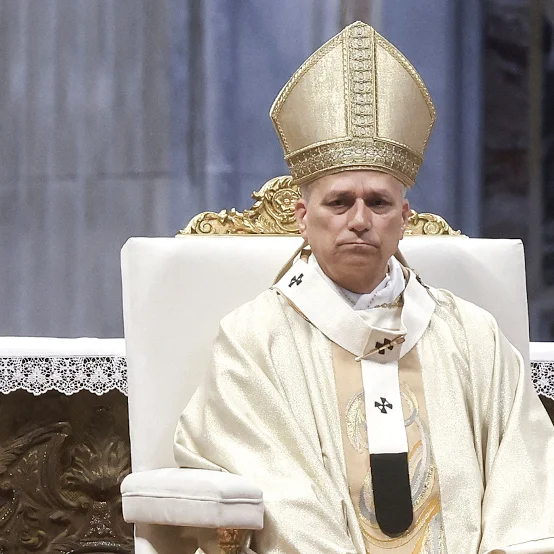
Breaking: Pope Leo XIV tells states that Catholic Colleges and Universities must teach "sound doctrine" and that it is not enough to teach intellectual truths but they must teach the "Truth that is Christ."
Com exceção de que a cronologia dos autores está bagunçada e que há nomes mais importantes que não são mencionados, como Santiago Ramírez e Antonio Millán-Puelles, o ponto dele é verdadeiro. Precisamos conhecer melhor a tradição tomista.
At the risk of pettiness, I've tired of seeing "Thomists" on the internet who only know of Gilson, Maritain, G-L
Unless your IQ is 170+, a serious study of St. Thomas's metaphysics cannot be made w/o studying at least 2 of the medieval and 2 of the modern indispensable commentators:
✅Domingo Banez
✅Cornelio Fabro
✅John of St. Thomas
✅John Capreolus
✅Cajetan
Modernly:
✅Lawrence Dewan
✅Joseph Owens
✅Msgr. Wippel
✅Tommaso Zigliara
✅Steven Long
For intelligent folks wanting to take the next step in this most difficult subject, I recommend Msgr. Wippel's "The Metaphysical Thought of Thomas Aquinas" (and for Medieval commentators, Banez is #1 in metaphysical clarity imo, notwithstanding that all will tell yoi to read Caj first)
Por lo general, el desprecio por Tolkien es un signo de senectud espiritual. Suele indicar un contacto con su obra demasiado tardío, con el corazón ya avejentado e incapaz de apreciar lo asombroso y lo fantástico.
Luego están los que lo desprecian sólo por ser anglosajón. Catetos
Yes, I understood your intention in proposing a logical definition. My point here – or perhaps my uneasiness – is that the way you are framing the problem does not seem to sufficiently account for the primacy of the transcendental order over the logico-categorical one. This is reflected, incidentally, in your point about the suprapredicamentality of separated substances; for even if they cannot be adequately predicated from a categorical standpoint, this can be done by means of the analogia entis, which integrates both similarity and negation. In this sense, my question is directed at the transcendental dimension of intelligibility, hence my remark regarding the verum.
On the other hand, I reached a similar insight concerning the distinction between intelligibility and cognoscibility (which I termed "objectuality"). This distinction seems to me to be constitutive of the ens itself, alongside esse and essentia – both on account of the intellect’s relation to things, and God's relation to creatures. I articulated this in a presentation based on what I am developing in the first chapter of my dissertation. Anyway, the topic you raised is highly stimulating!
I agree that unum precedes verum in a certain sense, because the transcendental unum (as indivisum in se, divisum ab aliis) grounds the determinacy without which no form is graspable as this form, and the intellect's composing and dividing does simulate, at the logical level, the act-potency structure of substance. But I still find the foundation of intelligibility more properly in the ens/verum dyad precisely because ens is, properly speaking, the act that moves the intellect in the horizontal level of material being towards the form, and the verum expresses the esse of the thing as manifestative, as intrinsically ordered to intellect. It is the actuality of esse itself that is intelligible, and verum names exactly that relation, i.e., the ens as radiant of its own act of being toward an intellect capable of receiving it. Btw, the received form arrives in the intellect as potency; like a similitudo of the thing, still awaiting full actualization. Thus, the intellect's own esse then actualizes it, producing an esse-essentia relation interior to itself as the concept, the esse objectivum, which is the form now fully constituted as intelligibile in actu by the intellect's own act. What this means is that there is a double esse-relation here: the esse of the known thing, which the form carries as similitudo, and the esse of the intellect, which actualizes that form beyond what matter could ever grant it. In other words: the ens is intelligible because its esse is manifestative, and the intellect is receptive because its esse is immaterial and thus proportioned to receive that manifestation. That relation opens to the intellect recognizing its own actuality at work in what it has itself constituted, performing the reditio completa in the very same act by which it produces the verbum mentis.
"El esfuerzo de la filosofía occidental en estos cuatro siglos ha sido imponente y no puede negarse, entre otros méritos indiscutibles, una grandeza realmente épica a ese tratar de coger el pensamiento en un estado puro, anterior a toda actuación ab extra, en una identidad perfecta entre la esencia y el acto de ser, sin potencialidad pasiva alguna, sin facticidad, autosuficiente. Pero la aventura noética no es más que un aspecto – el de su fundamentación teorética radical – de esa actitud de espíritu [orientada hacia la inmanencia], que revela también su propia naturaleza en la creciente oposición a lo religioso como forma suprema de trascendencia".
– Carlos Cardona, Metafísica de la opción intelectual
«Cuando la Europa miró a Napoleón vencido por Wellington, ella comprendió una verdad que había ya enseñado la filosofía, a saber; que Dios se vale de los débiles para abatir a los poderosos».
—Juan Donoso Cortés
Who Coined the Term “Trinity”?
All Christians are familiar with the term Trinity, used to refer to the deepest mystery of the faith: the substantial unity of God in three Persons, Father, Son, and Holy Spirit.
In the Christian East, around 180–183 AD, the Greek term Τριάς appears in reference to the Trinity in Ad Autolycum (II, 15) by Theophilus of Antioch.
In the West, it was Tertullian who first used the word Trinitas to refer to the mystery of the Father, Son, and Holy Spirit. What is particularly noteworthy is that, unlike Τριάς, which already existed in the Greek vocabulary, Trinitas appears to have been employed for the first time by Tertullian.
Tertullian used the neologism Trinitas between 198 and 203 AD in his work De Praescriptione Haereticorum, though not in reference to God. The same is true in Adversus Valentinianos, written around 208 AD. It was only in Adversus Praxean, composed around 213 AD, that the term was applied to the mystery of God.
Praxeas was a heretic associated with the movement known as Monarchianism, which denied any distinction of Persons in God, Father, Son, and Holy Spirit. Against him, Tertullian wrote Adversus Praxean, in which he develops Trinitarian doctrine and repeatedly employs the term Trinitas to express both the substantial unity of God and the distinction of three Persons.
“οἰκονομίας sacramentum unitatem in trinitatem disponit, tres dirigens Patrem et Filium et Spiritum, tres autem non statu sed gradu, nec substantia sed forma, nec potestate sed specie”. (Prax. 2, 4)
One might ask whether the term was actually coined by Tertullian or whether it was already in use among Latin, speaking Christians. This question cannot be answered with certainty, owing to the lack of evidence. Nevertheless, it can be stated that Tertullian was the first author known to employ the word theologically in a distinctly Trinitarian sense.
A coisa mais cancerígena que notei nos livros de filosofia em português consiste no uso do termo “poderes”.
Isso acontece comumente pela literatura anglo-saxônica traduzir o termo clássico “potentia” (dýnamis) para “powers”.
Pelos nossos acadêmicos viverem — infelizmente, por necessidade — atolados em literatura em língua estrangeira, na hora de traduzir ou usar o termo “potentia”, eles pensam em “powers” e daí vem o tenebroso “poderes”, quando já possuímos o consagrado e técnico…
POTÊNCIA.
Me pergunto se o próximo crime será parar de escrever “substância” (substantia/ousia) para usar “ESTOFO” (vertendo porcamente stuff).
Um fenômeno a ser investigado: por que a maioria das pessoas pensa que se alguém é contra X, deve ser necessariamente a favor de -X?
Se a pessoa é contra o Bolsa Família, por exemplo, não significa que ela é a favor que pessoas em situação de miséria morram de fome.
Como já ensinava Aristóteles, todo problema prático admite múltiplas possibilidades de resolução; muitas vezes igualmente válidas.
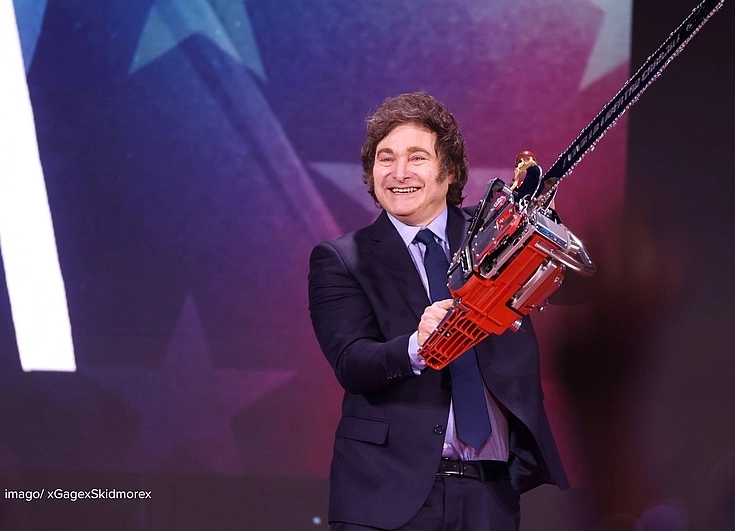
Se o Brasil fosse um país sério, disposto a cumprir sua vocação, estaria tratando Milei como uma ameaça gravíssima à estabilidade da região. Ele não é apenas um doidinho ancap, mas sim um agente de alguns dos poderes mais sombrios do mundo contemporâneo – bem aqui, nas nossas fronteiras.
🇺🇸🇦🇷 Peter Thiel is hedging against America.
The Palantir architect has been quietly buying property in Buenos Aires and building a relationship with Javier Milei.
A president who governs like Thiel thinks. Geographically isolated, ideologically aligned, anti-tax, anti-establishment.
His concerns about the US: California taxes, political chaos, nuclear war, and AI.
When people like Thiel leave, they don't announce it. They just quietly stop betting on the place.
Source: NYT







![ga_devitto's tweet photo. "El esfuerzo de la filosofía occidental en estos cuatro siglos ha sido imponente y no puede negarse, entre otros méritos indiscutibles, una grandeza realmente épica a ese tratar de coger el pensamiento en un estado puro, anterior a toda actuación ab extra, en una identidad perfecta entre la esencia y el acto de ser, sin potencialidad pasiva alguna, sin facticidad, autosuficiente. Pero la aventura noética no es más que un aspecto – el de su fundamentación teorética radical – de esa actitud de espíritu [orientada hacia la inmanencia], que revela también su propia naturaleza en la creciente oposición a lo religioso como forma suprema de trascendencia".
– Carlos Cardona, Metafísica de la opción intelectual](https://pbs.twimg.com/media/HJvU7TWXUAAZFIW.jpg)