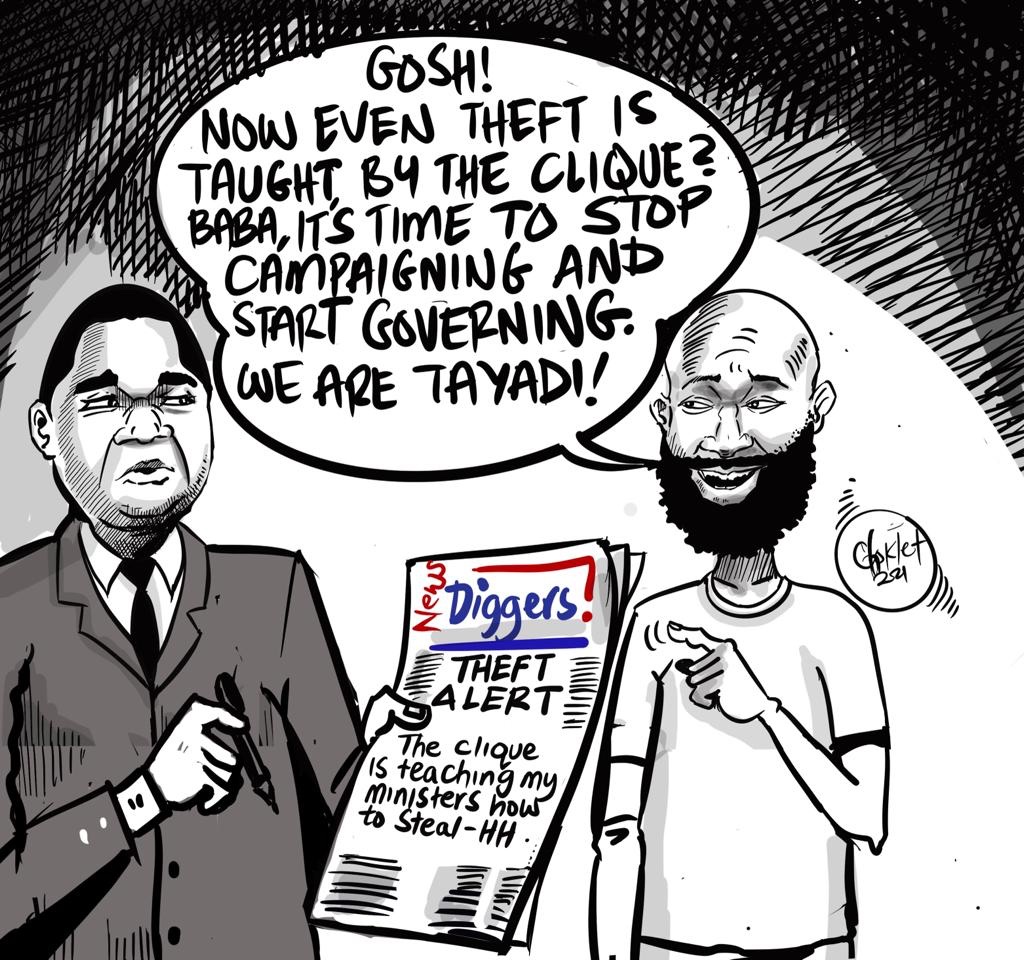
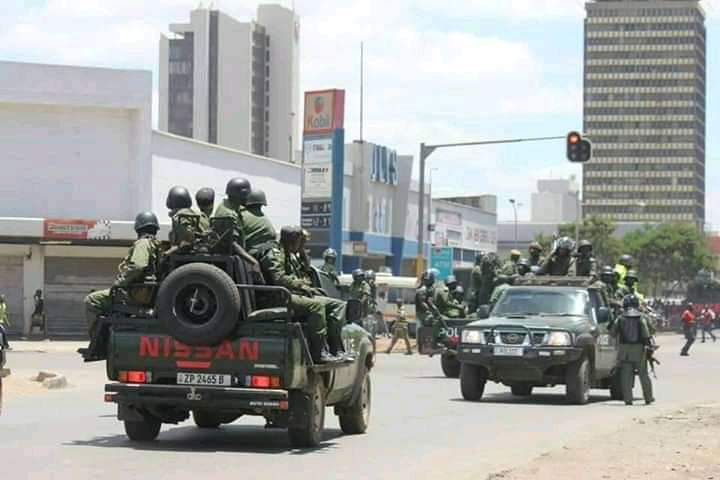
The headline is not THe problem. The problem is that some people in Zambia today feel excluded or marginalised. This is what needs to be addressed, not the media. The media is simply giving coverage to these people who, for whatever reason, feel excluded. The solution is not to invalidate their feelings, to insist that they should not feel that way or to gag the media from covering their expressions. The solution, in my view, is to seek to understand why those that feel marginalised are feeling that way and to address the roots of their concerns.
We will do well, as a people, to identify and address the causes of the actual disease, not merely the symptoms. As I wrote when Tongas complained of marginalisation under the PF, we must desist from shutting out anyone who complains of ethnic discrimination. It is counterproductive and most unhelpful. Resolving the complex ethnic question properly calls, among other things, for a mature and well-informed national conversation on ethnic oppression, discrimination and exclusion. One of the potentially effective ways of dismantling our ethnically coloured political system is by working for increased understanding in the society of the insidious and pervasive ways in which ethnic exclusion functions. This requires a willingness to re-examine what would be regarded as normal and everyday. It presupposes opening up the subject of ethnic marginalisation – no longer isolating and alienating those who dare to raise it. It involves listening and creating the spaces to hear the hurt, anger and aspirations of those expressing ethnic oppression. It means dragging the subject of ethnic exclusion from the hushed conversations and murmurs and silences into the arena of public discussion.
https://t.co/yCLZ9iGgGw
@ssishuwa Sishuwa, not only do you stand up for the voiceless through speaking truth through your articles, but you also generously give to the needy in our society. Your actions for the good of others is admirable. Keep up the great work.
After nearly a decade of political repression and poor economic performance, #Zambia reclaimed its democracy in 2021 and set its economy on a likely path to recovery. Here are the key institutions and individuals who contributed to the historic transition.
https://t.co/eytRmsCbR2
As the annual Mwanawasa Lecture started, Olaf, a colleague of Martin Kalungu Banda, listened in and came up with this drawing based on what he heard. @ssishuwa@Chipokota@mwanawasaM@LMF_ZM
In the latest sign of the shrinking democratic space in #Zambia, several youths protesting against the Govt’s crackdown on civil liberties were today forced to conduct their protest in the bush after the police threatened to “break their bones”. 80% of the population is below 35.
The state of readiness for change in #Zambia today. Once we, young people, know where real power lies and decide to stand up in response to a status quo that condemns us to excruciating poverty, mass unemployment, disease and a life on the margins, the desired change would occur.
@bbcdebate The Prime Ministers answer to every question is let’s get Brexit done. I am not sure if the supporters of Brexit only want to hear this. What is the actual plan Mr Minister?
@kalungubanda Thanks also to @jerrydbayless, the initial inspiration behind the Crossing the Threshold image. It's traveled a long way! Glad still of value.
Interesting piece @nytimes. I always thought we would see a 2nd referendum in 2019. In which case the best case scenario would result in brexit being a colossal waste of time (2016-19). Thats still a small bill compared to #Trumpism here in the US. #2020 https://t.co/zvRft9HPmw
The theme of this year's #InternationalDayoftheGirl - “With her: towards a skilled girlforce" - reminds us that access to free quality, inclusive public education is essential for achieving their dreams and being equipped with the skills for future work. https://t.co/DVtFTcfC8q