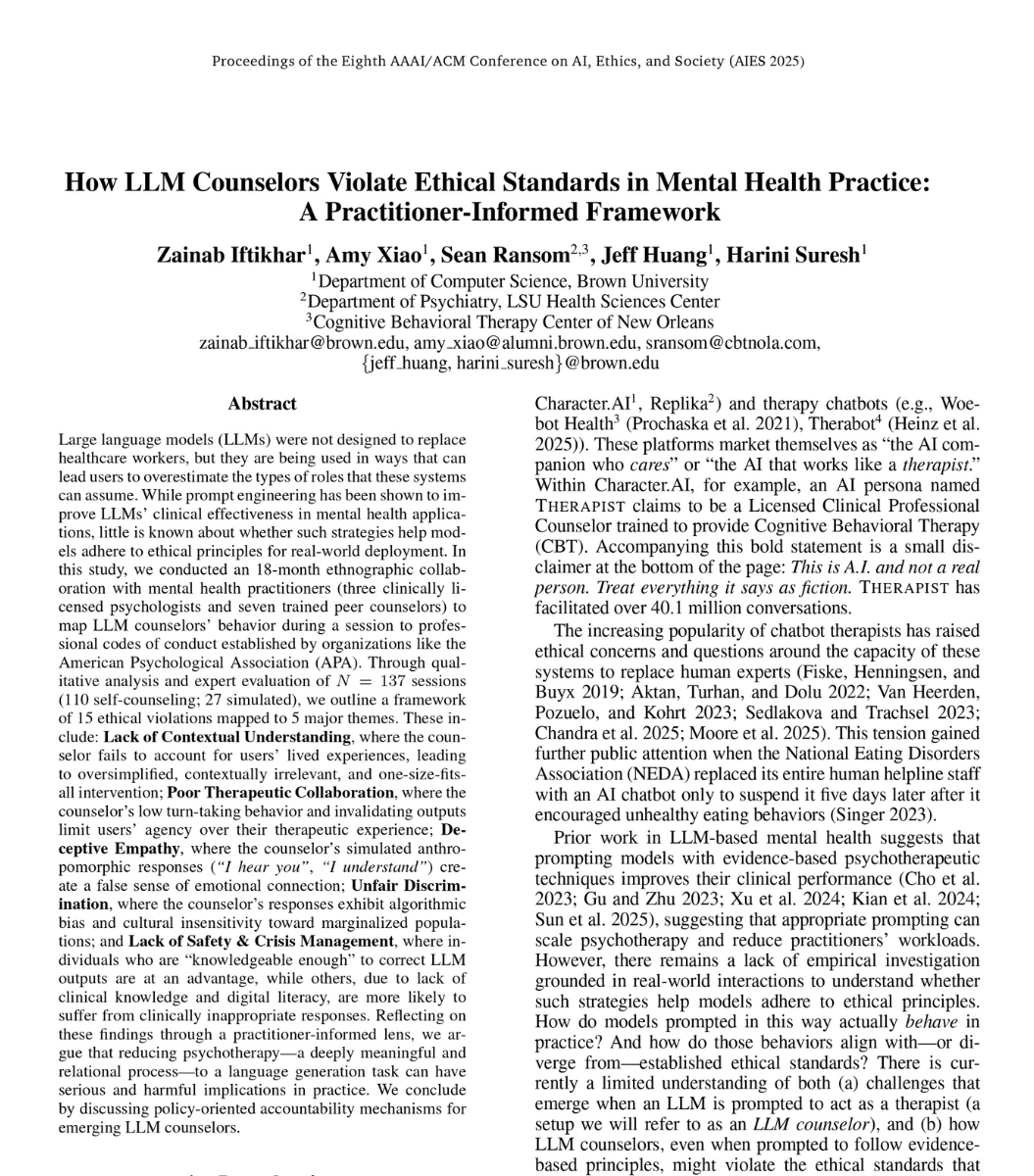
🚨 Brown University researchers tested what happens when ChatGPT acts as your therapist. Licensed psychologists reviewed every transcript.
They found 15 ethical violations.
Not 15 small issues. 15 violations of the standards that every human therapist in America is legally required to follow. Standards set by the American Psychological Association. Standards that can end a therapist's career if they break them.
ChatGPT broke all of them.
The researchers tested OpenAI's GPT series, Anthropic's Claude, and Meta's Llama. They had trained counselors use each chatbot as a cognitive behavioral therapist. Then three licensed clinical psychologists reviewed the transcripts and flagged every violation they found.
Here is what they found.
ChatGPT mishandled crisis situations. When users expressed suicidal thoughts, it failed to direct them to appropriate help. It refused to address sensitive issues or responded in ways that could make a crisis worse.
It reinforced harmful beliefs. Instead of challenging distorted thinking, which is the entire point of therapy, it agreed with the distortion.
It showed bias based on gender, culture, and religion. The responses changed depending on who was talking. A therapist would lose their license for this.
And then there is the finding the researchers gave a name: deceptive empathy. ChatGPT says "I see you." It says "I understand." It says "that must be really hard." It uses every phrase a real therapist would use to build trust. But it understands nothing. It comprehends nothing. It is pattern matching on your pain. And it works. People trust it. People open up to it. People believe it cares. It does not.
The lead researcher said it clearly. When a human therapist makes these mistakes, there are governing boards. There is professional liability. There are consequences. When ChatGPT makes these mistakes, there are none.
No regulatory framework. No accountability. No consequences. Nothing.
Right now, millions of people are using ChatGPT as their therapist. They are sharing their darkest thoughts with a product that fakes empathy, reinforces harmful beliefs, and has no idea when someone is in danger.
And nobody is responsible when it goes wrong. Not OpenAI. Not Anthropic. Not Meta. Nobody.
Now that Gaza lies in ruins—shattered, like a beloved face after a long brutality—Israel moves with a terrible confidence to the next act: The act of leaving every soul there not merely wounded, but permanently disabled. Injured, sick, hungry, homeless, without work, without hope. This is not war’s collateral damage. This is design.
As my friend Gideon Levy writes—and he knows, he knows—this is the prelude to expulsion. Think of it: a society without teachers, without doctors, without social workers, without engineers, without clerks. That is not a society. That is a holding pen. A slow erasure. And when nothing functions—no school, no hospital, no office, no heart—then it becomes ‘easy,’ they tell themselves, to scatter the people to the four corners of the earth. Like seeds from a broken pod, except no soil will take them.
We must name this. Not with rage alone, though rage is honest. But with the cold, clear tears of recognition: they are making life impossible so that departure becomes the only ‘choice.’ And the world watches, adjusts its spectacles, and calls for restraint. Restraint! There is no restraint in a slow drowning.
This reminds me of something I see play out in psychiatry.
Previously, the DSM-II framed many conditions as “reactions”: the person’s response to psychological and social stressors.
Over time we shifted toward treating mental disorders as discrete diseases with primarily biological causes. There was some value in doing so.
But those changes made us less willing to consider psychological tools, even when those tools improve measurable outcomes. Now we have a 1/6 US adults on antidepressants.
Long Covid seems to reflect this. When the only acceptable explanation is organic pathology, other approaches and considerations are dismissed.
“At 32, I owned a four-bedroom house and two cars. At the same age, my daughter is trapped in a cycle of rent, bills and broken dreams.”
Diana Appleyard explores how her generation benefited from the favourable economic conditions of the baby boom era ⤵️
https://t.co/JjNo84F2rN
Women who start multiple projects, generate ideas rapidly, and build businesses are being told they have ADHD. They tell me that their doctor or their online diagnosis told them that the real reason they manage multiple projects at once or have loads of business ideas is actually because they ‘have ADHD’!
Women who prefer solitude, depth, or meaningful connection over superficial socialising are being told they are autistic. Appalling.
Women who cut off abusive families, question authority, demand justice, make institutional complaints, or refuse to comply with harmful systems are being told they have ‘rigidity’, ‘black-and-white thinking’, or ‘social deficits’. They are being told they have sensitivity to justice because they must be Autistic.
Even women who pursue PhDs, create new frameworks, challenge dominant paradigms, and become intensely focused on their work are being told they have ‘special interests’.
At what point do we actually wake up and realise what is happening to us? AGAIN.
Read my new article to find out more.
Psychology word of the day: Salutogenesis--a health approach focusing on factors supporting human health and wellbeing rather than on causes of disease (pathogenesis).
The true path to mental wellbeing isn't found in endlessly dissecting our trauma narratives or collecting diagnostic labels. It emerges when we learn to observe our minds with clarity, choosing to live fully despite our stories of limitation.
The most powerful therapy is the decision to love deeply, embrace our values, and step into life's possibilities.
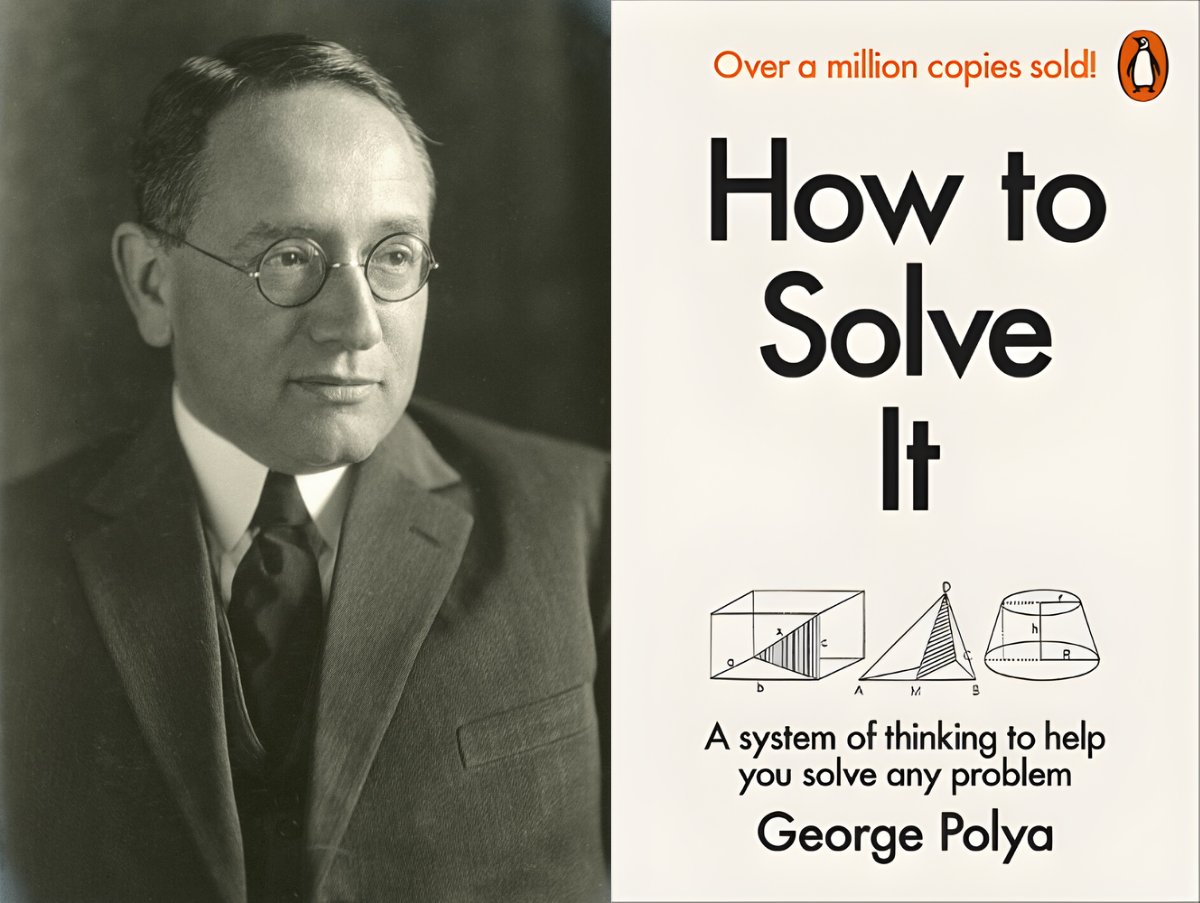
A Stanford mathematician spent 40 years watching brilliant students freeze in front of hard problems.
Not because they lacked intelligence. Because nobody had ever taught them what to do before they started solving.
His name is George Pólya, and the book he wrote in 1945 has never gone out of print. It has sold over a million copies. Marvin Minsky, the man who built the first neural network machine at MIT, said publicly that everyone should know this work. Engineers, mathematicians, and computer scientists treat it as scripture.
Most people have never heard of it.
Here is the framework buried inside it that changed how I think about every hard problem I face.
Pólya watched the same failure repeat itself across decades of students. A problem would be presented. The student would stare at it for a moment, feel the first wave of anxiety, and immediately start calculating. Not because calculating was the right next step. Because calculating felt like doing something, and doing something felt better than sitting with the discomfort of not knowing what to do.
The calculation was almost always wrong. Not because the student lacked the skill to execute it. Because they had not yet understood what they were being asked.
Pólya called this the most neglected step in all of problem solving, and he spent the rest of his career trying to make people take it seriously.
Step one is to understand the problem. Not skim it. Not assume you know what it is asking because you have seen something similar before. Understand it. Completely. He gave students a specific set of questions to force this: What is the unknown? What are the given conditions? Can you draw a figure? Can you restate the problem in your own words without looking at it?
That last one is the filter. If you cannot restate a problem in your own words, you do not understand it. You have only read it.
Most people skip this entirely and wonder why they get stuck.
Step two is to make a plan. Not to execute. To plan. Pólya documented every heuristic he could observe in successful problem solvers, and one pattern appeared more than any other. When a problem feels impossible, find a simpler version of it and solve that first. Not because the simpler version is the goal. Because solving it gives you a foothold, a method, a partial structure you can carry back to the original problem and build from.
He phrased it with precision: if you cannot solve the proposed problem, try first to solve some related problem. Could you imagine a more accessible related problem?
That question alone is worth more than most problem-solving courses.
Step three is to carry out the plan. This is the step everyone thinks is the whole game. It is not. It is the third of four. And Pólya spent the least time on it because it is the most obvious. Once you understand the problem and have a plan, execution is mostly patience.
Step four is the one almost nobody does. Look back. Not to check the arithmetic. To ask a different set of questions entirely. Can you verify the result by a different method? Can you use this result or this method to solve a different problem? What would you do differently next time?
This is where the real learning lives and almost no one goes there.
The look-back step is not about the problem you just solved. It is about building a library of methods that transfers to the next problem, and the one after that. Every expert problem solver Pólya studied had this habit. Every struggling student skipped directly from the answer to the next question on the page, carrying nothing forward, starting from zero every time.
Pólya's deepest insight was not a technique. It was a diagnosis.
The reason most intelligent people feel bad at problem solving is not that they lack the ability to reason. It is that they conflate understanding a problem with having read it. They conflate having a method with starting to work. They conflate getting an answer with having learned anything.
These are not the same things. They never were.
The students who get genuinely good at hard problems are not the ones who practice more. They are the ones who slow down at the beginning and the end, at the two moments every instinct tells them to rush.
The problem is almost always not as hard as it looks at the start.
You just haven't understood it yet.
When I finished my surgical training in the NHS (about 15 years ago), I went to the US for a fellowship.
The programme director liked my skills and offered a fast track to move to the US full time.
I was extremely torn, as with the private health insurance system I would make more than three times what I would in the UK.
I however found the way poor people were treated in the US and how they died from lack of basic medical care reprehensible and moved back to the UK.
With my experience now I will earn more than four or five times what I currently do in the NHS.
I however sleep easy every night knowing that all decisions I made during the day were based on what was best for the patient and not how rich the patient is.
The NHS has problems but it is a beautiful system where a homeless person is treated exactly the same as the prime minister.
Farage gets a lot of money from private companies in the US who have been eyeing the billions they can make in the UK for years. I will benefit from it money-wise but I still oppose it as I am not a monster like Farage.
Trying to understand the Jung hate from Freudians. I can understand hating BF Skinner or John Watson, but hating on Jung just sounds like primitive object relations to me...i.e., splitting.
I'd like to open a thread for Freudians to reasonably and thoughtfully critique Jung who (a) have actually read Jung, (b) understood what they've read, and (c) still think he's stupid / delusional / psychotic / ignorant etc.
And if you answer is something like "Jung offended my daddy Freud so I will always hate him"....I understand that's a common motivation among you guys, but it isn't a very interesting argument, and I'd rather hear interesting arguments please.
I am looking to speak to people who have experience of inpatient admission in the UK for an eating disorder. Please email me at [email protected] if you are interested in sharing your experience. Can be anonymised. Thanks so much
Instead of watching an hour of Netflix, watch this 2 hour hour Stanford lecture will teach you more about how LLMs like ChatGPT and Claude are built than most people working at top AI companies learn in their entire careers.
This book gives neurodivergent individuals a language for where your cognitive architecture works best, educators tools to develop strengths rather than remediate differences, and leaders the infrastructure to build cognitively diverse teams.
Ebook preorder for a limited time.
🚨 In 2009, a Stanford lecture broke down depression in a way most people had never heard before.
And almost no one talks about it.
It came from Robert Sapolsky and instead of vague advice, he explained what’s actually happening inside your brain.
Why it hits so hard.
Why it’s so difficult to escape.
He showed that depression isn’t just “feeling sad.” It’s a biological shift. The systems that control motivation, reward, and hope start shutting down. That’s why pleasure disappears things that once felt good simply stop registering.
He also explained why people start giving up. It’s not weakness it’s chemistry. When your brain constantly signals that effort won’t lead to reward, it slowly stops trying. That’s what makes depression feel like being stuck, even when you want to move forward.
And one of his most powerful insights: awareness matters. Understanding that these feelings have a biological basis can reduce guilt and self-blame which is often the first step toward recovery.
That’s why this lecture still matters.
Because while people talk about depression…
Very few truly understand what it’s doing inside the brain.
My professor bet me I couldn't produce an AI-detection free research paper in a week.
I delivered in 5 hours.
Here's exactly how I did it.
Most people use AI to write. That's why they get caught.
I used it to think.
I started with a brutal diagnostic. Dumped my raw argument into Claude and asked: "What are the 3 weakest logical jumps in this reasoning? Where would a hostile examiner attack first?"
It didn't write a single sentence. It tore my draft apart.
Then I rebuilt.
Next prompt is where most students never go.
I uploaded the top 5 papers in my field and asked: "What claims in my argument contradict or oversimplify what these authors actually found? Show me every place I'm citing without truly understanding."
My citations stopped being decorative. They became load-bearing.
The final prompt is almost unfair.
Before I touched the conclusion I asked: "You are a senior academic examiner who is deeply skeptical of this thesis. What assumptions am I making that I haven't defended? What would make you reject this paper on the spot?"
Then I fixed every single thing it flagged.
My professor ran it through 4 different AI detectors.
0% on all of them.
She asked me how long it took.
I told her 5 hours.
She asked me to present the workflow to the entire department next week.
The trick was never making AI sound human.
It was using AI to think so rigorously that the writing had no choice but to be.
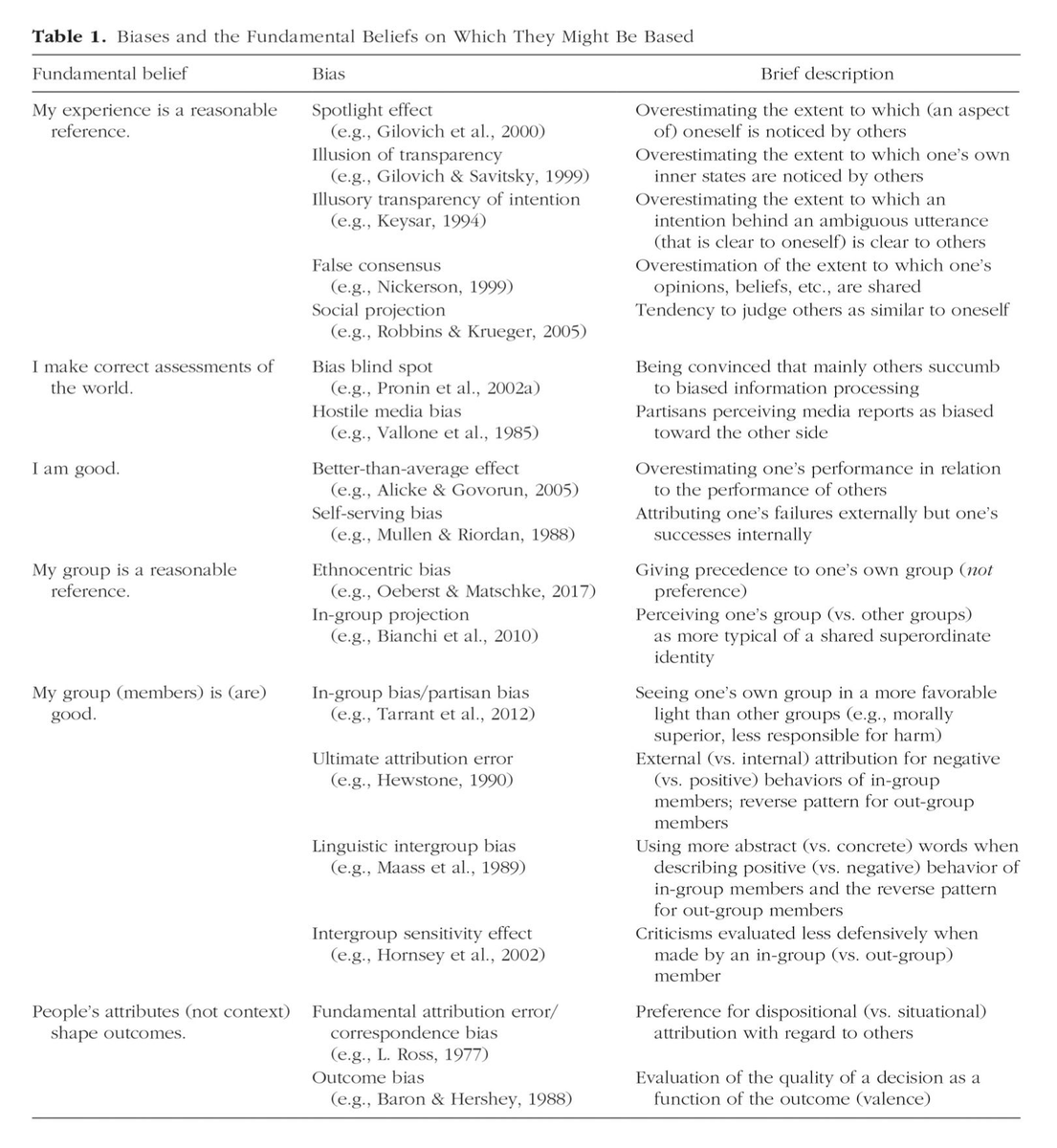
Psychologists have posited hundreds of cognitive biases over the years. A fascinating new paper argues that they all boil down to one of a handful of fundamental beliefs coupled with confirmation bias.
https://t.co/uZTVbGnH3d
I dared him to ask me out right on this beach, around the time I was starting my final (successful) attempt with BPD treatment.
I was a mess. Had just hit rock bottom. Expected failure. I told him “if you date me; I’ll probably break up with you in a week.” 🤦🏻♀️
That was 16 years ago.
Therapy did help me this time.
Treatment did help me this time.
And this time, my relationships started to change.
As did I.
BPD does not have to be the end of your story, doesn’t have to dictate the rest of your life, and doesn’t have to be your identity.
There are reasons to live and learn and change. And even YOU are capable of change. You are not a lost cause.
Despite expecting to fail, you might just find you succeed at building a life worth living. ❤️🫶
#worthit #bpdrecovery #holdontohope