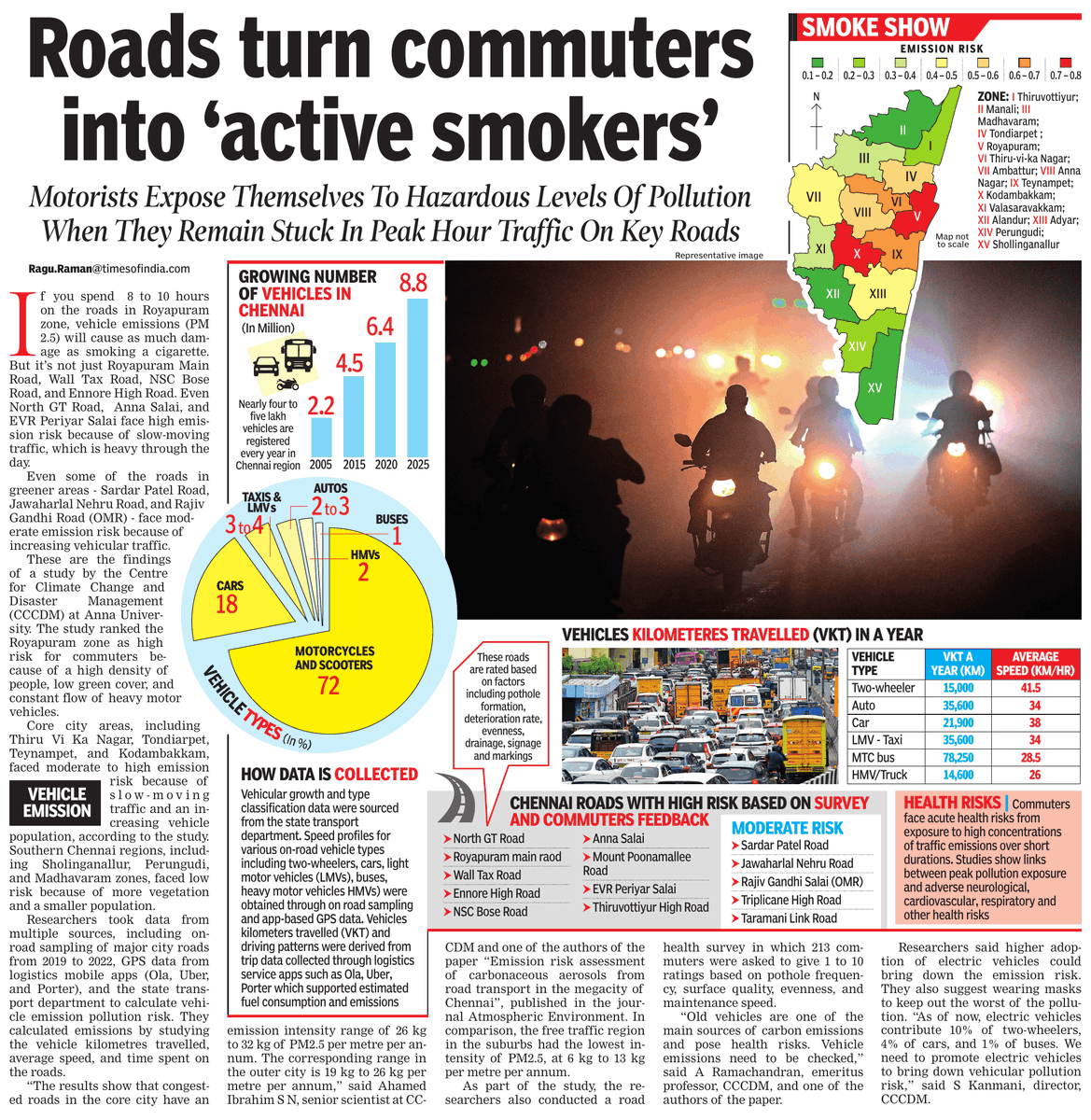
Chennai commuters on #OMR and #ECR face "active smoker" pollution risks from surging peak-hour traffic, with ECR at 22.5% vehicle share. Surveys show hazardous PM2.5 exposure for motorcyclists via tailpipe emissions and dust resuspension. Traffic growth of 6.4% worsens health impacts
@Tech_glareOffl Delhivery recently collobrated with many scam websites including kunti fashion in which they are delivering without printing the FROM address.. It is a total scam.
@parim Atmospheric concentrations depend on weather, chemistry, and non-traffic sources (e.g., industry).
Our work quantifies direct emissions from tailpipes (PM₂.₅/BC/OC in Gg/year), isolating the traffic sector’s contribution. This is critical for policy targeting.
Chennai’s air pollution crisis: Our new study shows PM₂.₅ emissions could double by 2035 without EVs.
However, with 5% annual EV adoption, we achieve zero emissions by 2038.
https://t.co/miHeNtShYi
@parim We modeled BS6 penetration growth (5–15% annually) in projections. Even with 100% BS6 by 2040, PM₂.₅ would still rise due to vehicle population growth (6.2%/year). EVs are the only path to net-zero from on-road. Still, the electricity mix from renewable sources is uncertain
@parim Yes, ideal fleet-mix data is scarce, but we used the best available proxies (RTO registrations, traffic surveys). Our core message remains: Without EVs, even BS6 won’t offset rising emission inventory from vehicle growth.