Ah, so you people knew there’s locally produced rice on the market that’s even better than the imported ones and nobody told me? You people no try at all!
There’s no need for young Ghanaians who have passed their exams at the secondary level or any level at all to fail to go to school because of lack of funds
The Ghana Scholarship Secretariat should really up their game because many youth do not even know how to access it
Review Ghana’s e-Visa Fees! ‼️⚠️
His Excellencies, Mr. President, @JDMahama & @S_OkudzetoAblak, @Dzifa_Gomashie@FelixKwakyeOfo1 Ghana cannot seriously position itself as a leading tourism destination while charging visitors $260 for an e-visa.
Compare that with Kenya 🇰🇪 at about $30, Tanzania 🇹🇿 and Rwanda 🇷🇼 at $50, Zambia 🇿🇲 from $25, Zimbabwe 🇿🇼 at $30, Cape Verde 🇨🇻 around $33, and several Caribbean destinations offering visa-free entry to many travellers.
Tourists compare the TOTAL cost of a trip before choosing a destination. A $260 visa fee can be enough to make a potential visitor choose somewhere else.
And when we lose that visitor, we don’t just lose the visa fee. We lose spending on hotels, restaurants, transport, tour operators, attractions, shopping and entertainment, and the jobs and tax revenue that come with it.
As investors and stakeholders in Ghana’s tourism industry, we respectfully urge the government to review the current e-visa pricing and engage tourism stakeholders on a more competitive approach.
Sometimes, a lower barrier to entry can produce a much bigger economic return.
Let’s make Ghana easier to visit, easier to sell, and harder for tourists to overlook.
Cc: @ivyprosper@moooveafrica@TheUnknowntours@wode_maya@ghanatourismGTA@ctighana@AmeyawDebrah
#VisitGhana #GhanaTourism #Tourism #ResettingGhana
I recently went after African elites for the tendency of blaming colonial borders for the failure to accelerate integration towards a single market.
My indignation flows from a constant barrage of evidence about the urgency of single market progress. "Urgency" is not strong enough. It is now a life and death issue for the continent.
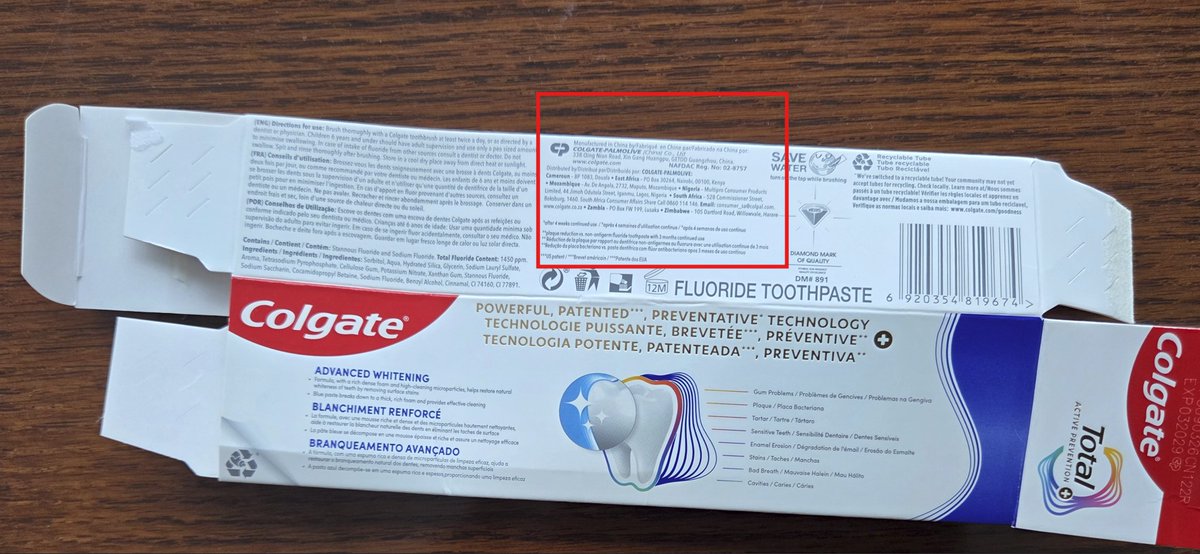
You just have to buy toothpaste in a European country like Britain or France and do the same in Dar or Dakar and the evidence will set your teeth on edge.
Attached are pictures of Colgate Total packaging. The Total brand is the company's frontier toothpaste technology.
In one instance, Colgate Palmolive makes the product in a massive hub in Świdnica, Poland. From this hub, it distributes Total across multiple countries in the EU, retaining valuable technology IP, jobs, skills, and profits in the EU.
In another instance, it makes Total in Guanzhou and ships through regional distributors in the Gulf and elsewhere into multiple African markets such as Dar and Dakar.
The curious thing is that though Colgate Palmolive has in the past closed some African factories like the one in Nairobi, it also entered a JV with Singaporean giant, Tolaram, to build a giant hub in Lagos.
Even though it shut down the Zimbabwean operations decades ago, it stayed put in Midrand, South Africa.
So, why does it need to send bulky toothpaste from China to distribute across Africa?
There are some clues on the packaging. The Polish (Świdnica) version is super clean. Pay attention. It is clear from it that "single market" design harmonisation is working across the EU. The Guanzhou packaging reflects all the fragmentation and marketing chaos of the African market.
The journey was supposed to be simple:
Tariff preference
↓
Free Trade Area
↓
Customs Union
↓
Single Market
Yet, what we have now in Africa is partial completion at every layer leading to a spaghetti of confusions.
An African Single Market would create common product rules. It will reduce duplicated regulatory approvals. It will make transport schedules more predictable. It will allow inventories to be pooled and replenishment to be smoother. All of which will cut working capital needs because supply chains will be streamlined. Pooled demand will become effective. It will then make sense to transfer precious frontier tech IP to an Africa-based hub.
For cosmetics like toothpaste, the EU's CPNP single notification system allows paperwork to be processed in Poland and voila you can hit stores in France!
Failure to do similar things means that there is very little incentive to move the Colgate Total production line from Guanzhou to Lagos or Midrand.
In fact, under conditions of the current fragmentation in Africa, a manufacturer selling into Africa is actually encouraged to set shop in Guanzhou to benefit from cheaper power, global value chains integration, skilled labour, and cheaper container-shipping costs. That is to say, from China to virtually every African country there is a smoother path than exists from most African countries to another.
All of which lead to underinvestment in African cross-border infrastructure because the main distribution nodes & lines all face outwards not inwards.
Reinforcing the point to investors: position your distribution hubs for Africa in Dubai and your manufacturing hubs in Guanzhou.
For how long, my brothers and sisters?
GHANA’S EDUCATION FINANCING CHALLENGE REMAINS SIGNIFICANT-IMF
The IMF’s latest 2026 Article IV Consultation Report on Ghana estimates that the country would require education spending equivalent to about 5.8% of GDP by 2030 to meet education-related Sustainable Development Goal (SDG) benchmarks. Ghana currently commits only 3.1% of GDP to education.
According to the IMF, education and health represent Ghana’s largest development spending needs, reflecting persistent gaps in service coverage and essential inputs.
The Fund notes that although education outcomes have improved, secondary school enrolment remains below SDG targets, while education quality indicators continue to lag peer countries.
This reinforces the need to progressively expand education financing while improving the efficiency, equity and effectiveness of public education expenditure.
More resources must translate into adequate teachers, infrastructure, teaching and learning materials, and improved learning outcomes, especially at the basic education level.
The IMF also calls for greater efficiency and better targeting of Free SHS/TVET, particularly towards poorer households, while the No Fees Stress programme is incorporated into the social programmes currently being monitored under the new Policy Coordination Instrument.
Ghana cannot achieve its human capital and economic transformation ambitions without adequately financing education with spending efficiency.
'It is not enough to fill the basket; what matters is how the food is shared'.-Larteh Proverb!
Ga West Municipal Assembly MCE Jon-Desmond Nai, please I just want to tell you that “wakyi gu hɔ” in your municipality.
Please act now to stop the developments in waterlogged areas in your municipality.
@HonLindaAkweley#civicsensegh#thinkrightactright#ghanaletsdobetter
Ga West Municipal Assembly, wetlands are being developed in your municipality at Amasaman Cocobod area yet I do not see at least a “STOP WORK! PRODUCE PERMIT!” written anywhere on these buildings.
What is happening??
#civicsensegh#thinkrightactright#ghanaletsdobetter
When Ghana Fought Portugal in Geneva, the Victory Was Angola & Mozambique's
1/ In 1962, Ghana went to war with Portugal on behalf of Angola and Mozambique. Not with soldiers, but with lawyers.
2/Under Portuguese colonial rule, African labourers in Angola and Mozambique were flogged with the palmatória, a holed wooden paddle, and forced into unpaid labour under the notorious indigenato system. The abuses were systematic.
3/ Kwame Nkrumah refused to look away. His Bureau of African Affairs, operating from Flagstaff House, took up the cause, making Ghana the legal voice of Portuguese Africa.
4/ Ghana assembled a formidable team. Government attorneys Austin Amissah, director of public prosecutions, and Adelaide Nana Woode, together with diplomat Major Seth Kobla Anthony, prepared to challenge Portugal before the world.
5/ In February 1962, Ghana brought Portugal before the Internation Labour Organization’s Commission of Inquiry in Geneva, accusing it of violating the Abolition of Forced Labour Convention (No. 105). Few expected a colonial power to be put on trial like this.
6/ Portugal denied everything. Then it tried to keep victims from testifying by offering scholarships and assimilado status (full Portuguese citizenship) to potential witnesses. Buying the voice of victims was Portugal’s strategy to win the legal battle.
7/ Ghana saw through it. Amissah and Anthony outmanoeuvred Portugal by recruiting a more balanced and credible group of witnesses.
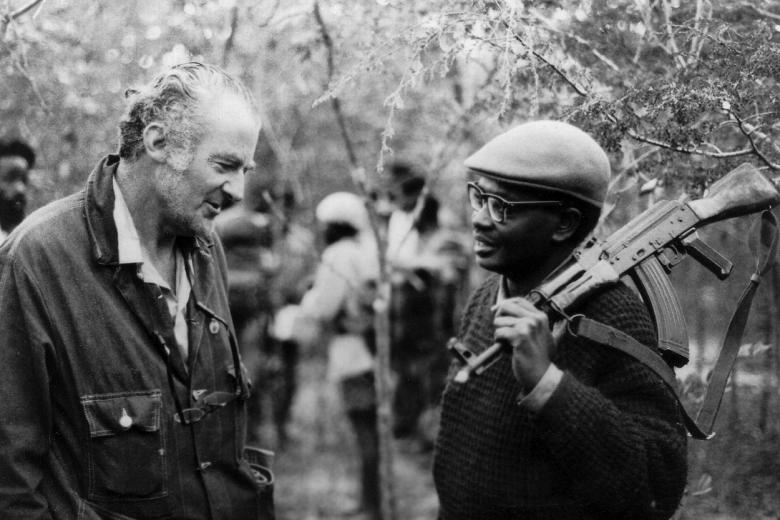
8/ They brought German and Irish Catholic priests, Angolan and Mozambican students living in exile, and renowned British Africanist & historian Basil Davidson, a white man who was listed as a "prohibited immigrant" in several white-ruled African countries. Davidson was the first reporter to travel with African guerrillas fighting the Portuguese in Angola and Guinea-Bissau, bringing their struggle to the world's attention. His firsthand knowledge of Portuguese Africa proved invaluable to Ghana's case.
9/ The evidence was overwhelming. Victims displayed torture scars. The palmatória itself was presented. Witnesses recounted what they had endured. Portugal's defence steadily collapsed.
10/ The Commission ruled that Portugal had violated the Abolition of Forced Labour Convention in its African territories. It stopped short of calling Portugal's ratification a deliberate act of bad faith, but Ghana had won the case.
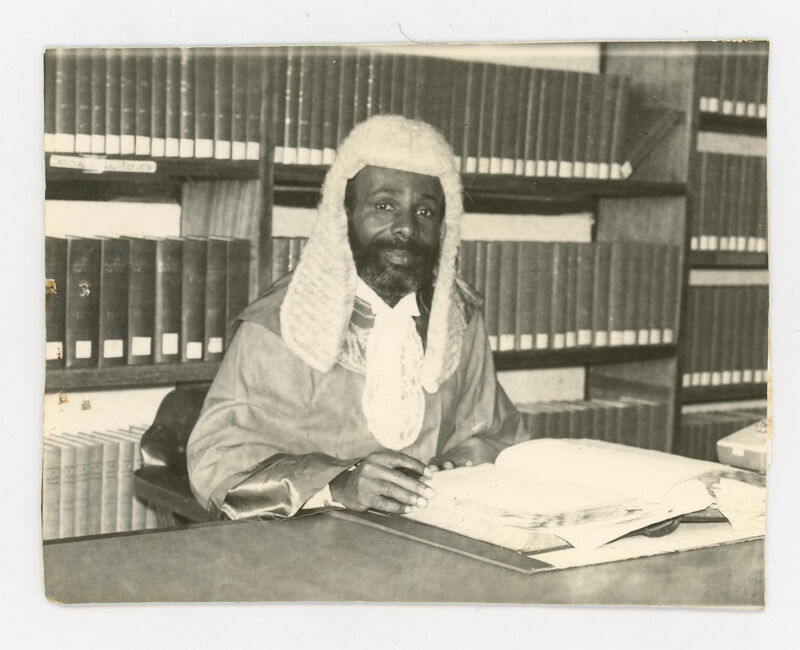
11/ The men behind the victory went on to remarkable careers. Austin Amissah later rise to become an appellate judge, then Attorney General, and eventually President of Botswana's Court of Appeal.
And as for Major Seth Kobla Anthony, his place in imperial military history had already been secured two decades earlier. Since 1942, he has held the singular honour of being the first Black African commissioned as an officer in the British Army, despite the objections of racist critics. For leading British troops and teaching them jungle warfare in Burma during the Second World War, he was awarded an MBE.
12/ Unlike the sarcophagus of Tutankhamun, hidden and left to lie forgotten in a tomb in the Valley of the Kings, only to be discovered over 3,000 years later, may the memories of these Ghanaian gems be widely known and remain ever fresh.
Ghanaian journalist, Abdul-Iddrisu Faisel has highlighted a disturbing situation in Hodzo, in the Ho Municipality, where a fully completed second-cycle institution building has been left abandoned and deteriorating in the bush.
The facility, which was reportedly completed and handed over in 2016, has remained unused despite claims of its completion, raising concerns over the neglect of public resources.
[🎥: Abdul-Iddrisu Faisel]
#Ghana | Aminata Bangoura, connue sur les réseaux sociaux sous le pseudonyme « Maman des enfants » et présentée comme une ressortissante belgo-guinéenne, a été interpellée mardi au Ghana, selon son avocat, Oliver Barker-Vormawor.
L’avocat affirme que sa cliente, présentée comme l’ancienne compagne du général Amara Camara, ministre secrétaire général de la Présidence de la République de Guinée, avec lequel elle affirme avoir deux enfants, est arrivée à Accra à bord d’un vol en provenance de Paris. Selon lui, son interpellation est intervenue en exécution d’une notice rouge d’Interpol émise à la demande des autorités guinéennes.
Sur X, Me Barker-Vormawor indique que son cabinet, Merton Everett LLP, a été officiellement mandaté pour assurer la défense d’Aminata Bangoura. Il affirme que sa cliente a quitté la Guinée après une rupture avec le général Camara et qu’elle craint pour sa sécurité en cas de retour dans le pays.
Plusieurs médias ghanéens, ont également relayé cette affaire. Ils rapportent que l’intéressée envisage de solliciter l’asile politique au Ghana.
Dans une nouvelle publication diffusée ce mercredi matin, l’avocat affirme que sa cliente a été transférée, vers 7 heures, d’un poste de police vers l’aéroport en vue de son expulsion vers la Guinée, sans décision de justice, selon ses déclarations. Il soutient qu’elle s’est ensuite enfermée dans les toilettes de l’aéroport afin d’empêcher son éloignement et d’obtenir la présence de son avocat.
Me Barker-Vormawor indique également avoir tenté de rencontrer les responsables d’Interpol au Ghana et affirme avoir saisi les autorités européennes. Il conteste la procédure engagée contre sa cliente, qu’il estime contraire aux garanties procédurales et aux obligations internationales du Ghana en matière de droits humains.
À ce stade, ni les autorités ghanéennes, ni les autorités guinéennes, ni Interpol ne se sont publiquement exprimées sur cette affaire ou sur les déclarations de la défense.
#Guinée
At 7am, my client Aminata Bangoura was removed from Cantonments police station and sent to Airport; to deport her.
Without any court order.
She has since locked herself in the toilet at the Airport and is demanding that her lawyer be present.
I have been at Interpol since morning asking to meet the director without audience
Are we serious as a country. I have contacted with European authorities over this attempted deportation of an European Citzen to Guinea, without due process.
The persons insists her life is in danger; based on her relationship with Brigadier General Amara Camara.
What would prevent us from according the person the minimum due process? Does any of our human rights obligations both domestic and international mean anything to us?
One thing I’ve always wondered about Ghana’s approach to public policy is why we rarely pilot major government interventions before rolling them out nationwide.
Why do we rush to legislate and scale policies that have never been tested in the real Ghanaian context?
Take Nkoko Nkitinkiti as an example. Why not begin with a pilot, evaluate the results, identify implementation challenges, and then decide whether the policy should be expanded? A pilot might have revealed, for instance, that some beneficiaries would use the chickens for akokɔ nkwan allowing government to design safeguards before scaling up.
The same question applies to the 24-Hour Economy. Why not start with a few targeted sectors or districts, evaluate what works, measure the costs and benefits, and then decide whether a national rollout and a new statutory authority are justified?
That should be standard practice in evidence-based policymaking: test, learn, adapt, and then scale.
Instead, we often do the reverse. We legislate first, implement nationwide immediately, and only discover the design flaws after spending significant public resources.
For a country with limited fiscal space, we should be minimizing the cost of policy mistakes, not maximizing it. Unfortunately, we seem to have a preference for launching government interventions at full scale from day one. That’s how we create procurement gigs for cronies.
The distrust in the judiciary must not scare only judges and lawyers. It must be of great concern to every Ghanaian.
I can't say that the Court of Appeal, in the Sedinam Tamakloe case, was influenced by politics. But the deep-seated distrust in courts and judges must be addressed.
It must begin with how we appoint and discipline our judges.
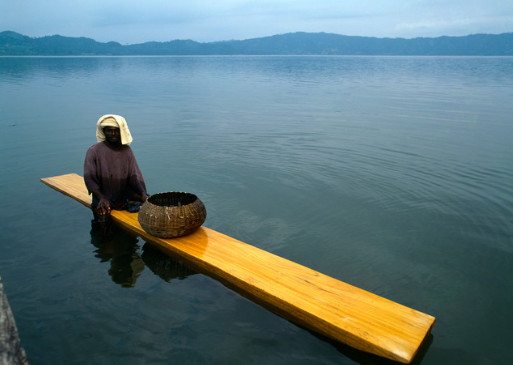
1. long before galamsey took over lake bosomtwi, one of ghana's greatest natural attractions, it was the spiritual centre of the local people.
2. once associated with numerous taboos that frightened even the bravest away, it is now polluted by the toxins of illegal gold mining. and woe to anyone who dares eat of it!
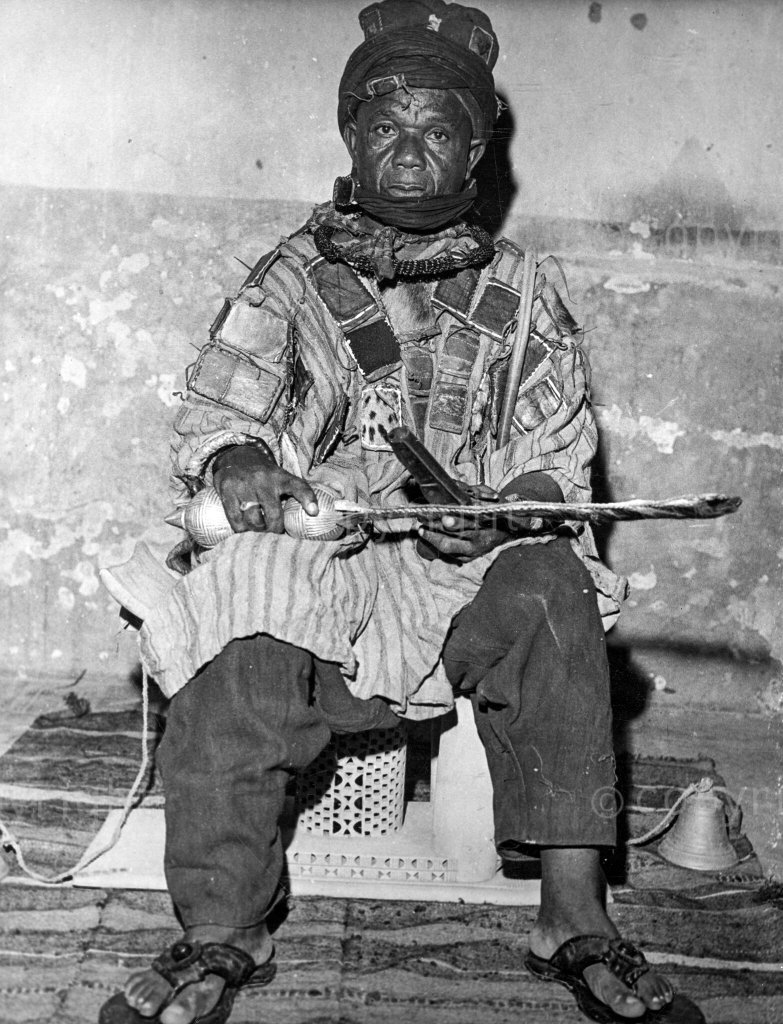
3. meet nana kwasi bugyei iii, custodian of the sacred lake and chief of asaman from the 1960s, under whose strict stewardship lake bosomtwi remained pristine.
The quality of service you get when you visit the Ghana Publishing Company is one of the best I have seen
What happens there is Ghanaian excellence at its best and we just have to replicate similar in other state institutions
Their online service too is top notch 👌