Let me be clear, climate crises can affect anyone of us at any time without prior notice, what we need is partnership and collaboration more than ever, particularly in investing in frontline communities to be resilient, and cope with climate crises
#ClimateFinance#ClimateAction
Free online UNDP Courses and Training opportunities are open to everyone ♻️
The United Nations Development Programme (UNDP) offers free, high-impact online courses designed to help you build skills for real-world global challenges.
What you’ll learn: Climate Action and Sustainability, Biodiversity Finance, Human Rights and Governance. Digital and Future Skills.
Why this support: In today’s rapidly changing world, these are not optional skills, they are essential for career growth and global impact.
Whether you’re a student, researcher, entrepreneur, or professional, this is your opportunity to learn from a leading global institution.
UNDP Apply Platform: https://t.co/Q1gacv8IY2
UNDP Course Catalogue (programs): https://t.co/BPEpxEXzI4
Formez-vous, le futur n’attend pas
Healing requires conversation, breaking the silence responsibly
Thirty-two years after the Genocide against the Tutsi, Rwanda has made remarkable progress in rebuilding trust, strengthening institutions, and nurturing a shared national identity. The country made a deliberate choice to focus on what unites its citizens rather than what once divided them. Emphasizing that we are Rwandans first has been central to restoring cohesion and preventing the return of narratives that once fuelled violence. Yet an important question remains: how do we ensure that younger generations understand history without feeling that the subject itself is off-limits?
Recently, I experienced a moment that brought this dilemma into sharp focus. I was travelling to Amsterdam on a KLM flight from Kigali via Entebbe, seated between a young Rwandan lady named Chantal and a Norwegian passenger. Chantal is in her twenties and studies in Italy. As is often the case with Rwandans, our conversation with Chantal quickly revealed mutual connections. We found ourselves discussing Rwanda and the Great Lakes region more broadly with the Norwegian guy.
At one point, the Norwegian passenger asked whether we were Hutu or Tutsi. The question immediately made Chantal uncomfortable. I responded calmly that we were Tutsi and explained that our families survived the genocide because they were in the diaspora at the time. Chantal shared that her parents had lived as refugees in what was then Zaire and returned to Rwanda in 1996. My grand parents returned in November 1993 and were resettled in Umutara in the areas that had been liberated by the RPF. For us we came back in 1995 march and landed in disserted kigali.
When the gentleman briefly stepped away to help himself, Chantal turned to me and quietly asked, “Are we allowed to talk about who we are?” Her question was sincere but also revealing. It reflected how some young people may interpret the emphasis on national unity as meaning that discussions about ethnicity or history should be avoided entirely.
I explained that Rwanda’s vision is clear; we are all Rwandans first. This identity is intended to transcend the categories that were once manipulated to divide society. However, choosing unity does not mean pretending that history did not happen. It means understanding the past in a way that builds responsibility, empathy and vigilance. Our children and young people need clarity, not silence.
In many families, conversations about the genocide are approached cautiously, often because of the pain associated with those memories. Others may feel hesitant because of the complex roles their parents and relatives played during that period. While such hesitation is understandable, avoiding discussion altogether can unintentionally create uncertainty among younger generations. Questions that remain unanswered rarely disappear; instead, they tend to resurface later, sometimes shaped by misinformation or incomplete narratives.
Rwanda’s experience demonstrates that structured dialogue can support healing. Commemoration periods such as Kwibuka, school discussions and community dialogues have created space to reflect responsibly on history while reinforcing unity. These efforts show that acknowledging the past does not weaken national cohesion rather, it strengthens it by ensuring that lessons are neither forgotten nor distorted.
Over the coming years, there is value in encouraging careful but honest intergenerational conversations. Young people should understand why Rwanda chose the path of unity and why rejecting divisive labels is a deliberate national commitment. At the same time, they should feel confident asking questions about history without fear that the subject itself is forbidden.
Healing is not a one-time event; it is a continuous process. Silence alone cannot sustain it. Responsible conversation, grounded in respect and a shared identity, helps ensure that future generations carry forward both the lessons of the past and the commitment to remain, above all, Rwandans.
Somalia is a country of origin, transit & destination for migrants.
Understanding these dynamics is vital to shaping policies that support stability, development & resilience.
IOM is proud to support Somalia in strengthening migration data systems & evidence-based policymaking.
We need to walk the talk, grassroot communities should be involved the process and their voices must be heard at decision-making stages.
#Climatejustice
PACJA Road to COP31–32 | Webinar Series | Webinar 5
What does a Just Transition mean for Africa amid ongoing energy poverty?
Join the conversation on the political economy of energy transitions and the realities of phasing out fossil fuels.
📅 April 14, 2026
⏰ 11:00–13:00 EAT
🔗 Register here: https://t.co/Pf7UY4FSKc
#JustTransition #EnergyAccess #ClimateAction
Over 60% of Africa’s population is under the age of 25. The median age is around 19, compared to 44.9 in Europe. By 2050, Africa is expected to have the largest youth population globally.
📌 20 Youth Development Experts wanted for this initiative- apply before 30 APRIL 2026. Link Below:
https://t.co/8QYWRihAUF
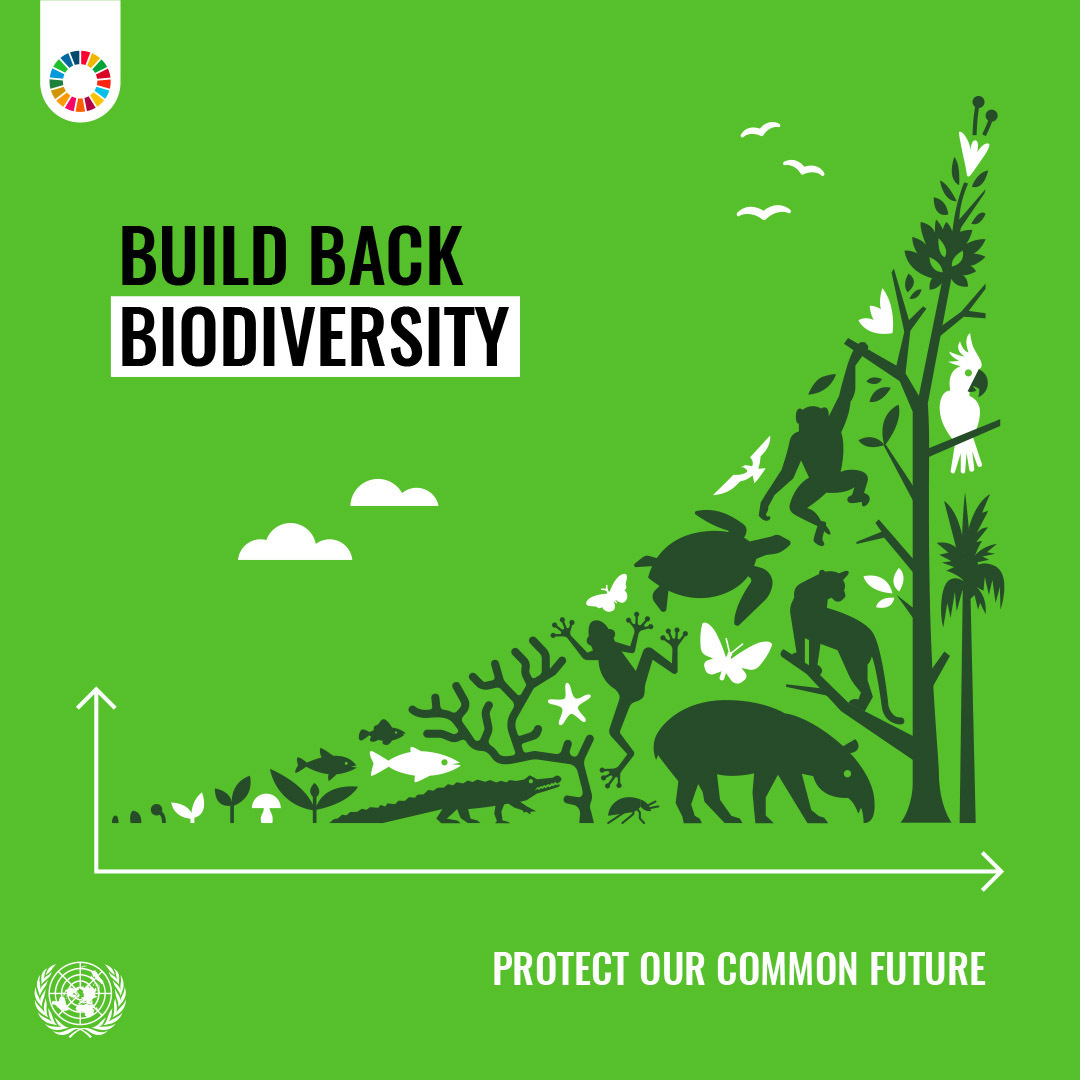
We rely on nature for our survival.
Yet, over one million species are at risk of extinction due to human activity.
The #GlobalGoals offer solutions to address the decline in biodiversity and the degradation of ecosystems: https://t.co/N6AZbbM4ZW
Just in case you missed it:
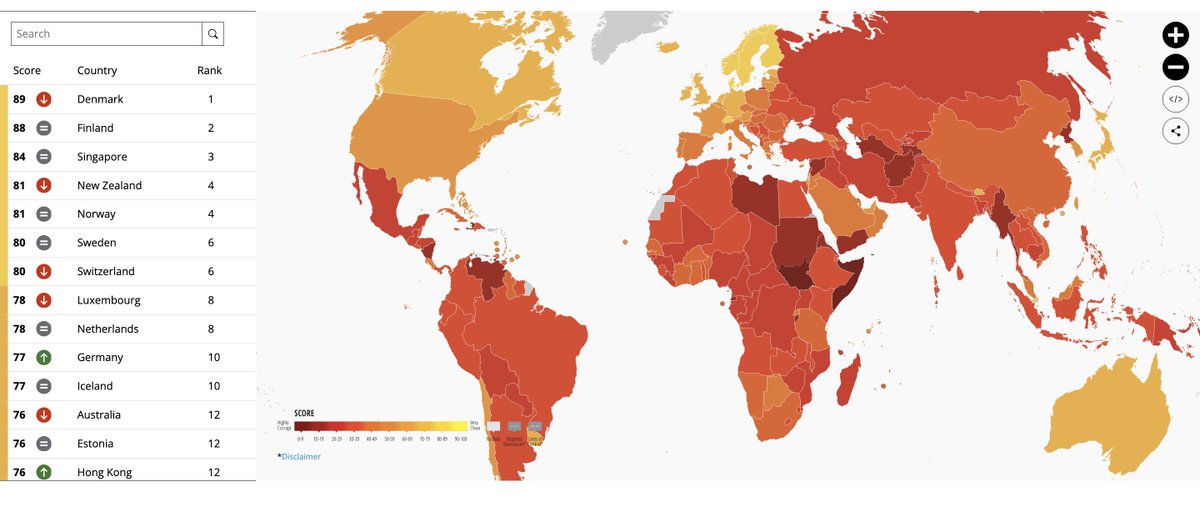
Somalia ranked world's most corrupt country by Transparency International - again.
Followed by South Sudan.
Denmark ranked least corrupt state in the world.
Overall, corruption resurgent in many countries around the world, study finds.
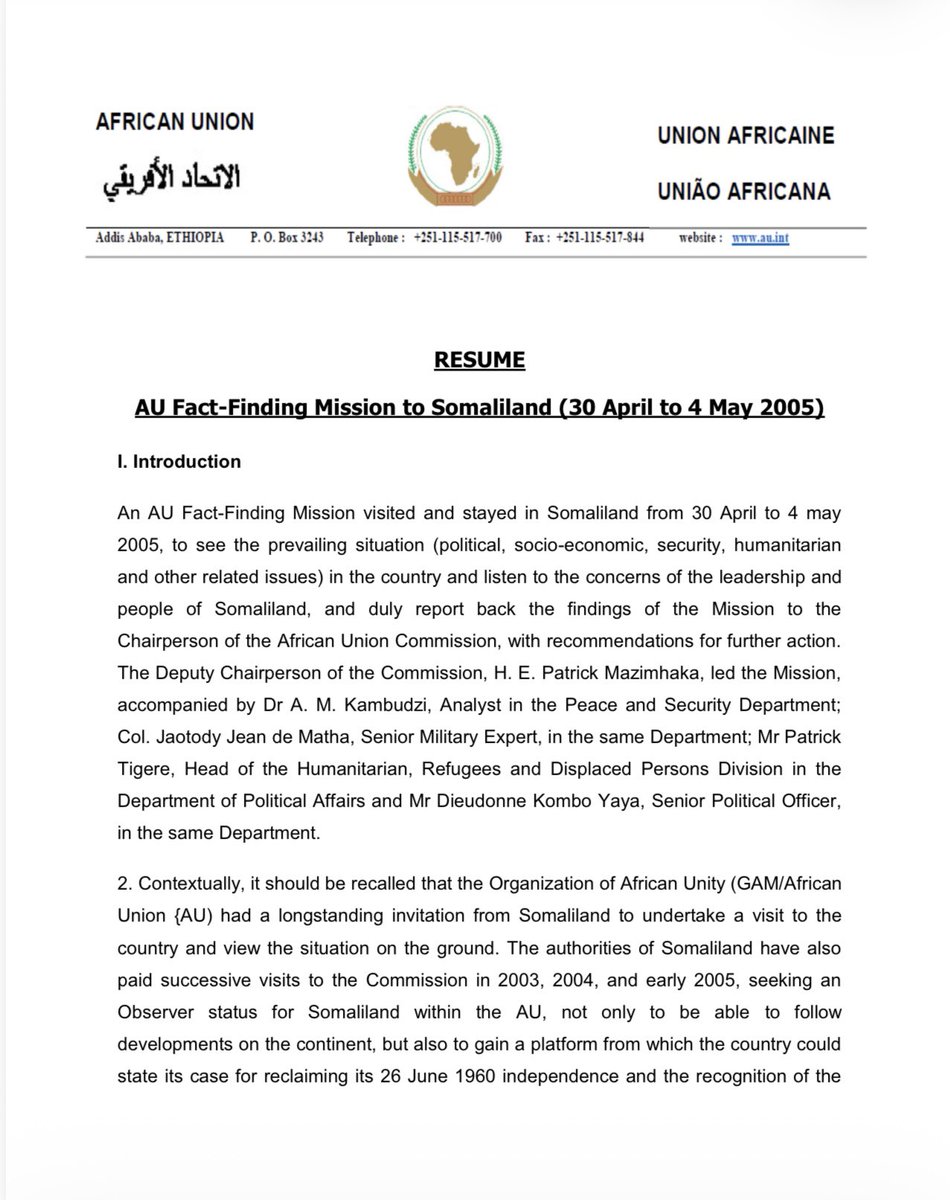
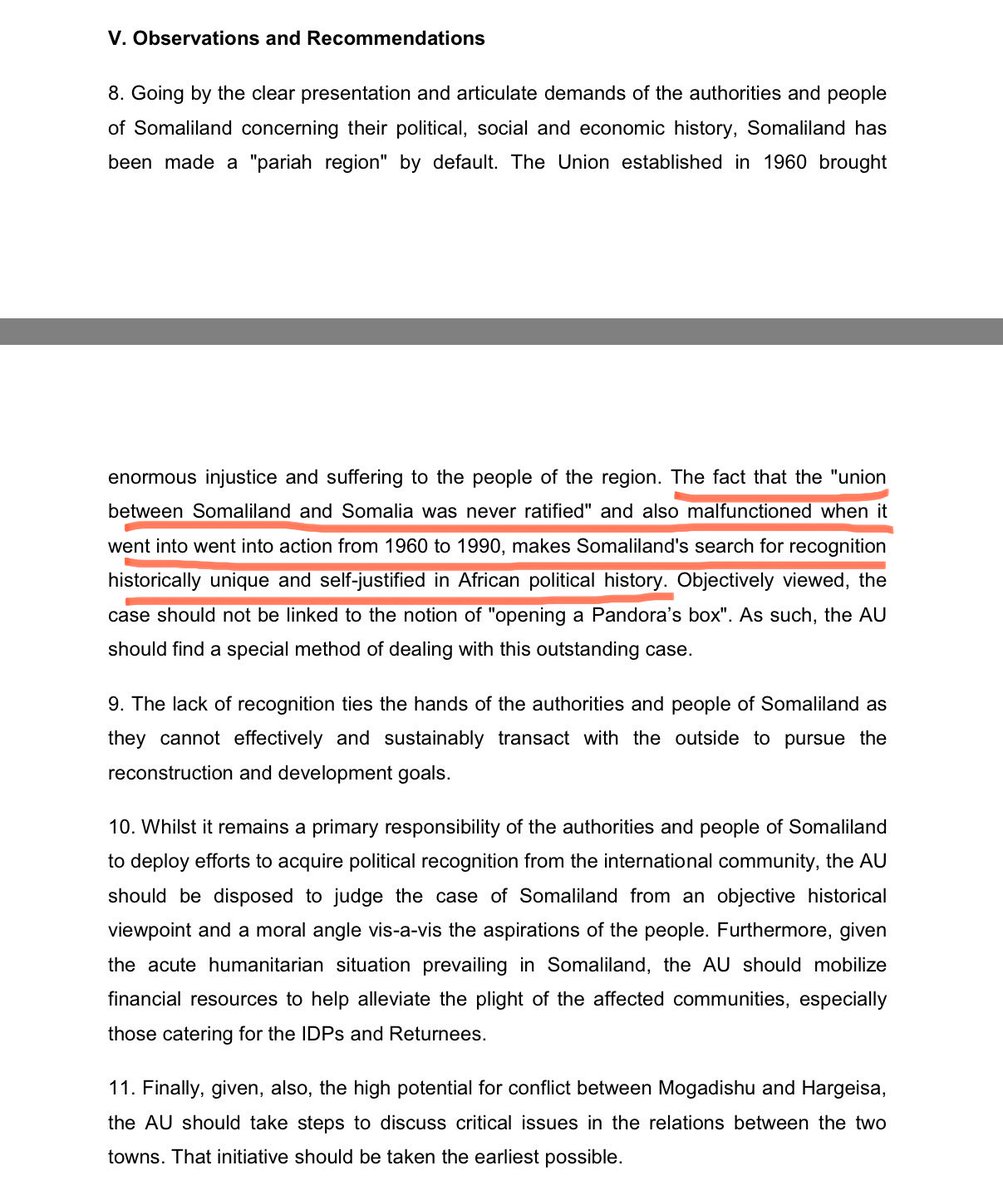
For anyone who forgot, this is what the African Union itself determined regarding Somaliland:
“The fact that the union between Somaliland and Somalia was never ratified and also malfunctioned when it went into action from 1960 to 1990, makes Somaliland's search for recognition historically unique and self-justified in African political history.”
SOMALILAND'S FORGOTTEN GENOCIDE
https://t.co/OU8LzoKzdV
Between 1987 and 1989, the regime of Somali dictator Siad Barre massacred an estimated 200,000 members of the Isaaq tribe, the largest clan in the region of Somaliland, which was then the northwest part of Somalia.
The Isaaq genocide was carried out with massive aerial and artillery bombardments and d*ath squads. The genocide included mass r*pe and forced displacement. Barre’s forces destroyed Hargeisa, Somaliland’s capital. The Isaaq genocide was the deadliest in Somalia’s modern history, but it is largely unrecognized to this day.
The Barre regime collapsed in 1991. Somaliland then declared independence.
Experts now say there are more than 200 mass graves in Somaliland, most of them in what is known as the Valley of Death.
Somaliland is still dealing with the effects of the mass murders committed under Barre’s rule, decades after the Isaaq genocide claimed tens of thousands of lives and created half a million refugees.
For more info, please read:
https://t.co/OU8LzoKzdV
https://t.co/Wk98vqJcVZ
https://t.co/MRRGuwKWNb
https://t.co/vMbAf3BuVq
https://t.co/BDcrPMy3TS