Proud mum of 3 daughters, Consultant Psychiatrist, London. Vegan,. Trying to bring best version of myself to life and work every day #compassion#justice 🌈
We're launching a new campaign called Thrive in Psychiatry to help our membership continue to provide great care for patients.
The aim is to retain psychiatrists in the profession and help our members thrive, overcome barriers and take on exciting new challenges. #ThriveinPsychiatry
https://t.co/Vw2jiKF5d0
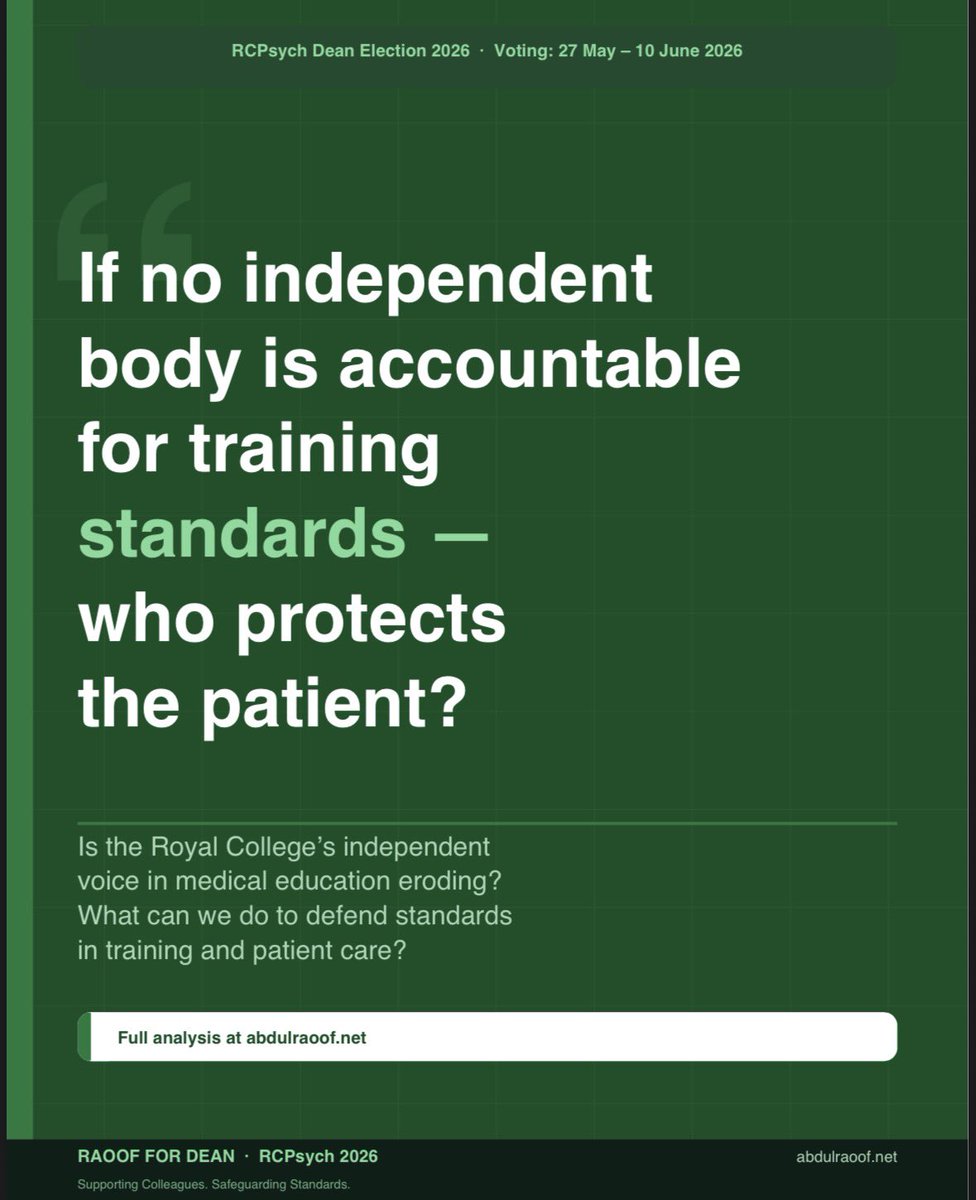
If no independent body is left to defend standards in training and care
Who protect our patients?
Just a thought as @rcpsych celebrates 100 years of Royal Charter
Click below to see how things have changed over the years
https://t.co/wCMi6iRqqt
@wendyburn@subodhdave1#GMC
This isn’t even debatable. Sadly the main reason people hate Starmer is because they’ve been told to.
He hasn’t been perfect but he hasn’t killed thousands of people, or taken us into an illegal war, or wiped billions off our economy etc etc etc
Dear Phoebe,
I read your Observer piece this morning on the reported “exodus” from Girlguiding - and I was genuinely shocked.
Not because you presented a different perspective to my recent Telegraph reporting on the problems within Girlguiding. That’s part of journalism.
But because you chose to include the case of a six-year-old little boy who reportedly tried to cut off his own penis - after being told he couldn't be part of Rainbows (the section of Girlguiding for 5–7 year olds). Presenting it as evidence of a problem with Girlguiding’s admissions policy.
It is not.
It is a deeply distressing account involving a very young child - and, on any view, a serious welfare concern. Framing it otherwise is a profound failure of editorial judgement.
You also refer to this male child throughout using female pronouns, including the phrase “her penis”.
I appreciate this may reflect current editorial conventions. But it sits uneasily with the basic duty of a journalist to report clearly and accurately on material facts.
I was already aware of this case through my own reporting for the Sunday Telegraph. I made a conscious decision not to include it at this stage - both because a minor is involved and because of the ethical considerations that arise when reporting on such sensitive situations.
Those considerations are not optional.
You will know, as I do, that journalism is not simply about presenting competing narratives. It is about establishing facts clearly, handling vulnerable subjects with care and exercising judgement about what should - and should not - be used to advance an argument.
I trained as a journalist in the early 2000s - a good 20 years earlier than you did - but to my knowledge nothing has changed.
Good journalism should bring clarity. It should not muddy the facts - in order to promote an ideological position.
In this context, that means being clear about sex - a material fact that is both legally and practically relevant.
I appreciate you may be under pressure from colleagues or editors to frame stories in a particular way - or to use she/her pronouns, or the phrase “her penis”.
But that doesn’t make it right.
Earlier this week, the Manchester Evening News reported a violent murder as being committed by a woman - one of many examples of inaccurate reporting around sex and gender.
In this case, even the Crown Prosecution Service - the public body responsible for prosecuting criminal cases in England and Wales - also reported the crime inaccurately.
So that’s two professions we should be able to trust to tell the truth - providing inaccurate information.
Crime statistics matter. Without accurate data on who is committing serious violence, we cannot properly understand it - let alone prevent it.
I considered raising this privately, or writing to your editor. But this issue is too important to be brushed aside with a “thank you for your feedback”.
I’m happy to discuss it with you privately, or to support a conversation with your editor if that would be helpful. But I hope this gives you - and your colleagues - serious pause for thought.
Because it is very much needed.
Janet
So, as a doctor I can’t accept a plastic pen from a pharmaceutical company because it might influence my prescribing decisions, but MPs can accept thousands in cash from those who want to privatise the NHS and it won’t affect their decision-making??? CTFO
https://t.co/ax78s1RSRJ
Health care? "You're on your own."
Housing? "Nothing we can do."
Grocery prices? "You're out of luck."
$200 billion for another war? "No problem!"
Americans—Democrats, Republicans, independents—are SICK AND TIRED of endless wars.
We need to invest here at home.
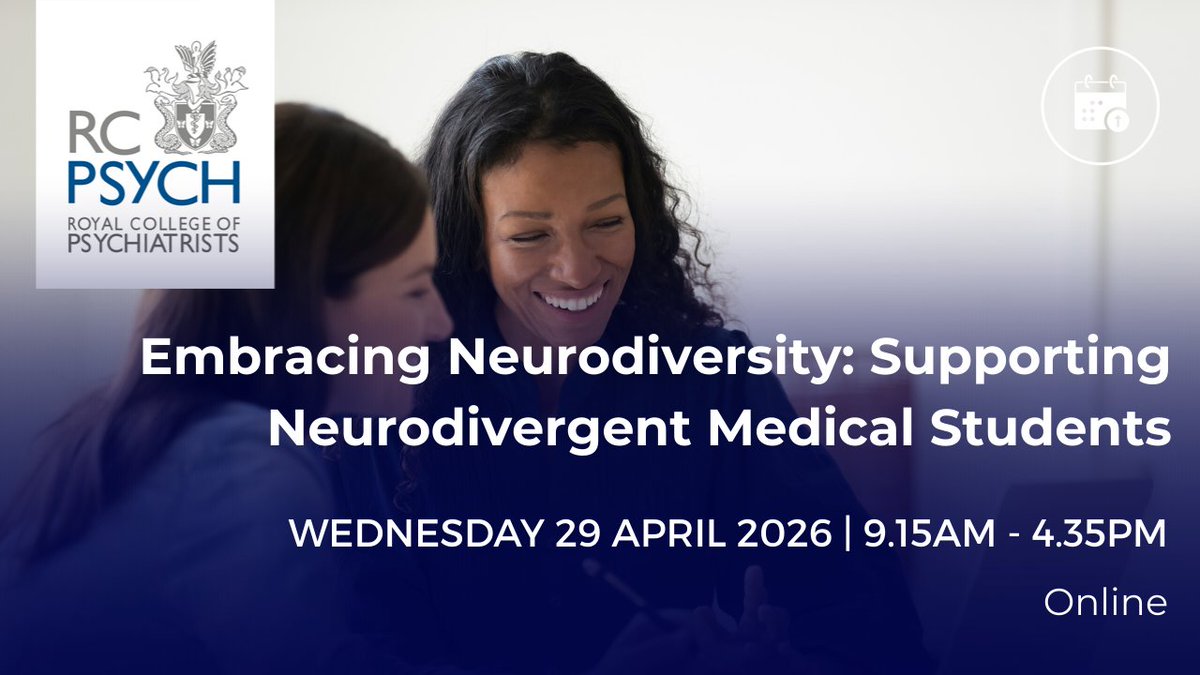
Have you seen the programme for our new online event, Embracing Neurodiversity: Supporting Neurodivergent Medical Students? Highlights include a talk from a GMC perspective, Q&A sessions and panel discussion with our expert speakers.
View the programme: https://t.co/GEOIiZcFnk
So impressed by the quality of work produced by our winning medical students. Quinn, Saadi, Maliha and Abbey. Superb session on ethics. Thanks to @rcpsychForensic for the unstinting support of medical students
Excellent feedback from the medical student essay presentations by Quinn Collins, Saadi Karim Robinson, Maliha Shakir, and Abbey Venables covering risk, ethics, rights and liberty. A remarkable achievement and contribution to the academic programme by all #rcpsychforensic26
@regalexa@KevinMu62271410@rcpsychForensic Great to meet you Regi and good luck in your campaign and wonderful to catch up Kevin and to have the opportunity to chair your session about the parole board process .
@RCPsychScot It appears that pressure on the service s and workforce challenges are pervasive across UK , in all devolved nations- themes are similar with some geographical variations
Robust central vision,local engagement and advocacy through @rcpsych necessary @RCPsychScot@RCPsychWales
👏👏👏👏
Resident and SAS doctors’ posters and Medical students presentations were of very high quality
Congratulations everyone 👏👏👏
All are winners
Great work by @rcpsychForensic to provide such platform 👍👍
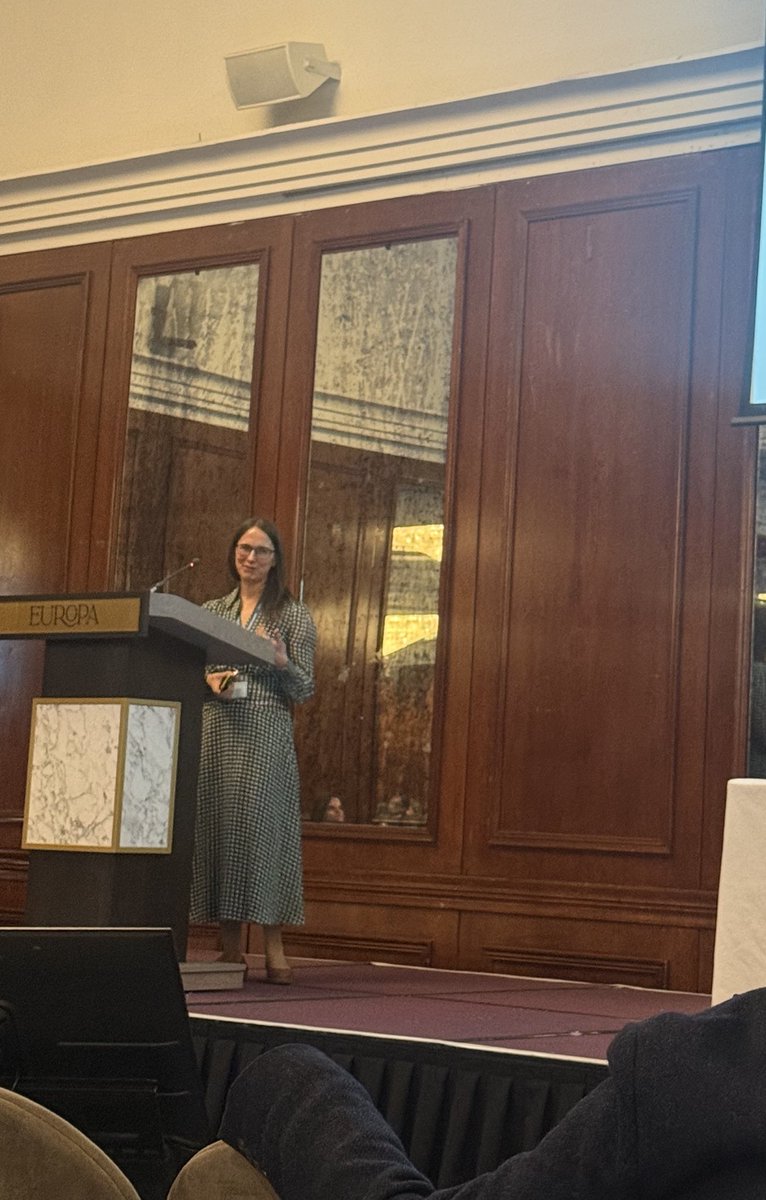
Dr Hannah Cappleman discusses inquest support for psychiatrists, sharing local and national work being undertaken. Importance of both practical and emotional support highlighted and need for inquest supervisor roles and training #rcpsychforensic26