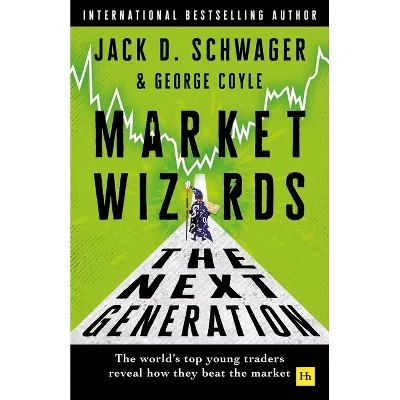
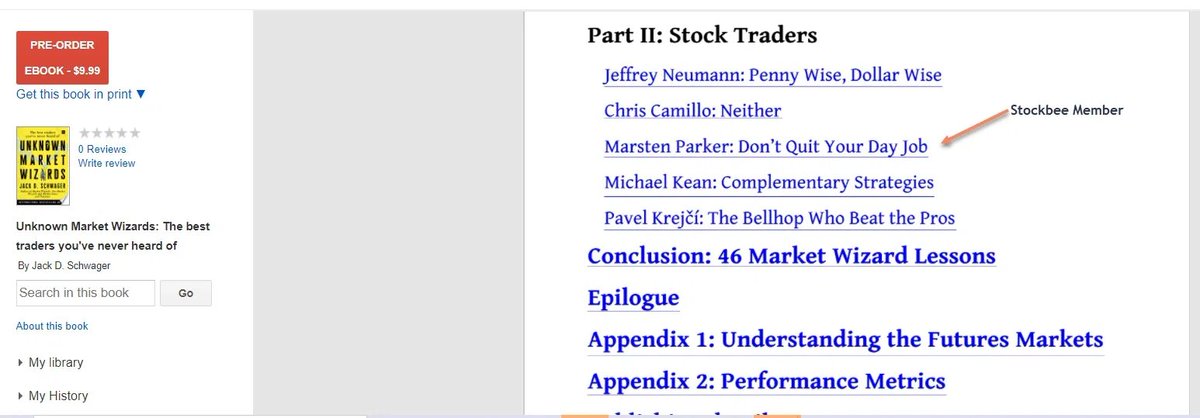
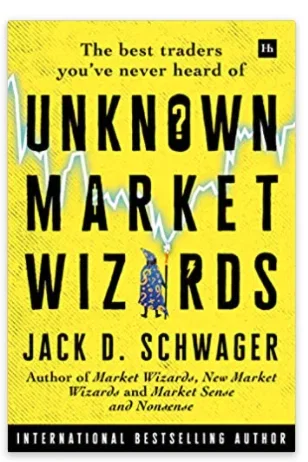
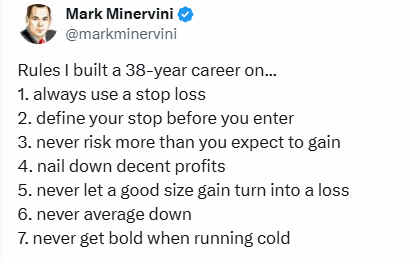
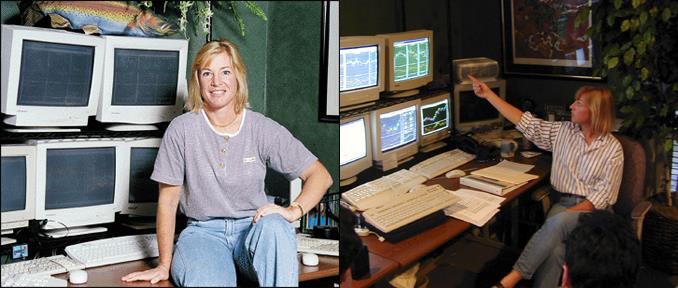
Both the Market Wizards from Stockbee Marsten Parker @mars10p have and Kristjan Kullamägi
@Qullamaggie
have the same message. Don't think trading is easy. It takes a ton of self-leadership, setup, and situational awareness to make it in this field.
Pradeep Bonde, a mentor to multiple 7, 8, and 9-figure traders says most traders are playing the wrong game.
“People think trading is about passion… it’s not.”
You can love the markets, study every day, and still not make money.
Because there’s a gap:
What real traders do vs what you think they do.
“Most pros aren’t hitting home runs… they’re hitting singles. Over and over again.”
But nobody wants that game.
They come in wanting big wins, fast money, life-changing trades.
Instead, the real game is repetitive, disciplined, and honestly… a bit boring.
So here’s the real question:
Are you willing to trade the way money is actually made… or just the way it looks exciting?
Full episode 👇
Pradeep Bonde, a mentor to multiple 7, 8, and 9-figure traders says most traders are playing the wrong game.
“People think trading is about passion… it’s not.”
You can love the markets, study every day, and still not make money.
Because there’s a gap:
What real traders do vs what you think they do.
“Most pros aren’t hitting home runs… they’re hitting singles. Over and over again.”
But nobody wants that game.
They come in wanting big wins, fast money, life-changing trades.
Instead, the real game is repetitive, disciplined, and honestly… a bit boring.
So here’s the real question:
Are you willing to trade the way money is actually made… or just the way it looks exciting?
Full episode 👇
All I set out to do was make a living from trading. But once I realized that the stock market is the greatest financial opportunity on earth, my goal became much bigger—to build enough wealth so I would never have to worry about money again. I wanted the personal freedom that comes with financial independence, and I achieved that by age 38.
I made my first trade at 18 years old in 1983. However, I didn’t get truly serious about trading until I was 25 in 1990. Still, it took me until I was 28 to fully commit to the discipline necessary to trade at the highest level. From that point on, my life changed—and the rest is history.
When I started, the Dow was trading just a little above 1,000. People were worried and they warned me that the market was too high. Today, the Dow trades over 45,000, and you hear the same worries. The fact is, it's never been a better time to be a stock trader. Those who say you can't succeed have no credibility because they never succeeded themselves. I'm here to tell you you can. The proof that I'm smarter than them comes not from my success, but from my belief in you.
Go get it! You can do it. 😇🙏
Interview with Richard Dennis from Market Wizards:
What is the biggest public fallacy about market behavior? "That markets are supposed to make sense."
"If this company is the next great growth stock, a little is all I need.
If it's not, a little is all I want."
- Tom Engle (TMF1000)
Highly recommend creating a framework to guide position sizes
Mine:
the only trading philosophy you'll ever need to make your first million dollars in the stock market.
apply this principle when analyzing charts for opportunities
The power start to 2026 continues with a 4th breadth thrust day in a row shown on @PradeepBonde Market monitor - as I've said before, the best tool for situational awareness.
From Trader's Almanac:
"Over the last 48 years, when the S&P 500 finished the first 5 days of the year in the green, the SPX went on to finish the year green 83% of the time, with an average gain of 14.2%."
$RKLB $TSLA $ASTS $MU $FSLR $SNDK $NVDA
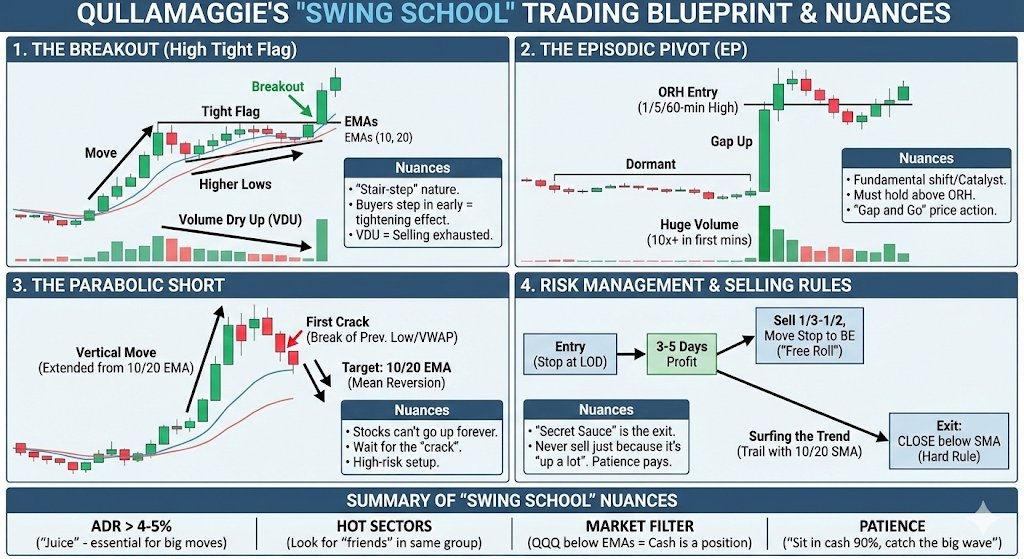
For 2026 here is full fledged trading system as taught by @Qullamaggie
Now it's upto us to put in that enormous hard work, be disciplined, execute with concentration and FOCUS
Wish you all happy holidays!!
Roger Federer broke the internet with one statistic that will change how you see every setback in your life.
1,526 singles matches.
Won almost 80% of them.
20 Grand Slams. 103 titles.
Now answer honestly:
What percentage of total points do you think he won across his entire career?
70%? 65%? 60%?
Try … 54%.
He lost literally almost EVERY SECOND POINT he ever played for 24 years.
And still became one of the greatest of all time.
Watch him explain it himself (2:07 of pure life-changing wisdom):
“In tennis, perfection is impossible… When you lose every second point on average, you teach yourself to say:
‘Okay, I double-faulted — it’s only one point.’
‘Okay I got passed at the net — it’s only one point.’
Even a screaming overhead smash that ends up on SportsCenter Top 10… still just one point.
So when you’re playing your point, it has to be the most important thing in the world.
The moment it’s over — it’s behind you.
That mindset frees you to attack the next point, and the next, and the next with absolute intensity and clarity.”
Then he looked at the crowd and said the line that hit a billion people in the soul:
“The real sign of a champion is not that they win every point.
It’s that they lose again and again and again… and have learned how to deal with it.
Negative energy is wasted energy.
Cry it out if you have to. Then force a smile.
Move on. Be relentless. Adapt. Grow.
Work harder — and work smarter.”
Save this post.
The next time you lose a deal, bomb a presentation, get ghosted, miss a deadline, or just have “one of those days” — come back here and read it again.
You’re not falling behind.
You’re just in the 46%.
And the 46% is exactly where every single legend has spent most of their career.
Keep playing the next point.
(full 2:07 clip — sound on)
Market Wizard Linda Raschke's 12 Technical Trading Rules:
1. Buy the first pullback after a new high. Sell the first rally after a new low.
2. Afternoon strength or weakness should have follow through the next day.
3. The best trading reversals occur in the morning, not the afternoon.
4. The larger the market gaps, the greater the odds of continuation and a trend.
5. The way the market trades around the previous day’s high or low is a good indicator of the market’s technical strength or weakness.
6. The previous day’s high and low are two very important “pivot” points, for this was the definitive point where buyers or sellers came in the day before. Look for the market to either test and reverse off these points, or push through and show signs of continuation.
7. The last hour often tells the truth about how strong a trend truly is. “Smart” money shows their hand in the last hour, continuing to mark positions in their favor. As long as a market is having consecutive strong closes, look for up-trend to continue. The up trend is most likely to end when there is a morning rally first, followed by a weak close.
8. High volume on the close implies continuity the next morning in the direction of the last half-hour. In a strongly trending market, look for resumption of the trend in the last hour.
9. The first hour’s range establishes the framework for the rest of the trading day.
10. A greater percentage of the day’s range occurs in the first hour then was the case in the past, and thus it has become increasingly important to trade aggressively if there are early signs of a strong trend for the day.
11. There are four basic principles of price behavior which have held up over time. Confidence that a type of price action is a true principle is what allows a trader to develop a systematic approach.
The following four principles can be modeled and quantified and hold true for all time frames, all markets. The majority of patterns or systems that have a demonstrable edge are based on one of these four enduring principles of price behavior.
Charles Dow was one of the first to touch on them in his writings. Principle
One: A Trend Has a Higher Probability of Continuation than Reversal Principle
Two: Momentum Precedes Price Principle
Three: Trends End in a Climax Principle
Four: The Market Alternates between Range Expansion and Range Contraction!
12. In the world of money, which is a world shaped by human behavior, nobody has the foggiest notion of what will happen in the future. Mark that word – Nobody!
Thus the successful trader does not base moves on what supposedly will happen but reacts instead to what does happen.