This is Ed Seykota.
He turned a $5,000 account into $15 million in about 12 years.
Self-taught. No floor, no tips, no secret indicator.
Here's the philosophy behind one of the greatest track records ever:
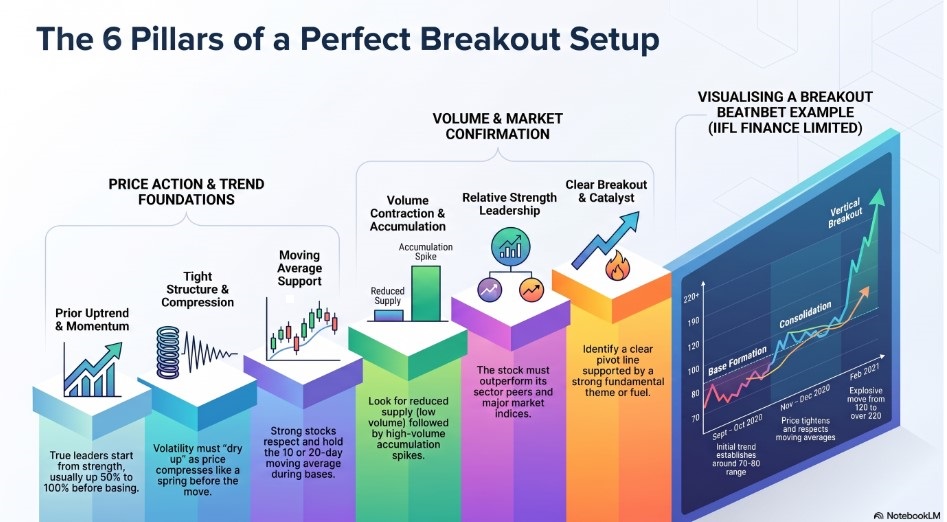
📌I focus on the rising 10 and 21 day moving averages for early momentum.
🟩Simple Process
✅Big moves up,
✅Pullback to rising moving averages,
✅Series of higher lows,
✅Potential undercuts and reclaims,
✅Tight ranges, then breakout.
Simple and repeatable.
Some Recent Real - World Examples for better Understanding👇
Every millionaire trader I’ve ever studied understands this 1 core concept:
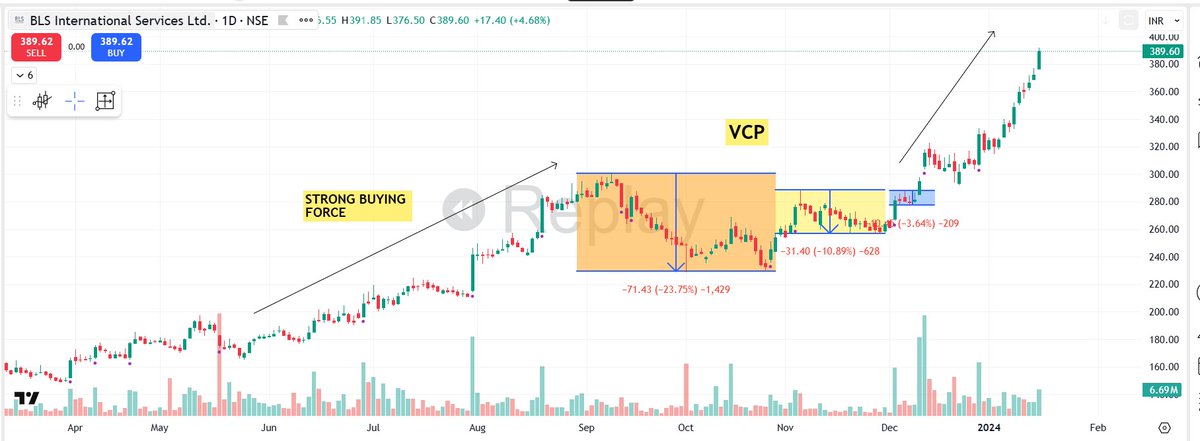
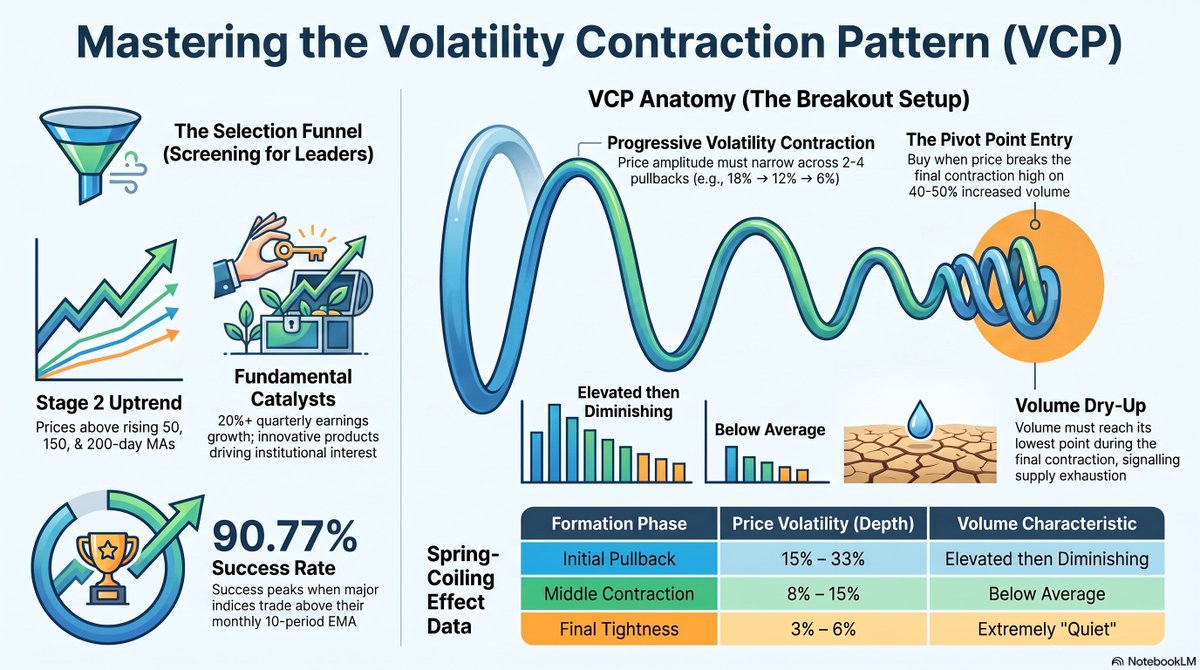
Look for tight, "coiled" price action.
Think of price like a spring.
The tighter the coil becomes, the greater the potential release once momentum returns.
Compression creates opportunity.
David Ryan won the US Investing Championship three years straight.
Triple-digit returns each year, roughly 1,379 percent compounded.
He reads a chart in under a second.
And he throws out almost every pattern name you were taught.
Here is the one line he draws instead ↓
Nithin Kamath, 2026:
"When I started out... I had a simple wealth goal. I'd actually written it down: hit ₹5 crore, retire in Goa, beach shack, done. That was the dream."
now he thinking of..
@aryakthinks Bhai mere bike me koi dikkat nahi aaya hai abhi tak.. office me v kai log se puchha to kisi k bike or car me abhi tak koi problem nahi aaya hai... Halaki neta log par mujhe bharosa nahi hai lekin apna experience abhi Tak sahi hai is mamle me...
Oliver Kell turned a small account into a 941% year and won the US Investing Championship.
His entire edge was one skill: knowing where a stock is in its cycle.
He laid it out in a free podcast. I turned it into something you can use.
Here's the framework 🧵
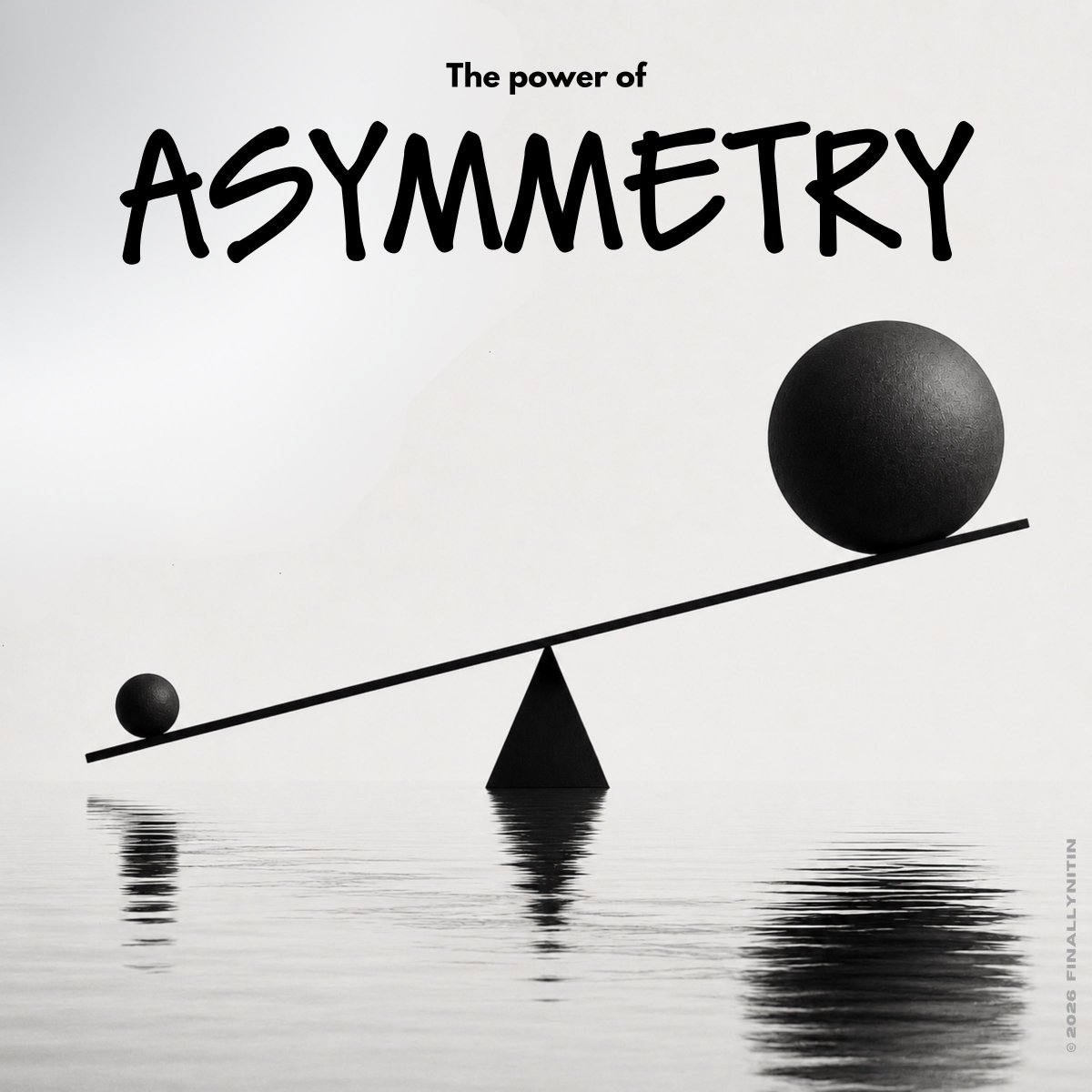
If there's one thing that trading can teach you, it should be the power of asymmetry.
A successful trader accepts small losses on lots of trades, but is able to generate an asymmetrically bigger profit on his winners.
A writer keeps writing all his life, & then one book becomes the bestseller. One composition of a musician gets counted in the timeless classics. Athletes train for years for a race that lasts few seconds. Asymmetric effort that gets no visibility in comparison to the outcome that gets celebrated.
A few exceptional investments, one breakthrough product, one conversation, one mentor, one friend, one act of kindness can create ripples that last for years.
So then what to do?
Design your life around favorable asymmetries. Smile more than circumstances justify. Learn more than your profession demands. Give more than people expect. Lose gracefully. Win generously. Seize the moment when it arrives.
Be the person जो छोटी सी खुशी से, छोटी सी positive चीज़ से asymmetrically खुश हो जाता है, बड़ी से बड़ी मुसीबत में उसके माथे पर शिकन तक नहीं आती.
ज़िंदगी के हर moment को equal importance देने से बात नहीं बनती। बात बनती है by making the right moments matter asymmetrically.
🚨 Presenting the Strong Start RVOL Dashboard TradingView indicator, free for everyone!
Paste a watchlist → it ranks every name by RVOL & stars the ones that have a strong start
- Credits to @FreeThinkEd for the original script on which this is based
- Credits to @imanasarora for the strong start concept
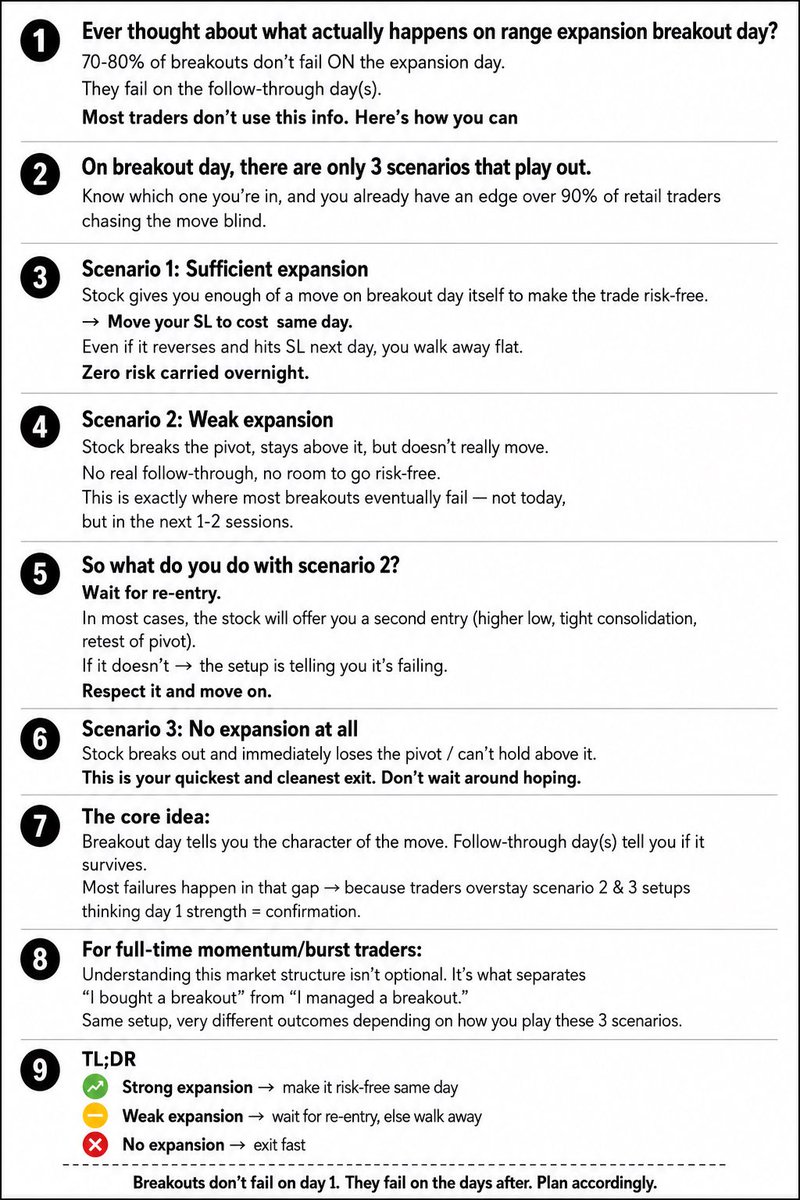
Buying is the easy half. Selling a winner is where the money is actually made or lost.
The old masters used a 20-signal checklist for it.
I do it with one moving average and two rules.
Here's the system 👇
RECOVER FASTER THAN EVERYONE
Lose the day. Come back at night. Miss the gym. Go tomorrow. Waste a week. Win the next one. Get embarrassed. Stay visible. Get rejected. Try again. Fall behind. Move anyway. Stop turning every mistake into a new identity. Stop making failure mean more than it does. Stop disappearing every time life proves you’re still human. The men who win aren’t perfect. They just don’t stay gone.
The cheat code is simple.
Become impossible to keep down.
One of the worst lies you tell yourself: “I just need to gather more information.”
Carl Jung coined the archetype of Puer Aeternus (Latin for the "eternal boy") as an adult who lives in a constant state of boyhood, with a fear of commitment and an obsession with preparation for action that never comes.
The modern world has made it easier than ever to fall into the Puer Aeturnus trap. Information gathering has become sport. Research, studying, learning, planning. All of it jammed into neat little dopamine feedback loops that convince you that you're doing something productive and valuable.
You're just one piece of information away from the big breakthrough. You'll start the business when your business plan is perfected. You'll meet your partner when you've scrolled through another round of profiles. You'll get that dream job when you have one more degree in hand.
I've been there. I was Puer Aeternus. Until I realized that the world wasn't being run by a bunch of geniuses with 47 PhDs and 170 IQs. The world was being run by a bunch of normal people with abnormal bias for action.
The opportunity you seek is floating around at all times. But you have to take action to seize it. Dopamine from information gathering is a dangerous drug. Get your dopamine from action.
Major cheat code for life: Master the art of the fresh start. From a bad morning. From a bad interaction. From a missed workout. From a poor decision. The goal isn't to avoid the fall. It's to shorten the time between the fall and the reset. Fast recovery compounds.
One of the biggest lessons I've learned over 20+ years wasn't about buying stocks.
It was about learning to be comfortable doing nothing.
For years, I believed my job as a trader was to be invested. If I was sitting in cash, I felt like I was missing opportunities. I felt like I wasn't making progress while everyone else seemed to be making money.
Looking back, that mindset cost me a lot.
Whenever the market became choppy or weak, I still searched for trades because I thought I always had to be in the game. Those periods produced many unnecessary losses and a lot of emotional stress.
Over the years, I started reviewing thousands of trades and backtesting different market environments. One realization kept showing up:
My results deteriorated whenever I forced trades during poor market conditions.
That completely changed the way I think.
Today, I don't see cash as something temporary while I wait for the next trade.
I see it as my natural position. Capital preservation comes first.
Only when I find exceptional stocks, clean setups and favorable market conditions do I move from defense to offense. The market has to give me a reason to invest.
Ironically, sitting in cash doesn't feel frustrating anymore. It feels like freedom.
No pressure to force trades.
No pressure to chase stocks.
Just patience until the odds are clearly in my favor.
This is one of the biggest mindset shifts I share with my members. We don't have to trade every week. We don't have to trade every market.
Our job is to protect capital first and become aggressive only when the market earns it.
If I could give my younger self one piece of advice, it would be this: Cash isn't just a position. It's the default position. The market has to earn my capital.