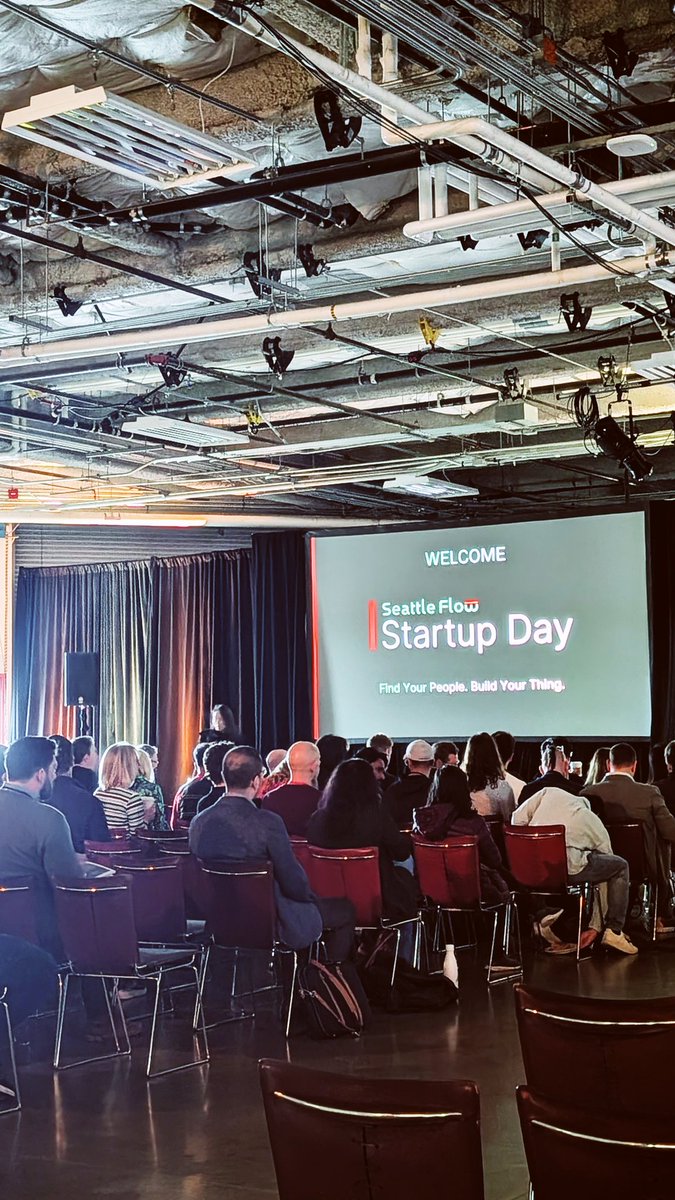
We are at @seattlefloworg sharing what we’re building at @AIPredictable.
We'll be at the Startup Fair. Live demos of @predictablecode, great conversations, and a lot more coming soon ❤️
@PredictableCode That's how Predictable Code keeps AI-generated code aligned with what you actually specified. No surprises, no quiet deviations.
Full case study with the complete recording here:
https://t.co/2E14KNr4f6
The one question I keep coming back to with AI-generated code: does it actually do what I specified?
Our first @PredictableCode case study answers that end-to-end on a real Java codebase, with a full recording of the workflow.
https://t.co/2E14KNqwpy
@PredictableCode For every deviation between code and spec, three options:
→ Fix the code (scoped prompt, can't break other contracts)
→ Update the spec (if your intent was different)
→ Remove the spec (if it no longer applies)
We'll be at @seattlefloworg Startup Day 2026 on May 15th, demoing @PredictableCode at the Startup Fair.
Come see what it looks like to formally verify AI-generated code. Not "passes review," actually proven correct. 👌
Tickets 👉 https://t.co/5eusyEE8ty
The last article of the #AICodePainPoints series is done! (For now, because every improvement in this field brings new issues with it.)
This time, it's about what happens when a developer clicks Merge on AI-generated code reviewed by another AI. What are they actually approving? And in regulated industries, who carries the weight when something breaks?
The accountability didn't disappear. It just concentrated in one click.
AI writes the code.
AI reviews the code.
A developer clicks "merge" in under 10 minutes.
In that single click, all the legal and regulatory liability concentrates in one human, for code they didn't write and couldn't fully read.
Uno de los amigos que ayer hizo demo fue @Jorge__Galindo con su @AIPredictable .
Está escribiendo unos blogposts majos sobre cómo su bicho ayuda a solventar los pain points habituales de programar con IA, pero en su caso con clientes corporate para cosas serias (no el vibecodeo de pachanga que flexeamos por aquí).
Echadle un ojo, que merece la pena aprender sobre el curro que tiene el garantizar que tienes unas specs capaces de superar auditorías corporate, y no un markdown slopeado de esos...
https://t.co/hFeCyIHd5I
If you are curious about knowing the different pain points we see in the ai generated code, and how we think we can help, this series of articles could be interesting to you 😊
Documentation stopped being just for the team. It's now the context for every line of code your AI is about to write.
Third piece of our pain points series: https://t.co/0lkGmGBAoi
Every team has a doc that's quietly become a lie.
The README wasn't updated when the API changed. The Notion page from six months ago.
We used to shrug at it. Then we started pasting it into Claude as context for the next feature.
Code that runs, compiles, passes tests, and still isn't doing what you asked.
Same requirement, three AI sessions, three incompatible implementations.
The second piece of our pain points series is up.
https://t.co/025A3QEuT0
Software engineers, PMs, designers, and CS / ML / MBA students: We're doing a Startup Fair @ Startup Day 2026.
Builders from @getclarify@yoodli@ItsClearlyAI@AIPredictable and more will talk product, tech, and their roles. No recruiters.
May 15. Free.
Ten developers, ten AI sessions, ten slightly different ideas of what the codebase is supposed to do.
First of a short series on the pain points we're solving with Predictable Code.
https://t.co/U71O2VS2zo