At its height Rome was the greatest power the world had ever seen
In 9 AD three Roman legions marched into the forests of Germania. They never came back
Watch the full film free on MovieAtlas @MovieAtlasApp
"Teutoburg Forest" by historyreforged · curated streaming for AI cinema
“That dependable courage, which in spite of the most sudden circumstances, nevertheless allows freedom of mind, of judgment and of decision, is exceedingly rare.”
- Napoleon Bonaparte
On May 25, 1775, the twenty-eight-gun frigate HMS Cerberus, named for the mythical three-headed dog that guarded the gates of Hell, sailed past Boston Light and into Boston Harbor. She carried three major generals from England—William Howe, Henry Clinton, and John Burgoyne. The generals had been sent to quell the tumults and disturbances in Massachusetts. They were ferried to Long Wharf where they were greeted with martial music and proper military procedure. General Thomas Gage knew the arrival of the three major generals marked the beginning of the end of his days as Commander-in-Chief of the Massachusetts Bay Colony and all British forces in America.
The three could not have been more different. The swarthy, good-looking William Howe commanded a force of special unit light infantry during the war with the French and Indians. The forty-five-year-old Howe outranked his two fellow generals. His older brother, the 3rd Viscount George Howe, was in killed 1758 in a skirmish at Fort Ticonderoga. The colony of Massachusetts paid for the beloved Howe’s memorial in Westminster Abbey. William was no martinet and well-liked by his men and officers. He did not bother to conceal his penchant for gambling and women.
The small, fair-haired Henry Clinton was a year younger than William Howe and next in rank. He grew up in New York, where his father was governor. He lacked Howe’s passion, but the two generals agreed on one thing: neither had wanted to volunteer in the war. Howe wrote to constituents in Nottingham, “My going thither was not of my seeking. I was ordered, and could not refuse.” Henry wrote much the same thing, “I was ordered by my Sovereign and I obeyed.”
John Burgoyne was the oldest at age fifty-three and lowest ranking. His army career had stalled after he eloped with Lady Charlotte Stanley in 1751 and was forced to sell his commission to survive. Burgoyne shared with William Howe a love of gambling, but they did not share it together. He had a flare for drama and was a successful playwright.
Oliver Cromwell — Britain’s Warrior Protector or Ruthless Dictator?
Few figures in British history remain as divisive as Oliver Cromwell. Rising from relatively modest gentry origins, Cromwell became the leading commander of the Parliamentarian “Roundheads” during the English Civil War and helped overthrow King Charles I. His victory over the Royalists changed the course of British history forever.
In 1649, Cromwell was one of the men who signed the king’s death warrant, leading to the shocking execution of Charles I outside the Banqueting House in London. For many Europeans, the killing of a monarch by his own subjects was almost unthinkable. England briefly became a republic known as the Commonwealth, but Cromwell soon emerged as its dominant ruler.
As Lord Protector from 1653 until his death in 1658, Cromwell governed with military backing and strict Puritan ideals. His government imposed harsh moral laws, closing theatres, discouraging gambling and drinking, and famously suppressing many traditional Christmas celebrations because they were considered too extravagant and unbiblical. This earned him a lasting reputation as the man who “banned Christmas.”
Cromwell’s campaigns in Ireland and Scotland remain the darkest part of his legacy. His brutal sieges at Drogheda and Wexford in Ireland resulted in mass killings that many historians and Irish nationalists have condemned for centuries. Catholics in particular viewed Cromwell as a ruthless persecutor whose actions caused immense suffering and long-lasting bitterness.
To supporters, Cromwell was a defender of Parliament who prevented absolute monarchy and helped shape constitutional government in Britain. To critics, he was a regicidal military dictator who replaced one form of tyranny with another. Even today, his name continues to provoke fierce debate across the United Kingdom and Ireland.
#Stuart #BritishHistory #England #Stuarts #EuropeanHistory #OliverCromwell #Cromwell #historyfacts #HistoricMoment #EnglishHistory #HistoryWillRemember
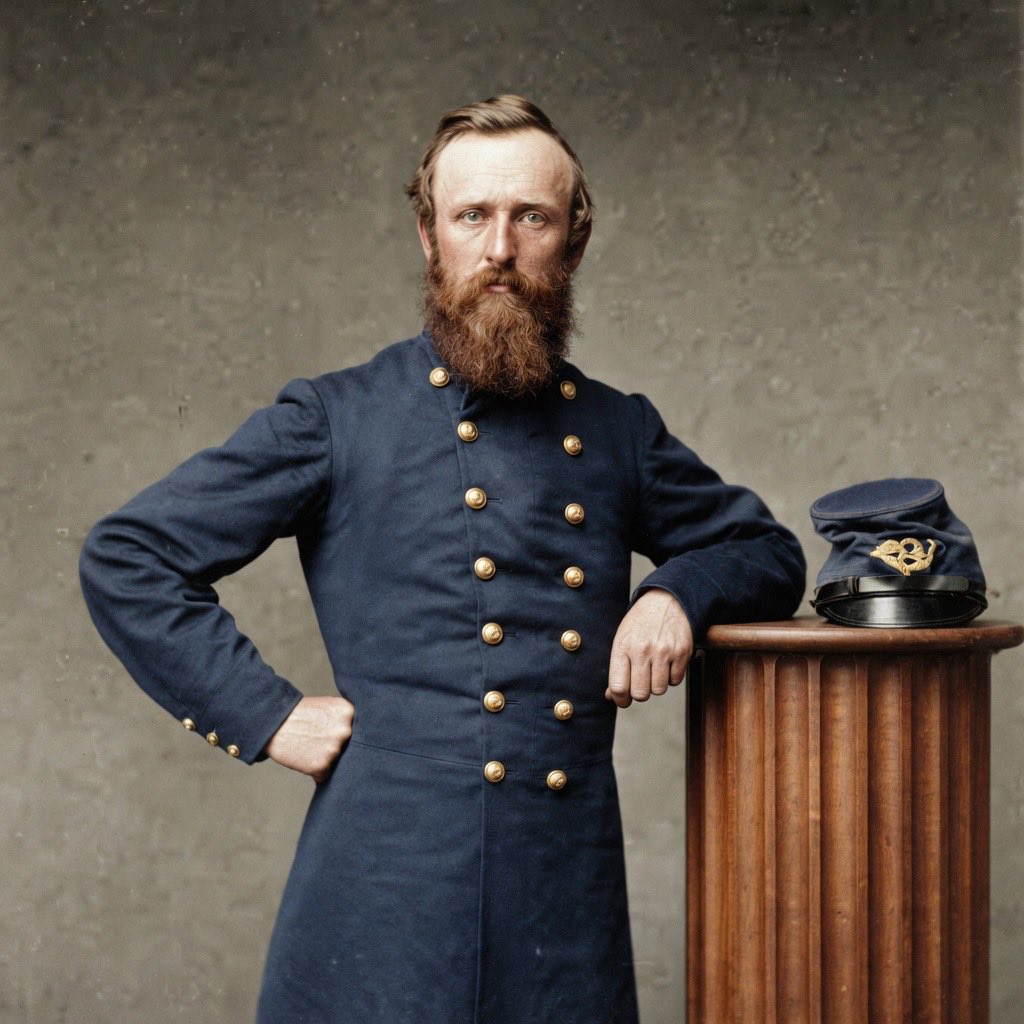
🇺🇸 Most Badass Presidents: Combat Veteran Edition #6 Rutherford B. Hayes
Rutherford B. Hayes, our 19th President, was one badass President.
He was wounded four times, had four horses shot out from under him, and kept leading charges under heavy fire.
Born October 4, 1822, in Delaware, Ohio.
A successful lawyer and politician, Hayes volunteered for service when the Civil War erupted.
He was appointed major in the 23rd Ohio Volunteer Infantry, the same regiment that included a young William McKinley.
He quickly rose to colonel and commanded from the front in every fight.
In the wild mountains of West Virginia, Hayes frequently led anti-guerrilla bushwhacking expeditions.
During one raid, Hayes personally led a small squad that charged a cabin filled with Confederate bushwhackers, engaging in frantic, hand-to-hand combat to capture the post.
Despite his high rank as a Colonel and General, Hayes refused to sleep in luxurious quarters if his men were roughing it.
In spring 1862 a fragment from an exploding artillery shell struck Hayes directly below his right knee near Pearisburg.
At the Battle of South Mountain on September 14, 1862, Hayes led a daring charge against entrenched Confederates at Fox’s Gap.
A musket ball tore through his left arm just above the elbow, shattering the bone.
He tied a handkerchief around the wound to stop the bleeding and remained on the field to lead before passing out.
He lay stranded between the lines for twenty minutes while the fighting raged.
A small squad of Union soldiers braved heavy Confederate musket fire to sprint out into the open clearing, lift Hayes off the ground, and carry him back behind Union lines.
At the Battle of Kernstown on July 24, 1864, as the Union lines buckled and fell into intense confusion, a bullet struck him directly in the shoulder. At the same time, Hayes' horse was shot out from under him, violently crashing to the ground.
Hayes managed to scramble to his feet and escape the rapidly advancing Confederates
At the Battle of Third Winchester on September 19, 1864, Hayes' horse became stuck in deep mud. He dismounted and crawled across on all fours under heavy Confederate fire. His raw, gritty leadership inspired his men to follow him, breaking the Confederate line and routing the enemy.
At the Battle of Cedar Creek on October 19, 1864, his horse was killed instantly in a gallop, going heels over head.
He was thrown hard, sprained his ankle badly, and was hit in the head by a spent musket ball that lost its force going through someone else.
Hayes passed out next to his dead horse. Believing the head wound was fatal, fleeing soldiers spread rumors that the colonel was dead, causing immense grief for his wife Lucy before the truth reached her.
When Hayes regained consciousness, Confederate lines were closing in. Refusing to surrender, he managed to hobble away on his damaged ankle and scramble up a hill into a grove of trees to successfully evade capture.
He fought in more than fifty engagements and rose to brevet major general for gallant and distinguished service.
Even after serving as president, he explicitly stated that his favorite title was "Colonel"
He bled for the Republic on Civil War battlefields long before he ever stepped foot in the White House.
Thank you, Colonel! 🇺🇸🫡
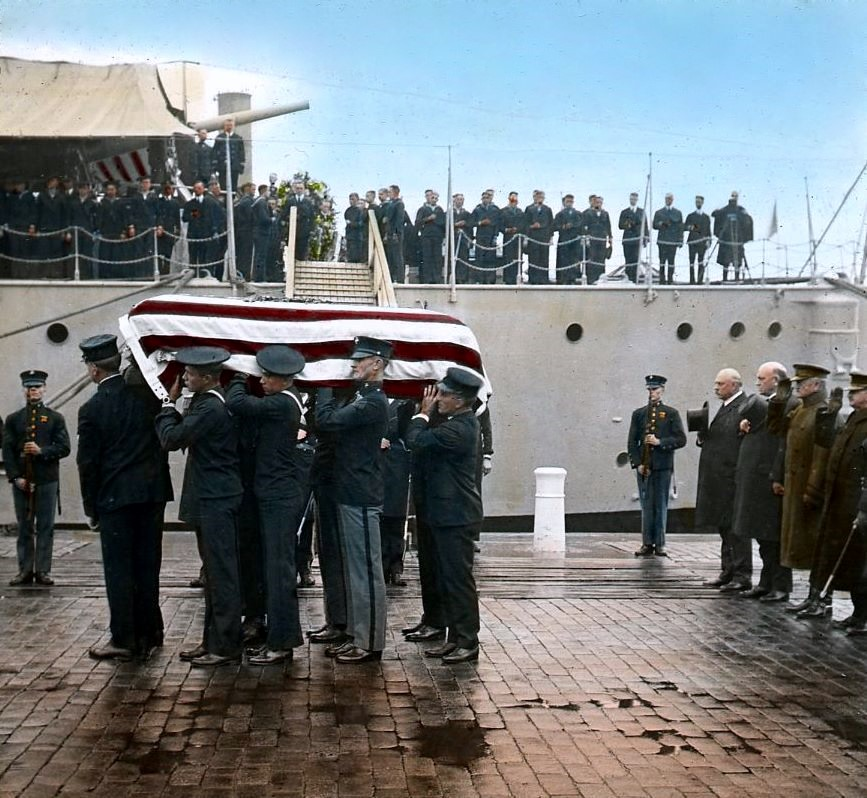
Super image the march from the church at the unveiling of the memorial February 1921 in the village of Ilmington, Warwickshire. Zooming into the photo there are some still in their military uniform. Inaugurated one day before Valentine’s Day, what it must have meant for women to have seen their loved ones name listed upon it.
📸 Shakespeares County FB
26 May 1868: U.S. #President Andrew Johnson is acquitted by one vote in his U.S. #Senate impeachment trial. The vote was 35-19, two-thirds are needed to convict. The House voted out articles of impeachment on March 2 by a vote of 126-47. Only a simple majority is needed in the House. #History #OTD #ad https://t.co/Vt4mN4Hkiw
#onthisdayinhistory 22 May 1941 - HMS Greyhound (H05) was sunk by German Junkers Ju 87 Stuka dive bombers north-west of Crete as she escorted the battleships of the Mediterranean Fleet attempting to intercept the German sea-borne invasion forces destined for Crete.
Her survivors were rescued by the destroyers Kingston & Kandahar, but six officers & 74 sailors were killed in the attack. The Germans later rescued four more sailors.
#lestweforget #royalnavy @RoyalNavy@NatMuseumRN
On this day in 1805, an American commodore parked a fleet outside a North African harbor and ended a war without firing a single shot.
Most Americans have never heard his name. He is the reason the United States Navy exists in the form it does today.
The First Barbary War had been grinding on for four years. The Pasha of Tripoli, Yusuf Karamanli, had been seizing American merchant ships and enslaving their crews for over a decade, demanding tribute from a young republic that could barely pay its own army. Thomas Jefferson, who hated standing militaries on principle, had finally decided enough was enough. He sent a squadron.
It went badly. The USS Philadelphia ran aground off Tripoli in 1803 and her entire crew was captured. Stephen Decatur famously snuck in and burned her at anchor to keep the Pasha from refloating her, which Lord Nelson called "the most bold and daring act of the age." But the war dragged on.
By spring 1805, the squadron commander Samuel Barron was sick, exhausted, and ready to quit. On May 22, 1805, he handed command to John Rodgers.
Rodgers did not waste time.
He had inherited four frigates, three brigs, a sloop-of-war, three schooners, two bomb vessels, and nine gunboats. The largest American fleet ever assembled to that date. Four days after taking command, he sailed the entire force directly into the harbor at Tripoli and dropped anchor in plain view of the Pasha's palace.
No bombardment. No threats. He just sat there.
The Pasha looked at his harbor, looked at twenty-two American warships pointed at his city, looked at his options, and sued for peace within the week.
The treaty was signed June 4, 1805. The American hostages came home. The Barbary states never seriously challenged American shipping again. And the United States Navy, four years old, had just forced a hostile foreign power to surrender by showing up.
Every great power moment since traces back to that anchor drop in Tripoli harbor.
221 years ago today. Almost nobody teaches this.
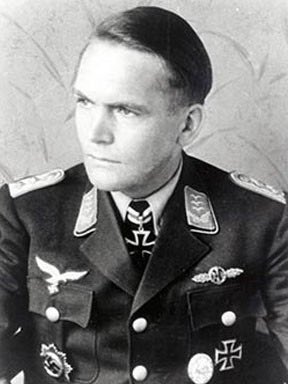
This day in 1945, members of the Flensburg Government, including Albert Speer and the successor of Adolf Hitler, Reichspräsident Karl Dönitz, are arrested by the Allies, the end of Nazi Germany. #WW2