Kalau kamu vibe coding tapi UI webstinya masih jelek, bukan modelnya yang salah.
Tapi mungkin kamu gak ngasih reference design yang bagus yang bisa diikuti agent nya.
Coba kasih ini, UI mu akan langsung jadi keren:
👋🏼ADIÓS a pagar OCR para leer PDFs!
Estás mandando TODOS tus PDFs a un servicio de OCR.
Y más de la mitad NO lo necesitan.
Firecrawl ha soltado pdf-inspector:
Una librería en Rust que mira el PDF en 20 milisegundos y te dice si hace falta OCR o no.
→ Si tiene texto: lo extrae en local en 150 ms y ya está
→ Si está escaneado: lo mandas a OCR
Y no es todo o nada.
Te devuelve la lista exacta de páginas que necesitan OCR, para que mandes tres páginas en vez del documento entero.
Además te lo convierte a Markdown limpio, detectando solo:
→ Titulares por tamaño de fuente
→ Tablas (incluidas las financieras y las que siguen en la página siguiente)
→ Bloques de código por fuente monoespaciada
→ Listas, negritas, cursivas y enlaces
→ Columnas tipo periódico en el orden correcto
→ Palabras partidas con guión al final de línea
En su benchmark contra 200 PDFs le gana a pymupdf4llm y markitdown, y hace el corpus entero en 0,47 segundos frente a los 17 de pymupdf4llm.
Sin modelos de IA.
Sin servicios externos.
Y va desde Python, Node, Rust, CLI y hasta en el navegador con WebAssembly.
Repo en el primer comentario 👇
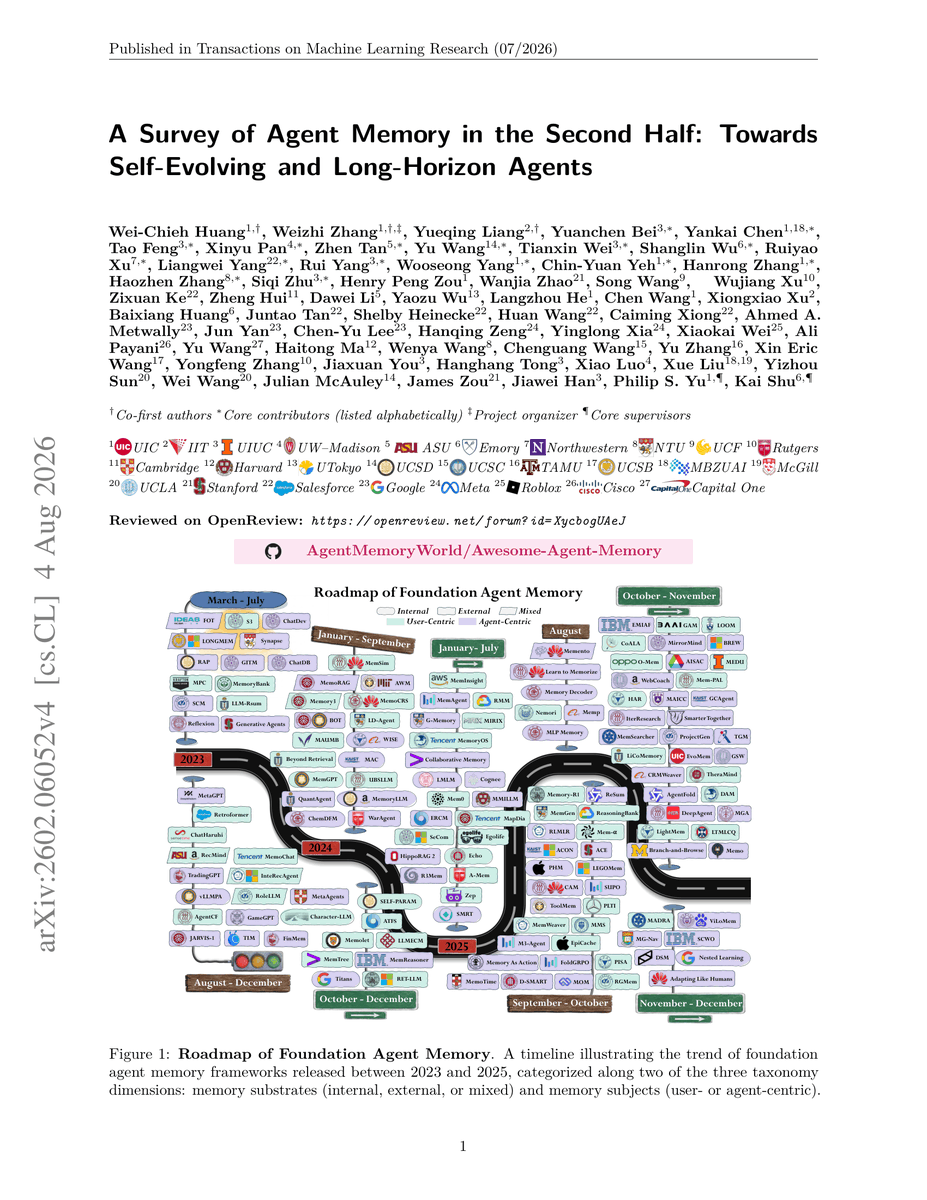
This paper is f*cking brilliant
A computer science survey mapped 150+ agent memory architectures across 90 pages to build self-evolving long-horizon agents
The result: a 3D taxonomy showing action-based memory and self-evolving structures boost long-horizon retention by 50%
The crazy part is memory is no longer just a passive database lookup
It also trains models to execute tool actions, update parametric weights, and consolidate episodic traces into skills
Most memory surveys analyze static database retrieval
This one maps the entire self-evolving agent operating system
Read the complete paper + article below
Bookmark it for future reference
Kalau lu lagi cari API AI gratis buat eksperimen, nemu satu lagi yang cukup menarik. 👀🔥
AgentRouter lagi kasih $175 credits buat akun baru.
Bisa daftar di sini:
https://t.co/9ULfUAonHz
Prosesnya juga simpel banget:
→ Daftar pakai email
→ Konfirmasi email
→ Credits masuk ke akun
→ Buat API key
→ Mulai testing
Base URL:
https://t.co/B2mONqh0vL
Beberapa model yang tersedia:
🔥 Claude Opus 5
🔥 GPT 5.6-SOL
🔥 Claude Opus 4.8
Jadi kalau lu lagi build agent, coding pakai AI, atau cuma pengen bandingin beberapa model tanpa langsung bakar saldo, ini lumayan buat ditambah ke toolkit. 🤝
$175 free credits juga nggak kecil sih. 😭
Gue share karena menurut gue berguna, bukan karena sponsored.
Kalau mau coba, mending daftar selagi credit-nya masih tersedia. 👀
Ngobrolin tentang loops dan ga baca kode AI.
Kayaknya banyak yang salah paham klo maksudnya Loops adalah totally ga prompting, biar si AI yang ngeprompt AInya.
Sepemahaman aku liat berbagai macem penjelasan loops dan turunannya, esensi loop ini lebih ke solving middle problem. Kan gini yak prosesnya sekarang:
Judgement(H) -> Generation (AI) -> Verification (H)
*H = Human
Of course tergantung workflow dan manusianya, tapi yang sering problem itu ada pada si Generation. AI kadang luput, kadang salah, kadang broken. Yang mestinya si manusia harus manually telling, ga works iki bruh, jelek kodenya bruh, ga ngikutin aturan kita dll.
Nah loops, yang solving problem ini. Instead of ngasih tau bolak-balik secara manual, kenapa ga bikin semacam looping yang punya programmatic dan deterministic gates untuk judging ini udah "Done" atau belom. Yang akhirnya bisa ngilangin proses capeknya bolak-balik di tengah (generation).
Jadi manusianya bisa fokus ke GOAL dan VERIFIKASI.
Nah, sekarang muncul lagi debat baca kode atau egak. Ya bebas sih, baca kode okey, ga juga gapapa. *Menurut aku yakk. Boleh ga setuju. haha..
Tapi gini. Dari workflow aku sendiri. Aku sendiri udah mulai ~90% ga baca kode untuk building end-user app (treatment aku beda untuk building tooling). Tapi bukan berarti ga ada proses judgement.
Untuk make sure aku ga baca kode yang mentah, semua gates udah ku siapin di awal.
1. Aku pakai monorepo template yang udah aku siapin. Include mostly basic needs.
2. Setelah bikin repo, aku siapin Gatesnya, mulai dari test, linter, AGENTS.md, references dan rules.
3. Setelah brainstorming, aku masukin high level idea prd, technical-req. dan milestone tasknya.
4. Buka codex, start untuk baca semua requirements, minta dia bukan tools aku namanya "loops", bikin *.task.json. Dengan gates, providers, dan agent.
5. Tiap task, bisa punya gate yang beda-beda.
6. Looping akan ngerjain task dengan high level goal sampe deliver PR, nah setelah PR loopingnya monitoring si PR sampai ready to merge.
7. Aku pakai Coderabbit btw, untuk review. Kalo ada komen dari coderabbit, loopingnya akan jalan ke iterasi berikutnya dan update PR.
8. Aku hanya review kalo semuanya sudah "Ready to merge".
Jadi efisiensinya lumayan nambah.
J-j-j-g-g-g-g-g-v-v-V
*Huruf kecil: By AI
*Huruf besar: By Human
Kalo mau liat script loops aku disini:
https://t.co/pSYw8FZYVo
you don't need to re-explain your codebase's architecture to your agent every session.
most tools stop at telling you what broke.
sentrux is a real-time architectural sensor, it watches your codebase as a live treemap and turns file structure and dependencies into one continuous quality score.
the loop is simple:
codebase > agent scans structure and dependencies > sentrux scores 5 root cause metrics into one signal > agent sees exactly where risk concentrates > next session starts from a live map instead of a blind grep
the binary carries zero built-in language knowledge, all 52 languages live in plugin.toml and tags.scm query files, so a new language needs zero rust code.
small catch: it only scores the structure, it won't tell you why the cycle happened, that part's still on you.
built pure Rust with no runtime dependencies, specifically so it could sit as one binary between an agent and a codebase without adding friction.
Sudah meninggalkan vrcl&nxtjs setelah iykyk dengan foundernya
Semua stack baru gue pakai tanstack bun hono, biar natively bisa lgsg deploy ke @Cloudflare
8 product, r2 (storage), d1 (sqlite database), container, workers, kv, email routing, queue (cron job) cuman habis segini
WAIT… PEMBUAT OBSIDIAN SENDIRI BARU RILIS CLAUDE SKILLS PACK. 🧠⚡
Dan katanya sudah dipasang oleh 44,000+ developers.
Kalau lu lagi bangun second brain pakai Claude + Obsidian, ini salah satu yang menurut gue wajib lu cek.
Kenapa?
Karena ini bukan sekadar community-made skills.
Kepano sendiri yang nulisnya.
Yep.
Orang yang bikin Obsidian. 👀
Jadi skill-nya dibuat dengan ngerti cara Obsidian sebenarnya bekerja:
→ Markdown
→ Bases
→ JSON Canvas
→ Backlinks
→ Plugins
→ struktur vault
Bukan sekadar:
“AI, tolong bikin notes.”
Dan cara pakainya juga simpel.
Masukkan skills-nya ke Claude skills folder sekali.
Setelah itu, lu bisa kasih instruksi biasa seperti:
“Summarize my notes about Karpathy.”
atau:
“Extract this article to my inbox.”
Lalu skill yang relevan bisa otomatis kepakai.
Nggak perlu tiap kali:
❌ bikin prompt panjang
❌ jelasin struktur vault
❌ copy-paste context
❌ konfigurasi ulang workflow
Claude ngerti harus ngapain. 🤯
Dan honestly, bagian trust-nya yang paling menarik buat gue.
Kalau lu menemukan 10 repo berbeda yang mengklaim bisa menghubungkan Claude + Obsidian…
mana yang paling bikin lu yakin?
Skill random dari internet?
Atau skill yang dibuat oleh orang yang memang membangun Obsidian itu sendiri?
Exactly.
Second brain + AI sekarang mulai bergeser dari:
“Gimana caranya gue prompt AI supaya ngerti vault gue?”
menjadi:
“Gimana caranya AI langsung bekerja sesuai sistem vault gue?”
Itu perbedaan kecil di permukaan…
tapi bisa jadi besar banget kalau lu pakai Obsidian setiap hari. 🔥
Gue malah penasaran sama bagian lain dari ecosystem ini.
Kalau satu skill pack saja bisa menghilangkan sebanyak itu pekerjaan manual…
apa yang terjadi kalau seluruh workflow second brain lu punya skill sendiri? 👀
Worth bookmarking.
Full breakdown + ranking 10 repo ada di artikel aslinya. 🧠🔖
https://t.co/daIqrRbuhO
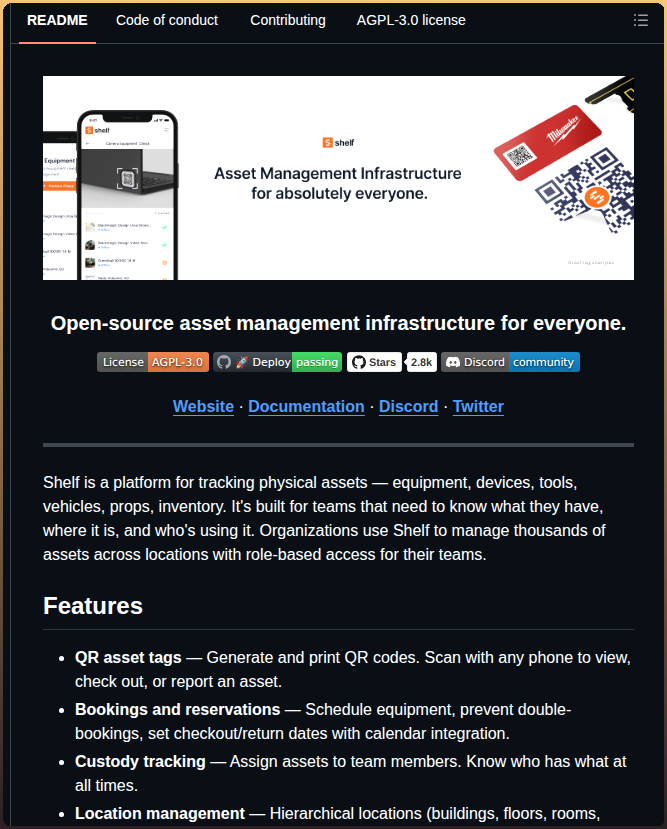
Shelf is an open-source asset management platform for tracking physical items including equipment, devices, and inventory. The tool provides features for generating QR codes to facilitate checkouts, scheduling resource bookings, and assigning custodianship to ensure clear ownership records across distributed teams.
https://t.co/YM9Fe0BHs1
Obsidian Muhammadiyah
Udah lama pingin bikin Obsidian yang auto generate knowledgenya, dan bisa jadi backend untuk Chatbot himpunan putusan Tarjih Muhammadiyah.
Sebelum renang tadi mulai bikin, pulang dilanjutin. Pake Claude, cepet sekali jadi.
Node-node yang bergerak itu adalah konsep dan entitas yg baru saja diekstrak oleh agent, dan masuk ke dalam knowledge graph yg sedang dibangun.
Obsidian ini seperi second brain.
Next, bikin second brain KH Ahmad Dahlan. Menghidupkan kembali pemikiran, kebiasaan, dan cerita2 dari masa kecil, masa perjuangan, hingga akhir hayat dari sosok pendiri Muhammadiyah ini. Melalui Obsidian yang sumbernya dikurasi secara akurat.
Gen Z bisa tanya dan ngobrol dengan "KyAI Dahlan" ntar.
Pinginnya gituuu...
pdf-inspector is a local Rust tool that classifies a PDF, extracts structured Markdown when possible, and flags only the hard pages for OCR.
No model, external API, or SaaS on the fast path.
PDF pipelines shouldn't default to OCR.
https://t.co/S7Rv5VJswX
Web-check analyzes any website to extract comprehensive technical data. It reveals details such as IP information, DNS records, technology stacks, SSL chains, and server location.
https://t.co/6k6N2rqxxb
CheckCle is a self-hosted, open-source monitoring platform for real-time full-stack systems and infrastructure. Deployable anywhere, it supports distributed checks, uptime monitoring, and incident tracking. It monitors HTTP, DNS, Ping, and TCP services, and tracks server metrics like CPU, RAM, and disk usage. It supports Linux and Windows, offers public status pages, and sends alerts via Email, Telegram, Discord, Slack, and Matrix.
https://t.co/lvu67yjnoW
I found a site that solves pretty much every UI component oversight problem.
It gives you exact, step-by-step checklists for building cards, navigation, and forms so you never miss critical micro-details again.
Link: https://t.co/fe2zznSsIY
AI coding agents re-explore the same codebase every single session.
Repowise indexes a repo once and gives Claude Code, Codex, or any MCP agent a real dependency graph, git history, and a bug-predictive code health score.
No re-grepping the same files. No stale docs. No guessing which file is about to break.
The loop is simple:
measure every file > locate where the risk concentrates > generate the exact refactoring plan to fix it
Indexing a repo takes under 30 seconds and updates automatically on every commit.
Paired benchmarks show up to 96% fewer tokens spent loading context and 70% fewer agent tool calls, at the same answer quality.
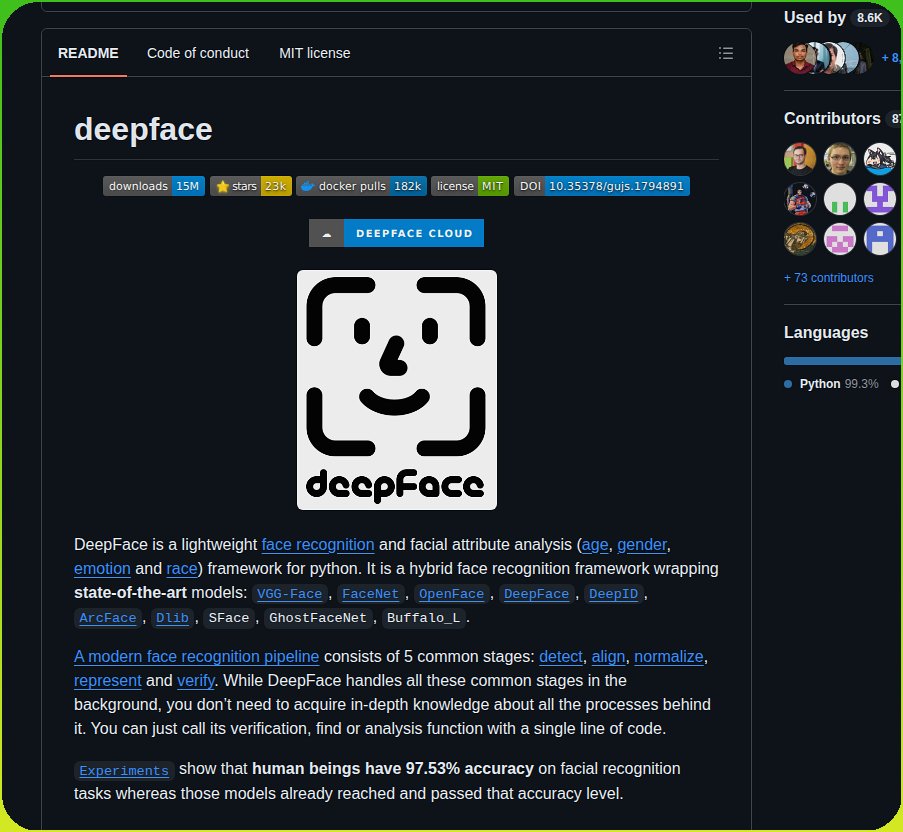
DeepFace simplifies facial analysis by combining detection, alignment, and normalization into an automated pipeline for models like VGG-Face, FaceNet, OpenFace, and ArcFace. Developers can implement face verification and extract attributes like age, gender, emotion, and race using just a single line of code within their Python applications.
https://t.co/iOU9p0L2q2