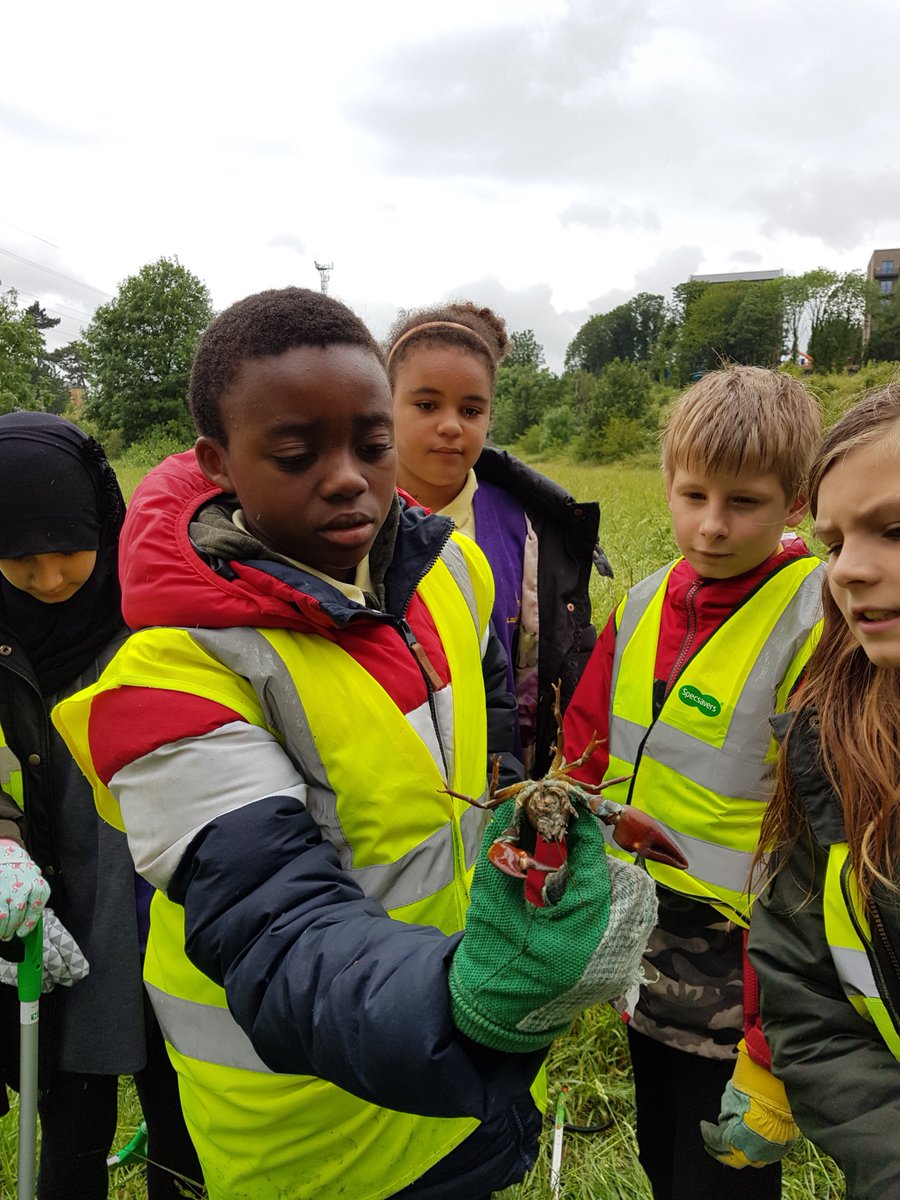
You can see the body shapes & the black eyes of some of these baby signal crayfish, they would have left their mother soon, average numbers of young between 100 & 300, happening every year which is why we have a major problem with this IS. @ajbelloni@WatfordCouncil@ColneCAN
Another big thank you to Veolia Watford! St Mathews Church had been fly tipped right by the main steps & Veolia kindly removed this mess, well done. @VeoliaUK@WatfordCouncil
We tried hard to keep the two metres!, thanks Rob, small groups are best for now, & I always like to get the good practise & health & safety reminders as well as the discussion, practical work advice & contacts; brilliant @OxheyParkFoOP@WildTroutTrust@ajbelloni@WatfordCouncil
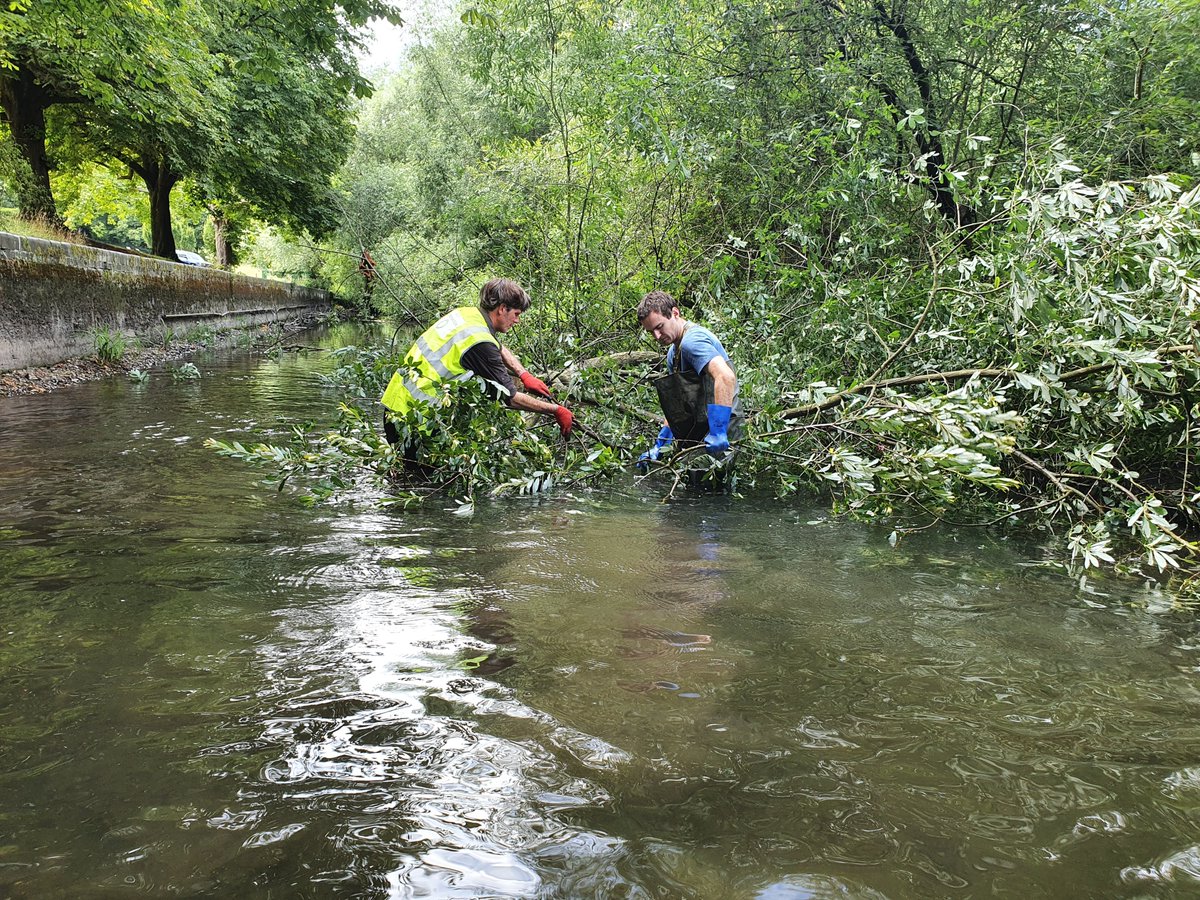
Yesterday the Welland today the Colne nr Watford. Advice given to hard working Sandy on willow tree hinging and planting of river margins. Trailing willows will give cover to the fish.Nesting moorhens avoided of course. @OxheyParkFoOP@WildTroutTrust
@WatfordCouncil@VeoliaUK@Veolia@CCPCIC@OxheyParkFoOP That's funny I spent hours rescuing the duck & then bringing it to park vets, then collecting it from park vets, and I called lisa to engage her in release, with all my photos but that doesn't warrant a mention from WBC? just a Veolia ting (my partners, along with WBC & I love!)
@Lydiacampbell That's funny I spent hours in waders rescuing the duck, then bringing it & collecting it from park vets, then calling Lisa to see if she'd like to release it & meeting her to organise, but that doesn't fit with WBC/Veolia promo?
Large Woody Debris can be seen as the rivers ‘backbone’ a vital watercourse component, removal can degrade a rivers health. It stabilises & protects a river's banks & beds, lessening erosion by resisting & deflecting flows. It also assists retaining sediments & CWD
@ajbelloni I think there's a chance a good arborist could cut those free and the bank would drop back down. You could then secure the cut limbs in the lee or elsewhere and the stumps will re-sprout - providing nice low cover habitat. Win win!
'Bushey Hall Farmlands' Affinity Water are carrying out works to enable conservation grazing on their land (this is part of the wider Rediscovering the River Colne project): for more info https://t.co/QBKSvx5StT
Steps Jacotts Hill from Cassiobury Park (by Lock No 76), maintenance after heavy winter rains had washed down allot of mud & debris. Hill forms a high plateau in West Herts Golf Club which was part of the parkland of the Cassiobury Estate in the 17th it was known as High Park.
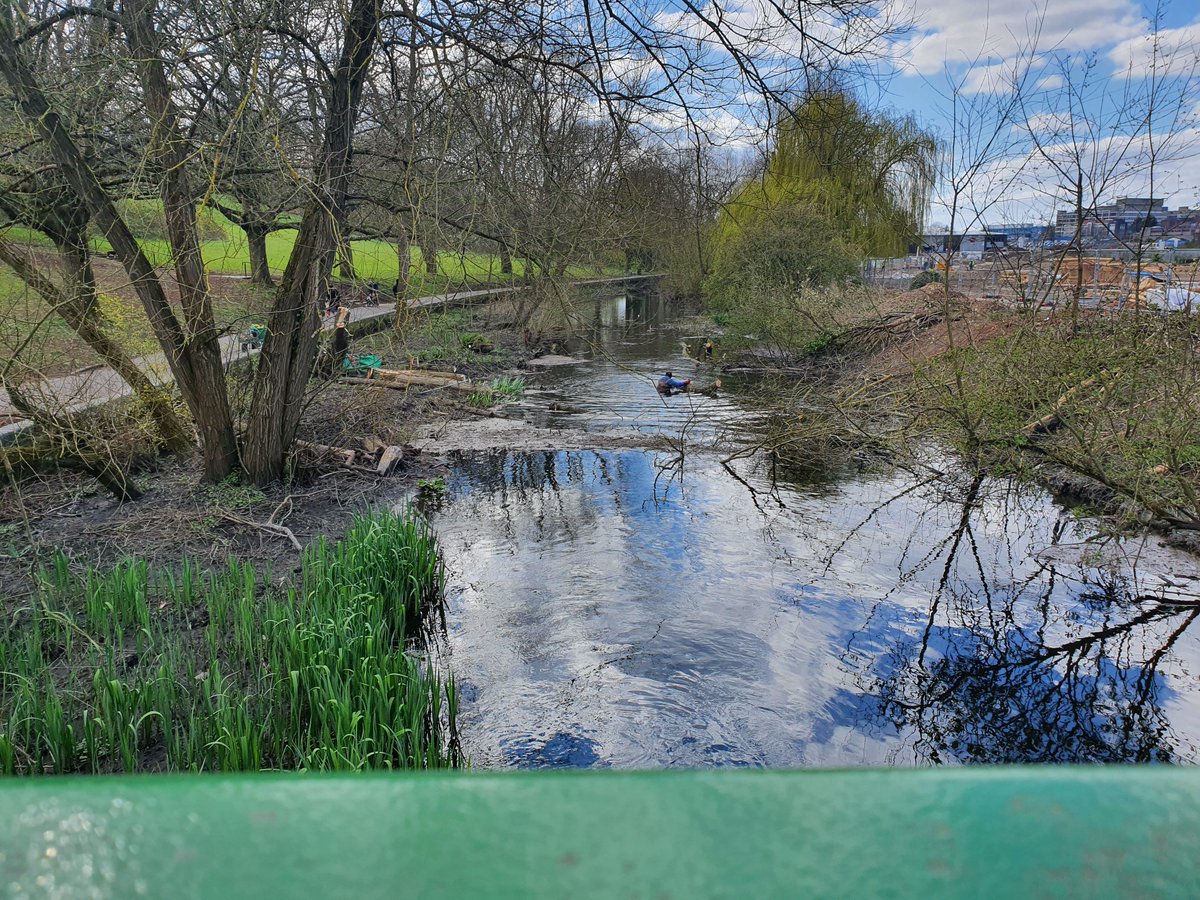
We've been clearing the East bank of the river Colne in Watford by Stephenson Way. I'm hoping we can better protect this ponded riverside area in the future. https://t.co/C3cjcKRG6w @WatfordCouncil@HertsmereBC@ColneCAN
Frogspawn on moss today on a fallen tree river Colne Watford. Signal Crayfish predate spawn, another good reason for trapping Crayfish. I understand the jelly is quite indegestable to birds as it swells in the stomach?. @WatfordCouncil@ColneCAN @hannah__needham
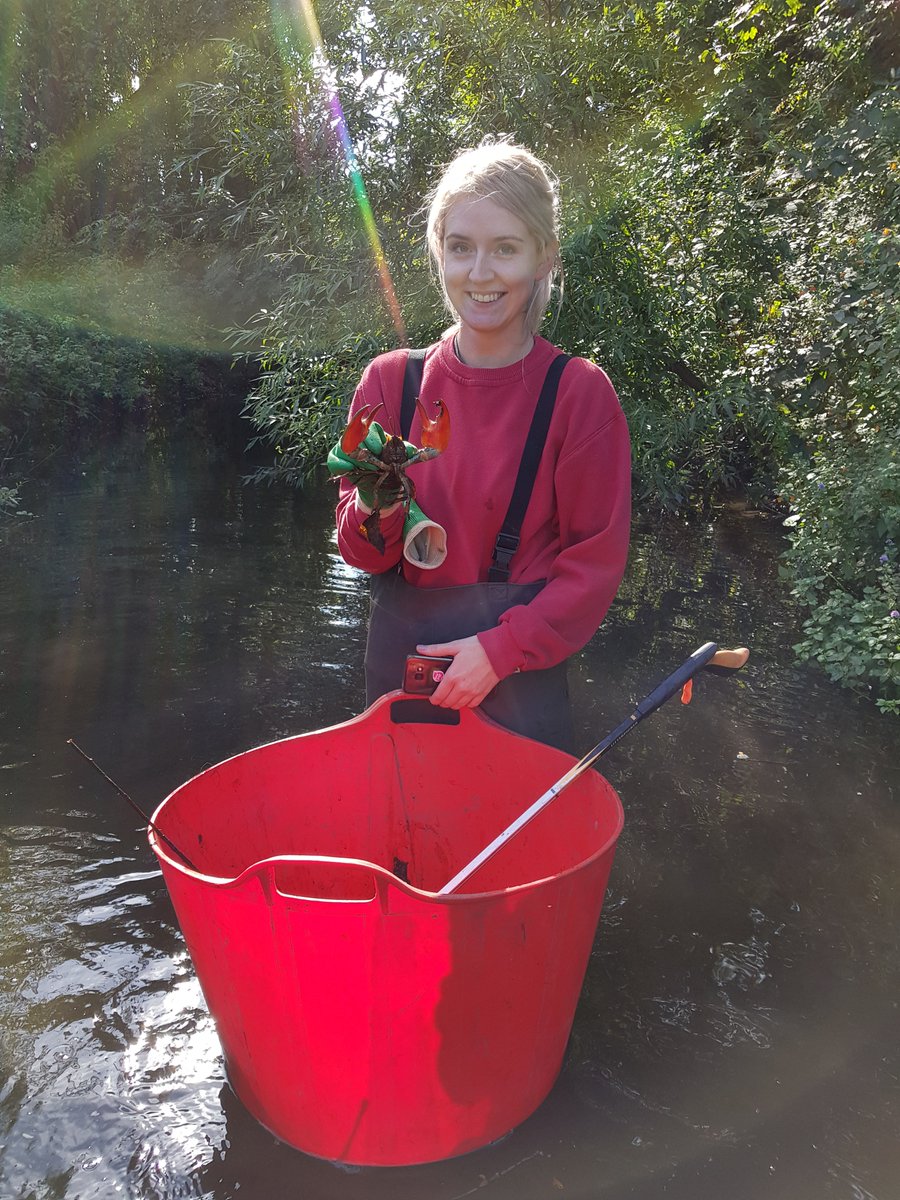
Berried females trapped, Defra rules (IAS Order) make it illegal to move Signal Crayfish without permit, requiring bankside dispatch. Average eggs 100 to 300 with 25% survival rate to adult, hope to change this using artificial refuge traps ART’s. @ajbelloni@WatfordCouncil
Extensive & prolific burrowers cause bank destabilisation, alter flow regimes, reduce water quality via bioturbation & microhabitat loss, severe negative impacts on spawning gravel oxygenation/fish recruitment & biomass/macro invertebrate abundance (Chadwick 2019)@WatfordCouncil
Invasive Species Signal Crayfish are causing water quality problems on the river Colne in Watford; explaining to LHS pupils. Watford in the water project #https://www.facebook.com/groups/952293954853968/ @LHS_Watford@WatfordCouncil@Observer_Owl
Clearing litter & invasives species (signal crayfish & himalyan balsam) from the River Colne Watford with Laurance Haines School https://t.co/aSpIeGfZk2 - @lhs_watford