It should also be noted that four CBS News Radio affiliates that carried the hourly have a cumulative audience of more than three million people. That’s larger than the audience figures of cable or digital programs that occupy the discourse.
CBS News radio employed so many great anchors - Christopher Glenn, Dan Raviv, Sam Litzinger, Charles Osgood come immediately to mind.
In my case, I remember hearing their top-of-the-hour news breaks late at night driving around. You'd be fiddling with the dial, and then stop.
You don't know what day it is.
You're eating countless meals a day with lots of snacks in between.
You're napping throughout they day.
Either it's the time between Christmas and New Year or you're a cat.
My final thoughts on the show: Thanking the audience for supporting a show dedicated to fairness and journalism, even when it ticks off both sides. It's been a privilege. #Mediabuzz https://t.co/zw6ubOliBU
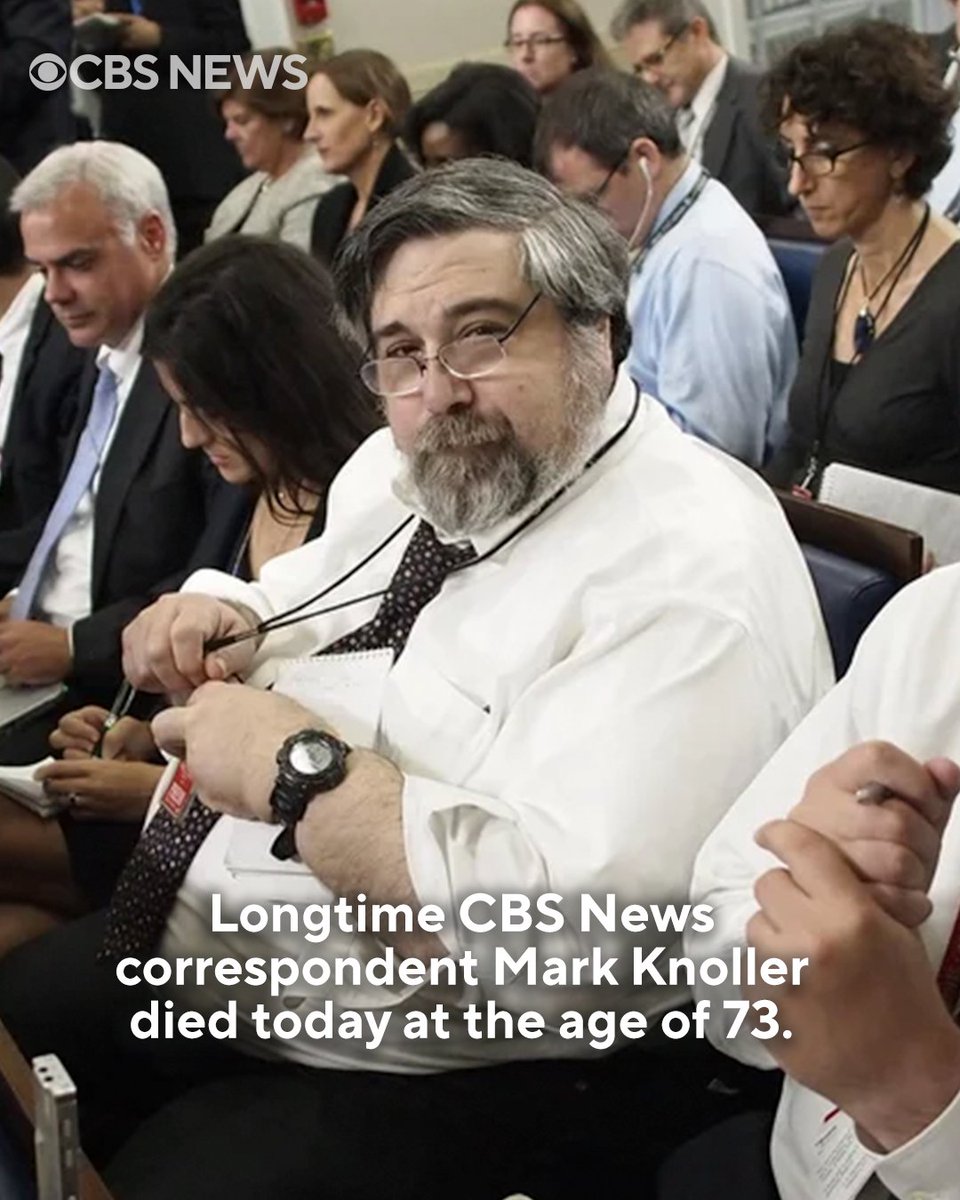
Longtime CBS News correspondent Mark Knoller died today at the age of 73.
He died in Washington, D.C., according to a close friend. The cause of death was not disclosed, but he suffered from diabetes and had been in ill health.
Friends and colleagues remember Knoller as a legend. For decades, everyone in the White House press corps knew him as the unofficial presidential historian and statistician.
https://t.co/bs8aM9Yc7E
Twenty years—wow. Twenty years ago this morning, one of the very worst #hurricanes in American history smashed the Middle Gulf Coast. Twenty years ago, the very spot where I'm sitting to write this post was under water—had become part of the Gulf.
Mighty #KATRINA came roaring ashore on 29 August 2005, first in the SE tip of Louisiana, then at the Mississippi/Louisiana state line. The cyclone's winds had weakened to Category 3 just before landfall, but at the same time, the wind field dramatically expanded, creating a gargantuan killing machine that mauled hundreds of miles of American coastline and changed millions of lives forever.
In New Orleans, catastrophic levee failures put huge, densely populated areas underwater, killing over a thousand residents and leaving much of the city uninhabitable. Outside of the city, Plaquemines Parish (where the center first made landfall) and St. Bernard and St. Tammany Parishes were devastated by a lethal combination of wind and surge.
In Mississippi, which got the hurricane's dreaded right-front quad, the highest storm surge ever observed in the Western Hemisphere roared ashore like a mighty bulldozer, wiping out whole communities from the Louisiana state line to Biloxi and beyond. This surge—which peaked in Waveland, Bay Saint Louis, Pass Christian, and Long Beach—is officially estimated at 28 ft (8.5 m), but many locals swear it was 35 ft (11 m) or even higher. This here is Downtown Bay Saint Louis right after the hurricane. The scale of the destruction in Coastal Mississippi is hard to capture in words, looking something like a nuclear bomb had been dropped. And where the surge couldn't reach, the winds did: damaging gusts penetrated far inland, to Hattiesburg and beyond.
Because of KATRINA's tremendous size, even Alabama—over 70 mi from the landfall point—saw hurricane winds, and a large and destructive storm surge was felt on both sides of Mobile Bay. Dauphin Island and Bayou Le Batre were especially hard hit.
The final toll: almost 1,400 people dead and over $200 billion damage (in 2024 dollars), making KATRINA the deadliest American hurricane since 1928 and by far the costliest natural disaster in American history. This aside, the cataclysm caused significant population shifts across the Southern US, with KATRINA survivors migrating to other major cities like Houston, Baton Rouge, and Atlanta. To this day, the population of New Orleans remains well below what it was before KATRINA.
All along the Mississippi coast, the scars and symbols remain—the concrete slabs where grand old homes once stood, the grassy fields where businesses once thrived, the shrines, the monuments.
Despite this, Coastal Mississippi is absolutely booming today. If ever I've witnessed a phoenix rising from the ashes, it is this place—towns like Bay Saint Louis that have come roaring back even better than before, while still holding onto their unique historical markers. My home, Hurricane House, sits where an old house once stood—until this moment twenty yeas ago.
Today we remember KATRINA.
10/07/24 11am Major Hurricane Milton Update
⚠️Now a Category 5 Hurricane
⚠️If the storm stays on the current track, it will be the worst storm to impact the Tampa area in over 100 years.
⚠️Please evacuate if told to do so.
⚠️Complete all prep before tomorrow night. #flwx
The view in Florida wasn't as spectacular - if you could see anything at all - but portions of the U.S. were treated to a light show Friday night into Saturday morning as the Northern lights were visible.
https://t.co/O49pRczHR5
According to @APPCPenn only ¼ of Americans can name our 3 branches of government, & @ctzns_schlrs says only ⅓ could pass the U.S. citizenship test.
How do we fix this problem?
In comes @JA_USA. ⬇️
https://t.co/5pm7FL8cNB
Larry the Cat, a 15-year-old tabby who serves as Chief Mouser at the residence of Britain's prime minister, has outlasted David Cameron, Theresa May, Boris Johnson and now Liz Truss.
https://t.co/pKSVFKnijS
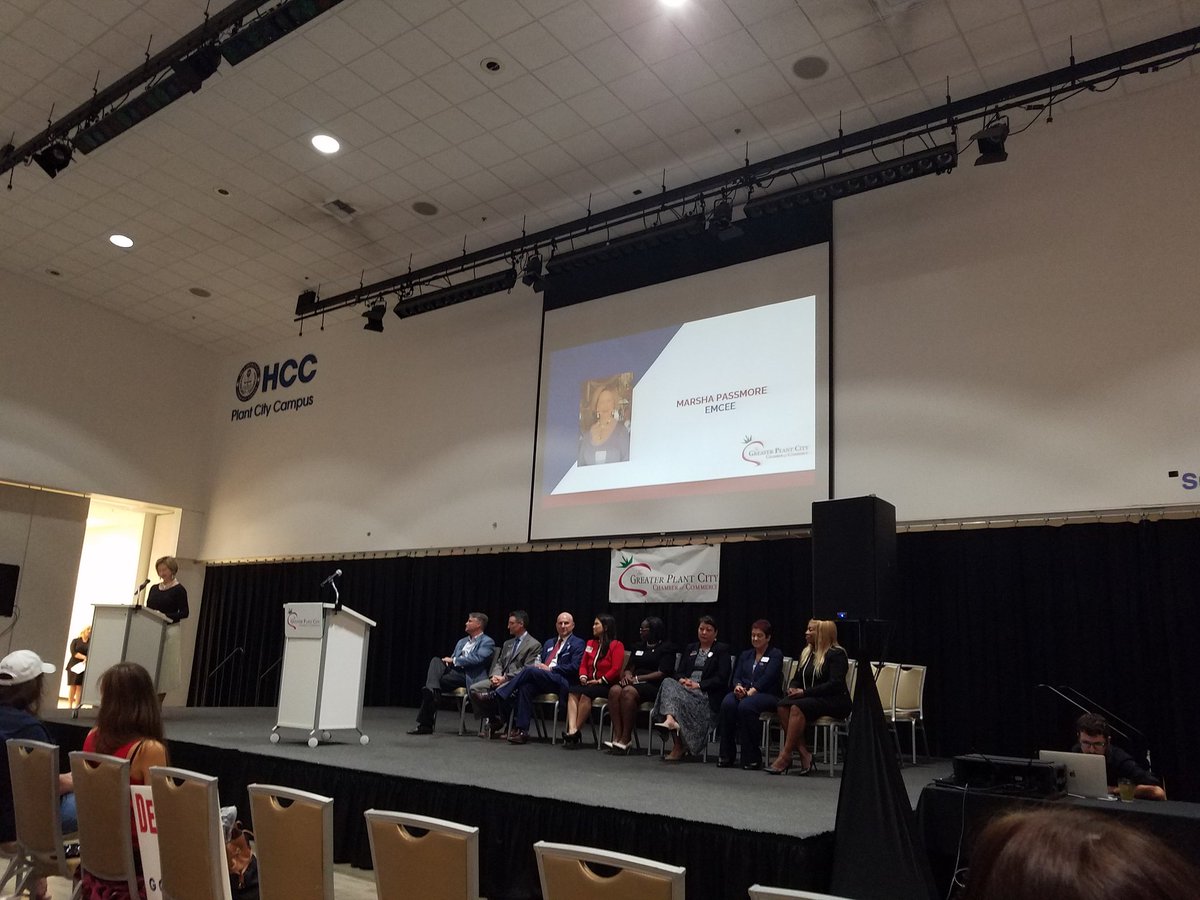
On The Zest Podcast, learn how "itty-bitty" Plant City became the Winter Strawberry Capital of the World. @FLStrawberryFst spokeswoman Jennifer Morgan dishes up history with a side of shortcake. https://t.co/AZpO5QIUlr #foodie#podcast#LoveFL@VISITFLORIDA