My flight home to MKE got interesting!
Upon landing a very brave @SouthwestAir FA played the @ChicagoBears fight song! @packers fans responded with “Go Pack Go!”
Then the FA hopped on the PA and said: “Welcome to Milwaukee… home of the number TWO team in the NFC North.” 🫨
Working out listening to a guy on the phone talking about his 10u football player getting recruited to a 11u team and getting “offered”, but will only accept the “offer” if the coaching staff gets fired. What on earth are we doing in youth sports
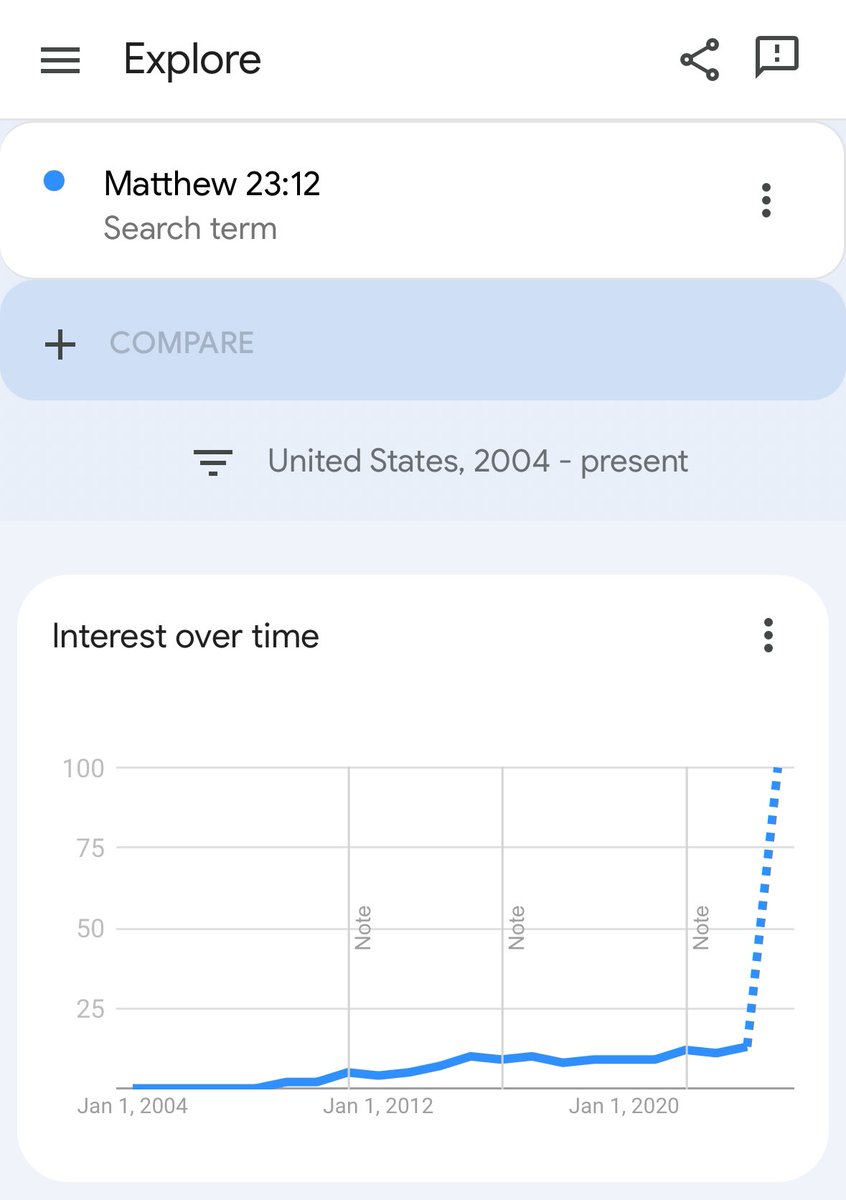
Notre Dame QB Riley Leonard put his "Matthew 23:12" wristband on camera during last night’s national championship game.
"Whoever exalts himself will be humbled, and whoever humbles himself will be exalted."
The result?
Google search interest has hit a new all-time high.
What athletes think they need:
- Training 6 days per wk
- Training individual body parts
- Maxing out every wk
- Training until max exhaustion
What athletes actually need:
- 3-4 quality training days per wk
- Train upper/lower or full body splits
- Training built around POWER
Didn't go the Exercise Science Route in college?
Neither did I.
Here's everything you actually need to know in this field:
Stimulus
A trigger that causes a physiological change by the body.
Exercises, sets, and reps, are all ways to apply and progress applied stress (training stimulus).
Adaptation
The actual change made by the body as a result of the stimulus.
The end result you see:
- More lean mass
- Improved strength
- Higher jumps
- Fat loss
These are all the adaptations the body has made in response to the stimulus applied.
SAID Principle
Specific Adaptation to Imposed Demands.
The body will adapt accordingly to the stimulus (training) applied.
The training stimulus MUST be tailored to the adaptation you want to happen.
Example: Training for distance runners is vastly different from sprinters.
Intensity
How difficult the exercise prescription is.
Usually measured in % of the 1RM, perceived exertion, reps in reserve, direct feedback, and coach’s eye.
i.e. 2 reps at 90%, 9/10 difficulty, could’ve done 2 more, “that was hard/easy”, “they look gassed”
Volume
Total amount of work prescribed.
Usually measured by sets, reps, training days, and time.
Examples:
- 3 sets of 10
- 3x/week
- Two 30 minute lifts
- Five 20yd sprints.
- etc
Variation
Changing the stimulus to continue adaptation
All training will stop working eventually
Change something once that happens
i.e. progressing/changing the exercise, sets, reps, rest time, etc
Periodization
A progressed plan of the SAID Principle through intensity, volume, and variation over time.
What adaptations does this athlete need and when?
Periodization is just the scheduled answer to those two questions over a set amount of time.
What Really Matters
It's not about knowing the terms.
It's about using the concepts above to build out the training program your athletes need.
Is that something you need help with?
My Program Design Course will show you exactly how to do that without the overpriced degree
Get it in the next tweet👇
“BuT gRaNdPa SmOkE & DrAnK & LiVeD pAsT 90!”
Him:
Worked/moved all day
Ate whole foods
Got plenty of sun
Didn’t stress about stupid shit
Was tough as nails
STRONG AF
You:
Get mad at strangers on a screen
Get tired walking
Cry when your sports team loses
Eat only ultra-processed food
Can't do 10 pushups
SOFT AF
"I'm done. I'm not chasing that anymore Lord. I want to play for You."
Listen to this powerful message from @UKBaseball coach Nick Mingione (and his son Reeves) after punching their ticket to their first College World Series