@CapelLofft bringing 'clarity, order, and decision to a complex professional body that has lost its way' and says much about LG's skills. However, the lesson is not really about 'bypassing' rather about being clear on essential goals and how to achieve them. I agree we badly need them now!
The Lloyd George bypass and @CapelLofft's related claim deserves comment. According to Hankey, LG was rather slow to focus on the convoy issue. When he did so during April 1917, he actually sought a range of views, including senior officers such as Beatty, then i/c Grand Fleet/1
An obvious Lloyd George bypass would be the convoy system. He ignored the senior officers to speak to a junior one, who suggested convoys. At that time GB was within three weeks of starvation. In contrast Starmer, according to a barrister who knew him, is lacking in imagination.
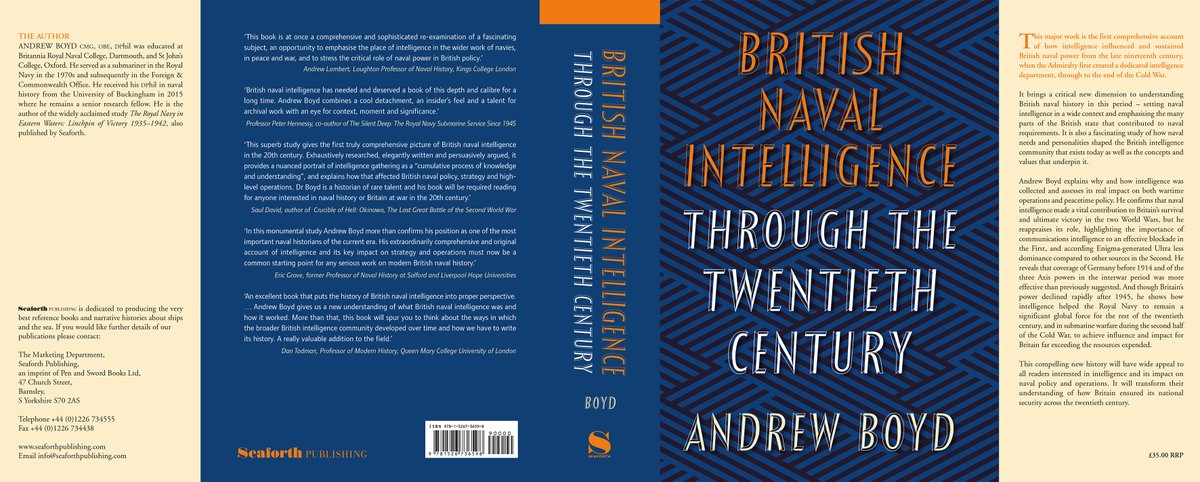
@CapelLofft famously and dramatically portrayed by A J P Taylor with LG allegedly sitting in the FSL's chair to demand convoying is highly misleading and does scant justice to what actually happened - see attached. The reality does show what an effective political leader can achieve by/3
The consequences might have been 'terrible' in the absence of countermeasures. But within a week of the German campaign beginning, the War Cabinet agreed a raft of actions. These included: accelerating all known anti-U-boat measures; increased shipping construction; economy of/1
@ajcboyd You may well be right. But unrestricted U-boat warfare only began early in 1917 and the consequences were terrible. I assume then, as in World War II, 50% of our food supplies came from abroad and therefore – starvation could have been an outcome?
down 6% on 1916 and a further 4.5% in 1918. However, domestic production kept food supply only 1.4 % below the 1900-1913 average in 1917 and 2.7 below in 1918. Again easily manageable. The introduction of convoys was important but the other measures made a critical contribution.
An obvious Lloyd George bypass would be the convoy system. He ignored the senior officers to speak to a junior one, who suggested convoys. At that time GB was within three weeks of starvation. In contrast Starmer, according to a barrister who knew him, is lacking in imagination.
No serious modern historian would endorse the first sentence. The statistics are clear. The Germans were never remotely close to cutting the Atlantic lifeline. Roskill's notorious claim for early 1943 has long been discredited and Churchill is quoted out of context.
In 1942, German U-boats nearly won World War II without firing a single shot at a soldier.
They came within a hair of strangling Britain to death from the sea. Sinking supply ships faster than they could be built. Cutting the lifeline that fed, fueled, and armed an entire nation. Winston Churchill later said the U-boat threat was the only thing that truly frightened him during the entire war.
By June 6, 1944, those same U-boats were being sent to die.
Here is what happened to them, and it is one of the most brutal reversals in military history.
May 1943. Allied codebreakers had cracked German naval codes. New radar. Long-range aircraft. Improved depth charges. The hunters became the hunted almost overnight. In a single month, 43 U-boats were destroyed. A quarter of Germany's entire operational submarine force, gone in 31 days. Admiral Doenitz, commander of the entire U-boat arm, pulled his submarines from the North Atlantic and wrote in his diary: "We have lost the Battle of the Atlantic."
He was right. It was over. The weapon that had nearly killed Britain was broken.
But the war wasn't finished, and when D-Day came, Doenitz ordered his boats in anyway.
46 U-boats sat in heavily fortified pens along the Bay of Biscay coast when the invasion began. 36 sortied toward Normandy. Of those 36, only 9 had snorkels, the new technology that allowed a submarine to recharge its batteries while staying submerged. The other 27 still had to surface periodically to run their diesel engines.
In the English Channel in June 1944, surfacing meant one thing: Allied aircraft were everywhere, hunting around the clock, and they would find you within minutes.
The boats without snorkels barely made it out of port. They were spotted, attacked, depth-charged, and driven back or destroyed before they came anywhere near the invasion fleet. Two were sunk immediately. Four more were so heavily damaged they limped home as wrecks.
The nine snorkel boats were harder to kill. Creeping along at a few knots submerged, breathing through a tube, they made it into the Channel and caused real damage over the following weeks. 7 escorts sunk. 3 tank landing ships. 13 transports. Real losses. Real men dead.
But the Allies sank 18 U-boats in return in those same waters.
Doenitz knew it was a suicide order. He gave it anyway. His logic was simple and merciless: every boat that fought and died was one less the Allies had to worry about later. The U-boat men were told the mission was essential. Many of them knew they were not coming back.
Of the 40,000 men who served in German U-boats during the entire war, 28,000 never came home. The highest casualty rate of any branch of any military in the conflict.
In 1942 they had the Allies on the edge of catastrophe.
By June 1944 they were ghosts, sent into waters they could not survive, ordered to slow down something they could no longer stop.
They failed. The invasion fleet crossed unbroken. The supplies flowed. Europe was liberated.
Within hours of being announced as the nominee to be the U.S. Director of the CIA, I received a hand-delivered message on MI6 stationery congratulating me on my nomination. It was signed simply "C" in green ink. Legendary. I shared it with my son and even he thought I was now cool!
More than that, this note, from Sir Alex Younger, Chief of the Secret Intelligence Service of the United Kingdom, confirmed what I already believed: the work that the CIA and MI6 did together mattered, that the partnership was critical, and that two leaders focused on the mission could save lives and provide tools for our nations to deter our adversaries.
Alex's passing this week brought back so many memories of our time in service together. He flew to Langley to see me the day I was confirmed. We brought our two senior teams together in the UK to plan and coordinate and build in the first several weeks of my time on duty: making clear to them all that this relationship was more than special - it was critical for the security of our two countries.
Alex was a remarkable intelligence partner. When we needed help, it wasn't "let me see;" it was "this matters to you and America we'll get it done." And he and his team always did. I think he knew we would do the same for him and his team and his nation. Many Americans are alive today because of his leadership of MI6, I never knew how to thank him enough.
Alex became a friend as well. In the years since we both left office we would see each other from time to time. He was always so kind, so thoughtful, so smart. His deep love of his country was surpassed only by his deep commitment and love of his family. Decent and proper - and funny as hell - Alex was "C." As espionage requires, he was quiet, not attention seeking. He knew what evil was and he was ruthless in his efforts to crush it with every legal tool at his command. And he knew who his friends were and committed himself to supporting them.
I miss Sir Alex Younger. He was a role model for me and a man with whom every minute I spent was valued and savored. Blessings to you Alex. Praying for you and for your family. Well done and may you rest in peace in His hands.
Excellent research and analysis by Matthew Wright on the 'Indomitable' myth which sadly continues to be propagated by too many lazy popular historians. High time these also recognised that it was the Admiralty not Churchill responsible for the Force Z disaster. For more:
As HMS Prince of Wales and HMS Repulse were heading to the Pacific, the brand new aircraft carrier HMS Indomitable was undergoing trials in the Caribbean. A common story holds that she was to accompany Force Z to the Pacific, but an accidental grounding forced her to be held back, denying them crucial protection that might have saved them.
Now, how much of this story is actually true? Matthew Wright (@MJWrightNZ ) examines rare and unknown documents to separate fact from fiction. In the process, he tracks down the origins of the rumors to dispel one of naval history's longest-standing myths.
https://t.co/va7raJxKvr
I dreaded this news. So sad to get off a long flight and learn that my dear friend Alex Younger had died. Alex was the best of #MI6 - high intelligence, low ego, driven - beneath the affable exterior, deeply moral, kind, fun and irreverent. And an ace spy. RIP.
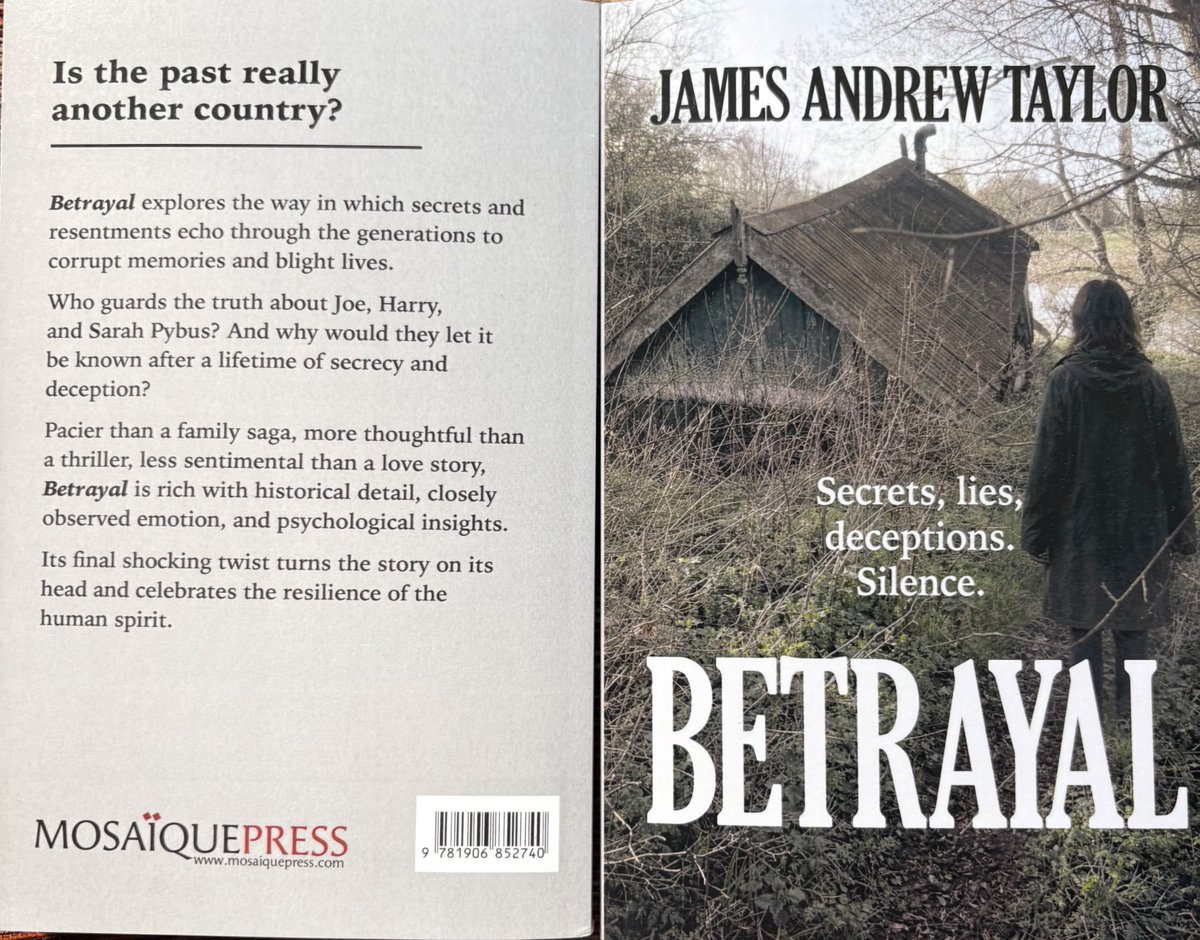
All my birthdays and Christmas rolled into one - my first novel.
I've published several biographies and studies of literature and history - but I always wanted a novel to my name, and here it is.
Best feeling in the world.
https://t.co/hwwMh3XCql
My review of Gav Don's splendid book recounting the last year in the life of HM Submarine Triumph, tragically lost in the Mediterranean in January 1942.
https://t.co/EXUHdYT6z2
Leaving aside whether RUSI author has expertise to support this claim, he overlooks that Trident offers multiple sophisticated targeting options not available when the limited city busting 'Moscow criterion' underpinned UK nuclear strategy in the 1970s. For more history:
💥 Air defences around Moscow may soon be sufficient to intercept Trident missiles launched from the UK’s nuclear deterrent, according to new report by @RUSI_org https://t.co/WXOggPIAeM